30A Architecture Styles Guide
Explore Seaside, Grayton Beach, Rosemary Beach and Alys Beach architecture—key features, climate adaptations, and community design.
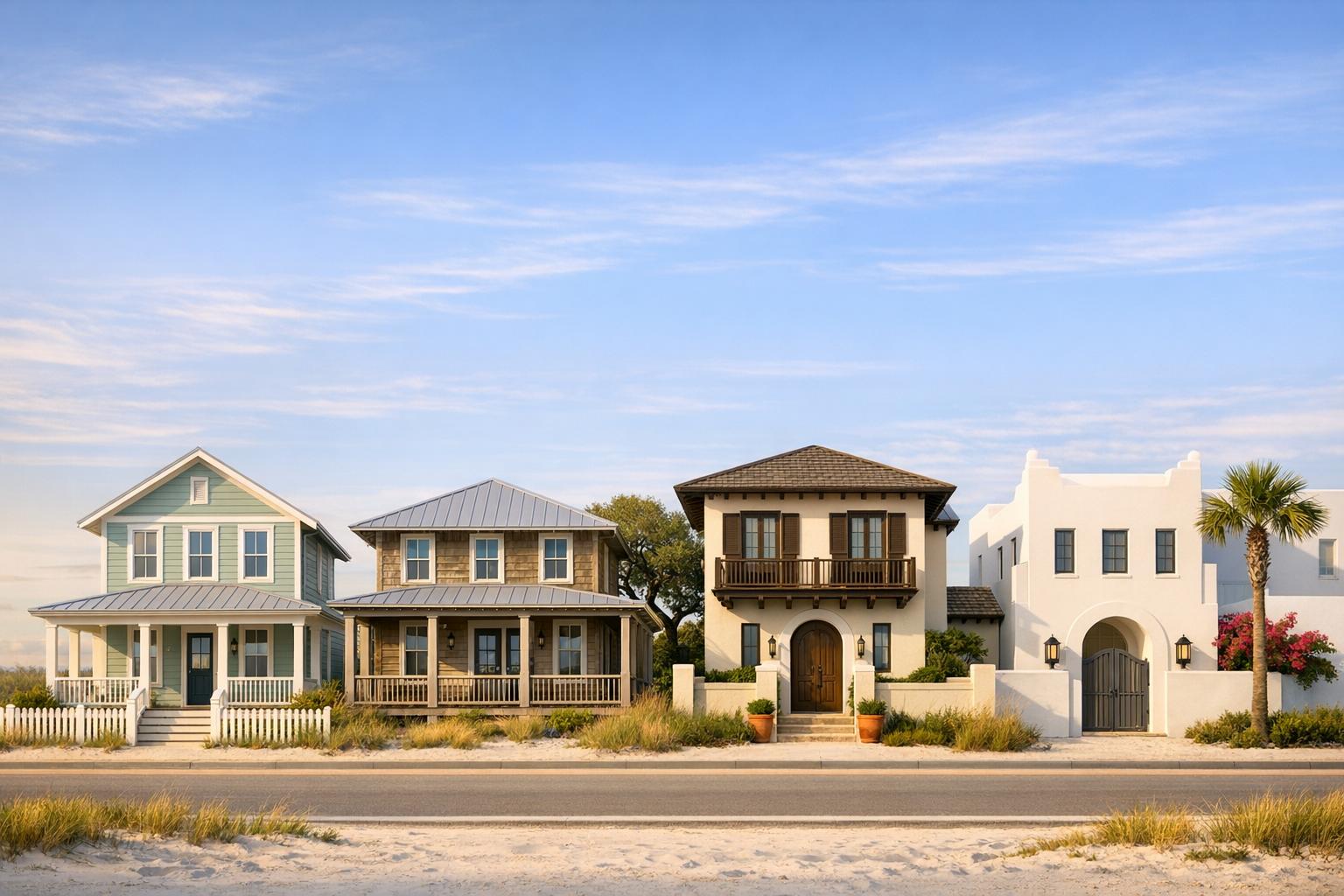
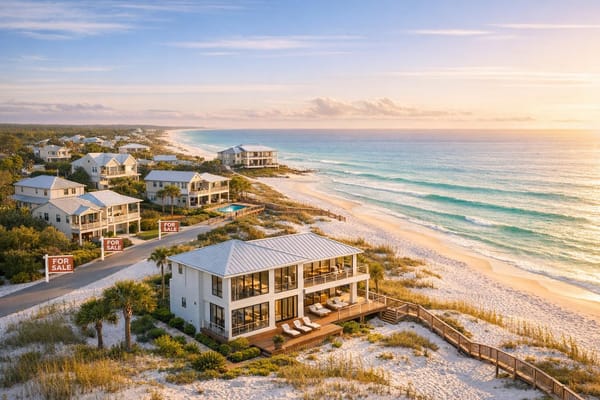
The 30A coastline in Florida offers a 26-mile stretch of diverse architectural styles across its planned communities. From Seaside's pastel cottages to Alys Beach's Mediterranean-inspired designs, each town showcases unique features tailored for coastal living. Here’s a quick look:
- Seaside: Known for New Urbanism and pastel cottages, with walkable layouts and iconic designs featured in The Truman Show.
- Grayton Beach: Oldest settlement (1885), featuring resourceful coastal cottages with high ceilings, wraparound porches, and weathered wood siding.
- Rosemary Beach: Blends Dutch West Indies and Spanish Colonial styles, with cobblestone streets, gas lamps, and private courtyards.
- Alys Beach: Modern Mediterranean aesthetic with white stucco walls, stepped roofs, and energy-efficient, storm-resilient construction.
Each community balances design with functionality, incorporating features like high ceilings, shutters, and durable materials to thrive in Florida's coastal climate. Whether you prefer Seaside’s charm, Rosemary Beach’s sophistication, or Alys Beach’s sleek design, 30A offers a rich blend of styles and lifestyles.
Discover the Unique Architectural Elements of Seaside, Florida | A 5-Minute Tour
Coastal Cottage Styles
Grayton Beach is a hallmark of coastal cottage architecture along 30A. With roots tracing back to 1885, when Army Major Charles T. Gray founded the community, it holds the distinction of being the oldest settlement on this coastline. The area exemplifies what locals refer to as "true vernacular architecture" - homes built with local materials to meet the practical needs of living by the coast. Many original cottages were resourceful creations, often repurposed from workers' homes relocated from a sawmill in nearby Point Washington during the late 1800s. These homes utilized the materials readily available in the coastal environment [3,5]. One notable example, the "Wash-A-Way", dates back to around 1890. Its name stems from a 1926 hurricane that swept away its foundation. Below, we’ll explore the design elements and historical significance of these enduring cottages.
Key Features of Coastal Cottages
The design of these cottages was driven by practicality and the coastal climate. Features like large wraparound porches, screened-in decks, high ceilings, and expansive windows were crafted to capture Gulf breezes and create seamless indoor-outdoor living spaces [1,3,4]. Louvered window shutters were added to combat the intense coastal heat [1,2]. The exterior materials were chosen for durability and availability, with weathered wood siding, metal roofs, and, historically, asbestos shingles being common choices [1,3,5]. The aesthetic leans toward a bohemian, eclectic style, with pastel colors and artistic details reflecting decades of coastal life [1,6].
As the Gettings Group puts it, "Grayton Beach isn't just another coastal town along Florida's famed Scenic Highway 30A - it's a state of mind".
Historical Background
The distinct features of these cottages are rooted in a unique historical backdrop marked by isolation and gradual development. The sandy soil, unsuitable for farming, and the absence of bridges or paved roads meant that growth in the area was slow and deliberate. In 1890, Generals William Miller and William Wilson mapped out the town, creating the narrow, oak-lined streets that still give Grayton Beach its intimate charm today.
Van R. Butler, a longtime resident and former "Mayor" of Grayton Beach, reflected on the town's quieter days: "People had pretty much abandoned the place... There were just four or five houses".
Natural features like Western Lake and the surrounding state parklands acted as barriers, limiting expansion and preserving the original quarter-mile-square layout of the village. This protection has helped maintain the cottage style, even as property values have risen steeply. Grayton Beach celebrated its 130th anniversary on July 4, 2020, and has earned a spot in the Top 10 Beaches of America rankings four times since 1991 [4,5]. These cottages continue to be cherished for offering a rare glimpse into Old Florida, where preservation has triumphed over large-scale development.
New Urbanism and Pastel Cottages in Seaside
Seaside, envisioned in the late 1970s by Robert Davis alongside architects Andrés Duany and Elizabeth Plater-Zyberk (DPZ), became a trailblazer for New Urbanism. This design philosophy puts pedestrians first, creating neighborhoods where daily essentials are accessible within a five-minute walk. Seaside’s carefully planned streets and iconic pastel cottages caught national attention when it became the main filming location for The Truman Show.
Design Principles of New Urbanism
Seaside’s design is built around a network of short blocks and narrow streets that naturally slow down traffic and make walking the preferred mode of travel. Its mixed-use buildings and strict form-based codes ensure a harmonious and pedestrian-friendly environment. These codes dictate everything from building size to porch placement, fostering a unified aesthetic. According to Inlet Beach Real Estate, "Seaside's consistent look is not an accident. Form-based rules and architectural guidelines guide porch placement, frontage, materials, and rooflines so the pedestrian experience stays coherent". Front porches are a must, and rear alleys keep sidewalks safe and uninterrupted. Together, these thoughtful details create the perfect backdrop for Seaside's charming pastel cottages.
Pastel Cottages and Their Appeal
The pastel hues - soft pinks, blues, yellows, and greens - brighten the streets and celebrate Old Florida’s design traditions. These cottages feature wraparound porches, white picket fences, and large windows that bring in natural light and encourage airflow. Metal roofs and wood siding complete the look. Built on small lots with narrow setbacks, the cottages maintain a human-scale charm that complements shared spaces like the central square and amphitheater. Buyers should be aware that Seaside’s aesthetic is carefully preserved through strict architectural review processes. HOA covenants regulate everything from paint colors to exterior renovations, ensuring the town’s signature look endures. The Seaside Post Office, located in the central square, serves as both a functional hub and a visual centerpiece for the community.
Dutch West Indies and Spanish Colonial Influences in Rosemary Beach
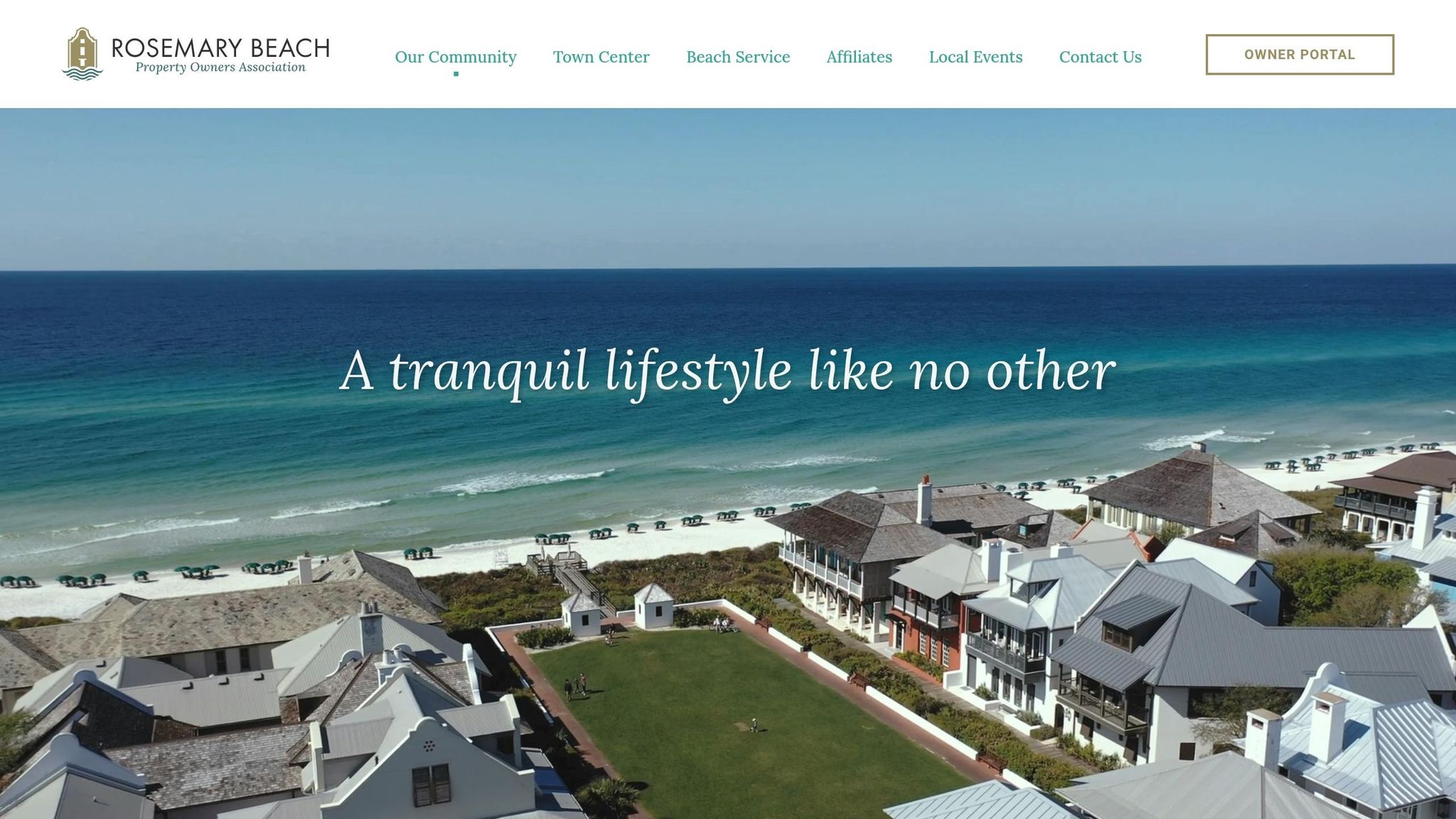
Founded in 1995 by Duany Plater-Zyberk & Company, Rosemary Beach blends the architectural charm of Dutch West Indies and Spanish Colonial styles. Drawing inspiration from places like St. Augustine and New Orleans, the town showcases a sophisticated, European-inspired aesthetic. Elizabeth Boswell, a Luxury Specialist at LiveLove 30A, describes it well: "Rosemary Beach houses shine with Dutch West Indies designs like parapet roofs, lofty ceilings, and expansive porches". The result is a timeless community, featuring narrow cobblestone streets illuminated by gas lanterns and a natural color palette of rust, tan, green, and brown that reflects the coastal surroundings. These design influences not only shape the town's visual identity but also provide practical solutions for its coastal climate.
Key Architectural Features
The Dutch West Indies influence is evident in features like scalloped parapet gables, white stucco walls, and Colonial bronze accents, creating a relaxed yet elegant atmosphere. Spanish Colonial touches can be seen in the clay tile roofs, Roman columns, and arched doorways. A standout Caribbean-inspired detail is the "welcoming arms" staircase, which frames second-floor entrances. Unlike other nearby towns that favor open front yards, Rosemary Beach homes are often tucked behind gates and fences. These barriers open to reveal private courtyards and loggias, adding an air of exclusivity and intimacy.
Coastal Climate Adaptations
The architectural choices in Rosemary Beach go beyond aesthetics - they’re designed to handle Florida’s hot and humid summers, where temperatures often climb above 90°F. High ceilings and sunrooms help direct hot air upward, while large windows, wide doors, and spacious porches encourage cross-breezes for natural cooling. White stucco walls and Bermuda shutters reflect sunlight, helping to regulate indoor temperatures. Additionally, private landscaped courtyards create cooler microclimates, offering a refreshing retreat from the heat. Together, these thoughtful elements enhance the architectural richness of the 30A coastline while ensuring comfort in a challenging environment.
Mediterranean and Bermuda Styles in Alys Beach
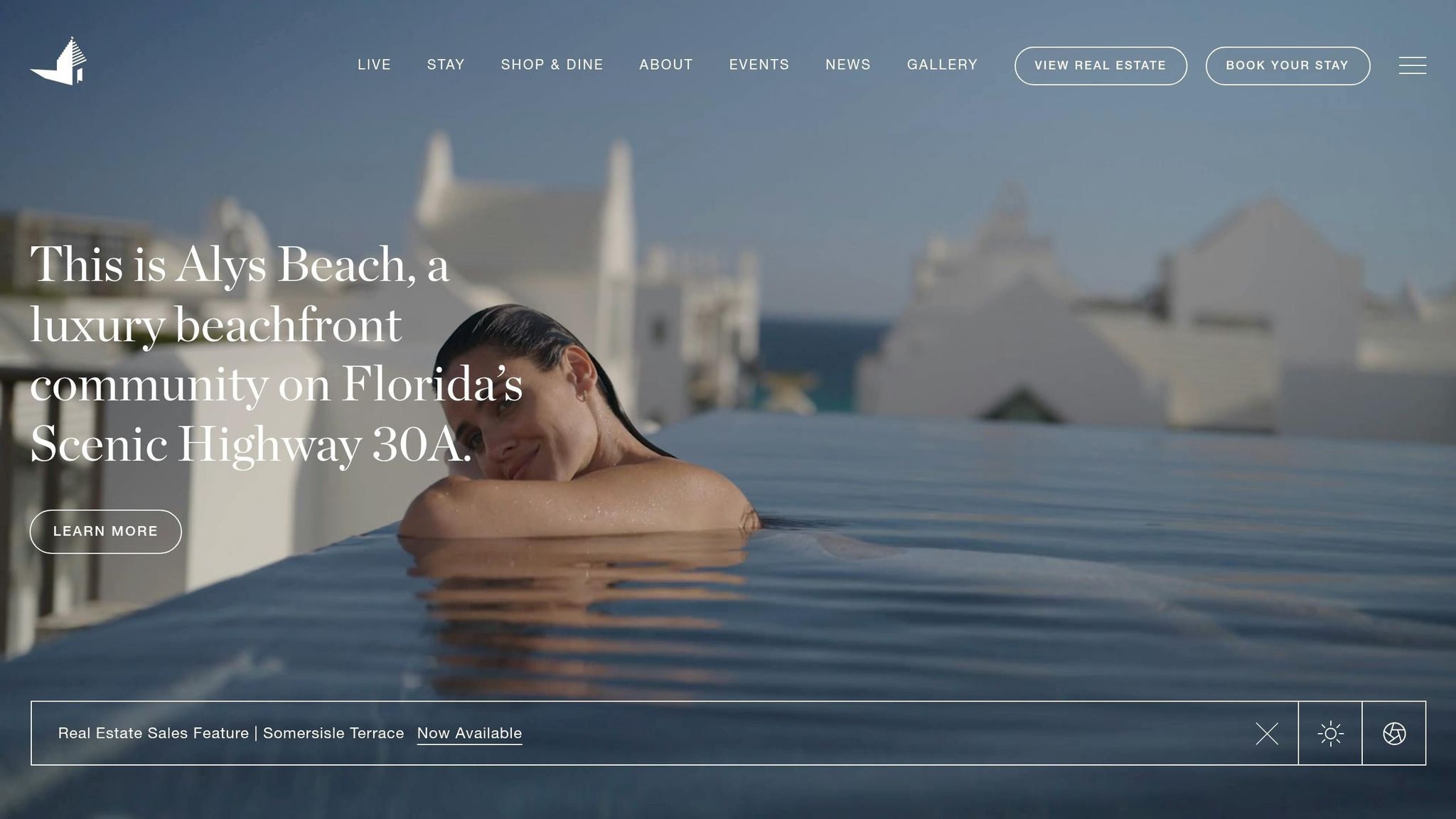
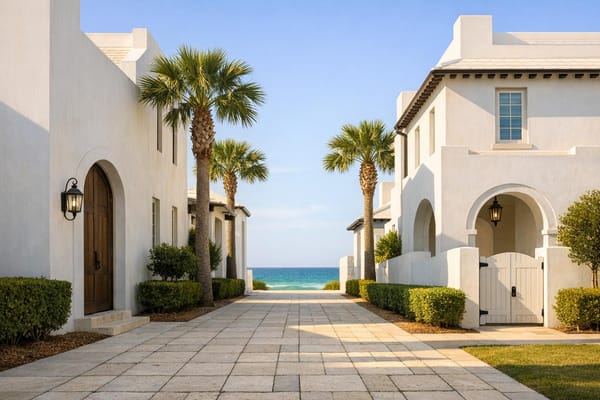
Alys Beach takes the European-inspired charm of Rosemary Beach and adds a contemporary twist by blending elements of Mediterranean, Moorish, and Bermudian design. Spanning 158 acres and featuring 1,500 linear feet of Gulf frontage, this community showcases a striking coastal aesthetic. Bermudian-style roofs combine with Mediterranean and Moorish details like arches, loggias, and trellises, creating what’s often called a Modern Mediterranean look. The result? A unified architectural identity defined by white masonry walls, sculptural forms, and distinctive white-tile or stepped roofs.
Defining Characteristics
One of the standout features of Alys Beach is its iconic white-stepped roofs, inspired by Bermudian architecture. Originally designed for freshwater collection, these roofs - crafted from concrete or stone tile - are as functional as they are visually striking. Homes are centered around private courtyards, which serve as tranquil outdoor living spaces and often include pools or fountains. Zaguán passageways link interior rooms to these courtyards, while arched porticos and shaded loggias provide shelter from sun and rain.
A unique aspect of Alys Beach is its encouragement of homeowners to contribute an "architectural gift" to the community. These gifts - like built-in benches, planters, or fountains - enhance the streetscape, creating a welcoming public realm. Visitors can explore these details while following a South Walton itinerary through the neighborhood.
| Feature | Bermudian Influence | Mediterranean/Moorish Influence |
|---|---|---|
| Roofing | White-stepped roofs for water/aesthetics | Tiled roofs and sculptural forms |
| Entryways | "Welcoming arms" staircases | Arched porticos and Zaguán passageways |
| Outdoor Space | Verandas and wrap-around porches | Private courtyards and shaded loggias |
| Windows | Top-hung shutters | Arched openings and trellises |
Durability and Design Principles
Alys Beach prioritizes resilience and energy efficiency in its construction. Homes are required to meet FORTIFIED-level standards, featuring reinforced masonry walls and continuous load paths that go above standard building codes to withstand storms. Additionally, all homes must adhere to Florida Green standards, incorporating energy-efficient materials, water conservation strategies, and landscaping with native plants.
The signature white stucco and masonry exteriors are not just for looks - they reflect the intense Florida sun, reducing heat absorption. Courtyard layouts are designed to encourage natural cross-ventilation, capturing Gulf breezes to keep interiors cool. Streets and view corridors are carefully planned to enhance airflow and frame breathtaking coastal views. While the higher costs associated with masonry construction and FORTIFIED documentation may seem steep, they offer long-term benefits like better storm protection and reduced insurance premiums.
Comparison of 30A Architectural Styles
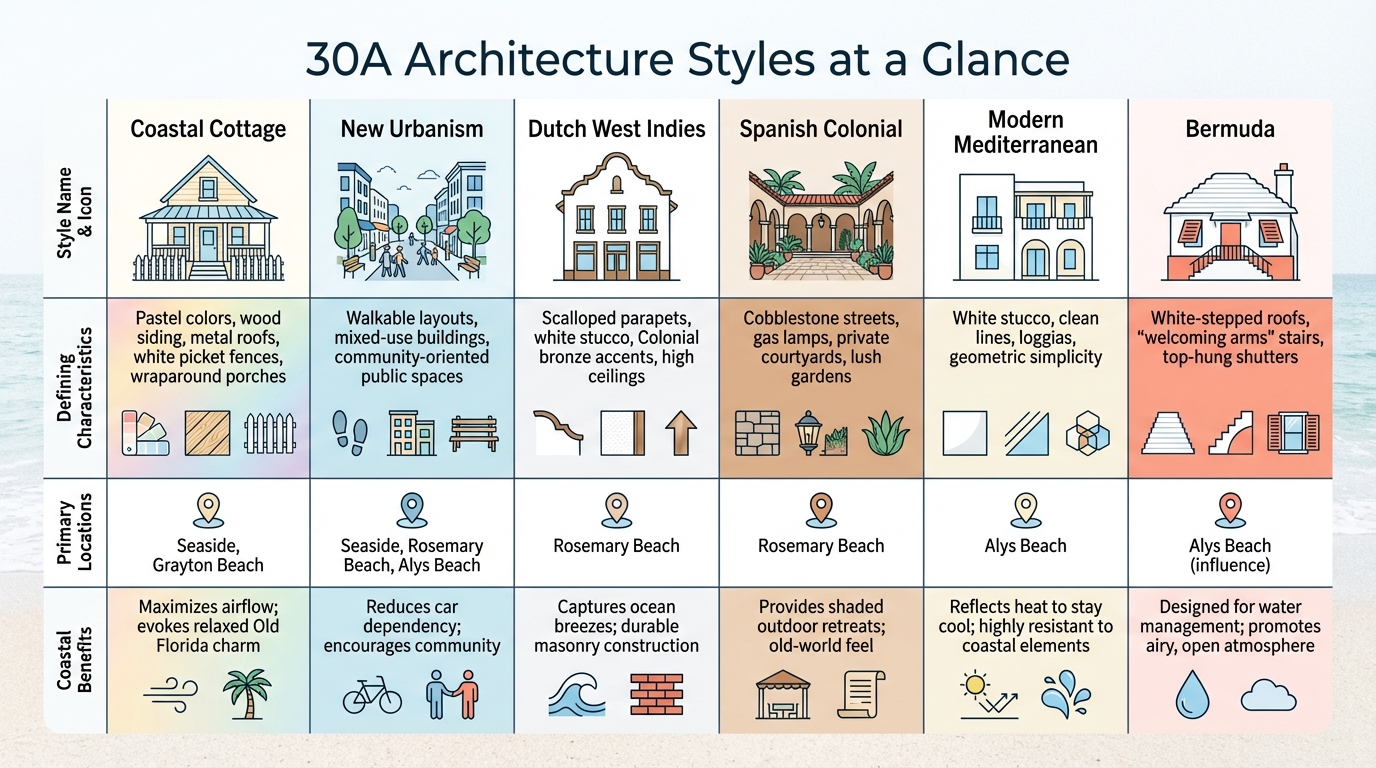
30A Architecture Styles Comparison: Features, Locations, and Coastal Benefits
The architectural styles along 30A reflect a fascinating blend of aesthetics, practicality, and community values, each tailored to meet the challenges and beauty of coastal living. Stretching across 26 miles, neighborhoods like Seaside, Rosemary Beach, and Alys Beach have developed distinct personalities that set them apart. For example, Seaside is known for its nostalgic Old Florida charm, featuring pastel-colored cottages, white picket fences, and a welcoming vibe. Rosemary Beach, on the other hand, leans into a refined European aesthetic with cobblestone streets and gas lamps. Then there’s Alys Beach, which embraces a sleek Mediterranean-inspired design, characterized by clean lines and understated elegance, as noted by April Lovins.
The choice of materials further distinguishes these communities. WaterColor, for instance, emphasizes natural materials such as wood, stone, and metal to harmonize with the coastal surroundings. Meanwhile, masonry and stucco dominate the designs of Rosemary Beach and Alys Beach, offering not only a polished look but also increased durability against coastal weather. These material choices highlight the unique balance between aesthetics, maintenance, and resilience.
"New Urbanism... represents the idea that people yearn for those days of easy connection, leisurely bike rides to work, and the relaxation that comes with everything at your fingertips."
- Robert and Daryl Davis, 30A Developers
Outdoor spaces also play a key role in defining these styles. In Grayton Beach and Seaside, coastal cottages often feature large wraparound or screened porches, designed to enhance airflow and create spaces for relaxed gatherings. In contrast, Mediterranean and Dutch West Indies-inspired designs, like those in Rosemary Beach and Alys Beach, often include private courtyards and loggias, offering shaded retreats from the sun while maintaining a sense of seclusion.
Comparison Table of Styles
To better understand the distinctions, here’s a breakdown of the defining features, locations, and benefits of each architectural style:
| Architectural Style | Defining Characteristics | Primary Locations | Coastal Benefits |
|---|---|---|---|
| Coastal Cottage | Pastel colors, wood siding, metal roofs, white picket fences, wraparound porches | Seaside, Grayton Beach | Maximizes airflow; evokes a relaxed Old Florida charm |
| New Urbanism | Walkable layouts, mixed-use buildings, community-oriented public spaces | Seaside, Rosemary Beach, Alys Beach | Reduces car dependency; encourages a sense of community |
| Dutch West Indies | Scalloped parapets, white stucco, Colonial bronze accents, high ceilings | Rosemary Beach | Captures ocean breezes; durable masonry construction |
| Spanish Colonial | Cobblestone streets, gas lamps, private courtyards, lush gardens | Rosemary Beach | Provides shaded outdoor retreats; exudes a romantic, old-world feel |
| Modern Mediterranean | White stucco, clean lines, loggias, geometric simplicity | Alys Beach | Reflects heat to stay cool; highly resistant to coastal elements |
| Bermuda | White-stepped roofs, "welcoming arms" stairs, top-hung shutters | Alys Beach (influence) | Designed for water management; promotes an airy, open atmosphere |
Each style not only brings its own aesthetic appeal but also addresses the environmental demands of coastal living, blending beauty with practicality.
Conclusion
The 30A coastline is a treasure trove of architectural styles that go well beyond the typical beach house. Each community paints its own picture through design - Seaside’s pastel hues exude charm, Rosemary Beach offers a touch of European sophistication, and Alys Beach embraces sleek, modern lines. What truly sets this area apart is how globally inspired designs - like Dutch West Indies, Spanish Colonial, Mediterranean, and Bermuda - blend effortlessly in a single region, all while staying true to the principles of New Urbanism and the relaxed vibe of coastal living.
Every detail in these homes is crafted with purpose, tailored to the Florida climate. Features like high ceilings, wraparound porches, and white stucco walls aren’t just visually striking - they’re practical, keeping homes cool and inviting. The emphasis on walkability, community spaces, and seamless indoor-outdoor living creates a lifestyle where bikes often take precedence over cars, and neighbors naturally become friends.
As April Lovins puts it, "The architecture of 30A is as diverse and captivating as its natural landscape."
The variety in design doesn’t just shape the skyline; it shapes the way of life along 30A. Whether you’re visiting or considering a move, there’s no substitute for experiencing these communities firsthand. The bohemian spirit of Grayton Beach feels worlds away from the calm sophistication of Alys Beach. Strolling the cobblestone streets of Rosemary Beach or biking through Seaside’s charming town center makes it clear how architecture and lifestyle are intertwined here.
For those ready to explore, sowal.co provides in-depth guides to South Walton’s neighborhoods, helping you find the community that feels like home. Dive into these spaces and see how thoughtful design fosters not just beautiful homes, but vibrant, connected communities.
FAQs
How can I tell Seaside, Rosemary Beach, Grayton Beach, and Alys Beach styles apart?
Each community's architecture showcases its distinct character: Seaside charms with pastel-colored cottages, inviting wraparound porches, and classic white picket fences. Rosemary Beach brings a Mediterranean flair with its courtyards and elegant wrought-iron balconies. Grayton Beach exudes a creative, bohemian vibe through its laid-back, eclectic cottages. Alys Beach captivates with its whitewashed Bermudian style, clean geometric lines, and environmentally conscious details.
Which 30A home designs handle heat, humidity, and hurricanes best?
Homes along 30A that thrive in the heat, humidity, and hurricane-prone environment are often elevated beach houses designed with storm-resistant features. These homes are typically built on pilings, which help protect against flooding and allow for better airflow. Popular styles, such as coastal cottages and elevated beach houses, often include these sturdy designs to handle the challenges of the coastal climate and weather conditions.
What HOA or design rules can limit renovations in these 30A communities?
HOA and design rules in 30A communities often place limits on renovations to uphold architectural standards and maintain a unified look. These regulations typically cover aspects like exterior modifications, building materials, color schemes, and structural changes. The goal? To preserve the area's distinctive coastal character and ensure harmony within the community.