30A Beach Flags Explained: What Families Need to Know
The short answer: always check the posted beach flag before anyone gets in the Gulf. On 30A, a calm-looking beach can still have rip currents.
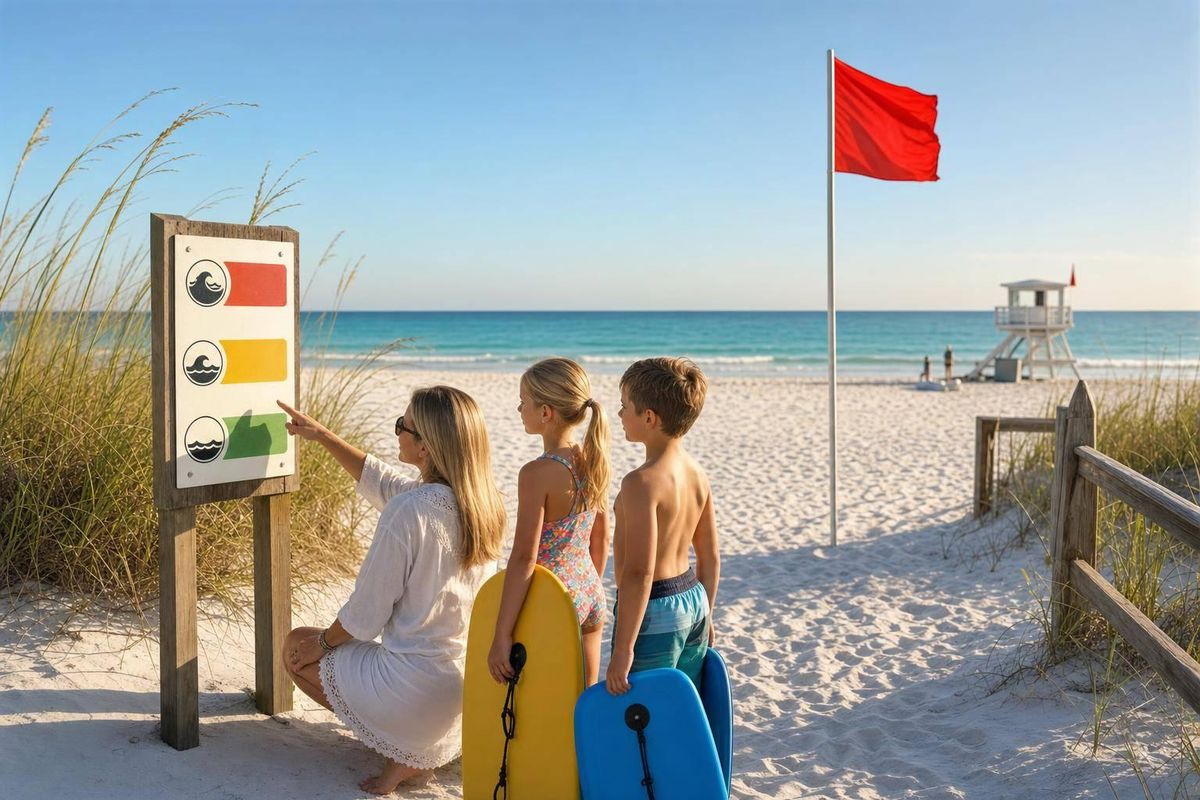
The short answer: always check the posted beach flag before anyone gets in the Gulf. On 30A, a calm-looking beach can still have rip currents, and flag colors can change by 9:00 a.m., 1:00 p.m., or sooner. If you see double red, the water is closed, and going in can lead to a $500 fine plus criminal penalties in Walton County.
Here’s the simple version I’d want any parent to know before stepping onto the sand:
- Green: Low hazard, but kids still need close watch
- Yellow: Medium hazard, stay shallow and near shore
- Red: High hazard, stay out of the surf
- Double Red: Do not enter the water
- Purple: Jellyfish, stingrays, or other marine life may be present
My main takeaway: I’d trust the posted flag at that beach access first, then use text alerts, SWFD updates, or the 30A app to confirm conditions.
| Flag | What it means | What I’d do with kids |
|---|---|---|
| Green | Low hazard | Swim with close watch |
| Yellow | Medium hazard | Keep everyone shallow |
| Red | High hazard | Stay on the sand or edge only |
| Double Red | Water closed | No one goes in |
| Purple | Marine life warning | Watch steps, shuffle feet |
A good family rule is simple: first adult to reach the access checks the flag, then one adult becomes the water watcher.
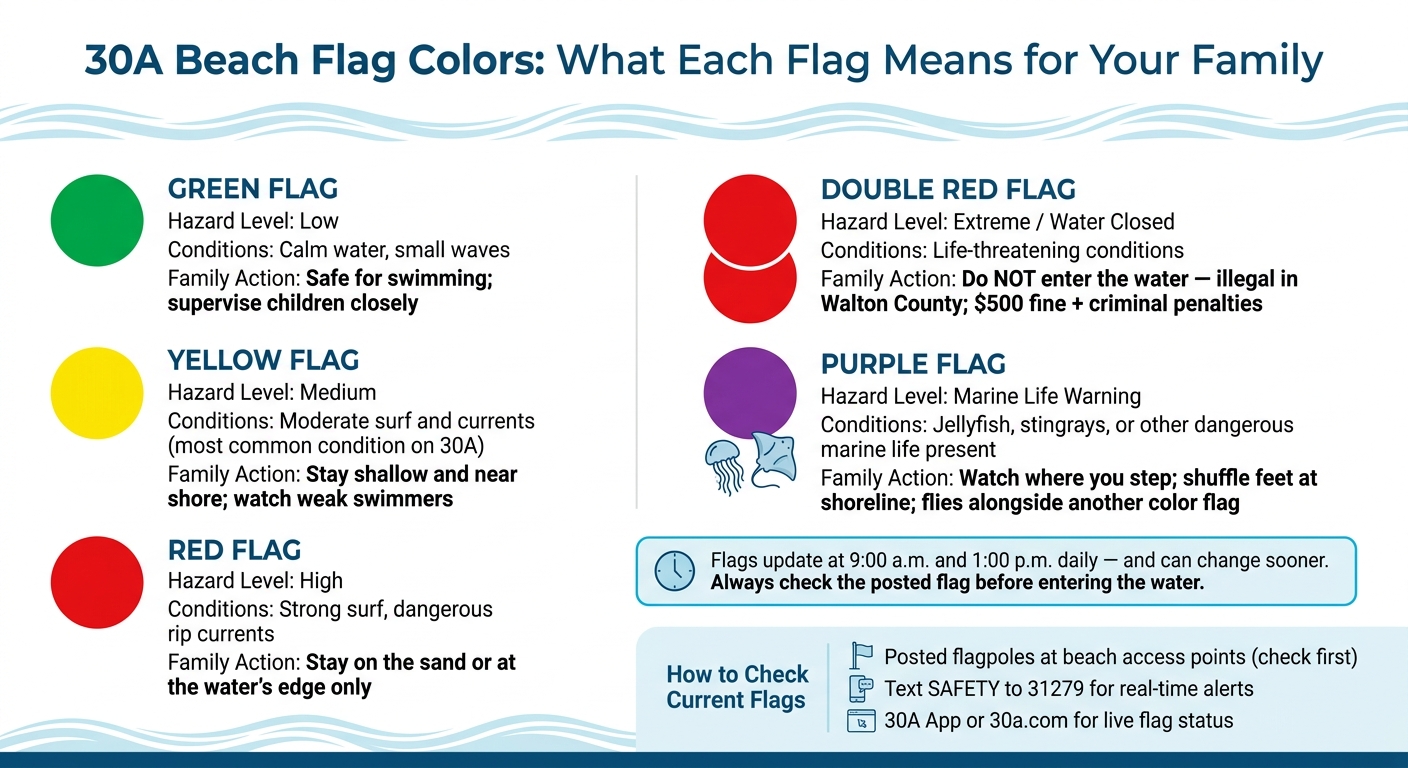
30A Beach Flag Colors: What Each Flag Means for Your Family
Beach Warning Flags Explained | Flag Facts
sbb-itb-d06eda6
What each 30A beach flag color means
Walton County's beach flag system uses five colors to show current Gulf conditions. Here's a simple guide to what each one means and how your family should respond.
| Flag Color | Hazard Level | Typical Conditions | Family Recommendation | Local Rule |
|---|---|---|---|---|
| Green | Low | Calm water, small waves | Safe for swimming; supervise children | Exercise caution |
| Yellow | Medium | Moderate surf/currents | Stay closer to shore; watch weak swimmers | Most common condition on 30A |
| Red | High | Strong surf, dangerous rip currents | Stay at the water's edge or out entirely | Stay at the water's edge |
| Double Red | Extreme | Life-threatening conditions | Stay on the sand | Water closed; do not enter |
| Purple | Marine Life | Jellyfish, stingrays present | Watch for stings; move carefully | Flies alongside another color flag |
Green and yellow flags: low to moderate hazard
A green flag means calm water and small waves. That said, kids still need direct supervision. Low hazard doesn't mean no hazard.
A yellow flag means moderate surf and currents. This is the most common condition on 30A. The Gulf can look harmless and still be tough on young kids or weak swimmers, so it's smart to stay in the shallows or skip the water.
Red and double red flags: high hazard and water closure
When conditions get worse, the rules get stricter.
A red flag means high surf and strong rip currents are active. Keep everyone out of the surf and stay on the sand. At most, stay right at the water's edge.
Double red flags mean the Gulf is closed to swimmers. Entering the water under double red flags is illegal in Walton County and can result in fines.
Purple flag: dangerous marine life in the water
A purple flag warns of jellyfish, stingrays, or other dangerous marine life. It usually flies with another flag, not by itself. If you see one, move carefully at the shoreline and watch where you step.
Local beach rules and what families should do under each flag
Walton County rules for double red flags
Under double red flags, the water is closed to swimmers. In Walton County, going into the Gulf during these conditions is illegal and can lead to a $500 fine and criminal penalties.
What parents should do under each flag color
Once you know the flag color, the next step is simple: decide how close your family should get to the water.
| Flag Color | Action |
|---|---|
| Green | Normal caution; keep children close. |
| Yellow | Stay shallow and near shore. |
| Red | Stay on the sand. |
| Double Red | Do not enter the water. |
| Purple | Watch for stings and shuffle at the shoreline. |
Setting water rules with kids before reaching the beach
With younger kids, simple rules tend to work best. The stoplight method is easy to remember: green means go with caution, yellow means slow down and stay shallow, red means stay out, and double red means stay out entirely.
It also helps to make one habit non-negotiable. Let the first adult at the beach access call out the flag before anyone moves toward the water. Then assign one adult as the water watcher for every beach trip, even on green-flag days.
How to check current beach flag conditions on 30A
Where to find posted flags in South Walton
Knowing the colors helps, but that’s only part of it. Always check the current flag at the beach before anyone gets in the water.
SWFD manages more than 30 flagpole locations across 30A, with sites at Inlet Beach, Rosemary Beach, Seaside, Grayton Dunes, Blue Mountain Beach, and Ed Walline. Look for the flagpole near the beach access or lifeguard tower. That flag shows conditions for that specific stretch of beach.
Check the flag again when you arrive. Flags update at least twice a day, usually around 9:00 a.m. and 1:00 p.m., and they can change sooner if conditions shift. If there’s no flag posted at your access point, head to a staffed regional beach access like Miramar Beach, Ed Walline, or Santa Clara.
Where to check live flags
You can text "SAFETY" to 31279 to get flag changes and safety warnings sent to your phone. Message and data rates may apply.
If you want a quick visual check, the free 30A app shows current flag status and safety tips. The 30a.com beach flag page also shows the current flag color, live webcams, and a "Last Changed" timestamp. Before you trust any online dashboard, look at the latest timestamp first.
Use the sources in this order:
- Posted flag first
- Official alerts and apps after that
| Source | What It Provides | Update Frequency |
|---|---|---|
| Physical Flagpoles | Visual hazard level at your specific access point | Throughout the day |
| Text Alerts (31279) | Real-time flag changes and safety warnings | As conditions change |
| SWFD.org | Official surf conditions and lifeguard tower map | 9:00 a.m. and 1:00 p.m. daily |
| 30A App / 30a.com | Current flag status, safety tips, live webcams, and "Last Changed" timestamp | Live |
When sources don’t match, follow the more cautious warning.
Conclusion: Read the flags before every beach visit
With the flag meanings clear, the next move is simple: check the posted color before every swim and follow it.
On red-flag days, stick to the rule: "Knee-deep is too deep." If double red flags are up, going into the water can lead to a $500 fine and criminal charges. Purple flags can appear alongside surf flags to warn about dangerous marine life, such as jellyfish or stingrays.
A calm surface can still hide rip currents. Watch for murky water or gaps in the wave line. That’s why the posted flag matters more than a calm first glance.
Make the posted flag your first check at the beach access before you enter the water. For families, it’s the clearest local sign for when it’s safe to swim and when it’s time to stay out. Rely on the posted flag, not guesswork, before children enter the water.
FAQs
What if no flag is posted?
If no flag is posted, do not assume the water is safe. Check official local sources before you get in.
You can confirm current beach conditions on the South Walton Fire District website. You can also text "SAFETY" or "FLAG" to 31279 for updates. sowal.co shares helpful 30A beach safety info too.
Can flags differ by beach access?
No. Beach flag status is the same across the area and is updated by the South Walton Fire District at 9:00 AM and 1:00 PM.
That said, beach conditions can shift fast. So when you get to the beach, check the flag at your exact beach access. If it’s different from what you saw online earlier, follow the flag posted on site.
What should kids do in a rip current?
If a child gets caught in a rip current, stay calm. Don’t try to swim straight back to shore. Instead, float or tread water to conserve energy.
Once the current starts to ease, swim parallel to the shoreline to get out of it. If possible, turn toward the beach, wave your arms, and call for help.
Never go into the water to try to help. Call 911 right away.