Alys Beach Development: Lessons for 30A
Alys Beach’s compact, FORTIFIED homes, dune preservation, and decentralized stormwater systems offer a model for resilient coastal development along 30A.
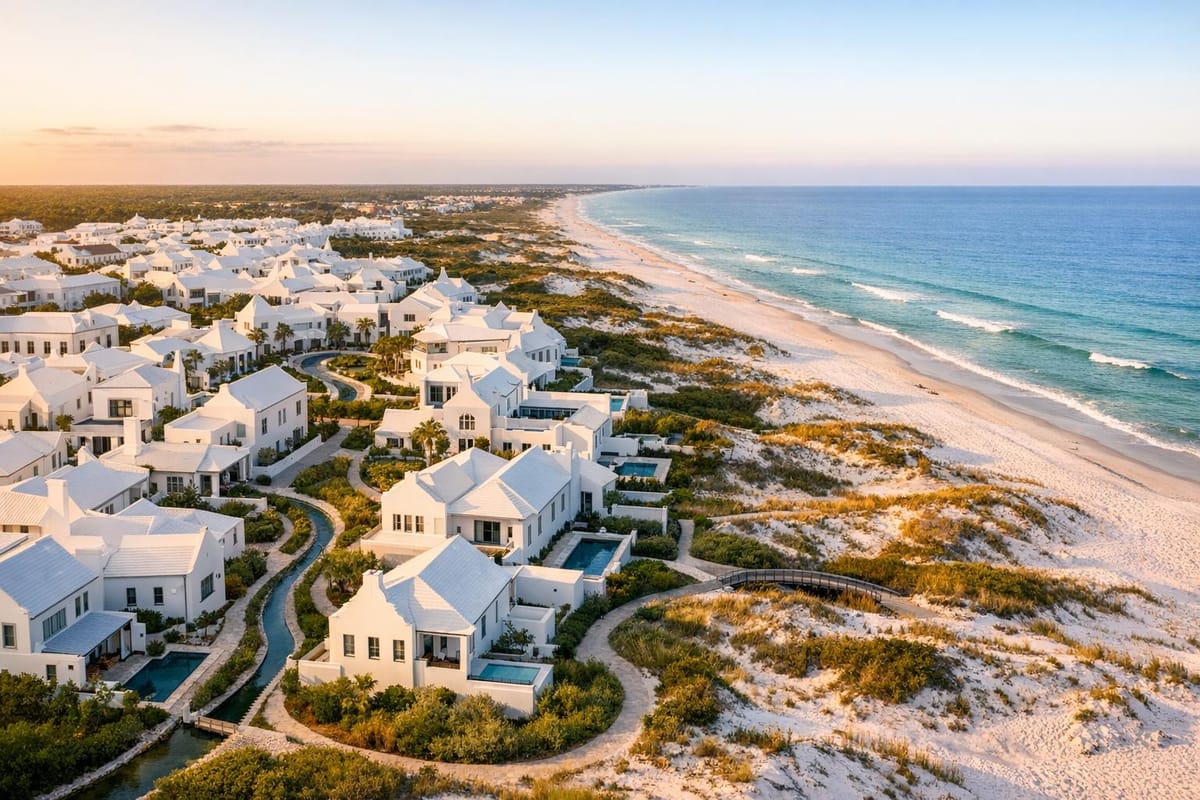
Alys Beach on Florida's 30A is a model for blending smart design with resilience. Unlike neighboring towns, its all-white architecture and compact layout prioritize durability and nature. Key highlights:
- Resilient Construction: Homes meet FORTIFIED standards, withstanding 160+ mph winds.
- Eco-Friendly Design: Cobblestone streets manage stormwater; wetlands and dunes are preserved.
- Walkability: Parking is kept on the outskirts, encouraging pedestrian movement.
- Efficient Layout: Streets align with the Gulf for breezes and views, while townhomes cluster near the beach.
- High Property Value: Homes range from $2M-$6M, with features attracting year-round residents.
Alys Beach proves that compact, durable communities can protect natural areas while driving economic growth. Developers along 30A can learn from its approach to planning, stormwater management, and construction standards.

Alys Beach Key Features: Resilient Design, Environmental Strategies, and Community Impact on 30A
Alys Beach 20th Anniversary Film

Planning and Design Approach
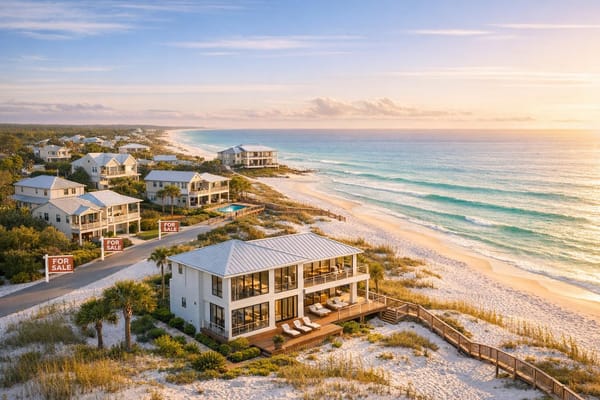
Alys Beach is a community that combines striking aesthetics with thoughtful, practical design to create a walkable and environmentally conscious neighborhood. Its layout follows a rural-to-urban transect, a principle of New Urbanism that arranges density based on proximity to the beach. Larger homes are situated near a 20-acre wetland preserve on the northern edge, while townhouses and mixed-use buildings are clustered closer to the Gulf. This gradual transition fosters a walkable, human-scale environment where residents typically drive only 6–8 times per week, a stark contrast to the 6–8 trips per day common in suburban areas.
New Urbanist Planning Principles
Covering 158 acres, Alys Beach prioritizes walking over driving. Parking areas are located on the outskirts, leaving the interior free for narrow promenades and cobblestone streets that encourage pedestrian movement. At the heart of the community is a mixed-use town center, featuring retail shops and apartments, creating a vibrant space where residents can live, work, and relax.
One unique aspect of Alys Beach is its "architectural gift" tradition. Homeowners are encouraged to add a public feature - like a fountain, bench, or planter - that enhances shared spaces. As Town Architect Marieanne Khoury-Vogt puts it:
"We do the best we can to make sure that every house is enhancing the public realm and not necessarily taking away from it".
These thoughtful planning principles are seamlessly complemented by architectural choices tailored to Florida's climate.
Architecture and Climate Response
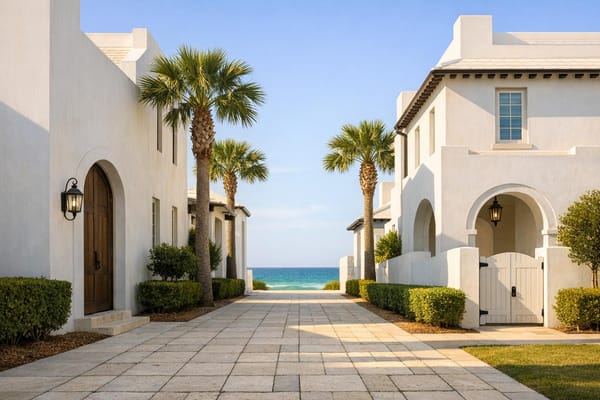
The community’s all-white masonry homes are as functional as they are visually striking. The high-albedo surfaces reflect sunlight, reducing cooling costs during Florida's hot summers. Reinforced masonry and cast-in-place concrete provide thermal mass, absorbing heat during the day, while shallow eaves minimize wind uplift during storms. Roofs, made of concrete tiles, are secured with a five-part system for added durability.
Inspired by Antigua, Guatemala, many homes are built around private courtyards. These shaded, ventilated spaces offer relief from the heat and provide protection from coastal winds. Additional features, like zaguáns - covered passageways connecting the street to private areas - and sealed, insulated attics, further enhance the energy efficiency and comfort of these homes.
Beyond individual structures, the design of streets and public areas plays a crucial role in fostering community and addressing environmental challenges.
Street Layout and Public Spaces
The streets of Alys Beach are laid out perpendicular to the Gulf of Mexico, a deliberate design choice that preserves water views for inland homes, channels cool sea breezes throughout the neighborhood, and provides natural drainage for storm surges. Galina Tachieva, Managing Partner at DPZ CoDesign, highlights the importance of this orientation:
"The streets are perpendicular to the beach, which invites natural breezes up along every street and deep into the site".
Cobblestone streets further support natural water drainage, while small pocket parks scattered throughout the community offer green spaces for relaxation. The waterfront plaza, complete with an open-air auditorium, serves as a central gathering spot for both residents and visitors, reinforcing a sense of connection and community.
Environmental and Resilience Strategies
Alys Beach’s 30-foot elevation isn’t just a geographical feature - it’s part of a carefully considered design. The master plan prioritizes protecting the coastal dunes, which act as a natural barrier against storm surges, and includes a 20-acre wetland preserve on the inland side. Inspired by the "Seaside model", the development intentionally avoids building directly on the shoreline to safeguard the delicate dune ecosystem. Additionally, the community actively restores these dunes, ensuring they remain both a critical ecological habitat and a defense mechanism for the coast. These foundational efforts pave the way for the forward-thinking environmental strategies outlined below.
Dune and Natural System Preservation
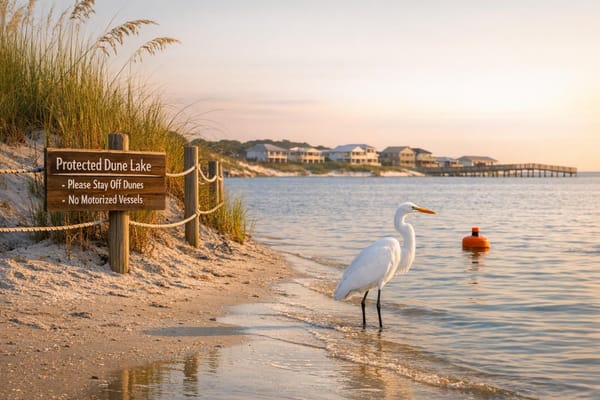
Alys Beach’s environmental approach goes beyond aesthetics, focusing on preserving natural defenses. The community maintains 1,500 feet of untouched beachfront, enhanced with native landscaping that thrives with minimal irrigation. Developers selected resilient native plants, capable of withstanding salt, wind, and drought, which not only conserve water but also maintain the natural beauty of the Florida Panhandle's evolving coastal towns. By concentrating 899 units within 159 acres, the design leaves significant areas of nature undisturbed. Galina Tachieva, Managing Partner at DPZ, highlights the importance of this compact layout:
"The compactness of these communities is the number one condition for being environmentally responsible, because then you can leave nature alone".
Stormwater Management Systems
Instead of relying on large, centralized detention ponds, Alys Beach employs a decentralized stormwater management system that mimics the site’s natural hydrology. Cobbled streets layered over deep gravel allow about one-third of rainwater to seep directly into the ground, replenishing the water table. Each home is also required to manage its own stormwater runoff before connecting to the broader community system. Features like bioswales, rain gardens, retention ponds, and vegetative buffers work together to treat runoff throughout the development. Additionally, the perpendicular street layout ensures efficient drainage during heavy rainfall or storm surges.
FORTIFIED Construction Standards

Alys Beach doesn’t just focus on sustainability; it also prioritizes resilience. It became the first community globally to require that all buildings meet FORTIFIED Home standards established by the Insurance Institute for Business & Home Safety. These structures use a "continuous load path" system to safely transfer wind forces exceeding 160 mph into the ground. Town Architect Marieanne Khoury-Vogt emphasizes the strength of these buildings:
"You can shoot a two-by-four at 150 miles per hour and you're not going to penetrate your building envelope".
Despite the reinforced masonry and concrete construction increasing costs by about 5%, the investment pays off. Homes in Alys Beach range from $2 million to over $6 million, and owners receive a five-year designation certificate from IBHS after a thorough third-party evaluation.
Impact on South Walton
Alys Beach has made a noticeable mark along the 30A corridor, blending forward-thinking planning with environmentally conscious strategies. This community has not only elevated property values but also reimagined what coastal living can look like. With its high design standards, FORTIFIED construction, and walkable New Urbanist layout, Alys Beach has become one of the most sought-after addresses on 30A. Its property values consistently outshine much of the surrounding market. This success has proven that resilient coastal development is a smart investment, inspiring nearby developers and homeowners to embrace similar green-building and resilient strategies to stay competitive. On top of that, the insurance benefits tied to Alys Beach's construction standards have become a strong selling point, bolstering buyer confidence and supporting long-term growth.
Economic Effects on Real Estate and Tourism
Designed as a luxury resort community with over 500 homesites, retail spaces, and hospitality venues, Alys Beach has significantly boosted 30A's appeal. Its distinctive architecture, thoughtfully designed public areas, and dynamic events have drawn visitors who are looking for more than the typical condo resort experience. Instead, they’re seeking a design-focused, walkable beach town. This approach has also helped stabilize tourism throughout the year, as many property owners and visitors use Alys Beach as a vacation spot or even a part-time home for remote work, reducing the seasonal ebb and flow of tourism along the Gulf Coast.
By clustering luxury homes, rentals, retail outlets, and hospitality venues within a compact, walkable area, Alys Beach has created an economic hub that supports a wide range of jobs. From construction and maintenance to food service, retail, event management, and professional services, the community generates opportunities across various sectors. Its focus on long-term durability and meticulous upkeep ensures ongoing demand for skilled trades and property management services, extending economic benefits well beyond initial construction. Moreover, the strong Alys Beach brand draws visitors to explore nearby 30A communities for dining, shopping, and recreational activities, creating a ripple effect of spending across South Walton.
This economic vitality has also contributed to a rich and thriving social atmosphere.
Community Engagement and Social Life
Alys Beach was designed to encourage connection and interaction. Its compact, pedestrian-friendly layout features plazas, courtyards, and streets that invite walking and gathering. Streets running perpendicular to the beach not only channel refreshing breezes but also frame picturesque views, creating a welcoming public space where people naturally come together. The courtyard-style homes and abundant public areas promote outdoor living and foster a sense of community, steering away from the isolation often associated with high-rise resorts.
The community comes alive with regular events and festivals, including art showcases, culinary experiences, and cultural programs. These gatherings transform public spaces into vibrant hubs of activity, drawing both residents and visitors into the social fabric of Alys Beach. Since the pandemic, many vacation properties have shifted to year-round or extended stays, increasing the number of permanent and semi-permanent residents. This change has deepened local ties, with residents investing more in schools, services, and civic initiatives across South Walton, extending their engagement beyond the peak tourist season.
Density and Conservation Balance
Alys Beach’s compact design doesn’t just benefit its residents - it also prioritizes the environment. The community has preserved an additional 20 acres of wetlands, striking a deliberate balance between development and nature. By concentrating buildings and infrastructure within a smaller footprint, much of the site’s dunes, wetlands, and natural ecosystems remain untouched or are restored. Streets aligned perpendicular to the beach help maintain natural wind and water flow, enhancing thermal comfort, improving stormwater management, and preserving the coastal dune ecosystem. This careful planning demonstrates that higher density, when done thoughtfully, can actually reduce sprawl and protect sensitive habitats.
The Alys Beach approach proves that resilient coastal development can fuel economic growth, encourage community involvement, and safeguard natural resources. This well-rounded model has left a lasting impression on South Walton and serves as an inspiring example for future projects along the 30A corridor.
Lessons for Future 30A Development
Alys Beach stands as a prime example of how thoughtful planning can balance profitability with environmental care. Spanning just 158 acres, its compact, pedestrian-friendly design highlights the value of preserving natural features while creating a resilient community. As Florida faces mounting challenges from its insurance crisis and increasing climate risks, these lessons are more relevant than ever for those developing or investing along the 30A corridor.
Designing Resilient Communities
At the heart of Alys Beach's success is its compact design. By concentrating development into a smaller footprint, the project was able to protect dunes, wetlands, and coastal ecosystems. Galina Tachieva of DPZ CoDesign underscores this approach, stating that "compactness is key to environmental responsibility" because it minimizes disruption to natural areas. Future developments along 30A can follow this lead by focusing construction on sites under 30 feet above sea level while safeguarding sensitive areas behind the dunes.
The layout of Alys Beach also incorporates streets running perpendicular to the shoreline, a design that channels cooling breezes and provides sweeping ocean views. Landscape architect Patrick Hodges points out that "permeable pavers are ideal for stormwater management in New Urbanist resorts", as they mimic the natural water cycle while enhancing visual appeal. Pairing these pavers with features like bio-swales, rain gardens, and retention ponds can further control runoff and promote sustainability.
Architecture plays a pivotal role in climate resilience as well. Alys Beach’s signature white buildings reflect sunlight, while its courtyard-style homes, inspired by Antigua Guatemala, create shaded areas that improve thermal comfort. Erik Vogt explains that these "occupiable courtyards" not only provide natural cooling but also offer protection during storms.
Long-Term Maintenance and Stewardship
Creating resilient infrastructure is only part of the equation - ensuring its upkeep is equally important. Alys Beach employs Community Development Districts (CDDs) and homeowners associations (HOAs) to maintain green infrastructure, replenish dunes, and enforce resilient building standards. These organizations are vital for overseeing features like bio-swales and permeable pavers, ensuring they remain functional over time.
In the face of Florida’s insurance challenges, this model of long-term stewardship has proven effective. Properties in Alys Beach consistently perform well during inspections and reserve studies, maintaining investor confidence and property values. Future 30A developments can adopt similar practices by requiring FORTIFIED construction standards, setting up reserve funds for maintenance, and using CDDs to enforce quality standards. These governance structures are critical for sustaining resilience and protecting property values as new projects emerge.
Applying the Alys Beach Model
The design and environmental strategies behind Alys Beach offer clear guidance for future projects. Developers should prioritize high-density, walkable layouts that preserve natural features, creating communities that are both pedestrian-friendly and environmentally conscious. Aligning streets perpendicular to the coast not only enhances natural ventilation but also maximizes scenic views for residents.
Decentralized stormwater solutions, such as permeable pavers, bio-swales, and rain gardens, can be scaled to fit neighborhoods of any size, offering both ecological and practical benefits.
Finally, the establishment of strong governance structures is crucial. Empowering CDDs and HOAs to enforce standards, collect fees, and manage infrastructure ensures that resilience features remain effective long after construction is complete. This approach protects the environment, maintains property values, and preserves the unique charm that defines the 30A corridor.
Conclusion
Designing with resilience and care for natural systems brings tangible benefits: lower insurance premiums, higher property values, and stronger, more connected communities. Alys Beach, a 158-acre development, stands as the world's first FORTIFIED for Safer Living® community, proving that prioritizing natural systems and creating compact, walkable neighborhoods generates enduring value. This approach has shaped both economic and environmental advantages for the 30A corridor.
The growing trend of year-round residency along 30A highlights increasing demand for communities that blend natural beauty with thoughtful, durable design. As Florida faces mounting insurance challenges, the lessons from Alys Beach become even more critical. Galina Tachieva of DPZ CoDesign summed it up well, advocating for compact development that respects the environment: "leave nature alone". By combining this principle with FORTIFIED construction standards and green infrastructure, Alys Beach offers a clear model for resilient coastal living - a model that raises the bar for future developments along 30A.
For those considering a move to 30A or exploring investment opportunities, the design principles of Alys Beach are worth noting. Features like perpendicular street layouts that enhance natural cooling and the preservation of dunes at 30 feet above sea level for storm protection are key elements to look for. These measures ensure resilience over time, safeguarding both investments and the unique coastal character of the area.
For more insights into 30A communities that embrace these sustainable, resilient practices, visit sowal.co.
FAQs
What makes Alys Beach's design resilient to natural disasters?
Alys Beach is built with durability at its core, combining strict construction standards, purposeful design, and smart site planning. Homes adhere to FORTIFIED standards, featuring reinforced masonry and roofs designed to endure strong winds and storm surges. To combat heat, white-washed walls and reflective tile roofs are used, while gravel streets help rainwater seep into the ground, reducing flood risks.
The community also protects natural defenses like dunes and wetlands, which serve as barriers against storms. Its narrow pathways, courtyard-style homes, and shaded public spaces create comfortable microclimates, even in harsh weather conditions. These thoughtful features not only boost safety and resilience but also preserve Alys Beach's distinct character, setting an example for coastal development along the 30A coastline.
How does Alys Beach's eco-friendly design benefit the local economy?
Alys Beach stands out for its carefully planned, pedestrian-friendly design and dedication to eco-conscious living. This approach not only adds to its appeal but also delivers clear financial perks. The community's compact layout reduces infrastructure and upkeep expenses, while its focus on sustainability increases property values, cementing its reputation as one of Florida's most desirable neighborhoods.
For both homeowners and developers, these attributes mean solid financial gains and lasting stability. Alys Beach serves as a prime example of how well-thought-out, sustainable planning can drive both economic growth and environmental responsibility.
How does Alys Beach’s design promote energy efficiency and sustainability?
Alys Beach has been meticulously designed with a focus on energy efficiency and environmental care. Its iconic white walls and roofs aren’t just for aesthetics - they come with a reflective finish that helps bounce off heat, cutting down the reliance on air conditioning. The use of thick masonry walls and concrete construction adds thermal mass, naturally regulating indoor temperatures and keeping spaces comfortable.
The community also integrates eco-conscious features, like cobblestone streets that let rainwater seep into the ground and native plants that thrive with little to no irrigation. These thoughtful choices don’t just save resources - they’ve also earned Alys Beach the distinction of being the first "green development" in northwestern Florida. This coastal community seamlessly combines stunning design with a commitment to the planet.