
The Arc Emerald Coast: Walton Family Guide
Walton County guide to Arc Emerald Coast services: programs, eligibility, intake steps, and paperwork to prepare.
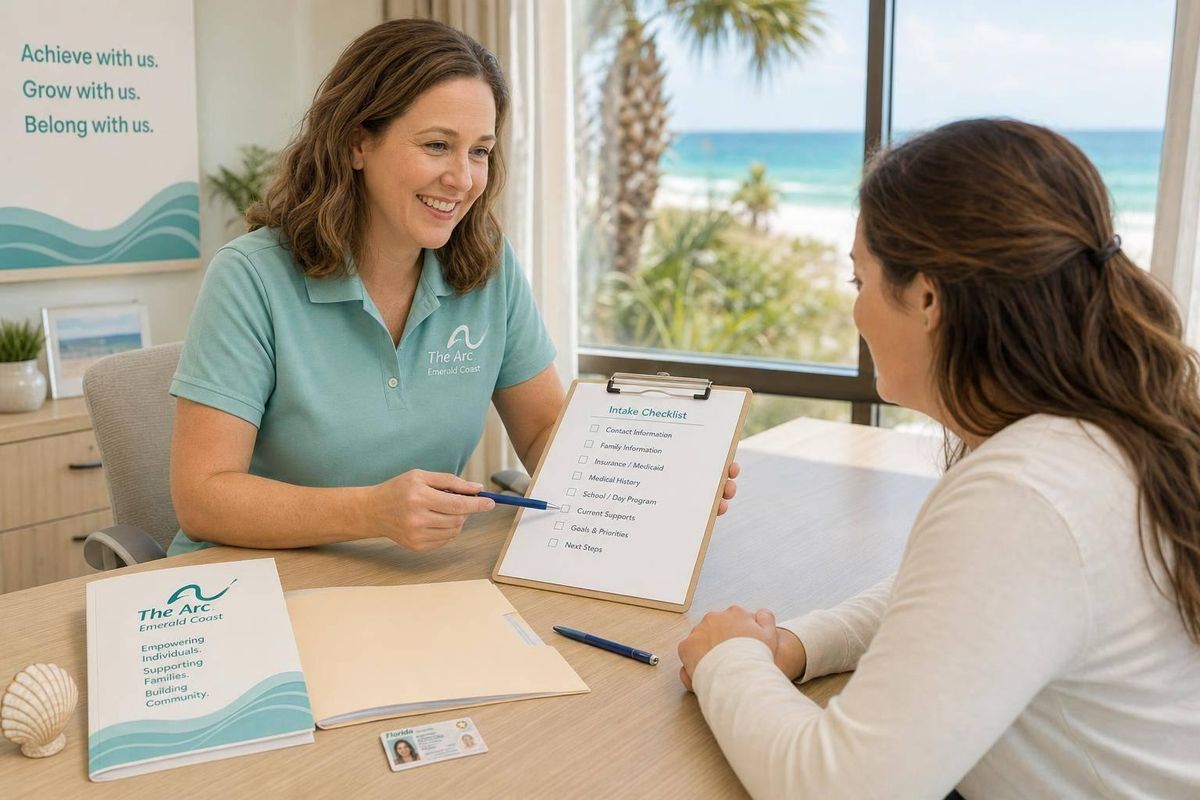
If you live in Walton County and need disability support, The Arc of the Emerald Coast may be a fit for both children and adults. It serves Walton, Okaloosa, and Santa Rosa counties and may help with early intervention, school-age care, job support, adult day training, respite, behavior services, transportation, and housing support.
Here’s the short version:
- Who it serves: Children and adults with intellectual or developmental disabilities
- Main service areas: Walton, Okaloosa, and Santa Rosa counties
- What Walton families should do first: Call and ask which services are available in Walton County and which require travel to Fort Walton Beach or Milton
- What to have ready: Diagnosis records, IEP/504 plans, therapy notes, Medicaid waiver or APD details, and your top 2–3 needs
- When to call: When delays, behavior issues, school transitions, adult planning, or caregiver stress start affecting daily life
- One stat that stands out: In a Florida caregiving study, 41% of family caregivers said respite would help, but 87% had never used it
The big point: don’t wait for a crisis. If you need help with school, home life, work, or adult services, an early call can help you figure out eligibility, waitlists, travel needs, and next steps.
I’d treat this article as a simple starting guide: what The Arc does, who may qualify, what records to gather, and what Walton families should ask during intake.
What The Arc of the Emerald Coast Does in Walton County
Its Role in Family Support and Disability Services
Founded in 1955, The Arc of the Emerald Coast is a regional disability service and advocacy nonprofit with a mission to help people move from disability to capability. It offers direct services and supports people seeking independence, inclusion, and access.
For families in Walton County, that can mean help with school supports, employment, and day-to-day living needs or finding social groups for new residents. In plain terms, it’s the kind of support many families look for when they’re trying to figure out what help is out there and how to get it.
Walton County Coverage and Regional Service Areas
Local access depends on the program. The Arc of the Emerald Coast serves Okaloosa, Santa Rosa, and Walton Counties, with its main office at 123 Truxton Ave. in Fort Walton Beach and adult day training centers in Fort Walton Beach and Milton.
Some services, like birth-to-three support and certain in-home services, may be available in Walton County. Other programs, including adult day training, residential care, and aquatic or education center services, usually mean traveling to Fort Walton Beach or Milton.
There’s one detail that matters a lot: some supports, including personal supports, are currently listed only for Okaloosa and Santa Rosa Counties. So if you live in Walton County, it’s smart to call first and check what’s offered close to home.
When you call, share your town or area name - DeFuniak Springs, Santa Rosa Beach, Miramar Beach, or the 30A corridor - so staff can confirm local options and explain any travel needs.
sbb-itb-d06eda6
Programs Walton Families May Be Able to Use
Early Childhood, Youth, and School-Age Support
Birth to Three Intervention brings support into the home through weekly visits. Staff watch how a child moves through everyday routines like meals, playtime, and bedtime, then work with occupational, physical, and speech therapists, plus care managers, to build a family support plan based on that child’s needs.
The Children's Center serves children from 6 weeks old through kindergarten. It’s a Voluntary Prekindergarten (VPK) provider and also offers extended care and summer programs. Children with and without developmental delays learn, play, and grow together, which gives kids chances to practice skills in a normal day-to-day setting. After-school care can also be set up around school dismissal times and therapy appointments.
Adult Services, Work Support, and Daily Living Help
As children get older, The Arc’s support moves from early learning into work and daily living.
The Arc runs two weekday ADT centers: one in Fort Walton Beach, serving about 82 people, and one in Milton, serving about 22. Participants build practical skills like meal prep, money management, hygiene, and community participation. They also take part in art, bowling, and community outings, with each activity tied to personal goals.
Six Employment Specialists support just over 100 people served with job placement, resumes, interviews, coaching, and follow-up. Funding may come through Medicaid Waiver, Vocational Rehabilitation, or the Social Security Ticket to Work program, depending on eligibility. For teens, that can make the shift from school to work a little less bumpy.
Supported living and group home options are also available for adults who need more structure. Supported living helps people manage a home or apartment with support for budgeting, chores, and getting out into the community. Group homes provide 24/7 support for people with higher support needs.
Behavior Support, Respite, Transportation, and Personal Care
Some families use these services alongside day programs, school support, or employment help.
These services can help keep routines steady at home, at school, and out in the community.
| Support Type | What It Does | Who It Helps Most |
|---|---|---|
| Respite Care | Trained staff covers care at home or an Arc home | Caregivers needing a break |
| Behavior Support | Assessment, behavior plans, caregiver coaching | Families managing challenging behaviors |
| Transportation | Accessible van rides to programs, work, community | Adults in day training or employment |
| Personal Support | Help with hygiene, feeding, daily tasks, outings | Individuals needing hands-on daily assistance |
A caregiving study focused on Florida found that 41% of family caregivers say respite care would be helpful, yet 87% have never used it. That gap says a lot. Many families need help but haven’t been able to tap into it. A higher-support in-home option is also available for those who need more intensive help at home.
These supports can ease pressure on caregivers and make day-to-day life run with fewer disruptions.
Intake helps match your family to the right service.
How Share the Love Helps ARC of the Emerald Coast
Who These Services Are For and How Intake Works
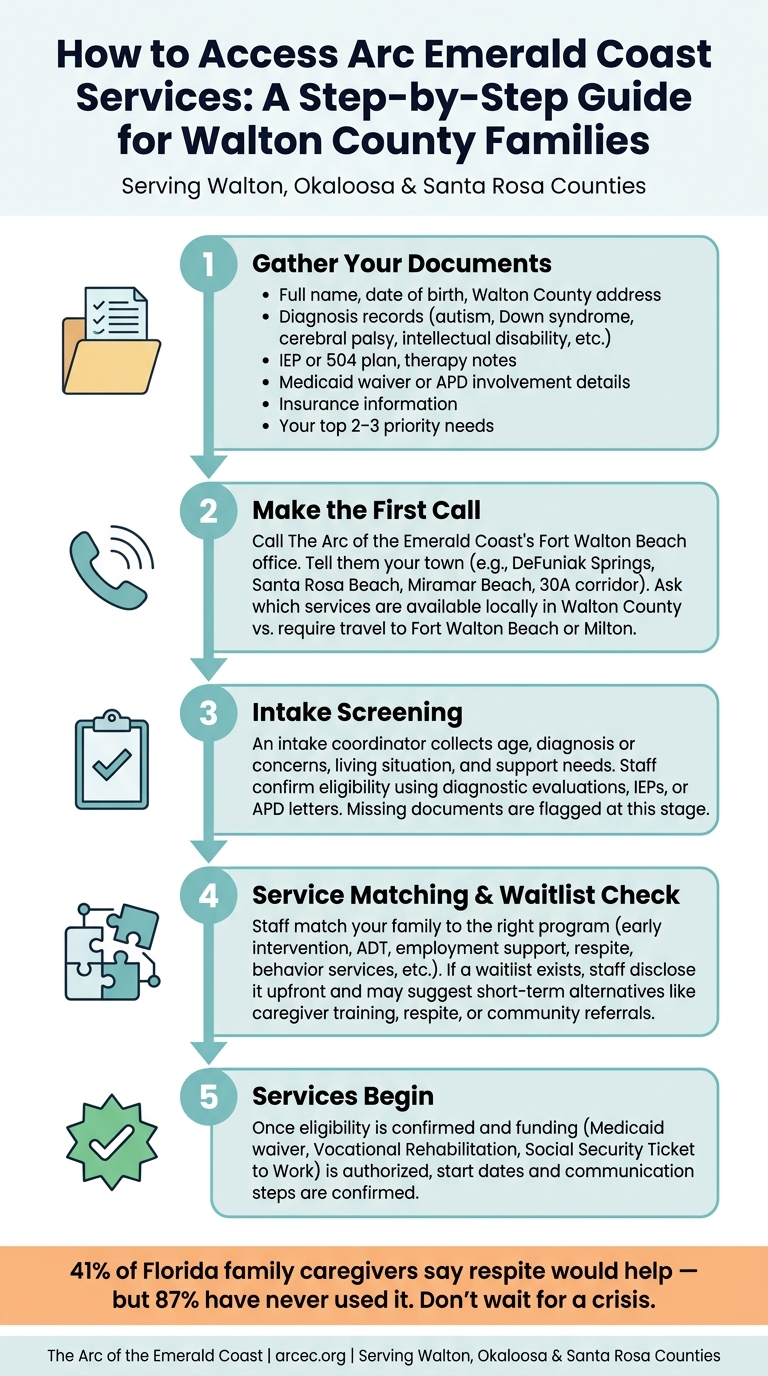
How to Access Arc Emerald Coast Services: Walton County Family Guide
Children, Adults, and Caregivers Who May Benefit
Once families know what’s out there, the next step is figuring out who should go where. In Walton County, families often reach out when a child or adult has an intellectual or developmental disability. Caregivers can also get help, especially when they’re juggling appointments, paperwork, and care across home, school, doctors, and state agencies. In those cases, care coordination and caregiver support during intake can make a big difference.
Many families contact The Arc after a child is diagnosed with autism spectrum disorder, Down syndrome, cerebral palsy, or intellectual disability. Others reach out when developmental delays are starting to affect learning, communication, social interaction, or day-to-day routines. Adults may also be a fit for Arc programs if they need help with daily living skills, community inclusion, transportation, or supported employment.
What to Prepare Before Your First Call
Before you make the first call, keep it simple. You usually just need the basics:
- The person’s full name, date of birth, and Walton County address
- A short summary of current concerns, like behavior, self-care, communication, or work issues
- Any services already in place, such as an IEP, private therapy, Medicaid waiver status, or Agency for Persons with Disabilities involvement
- Insurance or waiver details, if you have them, since many Arc programs may be funded through Florida Medicaid waiver and staff need to know what support is already in place
It also helps to know your top two or three needs right now. That could be school support, help at home, job coaching, or something else. Giving staff a short priority list helps them focus on what matters most in that first conversation.
What Happens After Intake
After intake begins, staff look at whether the person fits a certain program and what support can start next. The process usually begins with a phone call to the Fort Walton Beach office. During that first conversation, an intake coordinator collects basic details, such as age, diagnosis or current concerns, living situation, and the type of help you’re seeking, to see whether Arc programs are a match.
Next, staff confirm eligibility using documents like diagnostic evaluations, school IEPs, or APD letters. If something is missing, they can point out what still needs to be turned in. Once eligibility is confirmed, staff connect services to the person’s needs and go over start dates and communication steps.
If a program has a waitlist, staff should tell you that upfront. They may also talk through short-term options, such as caregiver training, respite, or community referrals while you wait. Funding timelines can also slow things down, especially when Medicaid waiver authorization through APD is part of the process. That’s why it helps to ask about timing early, so Walton families can plan around work, school, and everything else already on the calendar.
When to Ask for Help and Key Points for Walton Families
Signs It Is Time to Reach Out
After intake and service options, the next step is simple: when should a Walton family call? The short answer is this: call when a concern keeps showing up, not only after one bad week. If your family may need early intervention, behavior support, respite, or adult services, timing can shape what help is available and how soon it starts.
A toddler who is consistently behind in talking, walking, or play skills is a clear reason to reach out, especially during the birth-to-three years, when early intervention is offered. The same goes for a school-age child whose behavior is getting more frequent, more intense, or unsafe at home, at school, or in the community. Big school changes also matter. Moving from preschool to elementary school, middle school to high school, or getting close to graduation are all points when it makes sense to call early.
Caregiver strain is another sign people often push aside for too long. If no one is sleeping, siblings keep getting pushed to the side, or safety worries are becoming part of daily life, ask about respite or in-home support before things boil over.
These situations usually call for early contact, not waiting.
Common triggers for calling:
| Situation | When to reach out | Why it matters |
|---|---|---|
| Missed developmental milestones | As soon as concerns appear | Early services can support development and family planning. |
| Behavior affecting school or home | When patterns start to interfere with daily life | Behavior and family supports may prevent escalation. |
| Transition to adulthood | By mid-teens | Adult services and supported living take time to arrange. |
| Caregiver burnout or safety concerns | Before the household reaches a crisis point | Early support can help prevent a crisis and protect safety. |
Key Points to Remember Before Contacting the Organization
Before you call, get clear on one main need. That helps intake point you in the right direction faster. Confirm that you live in Walton County, then ask which services are handled locally and which ones are handled through Fort Walton Beach or Milton. If travel is hard, say that up front and ask what can be done nearby versus what may require trips to another office.
It also helps to bring only the records tied to your main concern. Too much paperwork can slow the conversation down. Lead with the top issue first, then ask which program fits best.
If there is immediate danger, homelessness, or a caregiver in extreme duress, treat it as a crisis and contact the APD regional office that serves Walton County.
FAQs
Do I have to travel outside Walton County for services?
It depends on the service. Many types of support are available right here in Walton County, but some specialized programs cover a larger area or are based in nearby counties.
For day-to-day needs, local help may be all you need. But for transportation, medical care, or other specialized services, it’s smart to check each provider’s service area before you make plans.
What documents should I gather before intake?
Before intake, gather organized copies of:
- personal identification
- relevant medical or disability records
- proof of age or residency
Requirements can vary based on your needs and the services you're seeking. To avoid delays, contact The Arc directly or review its official guidance before your scheduled intake.
How long do waitlists and approvals usually take?
Wait times and approvals in Walton County depend on the program.
Some school-related enrollment reviews can take up to 2 weeks. Some community service applications may take up to 21 business days.
Other programs, including many assisted living services, can take longer because spots are limited. It’s smart to contact the specific provider early to ask about current timelines and application requirements.