Beach Renourishment on 30A: What You Need to Know
Overview of 30A beach renourishment: sand sources, timeline, costs, environmental protections, public access, and what residents and visitors can expect.
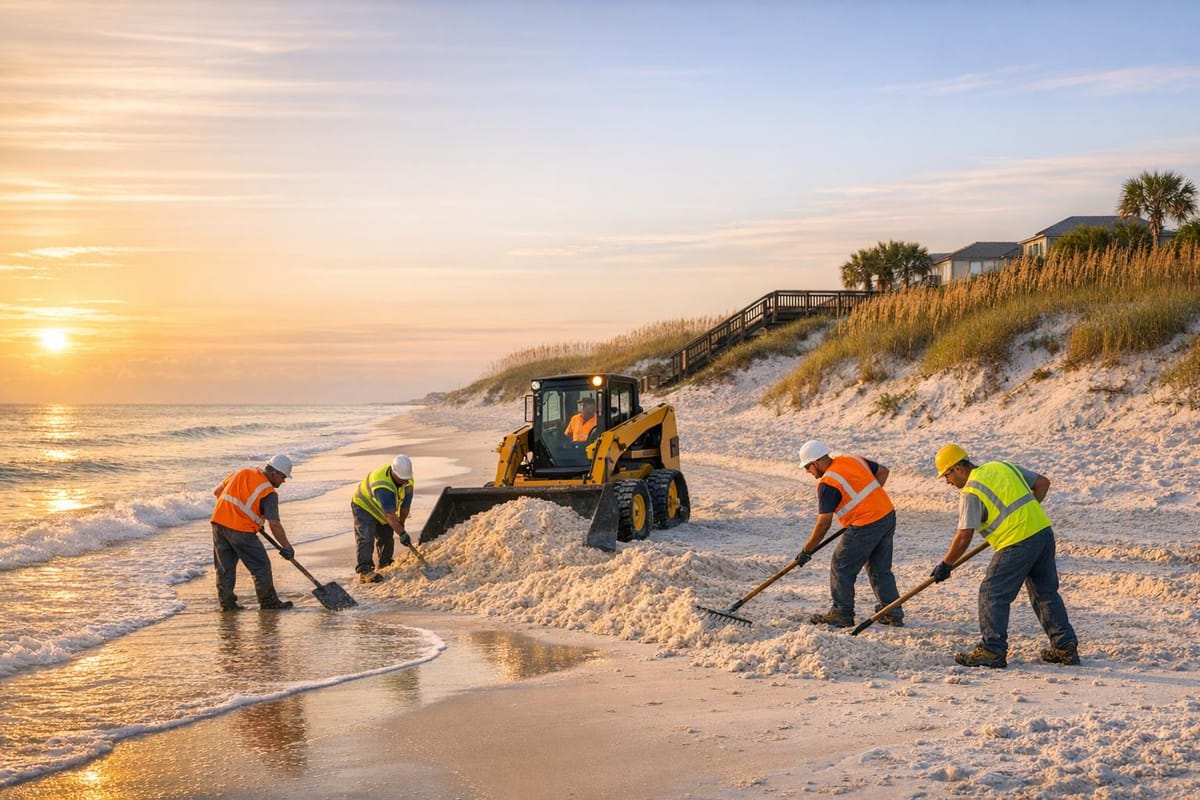
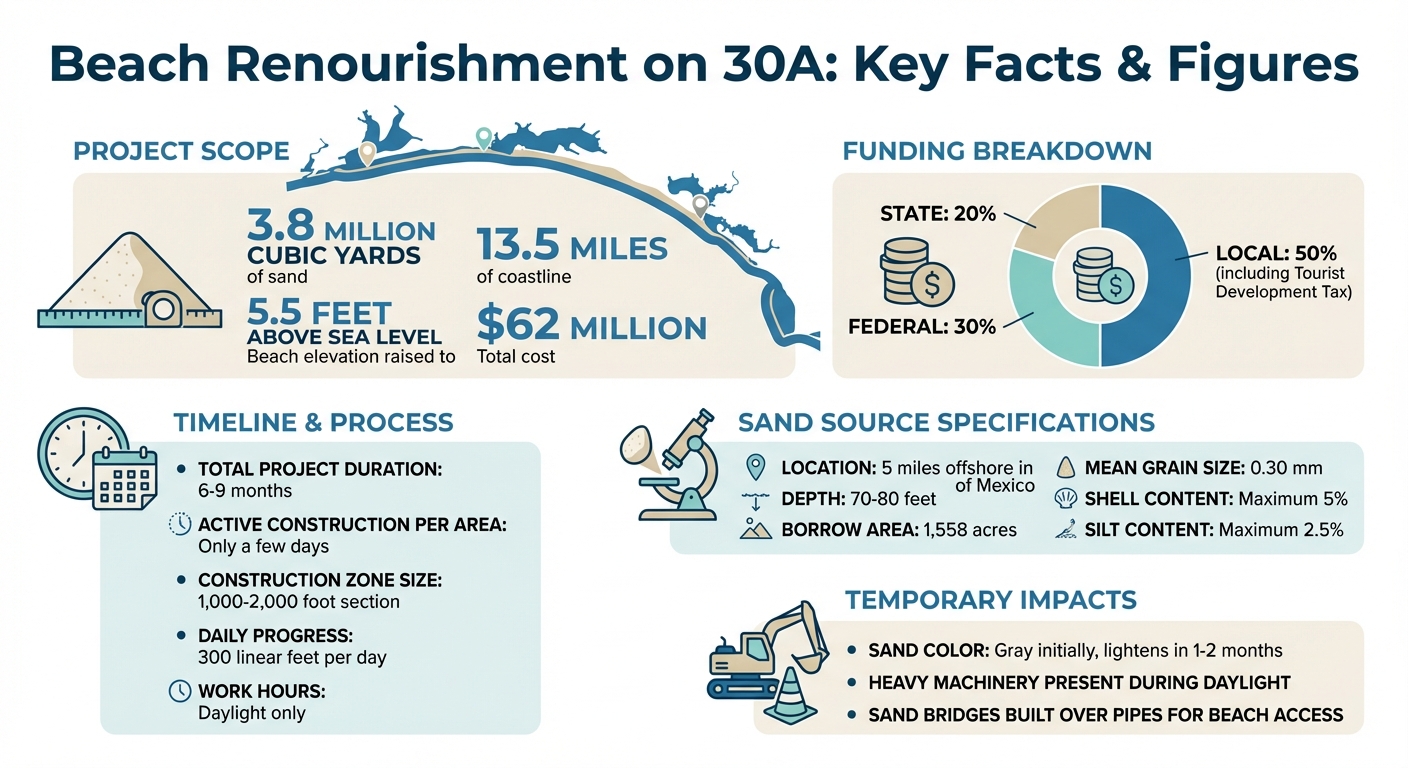
Beach renourishment on 30A is a large-scale project aimed at combating erosion, protecting coastal properties, and preserving the local economy. Walton County plans to add 3.8 million cubic yards of sand along 13.5 miles of coastline, raising the beach elevation to 5.5 feet above sea level. This initiative, costing approximately $62 million, is funded by federal (30%), state (20%), and local (50%) contributions, including the Tourist Development Tax.
Here’s what you should know:
- Why it’s needed: Erosion, hurricanes, and rising sea levels threaten both natural habitats and infrastructure.
- Process: Sand is sourced from an offshore site, pumped onto the beach, and shaped by bulldozers. Construction is limited to daylight hours.
- Timeline: Projects take 6–9 months, with disruptions in specific areas lasting only a few days.
- Wildlife and legal considerations: Strict guidelines protect sea turtles and shorebirds, while public access is maintained under Florida’s Erosion Control Line (ECL) regulations.
- Impact: Temporary noise, machinery, and grayish sand (which lightens within two months) are expected during construction.
This effort ensures long-term protection for 30A’s beaches, benefiting both residents and visitors while safeguarding the local economy and ecosystems.
Beach Renourishment 30A Project Facts and Figures
How Beach Renourishment Works on 30A
Grasping the process behind beach renourishment helps highlight how it protects 30A's coastline for the future.
Where Does the Sand Come From?
The sand for 30A's beach renourishment is sourced from a designated offshore borrow area about five miles into the Gulf of Mexico. This area spans 1,558 acres and lies at depths of 70–80 feet. Engineers rely on over 50 vibracores, each 20 feet long, to ensure the borrowed sand matches the native beach. The sand must meet strict criteria for color, grain size, soil classification, and shell content. For example, the mean grain size is set at 0.30 mm, shell content must stay below 5%, and silt content cannot exceed 2.5%. The U.S. Army Corps of Engineers notes:
"Based on the extensive geotechnical investigations, the proposed borrow site has been demonstrated to be the most suitable source, and has sand color, size, and composition generally similar to that of the native beach".
How is the Sand Added to the Beach?
The process begins with a hopper dredge, which pumps sand through a submerged pipeline onto the beach as a slurry. Bulldozers then spread and shape the sand, while screening equipment removes shells and debris when necessary. Construction in Walton County is limited to daylight hours, with crews typically covering about 300 linear feet per day. A Sand Quality Control and Quality Assurance Plan ensures the sand meets required compatibility standards throughout the project. These detailed steps help keep the project on track.
How Long Does a Renourishment Project Take?
A full renourishment project along 30A usually takes 6 to 9 months to complete. However, the active construction zone is confined to a 1,000- to 2,000-foot section of beach at any given time, meaning most areas are only directly impacted for a few days . The timeline can vary based on factors like weather, including storms or rough seas, as well as equipment repairs or mechanical issues with the dredge or piping. Work begins after sea turtle nesting season, and contractors provide weekly updates on construction schedules once the project starts. To minimize disruptions, "sand bridges" are built over dredge pipes so beachgoers can still access the water during construction.
Environmental and Legal Factors
Beach renourishment operates under strict guidelines to ensure wildlife protection and respect for property rights. These measures aim to strike a balance between restoring coastlines, safeguarding ecosystems, and maintaining public access.
How Does Renourishment Affect Wildlife?
Beach renourishment can help rebuild marshlands and create habitats, but it’s not without challenges. The National Park Service warns that excessive sediment from these projects can suffocate benthic communities, which are vital to the coastal food chain.
To address such concerns, projects must adhere to Chapter 62B-55 of the Florida Administrative Code. This includes protective measures for marine turtles, such as regulating beachfront lighting. However, removing sediment from offshore borrow sites can disrupt marine ecosystems. To mitigate these risks, engineers conduct rigorous testing to minimize environmental impact.
Legal frameworks further bolster these environmental protections, ensuring compliance and accountability.
What is the Erosion Control Line (ECL)?
The Erosion Control Line (ECL) plays a key role in protecting 30A’s shorelines. It marks the boundary between state-owned land and private property, ensuring public access to beaches under Florida’s Public Trust Doctrine.
Property owners near the ECL are required to grant perpetual construction easements. These easements allow sand placement and guarantee the public’s long-term use of the restored beach. In June 2025, Governor Ron DeSantis signed Senate Bill 1622 at Shunk Gulley in Santa Rosa Beach, simplifying the process of establishing ECLs. The legislation removed the need for public easements on private beachfront properties, making the process more efficient. It also allocated $60 million in state funding, matched by $60 million in federal funds, to address 19 miles of Walton County’s critically eroded coastline - part of its 26-mile stretch.
How Does Renourishment Impact Public Beach Access?
Beaches restored with public funds must remain open to everyone for recreational use. The land seaward of the ECL is public property, where visitors can swim, walk, and relax. Senate Bill 1622 also reinstated local governments’ ability to recognize the "customary use" of dry sand beaches without requiring court approval. This gives Walton County more control over managing beach access.
While property owners cannot block access seaward of the ECL, visitors must use designated entry points to cross private upland areas. To locate official access points, visitors can use the Visit South Walton interactive beach access map.
These environmental protections and legal frameworks provide the foundation for understanding the broader impacts of renourishment on 30A’s beaches.
Pros and Cons of Beach Renourishment on 30A
Beach renourishment projects bring both benefits and challenges. Understanding these trade-offs is essential for residents and visitors to appreciate how these efforts impact the 30A community.
What Are the Benefits?
One of the most immediate advantages is storm protection. During hurricanes like Ivan and Michael, areas that had undergone renourishment suffered less damage to upland structures compared to non-renourished areas.
Another key benefit is economic preservation. These projects help maintain local tax revenue by protecting the coastline that draws tourists to the area. Additionally, renourishment creates wider beaches for recreation and restores habitats for wildlife, including sea turtles and shorebirds. As the City of Panama City Beach explains:
"These projects not only provide recreational beach width for the benefit of residents and visitors, but during storm events, the sand also provides critical protection for public and private structures".
A major financial advantage comes from federal support. Once a federal shore protection project is in place, the government often funds post-storm repairs to restore the beach. For instance, the 2021-2022 repair project in Panama City Beach, which cost $28.5 million, was fully funded by the federal government to replace sand lost to Hurricanes Michael and Sally.
While these benefits are clear, renourishment projects also come with notable challenges.
What Are the Drawbacks?
Cost is a significant hurdle. The City of Panama City Beach compares renourishment to infrastructure like roadways, emphasizing the need for ongoing maintenance:
"This beach nourishment management program is much like a roadway or other such infrastructure - once it is built, it must be maintained".
Another concern is sand quality. Some residents worry about differences between native sand and imported sand. The natural sand on 30A is nearly pure quartz, with an average shell content of just 0.23%, while nourishment sand can contain up to 5% shell content. The U.S. Army Corps of Engineers also notes that:
"Some discoloration of the sand would occur following placement due to the fact that the sands to be placed on the beach are coming from anaerobic environment. Natural bleaching of the sand should occur within one to two months".
Construction disruptions are another drawback. Although Walton County limits construction to daylight hours to minimize noise and inconvenience, the presence of heavy machinery can still be disruptive to residents and visitors.
Lastly, private property disputes often complicate renourishment projects. Some beachfront property owners resist granting construction easements to the U.S. Army Corps of Engineers, fearing these agreements could lead to loss of their land. Without these easements, federal projects cannot move forward. This resistance has created delays and challenges in past efforts.
What Residents and Visitors Should Know
If you live on or plan to visit 30A, beach renourishment is something to keep in mind. While it temporarily changes the landscape, it plays a crucial role in protecting the beloved sandy shores.
How Will Renourishment Impact Your Beach Experience?
During the process, you’ll notice some changes. Heavy machinery and temporary pipelines will be present on the sand, but work is limited to daylight hours. While there might be some noise from dredges and equipment, it’s only noticeable near active work zones and stops once the construction moves on.
The good news? The work progresses quickly. This means you’ll likely find unaffected beach areas just a short walk away. In some cases, pedestrian sand bridges are built over dredge pipes, so you can still access the water.
Another thing to note is the appearance of the sand. When freshly placed, it looks gray but gradually lightens over one to two months. Sunlight, rain, and wave action naturally bleach the sand, helping it blend with the pristine white quartz beaches that 30A is known for. This process also removes finer materials, leaving the new sand looking just like the original.
These temporary adjustments are part of a broader coastal maintenance effort that helps preserve the beaches for the long term.
How Often Is Renourishment Necessary?
Each renourishment project typically takes 6–9 months to complete, but how often it’s needed depends on factors like storm activity and erosion rates. These projects serve two purposes: they reinforce the coastline in preparation for future storms and restore areas damaged by hurricanes. If a federally authorized project is significantly impacted by a storm, federal funding is used to bring it back to its original condition.
How to Stay Updated
Staying informed about renourishment projects is easy. The Walton County Tourism Department's Beach Operations division oversees these efforts and shares updates on their website at waltoncountyfltourism.com/projects. Another helpful resource is friendsofthebeachfl.com, which provides information on storm damage reduction initiatives.
For real-time updates on public vs. private beach access and construction zones, check out the Walton County GIS Portal. It offers interactive maps showing the Mean High Water Line and Erosion Control Line. The county also maintains 58 public beach access points, including nine regional ones with full amenities that remain open during construction. Additionally, sowal.co is a great resource for neighborhood-specific updates and curated information about the 30A coastline and South Walton area.
If you have questions, Beach Operations is available daily from 6:00 a.m. to 4:30 p.m. to assist with project inquiries.
Conclusion: Protecting 30A's Beaches for the Future
Preserving the beaches along 30A is about more than just aesthetics - it's about protecting the area's economy, wildlife, and way of life. Beach renourishment, particularly the creation of sacrificial dunes at 5.5 feet above sea level, is a proven strategy to shield homes, businesses, and infrastructure from storm damage. These dunes act as a buffer, absorbing the brunt of storm energy before it can wreak havoc. Past efforts have shown how effective this approach is in preventing major upland damage.
Economically, the stakes couldn’t be higher. Beachfront properties are a cornerstone of Walton County’s revenue, generating income through property taxes, sales taxes, and the 5% bed tax. Without consistent renourishment, these revenue streams - and the jobs tied to them - could face serious threats. The good news? Funding for these projects comes largely from visitor-based Tourist Development Tax revenues, ensuring that those who enjoy the beaches contribute to their preservation.
Collaboration is key to making these efforts successful. Property owners, local officials, and the community must work together to keep renourishment projects moving forward. Once federal shore protection projects are authorized, the federal government steps in with substantial funding to assist in rebuilding after major storms . Florida’s track record is encouraging - 61% (264.6 miles) of its critically eroded beaches have already been restored through state-led initiatives.
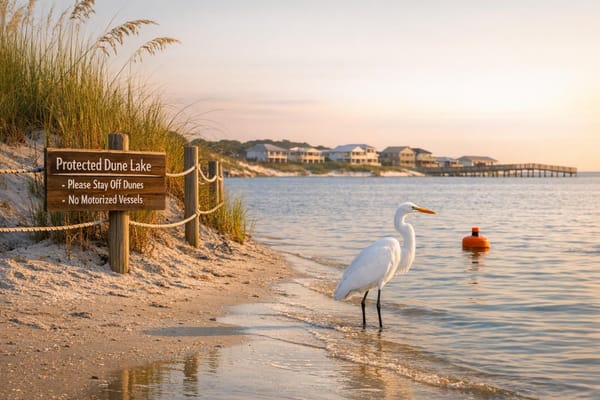
But it’s not just about economics. These beaches are home to vital wildlife habitats, serving as nesting grounds for sea turtles and shorebirds and supporting delicate coastal dune lakes . With rising sea levels and stronger hurricanes shortening the lifespan of these projects, ongoing renourishment is essential to protect the natural beauty and ecological balance of 30A, while securing its economic future.
FAQs
How does beach renourishment impact wildlife along 30A?
Beach renourishment along 30A plays a key role in restoring eroded shorelines by adding sand to rebuild dunes and expand the beach. This process not only helps protect the area from storms but also creates new habitats. However, it’s not without its challenges. The addition of large amounts of sand can temporarily disrupt local ecosystems, potentially smothering small organisms like clams and worms - important food sources for shorebirds and fish. It can also interfere with nesting areas for sea turtles and shorebirds, particularly if the work is done during peak nesting seasons.
To reduce these impacts, efforts are made to use sand that closely resembles the natural beach and to schedule projects outside sensitive periods. Residents and visitors can also play a part in protecting wildlife by sticking to marked paths, dimming lights during turtle nesting season, and reporting any disturbed nests. By working together, we can continue to appreciate the stunning beaches of 30A while helping to preserve the local ecosystem.
How is the sand used in beach renourishment matched to the natural beach sand?
To make sure the sand used for beach renourishment blends seamlessly with the natural shoreline, there are strict rules in place. The Florida Department of Environmental Protection (FDEP) mandates that the replacement sand must closely match the native beach material in terms of grain size, composition, and color. Before the sand can be brought to the beach, it’s thoroughly sampled and tested in a lab to ensure it meets these requirements. Permits are granted only after the sand is confirmed to be a proper match.
In Walton County, the Beach Operations team collaborates with experts to manage renourishment projects while adhering to FDEP standards. They carefully oversee the placement of sand to maintain the natural shape and profile of the beach. To keep the community informed and involved, workshops are held to address residents' concerns and ensure transparency throughout the entire process.
Will beach access be affected during the 30A beach renourishment project?
During the 30A beach renourishment project, some regional beach access points might temporarily close or experience limited parking to make room for construction equipment. That said, efforts are in place to keep disruptions to a minimum, and the majority of access points will stay open. The Beach Operations team is hard at work every day to ensure the beaches remain clean, stocked with essentials, and staffed with lifeguards.
The project also allocates funds to enhance public access by improving walkways, parking areas, and boardwalks once construction wraps up. Any closures are short-lived and carefully planned to maintain public enjoyment of the beaches. For the latest updates on access points, you can check local resources like the sowal.co guide for South Walton.