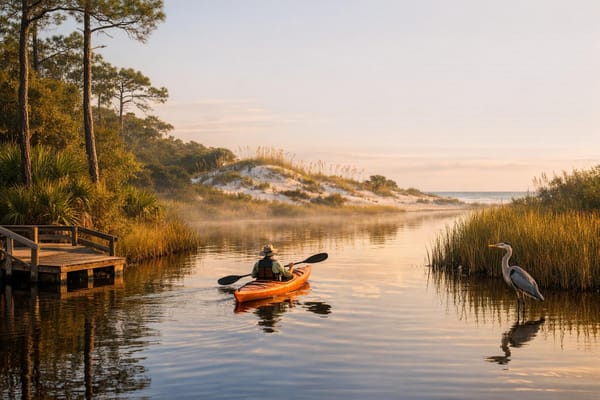
Best Hidden Trails in Point Washington Forest
Quiet 15,000-acre forest with 27+ miles of trails — 3.5–14.8 mile loops, dunes, swamps, wildlife, and $2 entry; tips on shoes, water and mosquito spray.
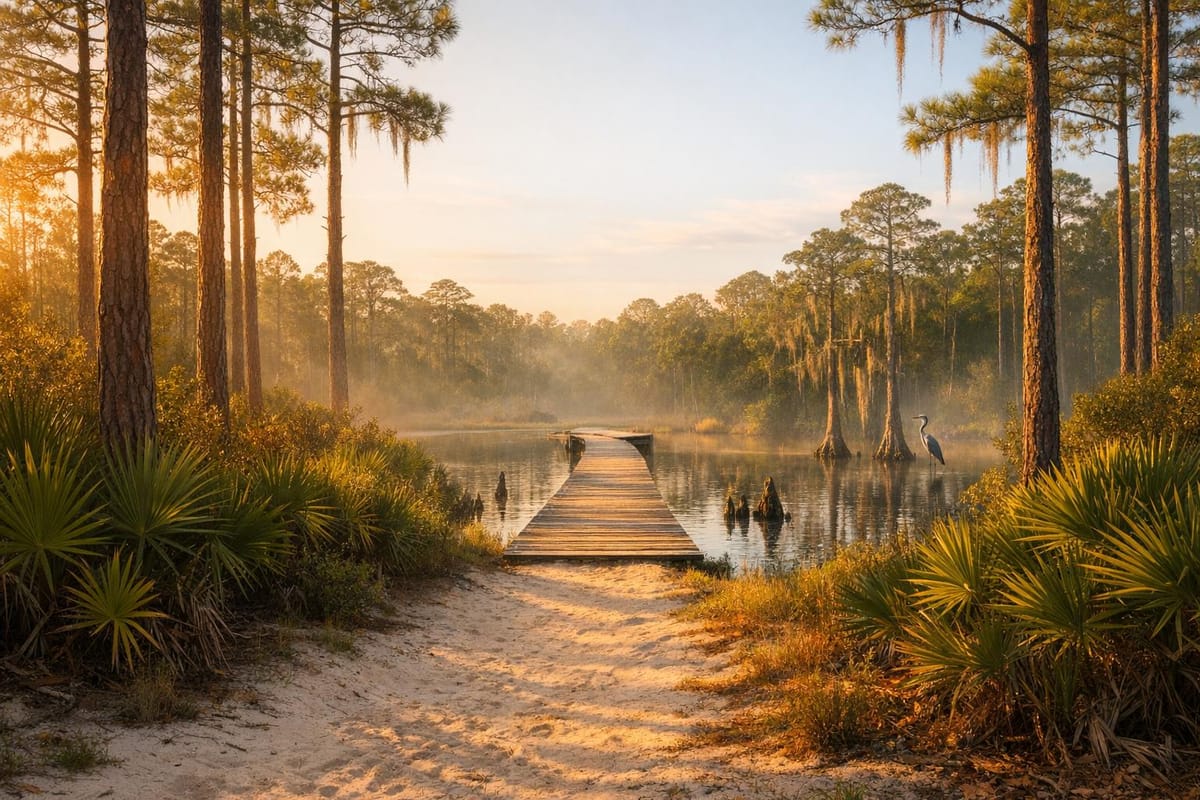
Point Washington State Forest, located in southern Walton County, Florida, spans 15,000 acres of natural beauty and diverse ecosystems. This forest is a haven for outdoor enthusiasts, offering over 27 miles of trails suited for hiking, biking, and wildlife observation. Entry costs just $2 per person, with children under six admitted free. Key highlights include:
- Black Creek Trail: 8 miles of serene pine forests and wetlands.
- Point Washington Trail: A 3.5-mile loop ideal for families and beginners.
- Eastern Lake Trail: Flexible loops ranging from 3.5 to 10.9 miles, featuring dunes and cypress swamps.
- Western Lake Trail: A 4.9-mile shaded path with lake views and wildlife.
- Longleaf Greenway Trail: The longest at up to 14.8 miles, with elevation changes and switchbacks.
Each trail offers a unique experience, from peaceful creekside views to challenging terrain. Be prepared with water, mosquito spray, and sturdy shoes to make the most of your visit. Whether you're seeking solitude or adventure, these trails provide a quiet escape from the busy 30A corridor.
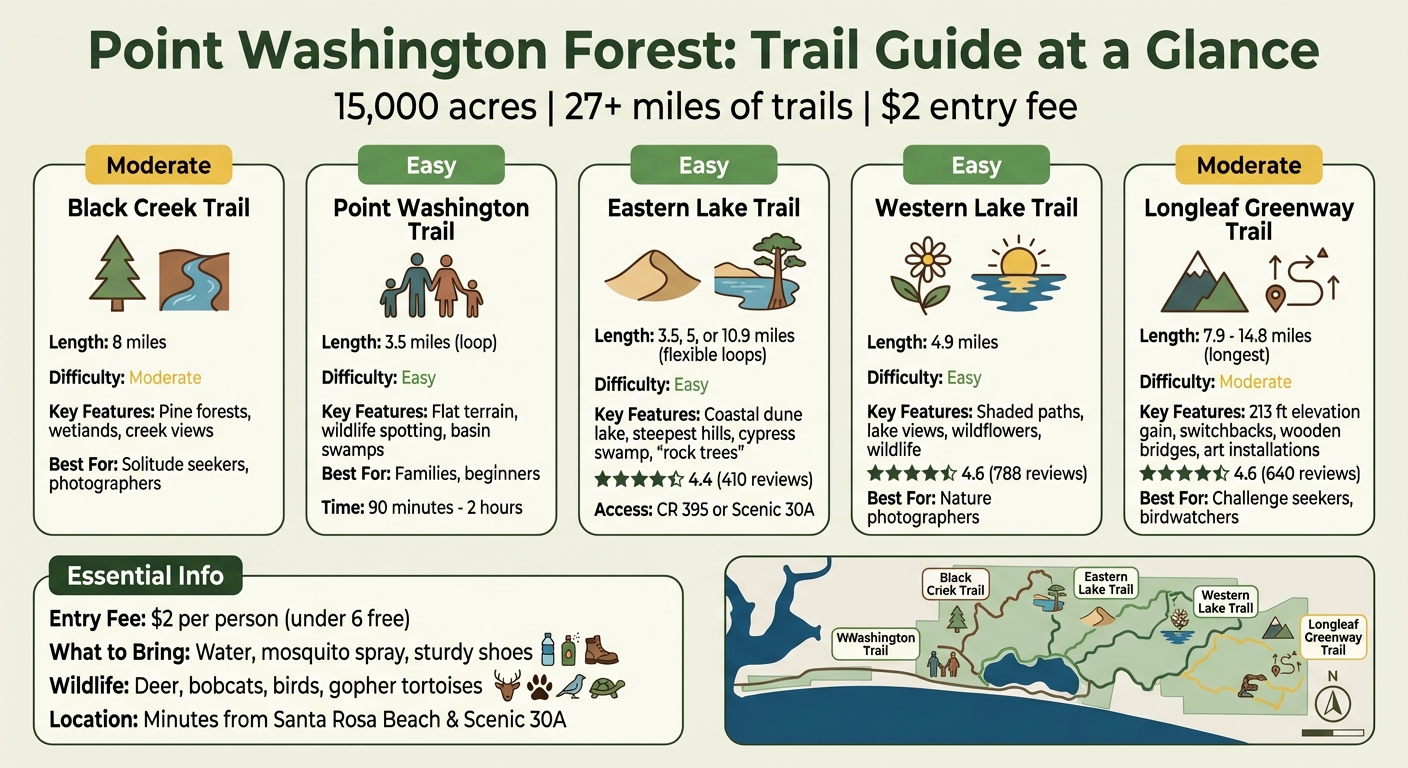
Point Washington Forest Trail Comparison Guide - Length, Difficulty & Features
Point Washington State Forest Eastern Lake Trail
Best Hidden Trails in Point Washington Forest
Point Washington State Forest offers a trail network that caters to all kinds of outdoor enthusiasts. With its diverse landscapes and ecosystems, each trail provides a unique way to experience the forest. Here’s a closer look at some of its lesser-known gems, each with its own charm and adventure.
Black Creek Trail
This 8-mile trail takes you into the quieter parts of the forest, weaving through pine trees and wetlands with serene views of Black Creek. It's an excellent choice for hikers seeking a moderate, longer trek without intense challenges. The mix of creek-side scenery and towering pines makes it a favorite for photographers. The sandy terrain is usually firm, but waterproof shoes are a smart choice during wet weather. This trail offers solitude and a peaceful escape, ideal for those looking to disconnect.
Point Washington Trail
For a shorter hike or a family outing, this 3.5-mile loop is perfect. Its flat terrain and well-marked paths make it beginner-friendly, while still offering plenty of opportunities to spot wildlife. The trail meanders through creek beds and dense woods, with frequent bird sightings along the way. It also passes through basin swamps and scrub areas, giving hikers a quick glimpse of the forest’s varied ecosystems. Most can complete the loop in 90 minutes to two hours at a relaxed pace.
Eastern Lake Trail
As the first trail system established in the forest, Eastern Lake Trail offers loops of 3.5, 5, or 10.9 miles, making it flexible for different schedules. The paths take you through dunes, flatlands, and along the edge of Eastern Lake, one of the area's unique coastal dune lakes. A standout feature is the Cassine Trail portion, which includes the forest’s steepest hills and access to a large cypress swamp. With a 4.4-star rating from 410 reviews on AllTrails, hikers praise the dune views but warn about sun exposure. Be sure to bring mosquito spray for swampy sections and download maps ahead of time, as some parts of the trail can be poorly marked or overgrown. Don’t miss the quirky "rock trees", where hikers have left stones as keepsakes.
Western Lake Trail
This 4.9-mile trail on the quieter north shore of Western Lake offers a mix of shaded sandy paths and vibrant native plants. With a 4.6-star rating from 788 reviews, it’s a favorite for nature photographers and wildflower enthusiasts. The trail is relatively easy but can get muddy, so waterproof shoes are recommended. The peaceful lake views and tree canopy create a cooler environment, even on hot days. Wildlife sightings are common, with deer, bobcats, and a variety of birds often spotted along the water’s edge.
Longleaf Greenway Trail
For those seeking a challenge, the Longleaf Greenway Trail spans 7.9 to 14.8 miles, making it the longest trail in the forest. It features dense pine forests, switchbacks, and wooden bridges over creeks and streams . With 213 feet of elevation gain and a 4.6-star rating from 640 reviews, it’s rated as moderately difficult due to loose sand and sun exposure. Photojournalist Manny Chavez notes the hidden pine roots that can be tricky in wet conditions. The trail offers unique sights, such as scrub oak canopies and an unexpected art installation. Birdwatchers will enjoy spotting Bachman’s Sparrows in the southern sections during spring and Red-shouldered Hawks near Peach Creek year-round.
Trail Comparison Table
Finding the right trail comes down to your fitness level, how much time you have, and the kind of scenery you’re after. Here’s a quick comparison of the key details and access points for each trail to help you decide:
| Trail Name | Length | Difficulty Level | Key Features | Access Points |
|---|---|---|---|---|
| Eastern Lake Trail (Yellow) | 3.5 miles | Easy | Dunes, flatland ecosystems, rock trees | CR 395 or Scenic 30A |
| Eastern Lake Trail (Red) | 5–6 miles | Easy | Wooden bridges, flat terrain, loop trail | CR 395 or Scenic 30A |
| Eastern Lake Trail (Orange) | 10–11 miles | Easy | Longest loop, cypress swamp, flat terrain | CR 395 or Scenic 30A |
| Western Lake Trail | 4.9 miles | Easy | Shaded paths, wildflowers, lake views, wildlife | Parking lot |
| Longleaf Greenway Trail | 14.8 miles | Moderate | 213 ft elevation gain, switchbacks, art installations | Near Eastern Lake Trailhead |
The Eastern Lake Trail System is ideal if you’re looking for flexibility, with three loop options starting from the same trailhead on CR 395 or Scenic 30A. For those seeking a bit more of a challenge, the Longleaf Greenway Trail offers a 213-foot elevation gain and switchbacks, making it the toughest option despite its moderate difficulty rating.
Most trails feature flat terrain with a mix of sand and dirt, but conditions can shift quickly with the weather. Use this guide to plan your route before diving into the hiking tips below.
Tips for Hiking These Trails
Before heading out on these lesser-known trails, a bit of preparation can go a long way in making your hike enjoyable. Point Washington's varied landscapes demand a thoughtful approach to ensure a smooth journey.
Bring $2 in small bills for the trailhead drop box; children under six can enter for free.
Pack plenty of water and some snacks. Manny Chavez suggests carrying an energy bar, especially if you're hiking during the summer. He shares this advice:
"Be sure to take along water and an energy bar or two. In the summer, early morning or late afternoon rides are more comfortable, and you're more likely to come across local wildlife during these hours".
Don’t forget mosquito spray, especially for the swampy sections near the Cassine Trail. Sturdy, closed-toe shoes are also a must to handle deep sand, muddy wetlands, and hidden roots. This is particularly important on the Longleaf Greenway, where pine needles can hide tripping hazards.
Keep an eye out for wildlife, but maintain a safe distance. The forest is home to creatures like pygmy rattlesnakes, coyotes, and bears. Also, be mindful of protected species like gopher tortoises and red-cockaded woodpeckers that inhabit this sprawling 15,000-acre forest.
If you're cycling, make sure to clean your bike after a muddy ride to keep it in good condition.
Located just minutes from Santa Rosa Beach and Scenic 30A, which is one of the best scenic fall drives in South Walton, the forest’s main trailheads offer convenient amenities like parking, picnic tables, and compost bathrooms. Look for these near landmarks such as Goatfeathers and Lodge 30A at Greenway Station.
Conclusion
Point Washington State Forest’s trails offer a rare retreat from the bustling 30A corridor - a place where you can find true solitude. With over 15,000 acres spanning 10 diverse ecosystems, from cypress swamps to sandhills, it’s entirely possible to spend hours exploring without crossing paths with another person.
Whether you’re winding through the Eastern Lake loop or navigating the Longleaf Greenway’s switchbacks, these trails provide a refreshing alternative to the usual beach day. Along the way, you might spot rare wildlife like the red-cockaded woodpecker, stumble upon quirky "rock trees" left by fellow hikers, or take in the striking landscapes shaped by prescribed burns.
And it’s not just about the scenery - there are practical perks too. Entry is just $2 per person, and kids under six get in free. Plus, the growing greenway system promises to eventually connect over 27 miles of trails, linking parks and neighborhoods across South Walton.
These trails don’t just offer an escape; they help safeguard South Walton’s natural beauty for generations to come. So, next time you’re in the area, consider trading a few hours of beach time for a peaceful walk through the forest - it’s a side of South Walton you won’t want to miss.
FAQs
Which trail is best for kids?
The 1.4-mile Eastern Lake connector, part of the 30A Trail, is a great choice for families with kids. This easygoing trail winds through picturesque coastal habitats, offering a gentle walk or bike ride that’s perfect for beginners. Located near the 30A Trailhead in Seagrove, it’s also a convenient spot for families, featuring primitive campsites and educational signs. It’s an enjoyable and approachable way for children and parents to explore the outdoors together.
Are dogs allowed on these trails?
Dogs are welcome on most trails in Point Washington State Forest, including several lesser-known paths. While leashes are generally required, some trails may have additional restrictions. Be sure to follow all posted rules and leash guidelines to keep both your pet and the environment safe. It's a good idea to review trail signs or regulations ahead of your visit to ensure you're in line with any specific requirements.
What’s the best time of year to hike here?
The ideal time to hike in Point Washington State Forest is during fall (September to November) or spring (March to May). These months bring mild temperatures, ranging from the high 60s to low 80s, along with fewer visitors and beautiful wildflower displays.
While summer offers longer days, it often comes with heat and humidity, with temperatures climbing into the 80s or 90s. Winter, on the other hand, is cooler (around 60-65°F) and quieter, though it may not be as enjoyable for longer hikes.