Best Practices for Preserving 30A's Natural Beauty
Practical tips to protect 30A’s dune lakes, beaches, and wildlife — stay on trails, reduce runoff and light pollution, use native plants, and support local conservation.
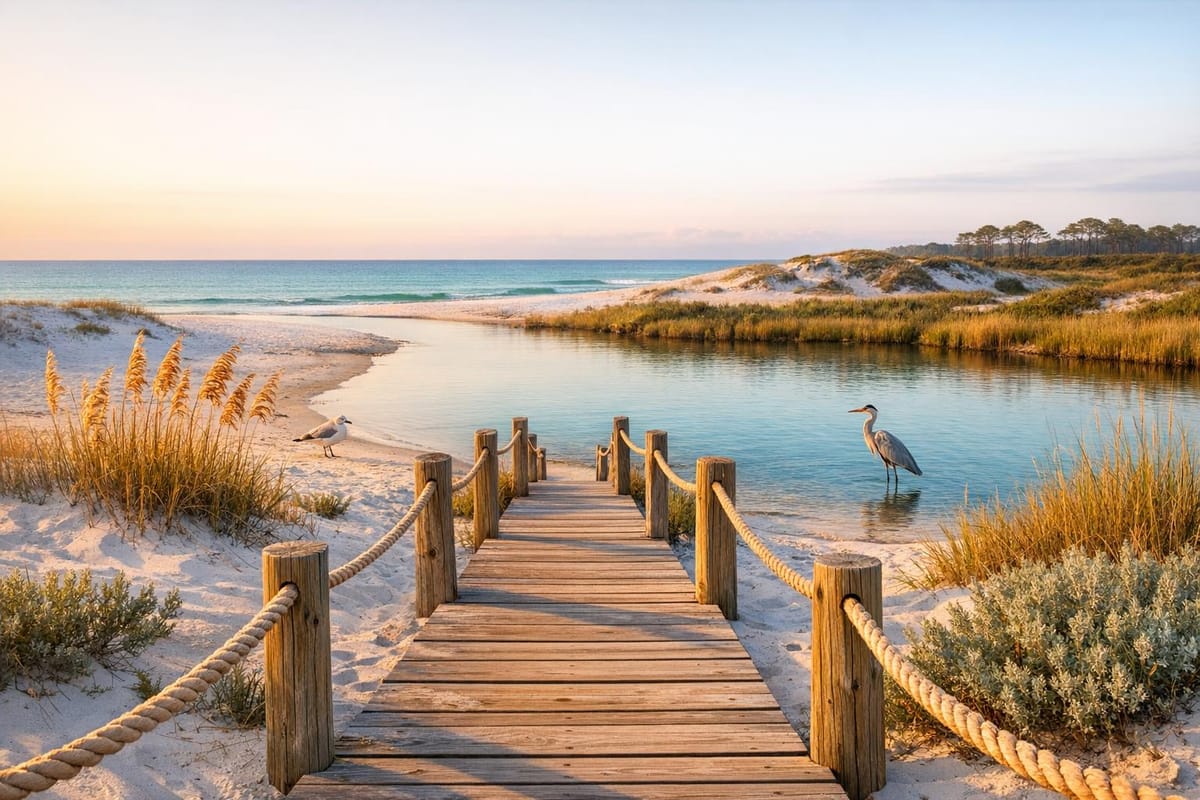
The 30A region in South Walton County, Florida, is a stunning area featuring rare coastal dune lakes, quartz sand beaches, and protected state parks. However, increasing tourism and development threaten these fragile ecosystems. Here’s how you can help preserve 30A's beauty:
- Stay on Trails: Stick to marked paths to protect dunes and wetlands.
- Leave No Trace: Remove belongings, fill sand holes, and avoid glass containers on beaches.
- Choose Biking or Walking: Use the Timpoochee Trail or local paths to reduce vehicle impact.
- Prevent Runoff: Limit fertilizer use and maintain natural vegetation near water.
- Protect Native Plants: Use native landscaping to support wildlife and reduce erosion.
- Respect Sea Turtles: Avoid disturbing nesting areas and reduce artificial light during nesting season.
- Support Green Building: Use eco-friendly materials and designs in construction.
- Join Conservation Efforts: Volunteer with local groups like Friends of South Walton Sea Turtles.
- Support Eco-Friendly Businesses: Choose sustainable restaurants, shops, and tours.
Every action counts. Whether you're visiting or living in 30A, these steps can help protect its natural charm for future generations.
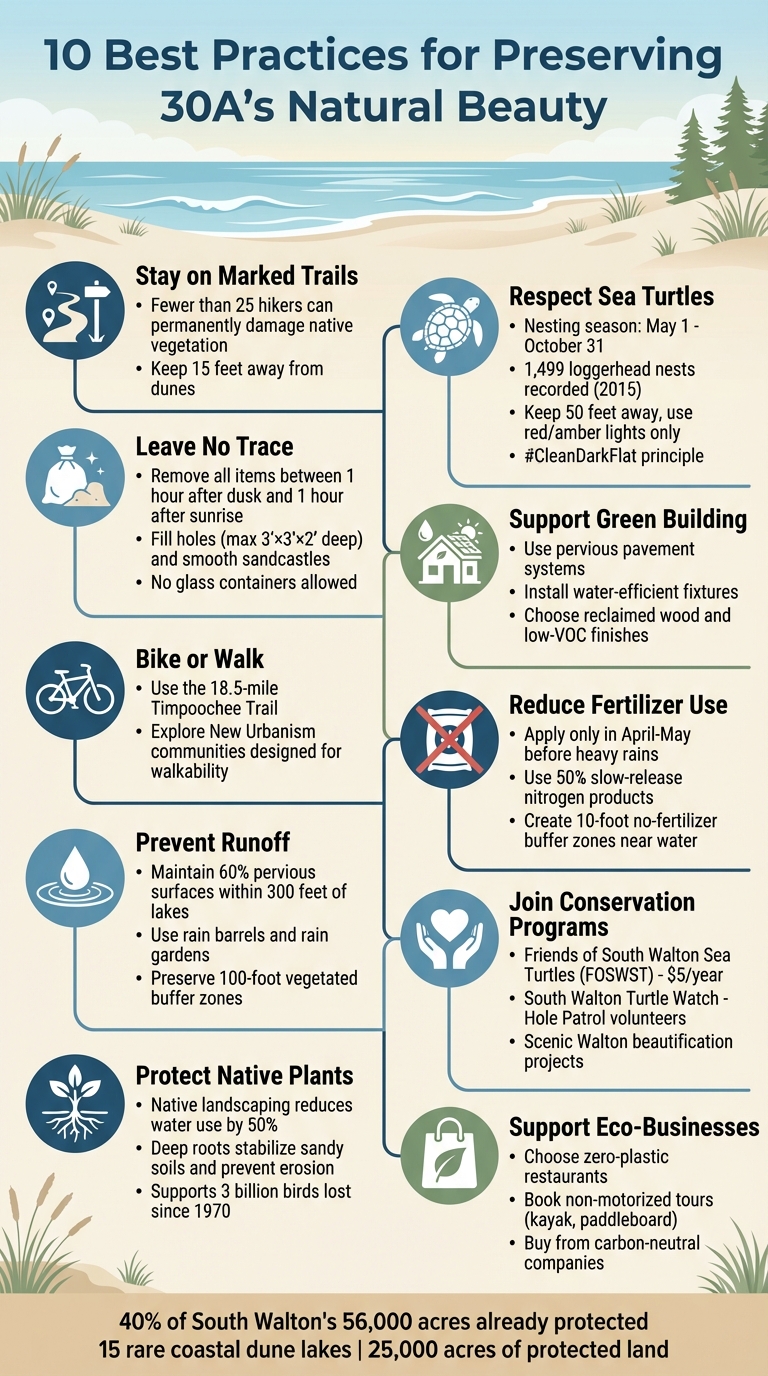
10 Best Practices for Preserving 30A's Natural Beauty
1. Stay on Marked Trails and Walkways
Straying off marked trails can seriously harm delicate ecosystems. Along 30A, even fewer than 25 hikers passing through an area can permanently damage native vegetation. This isn't just about preserving the scenery - it's about protecting essential coastal defenses. Dunes and wetlands in this area serve as natural shields for the coastline. Walking on dunes, for instance, destroys sea oats, which are critical for stabilizing the sand. Without them, dunes can suffer blowouts, leaving gaps in their protective barriers.
Jeff Talbert, Chairman of the Coastal Dune Lakes Advisory Board, highlights the importance of these ecosystems:
"Wetlands that surround these lakes are very important because they're some of the most biodiverse ecosystems we have here in Walton County and in the panhandle of Florida, which is part of a biodiversity hotspot".
To help preserve these fragile environments, always stick to designated dune walkovers and boardwalks when heading to the beach. These access points are carefully designed to protect the ecosystem while managing foot traffic. Keep a 15-foot distance from dunes to ensure both your safety and the conservation of these areas.
When encountering muddy patches on trails, walk through them instead of creating detours. Going around puddles might seem harmless, but it widens trails and damages the plants nearby. Over time, these "shortcuts" can turn into erosion channels as wide as 10 feet. Additionally, user-made "social trails" increase soil erosion and cause sediment runoff that harms nearby coastal dune lakes.
If you're exploring protected areas around 30A, there are plenty of marked trails to enjoy. Point Washington State Forest offers over 15,000 acres with 10 marked access points. For a variety of options, the Eastern Lake Trail System features three loops ranging from 3.5 to 10 miles. These trails are carefully designed to protect rare species, such as pitcher plants, orchids, and the endangered Choctawhatchee Beach Mouse, all while ensuring your safety.
2. Follow Leave No Trace Principles
Protecting the natural beauty of 30A's beaches starts with following Leave No Trace principles. Here's how you can do your part:
Make sure to remove all personal belongings - like chairs, umbrellas, tents, and toys - from the beach between one hour after dusk and one hour after sunrise.
"Leave no trace on the beach by removing all personal items and trash each night while also turning off any lights to help protect these endangered species." - Visit South Walton
Your actions on the sand also matter. During nesting season, any holes you dig should be no larger than 3 feet by 3 feet and under 2 feet deep. Fill in these holes and smooth out sandcastles before leaving to help protect wildlife.
Keep in mind that glass containers are completely banned on 30A beaches. Charcoal grills aren't allowed either, but propane grills under 225 square inches are permitted if you need to cook. Always dispose of trash in the designated bins to prevent harm to marine life.
If you're staying at a beachfront property, you can bundle your personal items at the toe of the dune overnight. However, never attach or store items under public beach access points - Beach Code Compliance will remove them. Also, ensure your belongings are kept at least 15 feet away from the dunes and water to meet safety standards.
3. Bike or Walk Instead of Driving
One of the easiest ways to help keep 30A beautiful is by skipping the car and exploring the area on foot or by bike. Thanks to the region's New Urbanism design - seen in places like Seaside, WaterColor, and Rosemary Beach - streets are designed to be walkable, making it easy to park your car and enjoy the surroundings at a slower pace. You can even generate a custom itinerary to plan your car-free exploration. Plus, local trails provide scenic, safe routes that make walking or biking a pleasure.
Take the Timpoochee Trail, for instance. This 18.5-mile paved path runs right alongside Scenic Highway 30A, offering incredible views of rare coastal dune lakes. These lakes are a natural wonder, found only in a handful of spots worldwide, including Madagascar and Australia.
If you’re looking for a bit more adventure, there are plenty of trails with varied terrain. Eastern Lake Trail in Point Washington State Forest is a great option, with three loops to choose from - 3, 5, or 10 miles - taking you through serene cypress ponds and sandy hills. Over at Topsail Hill Preserve State Park, bike riders can access trails through old-growth forests and towering 25-foot dunes for just a $2 entry fee.
Need a bike? Local shops like Big Daddy's Bike Shop and Peddlers 30A have you covered with rentals. If you’re hoping to explore even more, e-bikes are a fantastic option. Communities like Seaside and Rosemary Beach even have charging stations to make your ride more convenient and eco-friendly.
4. Prevent Runoff into Coastal Dune Lakes
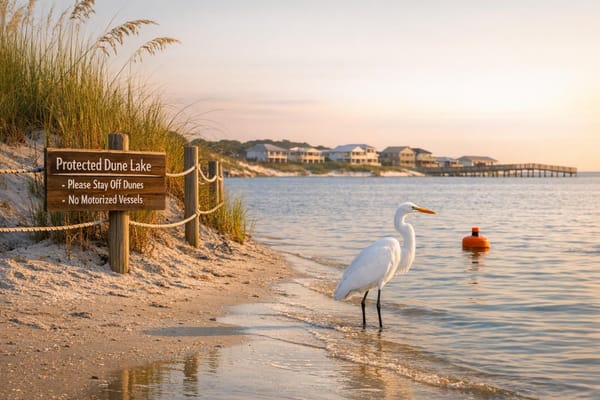
The 15 coastal dune lakes along 30A are rare ecosystems, found in only a handful of places worldwide. These unique lakes serve as natural filters, bridging the Gulf and upland areas with a fragile wetland system. Keeping pollutants and runoff out of these lakes is more than just a good idea - it’s crucial to their survival.
To protect these ecosystems, Walton County has established the Coastal Dune Lake Protection Zone (CDLPZ), which extends 300 feet from the lake's high water line. Within this zone, strict rules are in place to minimize environmental harm. For example, at least 60% of any property in the zone must remain a pervious surface, allowing water to soak into the ground naturally. Impervious surfaces, such as buildings and pavement, are limited to 40%. Additionally, clearing native vegetation is restricted to 50% of the property to preserve the natural filtration system.
Everyday activities, like fertilizer use or septic system leaks, can introduce excess nutrients that harm water quality. To address this, central sewer connections are required in the area. These issues highlight the need for individual action to help protect the lakes.
"The required 100-foot set-back acts as a vegetated buffer, reducing stormwater runoff impact to the lake. Maintaining this vegetation filters pollutants and nutrients that could harm water quality." – Brandy Foley, Researcher, Choctawhatchee Basin Alliance
Homeowners play a key role in reducing runoff. Simple steps like planting native plants instead of grass, using rain barrels, creating rain gardens to capture stormwater, and preserving natural vegetation near the water can make a significant difference.
5. Protect Native Plants and Trees
Native plants and trees play a crucial role in maintaining 30A's ecosystem. They act as natural barriers, reducing erosion by forming a vegetative buffer that filters and absorbs stormwater runoff before it reaches coastal dune lakes and the Gulf. Their deep root systems stabilize sandy soils, which are especially vulnerable to erosion in coastal areas. This not only helps preserve the land but also creates habitats for wildlife and supports the overall stability of the coastline.
"Native plants sustain life in your landscape by providing natural food, shelter, and nesting sites for birds, butterflies, bees, and other wildlife." – Florida Native Plants Nursery
The impact on local wildlife is undeniable. Since 1970, North America has seen a loss of around 3 billion birds, much of it due to habitat destruction caused by non-native landscaping. Native plants and trees are essential for reversing this trend, offering food and nesting spaces for birds and other creatures. Plus, native landscaping is practical - it reduces upkeep costs, conserves water, and minimizes the need for gas-powered tools, which helps lower CO2 emissions. Once established, these plants thrive in Florida's unique climate of hot summers and cool winters, requiring little to no extra irrigation or fertilizer. This is especially important in a state where nearly half of residential water use goes toward landscaping.
To make the most of native landscaping, select plants that match your property's conditions. For example, opt for salt-tolerant species if you're near the beach. Combine native trees, shrubs, and groundcovers of varying heights to create a layered habitat that benefits wildlife. Also, maintain a 10-foot no-maintenance buffer zone between landscaped areas and the water to safeguard sensitive ecosystems. Leaving natural debris like leaf litter and dead wood in place can further enrich the soil and provide nesting areas for local wildlife. These simple steps can transform your yard into a haven for both nature and the environment.
6. Respect Sea Turtle Nesting Areas
From May 1st to October 31st, the beaches along 30A transform into vital nesting grounds for sea turtles. Loggerhead turtles are the most frequent visitors, but Green and Leatherback turtles also make their way to these shores. These species are protected by both state and federal laws, making it illegal to disturb, harm, or interfere with the turtles, their eggs, or their hatchlings. In 2015 alone, 1,499 loggerhead nests were recorded across seven Gulf Coast counties, including Walton County. With each female laying over 100 eggs per nest, these numbers highlight the importance of conservation efforts.
Local initiatives focus on protecting these nesting areas, guided by the #CleanDarkFlat principle. This means keeping beaches clear of debris, ensuring no artificial light disturbs the turtles, and maintaining flat sand surfaces. To help, remove all beach items before nightfall and fill in any holes or sandcastles that could block hatchlings on their journey to the ocean.
Artificial light poses a major threat, disorienting more than 100,000 sea turtles every year. Hatchlings rely on the natural contrast between the dark dunes and the night sky to find the ocean. To minimize disruption, turn off outdoor lights or use low, shielded fixtures with red or amber LEDs (560 nm or greater). Close curtains to limit interior light spilling onto the beach.
"Interfering with a sea turtle hatchling's trek to the ocean can have fatal consequences. It's very important to leave them undisturbed." – Robbin Trindell, FWC Sea Turtle Biologist
When near nesting turtles, maintain a distance of at least 50 feet, and avoid using flashlights, cell phone lights, or flash photography. If you see a sick, injured, or distressed sea turtle, report it immediately to the South Walton Turtle Watch Hotline at 850-865-4503 or the FWC Wildlife Alert Hotline at 1-888-404-3922.
For those looking to get involved, check out "Wild Sea Turtle Wednesdays" at The Big Chill in Watersound from May through July. These events provide a chance to learn more about local conservation efforts and even pick up red pocket flashlights for safe nighttime beach walks. By adopting these simple habits, you can help protect 30A’s incredible sea turtle population while enjoying its natural beauty.
7. Support Green Building Practices
In addition to preserving runoff and habitats, sustainable building practices play a key role in protecting the delicate coastal ecosystems along 30A. Just as visitors are encouraged to make eco-friendly choices, builders and developers are urged to prioritize environmentally conscious designs to maintain the area's scenic charm.
Walton County enforces strict construction guidelines aimed at reducing environmental harm, especially near the rare and fragile coastal dune lakes. For example, within the Coastal Dune Lake Protection Zone, developers are required to use materials like pervious pavement systems or interlocking concrete pavers on sand beds. These features allow rainwater to seep naturally into the ground, reducing runoff and helping to preserve the ecosystem's balance.
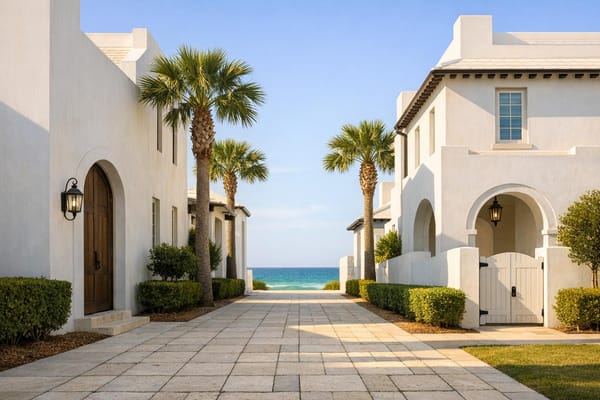
Alys Beach stands out as a shining example of sustainable development. This Walton County community is certified as a "Florida Green" land development, and every home must meet the FGBC "Florida Green" Home Standard. This ensures that every aspect of construction aligns with eco-friendly principles, setting a benchmark for responsible development.
For renovations, opting for materials like reclaimed wood, cork flooring, and low-VOC finishes can make a big difference. Installing water-efficient fixtures, such as dual-flush toilets, not only conserves water but also eases the strain on local utilities. These choices are practical, environmentally friendly, and well-suited to Florida's coastal climate.
The county's guidelines underscore the importance of thoughtful development, focusing on minimizing environmental impact while safeguarding Walton County's natural beauty and historical significance through careful resource management.
8. Reduce Fertilizer and Agricultural Runoff
Fertilizer runoff is a serious issue for 30A's delicate ecosystems, particularly its 15 rare coastal dune lakes, which are only about 5 feet deep on average. These shallow waters are highly vulnerable to nutrient pollution. When nitrogen and phosphorus enter the lakes, they can fuel algae blooms that block sunlight and disrupt oxygen levels. This imbalance can severely stress or even kill aquatic life. To minimize these harmful effects, adopting precise fertilizer practices is key.
Start by testing your soil through a local UF/IFAS Extension office before applying any fertilizer. This ensures you avoid overuse, which can lead to runoff. If fertilizer is necessary, opt for slow-release products with at least 50% slow-release nitrogen. Apply these fertilizers only during active growing periods, typically in April and May in Florida, before heavy summer rains increase the risk of runoff.
"Excess nutrients from fertilizers can wash into lakes, rivers, springs, estuaries and other water bodies causing algae blooms that reduce water clarity and create extreme fluctuations in dissolved oxygen."
– Southwest Florida Water Management District
Once you've selected the right fertilizer, proper application is essential. Use 1/4 inch of water to help nutrients absorb into the soil, but avoid overwatering, which can cause runoff. Create a 10-foot buffer zone around waterfronts where no fertilizers or pesticides are used. If you rely on reclaimed water for irrigation, additional fertilizer might not be needed, as it already contains nitrogen and phosphorus.
Other simple but effective steps include sweeping fertilizer granules off hard surfaces like driveways and sidewalks and back onto your lawn to prevent them from washing into storm drains. Leaving grass clippings on your lawn to decompose naturally is another great way to return nutrients to the soil without the risk of runoff. By following these practices, you can help protect the fragile ecosystems that make 30A unique while maintaining a healthy and thriving landscape.
9. Join Local Conservation Programs
Getting involved with local conservation programs is a hands-on way to help protect the unique ecosystems along 30A. These initiatives not only make a difference but also allow both residents and visitors to actively engage in preserving the area's natural beauty.
One standout organization is Friends of South Walton Sea Turtles (FOSWST), which runs the Volunteer Beach Ambassador (VBA) program. For just $5 a year, you can become a member and help educate beachgoers about conservation practices during the sea turtle nesting season, which runs from May 1 to October 31. As Beth Coppedge, President of FOSWST, points out:
"Florida beaches are the number one place for sea turtle nests in North America from May to October."
Training sessions for new ambassadors are held each May at the Walton County Visitors Center.
Another key group, South Walton Turtle Watch (SWTW), has been safeguarding sea turtle nests for over 20 years. Volunteers can join the "Hole Patrol", a team dedicated to filling beach holes and leveling sandcastles to ensure safe nesting conditions. Shifts last two months, and if you encounter a distressed sea turtle, you can call their hotline at 850‑865‑4503.
Beyond sea turtle efforts, Scenic Walton focuses on preserving the visual charm of the area. In September 2021, they partnered with the Green Thumb Garden Club and Trees on the Coast for a beautification project at Oyster Lake on CR 30A. This initiative involved planting 10 live oaks, 250 beach sunflowers, and native grasses across 24,000 square feet to trap windblown debris before it could reach a coastal dune lake.
You can support Scenic Walton, Trees on the Coast, and the Green Thumb Garden Club through volunteering or by purchasing specialty license plates that fund conservation work. Trees on the Coast enhances Walton County’s tree canopy through planting and educational efforts, while the Green Thumb Garden Club, established in the 1950s, leads beautification projects across 30A.
10. Support Eco-Conscious Businesses and Tours
When you spend along 30A, your choices can directly contribute to protecting its natural beauty. Many local businesses and tour operators are committed to conservation efforts, making it easy for visitors to support eco-friendly practices.
Take Bud & Alley's Waterfront Restaurant, for example. Under the guidance of owner Dave Rauschkolb, the restaurant has adopted a zero-plastic policy. They’ve swapped plastic for glass containers and use only paper products for straws, to-go containers, and bags. Plus, they source almost all their vegetables and seafood from nearby farms and Gulf fisheries. Similarly, The 30A Company incorporates recycled materials into its apparel - each t-shirt is made from up to 8 recycled plastic bottles. Over at Amavida Coffee, sustainability is baked into their operations. Their "Atmosphere" blend program offsets all CO₂ emissions, making them a carbon-neutral coffee company.
For a low-impact adventure, consider booking a guided eco-tour that uses non-motorized kayaks and paddleboards, or electric boats. These tours are designed to protect fragile habitats while offering an educational experience. Many focus on the unique coastal dune lakes and operate in small groups to ensure minimal disruption to wildlife.
As Visit South Walton puts it:
"Improving sustainability truly involves a village mentality here, as visitors pitch in right along with the locals."
Conclusion
30A is a vibrant natural haven, home to rare dune lakes, endangered sea turtles, and 25,000 acres of protected land. Every choice you make here - whether it's staying on designated trails , following beach rules for dogs, or contributing to conservation efforts - plays a role in preserving this delicate environment for the generations to come.
As highlighted in our best practices, mindful actions are key to protecting 30A's beauty. Scenic Walton aptly states, "Beauty is good for business". Thoughtful choices not only safeguard the area's natural wonders but also enhance property values, attract tourism, and maintain the Gulf's pristine waters. With around 40% of South Walton's 56,000 acres already under state protection, continued collective effort is essential to sustain this balance. It's a perfect example of how nature and local economies can thrive together.
You can enjoy 30A while helping to protect it by embracing eco-friendly activities like biking or practicing responsible beach habits. As Visit South Walton advises, "Whether you're relaxing on the white sand, swimming along the shoreline, or exploring the neighborhoods, remember to leave only footprints and take only memories".
For more tips on sustainable travel and local insights, check out sowal.co.
FAQs
What are the best ways to protect 30A’s natural environment while visiting?
To help safeguard the delicate ecosystems of 30A, consider adopting environmentally conscious habits during your visit. Respect wildlife by avoiding marked nesting areas, especially those of sea turtles, and keep beachfront lights off at night to prevent confusing hatchlings. When exploring places like coastal dune lakes or forests, stick to designated trails and boardwalks to reduce harm to natural habitats.
Cut down on waste by bringing reusable water bottles, bags, and utensils, and always dispose of trash responsibly. Show your support for local conservation efforts by following beach regulations and getting involved in projects like native plant restoration. Choosing eco-friendly transportation, such as biking or walking, not only reduces your carbon footprint but also lets you soak in the area’s stunning scenery. Small actions like these can make a big difference in preserving 30A’s beauty for future generations.
How can we help protect sea turtle nesting areas along 30A?
Safeguarding sea turtle nesting areas along 30A is crucial, especially during nesting season, which runs from May 1 to October 31. Sea turtles rely on dark, undisturbed beaches to nest and for hatchlings to find their way to the ocean. Here are some ways you can help:
- Minimize Artificial Lighting: Bright lights near the beach can confuse both adult turtles and hatchlings, leading them away from the water. If lighting is necessary, opt for low, long-wavelength bulbs like amber or red, and make sure they are shielded to reduce their impact.
- Respect Nesting Areas: Avoid walking or placing items near marked nesting zones. These areas are fragile, and interference can disrupt the turtles’ natural processes.
- Report Stranded or Injured Turtles: If you come across a turtle in distress, call the Sea Turtle Hotline at 850-865-4503 immediately. Quick action can save lives.
Keeping the beach clean is another key step. Remove trash and avoid leaving obstacles like chairs, tents, or toys on the sand. These items can block turtles’ paths or trap hatchlings, making their journey to the ocean even more challenging.
Finally, consider getting involved. Volunteering with local conservation programs or spreading awareness about sea turtle safety can create a ripple effect of positive change. By working together, we can protect these incredible creatures and preserve the natural beauty of 30A for generations to come.
What are the environmental benefits of using green building practices on 30A?
Green building practices play a key role in preserving the natural beauty of 30A by encouraging development that respects and protects local ecosystems. These approaches often focus on incorporating eco-conscious materials, energy-efficient designs, and water-saving techniques to limit the environmental footprint of construction and renovation projects.
In 30A, careful design strategies like clustering buildings, safeguarding wetlands and dunes, and managing runoff are essential in maintaining the area's distinctive landscapes. By embracing these methods, the community not only protects its breathtaking coastal scenery and fragile ecosystems but also promotes responsible development that benefits both current and future generations.