Best Time To Buy Vacation Homes On 30A
Find the best months to buy a 30A vacation home: fall/winter for bargains and motivated sellers, spring for widest selection, late summer for softer prices.

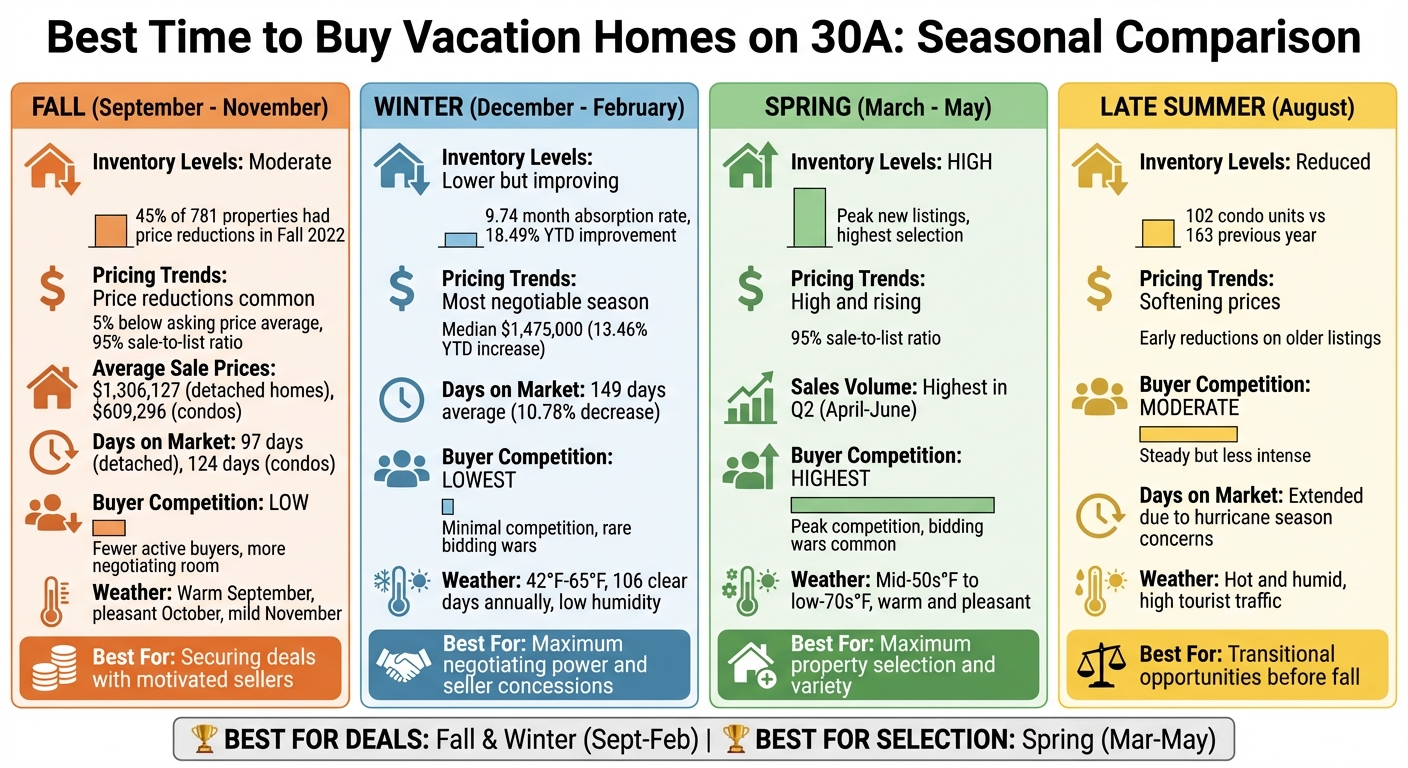
The best time to buy a vacation home on 30A depends on your priorities - price, inventory, or competition. If you're looking for lower prices and motivated sellers, focus on fall and winter months (September–February). During these seasons, sellers are more flexible, and buyer activity is lower, giving you room to negotiate. For example, January typically sees increased inventory as sellers prepare for the rental season, but buyer competition remains minimal.
If you prioritize selection and variety, spring (March–May) offers the highest inventory but comes with higher prices and fierce competition. Late summer (August) provides a transitional period with some price reductions, though inventory begins to shrink.
Key takeaways:
- Fall (Sept–Nov): Moderate inventory, price reductions, low competition.
- Winter (Dec–Feb): Lower prices, motivated sellers, minimal competition.
- Spring (Mar–May): High inventory, rising prices, peak competition.
- Late Summer (Aug): Reduced inventory, softer pricing, moderate competition.
Each season offers unique benefits depending on your goals. Winter is ideal for securing deals, while spring and summer are better for finding a wider range of properties.
Best Time to Buy Vacation Homes on 30A: Seasonal Comparison Guide
30A Market Update 2026 - Inventory Surges, Insurance Shifts and What Buyers Must Know
1. Fall (September to November)
Fall is a prime time to buy on 30A, thanks to increased inventory, motivated sellers, and reduced competition. Robin Maynard from Davis Properties sums it up perfectly:
While Spring may be the best time to sell, Fall is usually the best time to buy.
Here’s a closer look at why Fall stands out for buyers, covering inventory, pricing, buyer activity, and weather conditions.
Inventory Levels
Fall brings a noticeable uptick in available properties. Unsold summer listings and rentals hitting the market contribute to this surge. For example, in Fall 2022, around 45% of the 781 residential properties listed had price reductions. By Q4 2025, the Emerald Coast saw 506 detached homes and 303 condos sold, with properties averaging 97 days on the market for detached homes and 124 days for condos.
Pricing Trends
As demand slows in September, buyers often secure better deals. During Q4 2025, properties sold for an average of 5% below asking price, with a sale-to-list ratio of 95% for both detached homes and condos. Gulf-front properties offered even more flexibility, with a 92% sale-to-list ratio. The average sale prices during this period were $1,306,127 for detached homes and $609,296 for condos.
Buyer Competition
Fewer active buyers in Fall mean less pressure to act quickly. This allows for more thorough evaluations and personalized attention from agents and lenders who have lighter workloads. It’s a favorable environment for negotiations. As Amin Delawalla of the Delawalla Group explains:
2025 was defined by normalization and opportunity: sellers needed sharper pricing and stronger marketing, while buyers gained more choices and negotiating room than in recent years.
Weather Conditions for Property Viewings
September offers warm weather and fewer crowds, creating a relaxed atmosphere for property tours. October follows with pleasant days and cooler evenings, making it ideal for exploring neighborhoods. By November, mild weather and quieter beaches set the stage for detailed inspections. The cooler temperatures are also perfect for testing heating systems and assessing roofs before winter sets in.
2. Winter (December to February)
Winter on 30A offers a calmer market, with more inventory and motivated sellers, making it a season full of opportunities - even if the beaches are cooler and less lively.
Inventory Levels
As of February 2026, inventory levels across 30A are higher, creating a market that favors buyers. The absorption rate sits at 9.74 months, reflecting an 18.49% improvement year-to-date. Meanwhile, properties spend an average of 149 days on the market, marking a 10.78% decrease. New listings often pop up by mid-January, as sellers align with their New Year’s goals and prepare for the upcoming spring season. These winter trends highlight the unique ebb and flow of 30A's real estate cycle, giving buyers a strategic edge.
Pricing Trends
While winter is considered the off-season, prices remain firm. In February 2026, the median sale price climbed to $1,475,000 - a 13.46% year-to-date increase. However, sellers are eager to negotiate and close deals quickly. As Melinda Azar from eXp Realty explains:
Sellers who list in January mean business - they're serious sellers ready to close deals fast.
Unsold properties from the fall often see price reductions, attracting committed buyers. Sellers are also more open to negotiating on price or offering concessions like covering closing costs to finalize sales before spring picks up.
Buyer Competition
Winter is a quieter time for 30A’s market, with fewer active buyers and less competition. This means bidding wars are rare, and agents have more time to provide personalized attention and thorough property tours. Interestingly, closed sales in February 2026 were up 12.3% compared to February 2025, though overall buyer activity remains much lower than during the busier months.
Weather Conditions for Property Viewings
Winter temperatures in 30A range from 42°F to 65°F, offering a pleasant climate for property tours. The area averages 106 clear days annually, and the lower humidity makes outdoor activities like biking along the 30A path enjoyable. Be sure to dress in layers to adjust to the daily temperature swings. Plus, the quiet beaches create a serene atmosphere, perfect for evaluating potential investments without distractions. These seasonal details provide a clear picture of how winter shapes 30A’s real estate market, helping buyers make informed decisions.
3. Late Winter to Early Spring (Late February to March)
Late February through March is a transitional period for 30A, offering a calm before the springtime surge. During this time, inventory levels are high, and buyer interest begins to pick up as the peak season nears.
Inventory Levels
Vacation hotspots like Seagrove and Seacrest see a rise in new listings as sellers aim to catch the attention of spring buyers early. Drew Auker from Auker Group explains:
during spring months, buyers will find a higher inventory of available properties, but you'll also face more competition from other buyers, which can drive up prices.
This influx of listings creates opportunities but also sets the stage for increased competition as spring approaches.
Pricing Trends
While prices hold steady during this period, the higher inventory gives buyers some room to negotiate, particularly on properties lingering on the market for over 149 days. Real estate expert Marc Miller notes:
Buyers should expect competition for high-quality listings, particularly in walkable communities and near the beach.
He also highlights that luxury beachfront properties have maintained strong pricing despite market fluctuations.
Buyer Competition
As March nears, competition ramps up. Spring Break brings a wave of visitors, many of whom turn into potential buyers after experiencing the charm of 30A firsthand. Corbin Roush from Spears Group points out:
rental income can be strong during Spring Break weeks as visitors seek warm weather and beachfront experiences before the summer crowds arrive.
This is a prime time for investment-minded buyers to act, as securing a property now positions them to take advantage of peak summer rental demand. With rising buyer activity, the market becomes increasingly competitive.
Weather Conditions for Property Viewings
The weather during late February and March is mild, with temperatures ranging from the mid-50s°F to the low 70s°F. These comfortable conditions make it an ideal time for property tours. Open houses see higher attendance, and the vibrant atmosphere of the neighborhoods becomes more apparent compared to the quieter winter months. This lively environment offers buyers a chance to evaluate both the property and the community before making their decision.
4. Late Spring (April to May)
Late spring is when 30A's real estate market truly heats up. Historically, the second quarter (April through June) sees the highest number of property sales, making this the peak selling season. Warm, inviting weather during this time not only attracts visitors but also turns many into serious buyers. Let’s break down why this season is so pivotal for the market.
Inventory Levels
The market sees a surge in inventory during April and May, as many sellers list their properties starting in early to mid-March. This timing ensures a broader selection for buyers during these months. As Robin Maynard from Davis Properties points out:
Historically, more properties are sold in the second quarter (April-June) than any other.
While buyers may find more options, the increased activity means competition remains fierce.
Pricing Trends
Late spring typically brings higher prices compared to the fall and winter months, driven by stronger buyer demand. The sale-to-list ratio hovers around 95%, showing that well-positioned properties are still selling close to their asking prices. This trend underscores the importance of pricing strategies for sellers and quick decision-making for buyers.
Buyer Competition
Buyer competition reaches its peak in late spring. With motivated sellers and rising prices, the market becomes highly active. Jon Lyons, author of Live 30A, captures the dynamic perfectly:
Expect a busy buyer market in the springtime, fueled by lots of momentum leading up to it.
Savvy buyers often aim to secure properties before the peak rush, targeting homes between January and April. Another strategy is focusing on properties that have been on the market for over 180 days or exploring off-market opportunities through local agents.
Weather Conditions for Property Viewings
April and May provide ideal weather for property tours. April showcases 30A at its springtime best, with mild temperatures and blooming landscapes perfect for outdoor inspections and neighborhood visits. By May, the water warms up, and beach days become irresistible - all without the heavy crowds of summer. These shoulder-season perks allow buyers to experience properties in near-summer conditions while avoiding the peak tourist influx.
5. Late Summer (August)
By the time August rolls around, the bustling energy of spring and early summer on 30A begins to ease. This period marks a turning point in the market - inventory starts to shrink, and sellers become more motivated as the pace cools. For buyers, this creates an opportunity to take advantage of leftover listings and negotiate better deals as the area transitions into the quieter fall season.
Inventory Levels
In August, inventory noticeably thins compared to the peak months of spring and early summer. Many condo owners list properties during the height of the rental season, which means fewer fresh listings appear later in the summer. Additionally, concerns about hurricane season can cause properties to linger on the market longer than usual, giving buyers more options to consider.
Pricing Trends
While prices remain elevated due to summer demand, the market begins to show signs of softening. Sellers who listed properties in the spring often adjust their expectations, leading to early price reductions as the season winds down. For example, condo sales in August 2025 dropped to 102 units year-to-date, a noticeable decline from 163 units during the same period in 2024. If you're hunting for a deal, focus on properties that have been listed for over 180 days - these are more likely to come with flexible pricing.
Buyer Competition
Competition among buyers remains steady but less intense than during the spring frenzy. According to Stephanie Phillips of Resort Real Estate Group:
Late summer and early fall often slow down, partly due to hurricane-season uncertainty, which can reduce showings and extend DOM.
With fewer active buyers in the mix, there's more breathing room for negotiations and less urgency to make quick decisions. For proactive buyers, this transitional period offers a chance to secure properties before the market shifts further toward their advantage.
Weather Conditions for Property Viewings
August's warm, sunny weather is perfect for showcasing outdoor amenities, but the high tourist traffic can make scheduling property tours tricky. To avoid the crowds, plan viewings during weekdays or early in the day. Additionally, it’s wise to get insurance quotes and check flood zone classifications early in the buying process. Hurricane season can complicate closings and impact insurance premiums. These weather-related factors highlight both the challenges and opportunities of navigating the market in late summer.
Seasonal Comparison Table
This table breaks down key seasonal trends to help you navigate the 30A housing market. Each season brings its own mix of inventory, pricing, competition, and weather, which can influence your buying decisions.
| Season | Inventory Levels | Pricing Trends | Buyer Competition | Weather Conditions |
|---|---|---|---|---|
| Spring (March–May) | High (Peak New Listings) | High / Rising | High (Bidding Wars) | Warm & Pleasant |
| Summer (June–August) | High | Peak Prices | Peak Competition | Hot & Humid |
| Fall (September–November) | Moderate | Price Reductions Common | Lower / Serious Buyers | Mild & Clear |
| Winter (December–February) | Lower | Most Negotiable | Lowest | Cool & Quiet |
Winter stands out for its low buyer competition and the most room for price negotiations, although the selection of homes is smaller. If you're eyeing properties that have lingered on the market for over 180 days, this quieter season can be your best chance to strike a deal. On the flip side, spring and summer bring the highest number of new listings but also come with rising prices and fierce competition, often leading to bidding wars.
These patterns can help you decide when to buy and how to approach the unique dynamics of the 30A market.
Conclusion
To recap the seasonal trends: fall and winter are ideal for buyers seeking lower prices and motivated sellers. Local Realtor Melinda Azar highlights January as a standout month in 30A, Florida:
January stands out as a top pick for winter home buying in 30A, Florida. With lower competition, serious sellers, more negotiating room, and rising inventory trends, the local real estate market rewards those who start their early-year home search now.
During these months, homes that have been on the market longer often see price reductions.
For those prioritizing selection, spring and summer bring the largest inventory, though they come with higher competition and bidding wars. As noted by the Auker Group:
if you're looking for a primary residence and want the best selection of properties, spring and summer may provide more options.
Looking at the seasonal trends table, the off-season months - September through February - present an opportunity to find better deals with motivated sellers. Winter, in particular, allows more room for negotiating closing costs, while fall offers moderate inventory without the intense competition of peak seasons.
For more insights and updates, visit sowal.co. By keeping these seasonal patterns in mind, you can make a well-timed decision in this unique coastal market.
FAQs
What month is best for the lowest price on 30A?
January is often the prime time to snag the lowest prices on 30A properties. With winter in full swing, the market tends to quiet down, and demand drops. This slowdown gives buyers a chance to negotiate more favorable deals.
How can I win a spring bidding war on 30A?
To come out on top in a spring bidding war on 30A, preparation is everything. Start by securing a solid mortgage pre-approval - this signals to sellers that you're a serious contender. Be ready to adapt your closing timeline to meet the seller's needs, and while offering a competitive price can make a difference in a hot market, it's important not to stretch beyond what the property is worth. Move quickly when you find a property you love, and partner with a knowledgeable local real estate expert. They'll help you understand market trends and guide you in crafting a strong, straightforward offer that stands out.
What should I check about hurricane risk before buying in August?
August falls right in the heart of hurricane season, which spans from June 1 to November 30. If you're evaluating a property during this time, it's crucial to consider its flood zone status. Properties in flood-prone areas often come with higher insurance premiums and increased risks.
Take the time to review local hurricane preparedness efforts. This includes checking building codes, evacuation routes, and other safety measures in place. Ensuring the property has adequate flood and windstorm insurance is another must.
Lastly, examine historical hurricane patterns and keep an eye on current forecasts. This information can help you make a well-informed decision about the property.