Best Times for Beachfront Living on 30A
May and October are the best months for beachfront living on 30A—warm water, fewer crowds, less traffic, and better rates than summer.
If I want the short answer, I’d pick May or October. Those two months usually give me the best mix of warm water, lighter crowds, less traffic, and lower nightly rates than peak summer.
Here’s the simple breakdown:
- Spring: March is busy, April starts to calm down, and May is one of the easiest months for day-to-day beach living.
- Summer: June through August has the warmest Gulf water at 80°F to 85°F, but it also brings the most traffic, packed parking, and high rental costs.
- Early fall: September and October keep warm water, with fewer people after Labor Day. October stands out for many long-stay visitors.
- Winter: December through February is the quietest and cheapest stretch, but Gulf water drops to 58°F to 63°F, and some places cut hours or close for part of the season.
If I’m thinking beyond a short trip, I’d focus on the stuff that shapes daily life:
- Beach parking that can fill by 9:00 a.m. in peak season
- Saturday traffic that can turn a 10-minute drive into an hour
- Summer rental rates around $700 to $800 per night
- Winter rates closer to $300 to $350 per night
- Spring and fall pricing often 25% to 35% below peak July rates
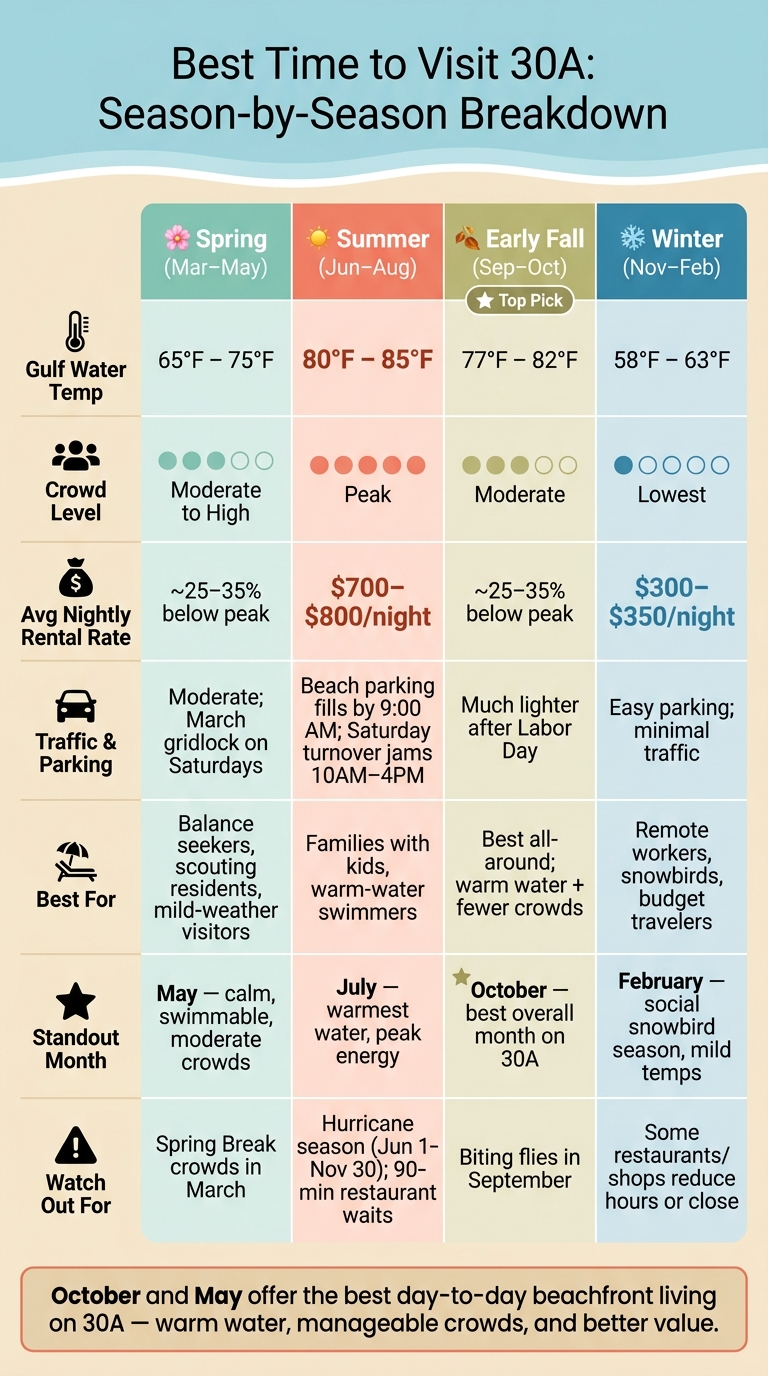
Best Time to Visit 30A: Season-by-Season Comparison Guide
Quick comparison
| Season | Best fit | Gulf water | Crowds | Cost |
|---|---|---|---|---|
| Spring (Mar–May) | Mild weather and better balance | 65°F–75°F | Moderate to high | Lower than summer |
| Summer (Jun–Aug) | Families and long swim days | 80°F–85°F | Peak | Highest |
| Early Fall (Sep–Oct) | Warm water with less hassle | 77°F–82°F | Moderate | Lower than peak |
| Winter (Nov–Feb) | Quiet stays and low rates | 58°F–63°F | Lowest | Lowest |
My takeaway: there’s no perfect season. I’d choose May if I want spring weather and swimmable water, October if I want the best all-around month, summer if warm water matters most, and winter if I care most about peace and price.
That’s the lens I’d use to read the rest of this guide: not “when is 30A best,” but “best for what kind of beachfront life?”
sbb-itb-d06eda6
Spring on 30A: Mild Weather and a Balanced Beach Routine
Spring feels different on 30A depending on the month. March, April, and May don’t just look different on paper. They change how the place works day to day. March is the busiest stretch, while May is the easiest month to settle into.
Spring Break crowds hit hardest in March. On Saturday turnover days, Highway 98 can lock up, and popular restaurants can see 90-minute waits. Andy Beal, a 30A Realtor, puts it plainly:
"A drive from Seaside to Rosemary Beach that should take 10 minutes can take an hour on a peak turnover Saturday."
That’s why, in March, biking between nearby beach towns is often easier than driving.
March vs. April vs. May for Everyday Beachfront Life
The month-to-month shift is pretty clear when you look at daily beachfront living side by side.
| Month | Typical Air Temp (°F) | Gulf Water Temp | Crowd Level | Daily Pace |
|---|---|---|---|---|
| March | 50°–72° | 65°F | Peak | High energy; Spring Break traffic; gridlock Saturdays |
| April | 58°–78° | 70°F | Moderate-High | Warming up; crowds thin by late month; good for biking |
| May | 65°–83° | 75°F | Moderate | Calm and swimmable; best balance of warm water and moderate crowds |
The water temperature makes a big difference. At 65°F in March, the Gulf is still cold enough that many people, especially kids, won’t want to stay in long. April gets closer to that line where swimming starts to feel okay for most people, with water around 70°F. By May, at 75°F, it feels much more inviting.
May gives you the best mix of conditions in spring: warmer water, moderate crowds, and lower rates than peak summer. Since schools are still in session, the beaches usually stay calmer until Memorial Day. Rental rates are 25% to 35% below peak July pricing, and minimum stays often drop from seven nights to three or four.
That shift matters a lot if you’re planning to spend actual time here instead of making a quick stop.
Who Benefits Most from Spring on 30A
April and May work well for families and for visitors who want a lighter, less hectic trip. Humidity stays lower than summer, restaurant waits are shorter, and spots like the top 30A bike trails and nearby state parks are easier to enjoy without peak-season traffic and crowd pressure.
For anyone considering a move to 30A, spring is one of the best times to visit. You get a clearer feel for what communities like Seaside or WaterColor are like to live in, without peak-season congestion skewing the picture.
Spring sits right between winter’s quiet and summer’s rush. That middle ground is what makes it worth a closer look before moving on.
Summer on 30A: Warm Water, Family Energy, and Full Activity
If spring feels balanced, summer is the high point. This is 30A at full speed: warm Gulf water, packed town centers, and a busy event schedule from June through August.
The Gulf hits 80°F in June, 84°F in July, and 85°F in August, which makes summer a great time for long swims and full beach days with the family. It’s the season when people stay in the water for hours, then head straight into town for dinner, ice cream, or whatever comes next.
July 4th is the busiest day of the year. Big parades in Seaside and Grayton Beach pull huge crowds. That demand shows up in rental prices too. In places like Seaside and Rosemary Beach, rates often land around $700 to $800 per night, and many rentals come with strict seven-night, Saturday-to-Saturday minimums. By August, the water is at its warmest at 85°F, but the walk across hot sand can still feel brutal.
Hurricane season runs from June 1 through November 30, with the highest risk from August to October. If you're planning a longer stay, that risk becomes part of the trip planning, not just something to check on the weather app.
What Daily Life Looks Like in Peak Season
Summer days here tend to revolve around two things: heat and traffic.
Public beach parking often fills by 9:00 a.m., so getting out early matters. Then the pattern flips in the afternoon. Near-daily thunderstorms usually show up around 2:00 p.m., clearing the beach and sending people toward restaurants, stores, and covered patios. That shift creates another bottleneck, and popular spots often have 90-minute waits during peak weeks.
Saturdays are the toughest day to drive anywhere. Turnover traffic can jam Highway 98 and Scenic 30A from 10:00 a.m. to 4:00 p.m., which means biking or walking is often faster. Late August brings one more annoyance: biting flies from the coastal dune lakes.
Summer Pros and Cons for Beachfront Living
| Factor | Pros | Cons |
|---|---|---|
| Weather | Warmest Gulf water (80°F–85°F); ideal for extended swimming | Heat index often climbs above 100°F; near-daily afternoon storms |
| Crowds | Busy, family-driven atmosphere; most businesses and events fully active | About 30% more visitor traffic than October; 90-minute restaurant waits |
| Convenience | Shops, restaurants, and amenities are fully open | Public beach parking often fills by 9:00 a.m.; Saturday turnover gridlock; seven-night, Saturday-to-Saturday minimums |
| Lifestyle fit | A strong match for families with school-aged children | Heavy heat and humidity can wear people down; biting flies show up in August |
| Risks | Long sunny days for outdoor activity | Hurricane season starts June 1; June Grass can show up in early summer |
Fall and Winter on 30A: Quieter Beaches, Better Value, and Local Rhythm
After summer, 30A settles down in the best way. When the traffic thins out, daily beach life gets a lot easier - parking is less of a headache, restaurant waits get shorter, and the shoreline feels far more usable. For long-stay visitors, snowbirds, and remote workers, the stretch from September through February is often the sweet spot.
Early Fall vs. Late Fall: Comfort and Crowd Levels
September feels like the payoff after a packed summer. The Gulf stays warm at 82°F, humidity starts to ease, and beaches are much less crowded once Labor Day passes. One small catch: north winds can bring biting flies in September. By October, things calm down even more, and the pace on 30A gets noticeably slower.
By November, swimming starts to fade for many people, and the season shifts more toward biking, walks, and local events.
| Feature | Early Fall (Sept–Mid Oct) | Late Fall (Late Oct–Nov) |
|---|---|---|
| Water Temp | 77°F–82°F; great for swimming | Drops to 70°F; too cool for many swimmers |
| Crowd Levels | Moderate; more local than tourist-driven | Low; quiet and peaceful |
| Weather | Warm with lower humidity | Cooler; jacket weather begins |
| Notable Events | 30A Half Marathon, BBQ Festival | MountainFilm Festival, Thanksgiving |
| Value | 25%–35% below peak rates | Rates getting close to winter lows |
By December, 30A starts to feel less like a beach trip and more like quiet coastal living.
What Winter Living Offers from December through February
From December through February, 30A is at its calmest. The Gulf drops to 58°F in January, which is too cold for most swimmers, but the beaches are close to empty and the day-to-day rhythm is slow in a good way. Air temperatures range from lows around 42°F in January to highs near 65°F in December and February, so layers are a smart move.
| Month | Avg Air Temp (°F) | Avg Water Temp (°F) | Daily Pace |
|---|---|---|---|
| December | 45°–65° | 63° | Festive; holiday lights and New Year's events |
| January | 42°–62° | 58° | Quietest; solitude and rock-bottom rates |
| February | 45°–65° | 60° | Social; snowbirds and mild-weather stays |
Winter brings the lowest rates of the year. In Seaside or WaterColor, quality rentals that cost $700–$800 a night in July can drop to $300–$350 in winter. That's a big swing.
There are trade-offs, of course. Some restaurants cut back their hours. Some shops close during January and February. Off-season construction is also common. If noise might be an issue, it's smart to ask your rental host straight up if there's active work happening on the street.
"From November through February, 30A transforms. The rental crowds disappear... Locals reclaim their town." - Andy Beal, 30A Realtor
For remote workers and snowbirds, this is when places like Rosemary Beach and Alys Beach show what they feel like without the summer rush - calm, local, and easy to enjoy at a slower pace. Events like the 30A Songwriters Festival on MLK weekend in January and the Sandestin Gumbo Festival over Presidents' Day weekend in February add a social spark without bringing back peak-season madness.
Conclusion: Which Season Fits Your 30A Beachfront Lifestyle
The best season comes down to what matters most to you: warmth, calm, or better value.
| Season | Best For | Water Temp | Crowd Level |
|---|---|---|---|
| Spring (March–May) | Balance, mild air, warming water | 65°F–75°F | Moderate to high |
| Summer (June–August) | Warm water, family energy, full amenities | 80°F–85°F | Peak |
| Early Fall (September–October) | Best overall mix of weather, water, and quieter beaches | 77°F–82°F | Moderate |
| Winter (November–February) | Peace, solitude, and lowest rates | 58°F–63°F | Lowest |
Use the table above as the quick answer, then line it up with the kind of beachfront life you want.
Spring is a good fit if you like mild weather and some activity, but don’t want the full rush of summer. Summer brings the warmest Gulf water and the most energy, which makes it the strongest match for families with school-aged kids. If that season feels a bit too packed, early fall is often the better pick.
October is the strongest all-around month - water stays at 77°F, humidity drops, and crowds thin out in a noticeable way. Winter fits travelers who want empty beaches, low rates, and a slower pace - you just need to be ready for cold water and shorter business hours.
"Knowing the best time to visit 30A comes down to two things: your budget and your tolerance for crowds. Everything else flows from there." - Andy Beal, 30A Realtor
For many beachfront residents, October and May hit the sweet spot for day-to-day living and easy beach access. Finding the right timing is just as important as choosing the right 30A neighborhood for your lifestyle.
FAQs
When is the cheapest time to stay on 30A?
January and February are usually the cheapest months to stay on 30A. Demand is at its lowest, and rental rates are often 50% or more below peak summer prices.
There is a catch: Gulf water is cooler, so swimming may not sound as tempting. But for a lot of travelers, that’s a fair swap. You get more space, very few crowds, and a calmer beach-town feel. On top of that, many properties run snowbird specials from November through March.
Is October warm enough for swimming on 30A?
Yes. October is widely seen as a great time for swimming on 30A, with Gulf water temperatures averaging 77°F to 81°F.
You can also expect air temperatures around 80°F, lower humidity, and smaller crowds than in summer. That means the beach usually feels more comfortable and a lot less hectic.
Which month is best for avoiding crowds on 30A?
For the fewest crowds, January and February are usually the best months to visit 30A. The vibe is quieter, slower, and a lot more laid-back.
If you want fewer people and warmer weather, May and October are also popular picks. They give you a nice mix of beach time and lighter crowds than peak summer.