
Checklist for Choosing Respite Care in South Walton
Checklist for choosing respite care in South Walton: verify licensing and staff, compare services and costs, inspect facilities, and review trial and cancellation policies.

When selecting respite care in South Walton, focus on these key factors to ensure the best experience for your loved one and peace of mind for yourself:
- Licensing and Staff Qualifications: Verify the provider's license through Florida's AHCA system. Ensure staff certifications (e.g., CNA, RN) are up-to-date and include background checks.
- Services Offered: Look for personal care, homemaker tasks, medication assistance, transportation, and tailored care plans for specialized needs like dementia.
- Costs and Financial Assistance: Costs range from $15–$500 per day depending on services. Explore programs like NWFLAAA, Medicaid, or VA benefits for financial support.
- Care Quality and Environment: Check cleanliness, safety features, and staff-to-resident ratios during facility visits. Request trial stays to assess compatibility.
- Location and Accessibility: Prioritize convenient locations near South Walton’s resources, like ADA-accessible beach points and local transportation services.
- Policies: Review trial options, cancellation terms, and written agreements for transparency on fees and care plans.
What Should I Ask When Choosing Respite Care? - CountyOffice.org
Check Licensing and Staff Qualifications
When choosing a respite care provider in South Walton, it's crucial to confirm their licensing and the qualifications of their staff. In Florida, the Agency for Health Care Administration (AHCA) oversees licensing and regulation for long-term care providers, including those offering respite services. Providers may operate as licensed nursing homes, assisted living facilities, or homemaker and companion service providers.
Confirm Licensing and Accreditation
Start by using the AHCA Online Licensing System to confirm that the provider holds a valid license and check for any past deficiencies. Ask for the provider's state license number and request a copy of their latest inspection report. These reports, typically available through AHCA or the Florida Department of Health, cover essential areas like sanitation, food safety, and disease prevention compliance. If the care involves developmental disabilities, ensure the provider is registered with the Agency for Persons with Disabilities (APD).
For instance, Emerald Coast Health and Rehab offers 24-hour respite care in South Walton, as of January 2026. Their services include medication management and continuous nursing care provided by licensed professionals, such as nurses and therapists specializing in physical, occupational, and speech therapy.
Once licensing is verified, the next step is to assess the qualifications of the provider's staff.
Review Staff Training and Certifications
Ensure that the staff meet all required qualifications, such as certifications for Certified Nursing Assistants (CNA) or Registered Nurses (RN), and confirm they have passed background checks through the AHCA Background Screening Clearinghouse. Staff credentials should also include ongoing continuing education to maintain their certifications.
If your loved one has specialized needs, such as dementia care or pediatric care, verify that the staff have completed specific training in those areas. Additionally, check for essential safety certifications like First Aid and CPR, which require regular renewal - typically every one or two years.
The demand for qualified professionals in home health and personal care is growing rapidly, with a projected 36% increase in these roles by 2028, underscoring the importance of finding well-trained staff.
Review Services and Customization Options
Once you've confirmed licensing and staff credentials, it's time to dive into the services a provider offers and how well they can adapt to specific needs. In South Walton, respite care often includes a variety of services such as personal care (help with bathing, grooming, dressing, and toileting), homemaker tasks (meal preparation, light housekeeping, and laundry), medication assistance, and companionship. Many providers also offer transportation for medical appointments or social outings. These services can often be adjusted to suit individual care requirements, as demonstrated by local providers.
Core Respite Care Services
Take, for instance, Visiting Angels in Shalimar/Destin, which specializes in dementia support and transitional care for those recovering from a hospital stay. Similarly, Home Instead in Fort Walton Beach creates personalized in-home care plans that include companionship and medication reminders.
It’s important to clarify whether a provider offers simple medication reminders or full medication administration, as the latter requires licensed medical supervision. For individuals needing more comprehensive care, facilities like Emerald Coast Health and Rehab provide 24-hour licensed nursing care, medication management, and therapy services, including physical, occupational, and speech therapy.
Customization for Specific Needs
Tailoring care plans to meet unique needs is key to ensuring the best experience. Most respite providers start with a thorough assessment to create a personalized plan that aligns with your loved one's daily routines, health requirements, and preferences. A customized plan not only addresses medical and physical needs but also supports emotional and mental well-being. This might include adjustments for dietary restrictions, mobility assistance, or specialized care for conditions like Alzheimer's or dementia.
For individuals with memory care needs, sharing specific details - like environmental triggers (e.g., sensitivity to loud noises) or calming techniques (e.g., favorite music or hobbies) - can significantly enhance the quality of care provided.
"Home Instead advocates personalized care tailored to each individual's needs."
Consistency is another crucial element. Documenting daily care routines helps maintain a sense of familiarity and stability. If specialized equipment, such as a CPAP machine or orthopedic braces, is required, ensure these details are included in the care plan and confirm that the provider is equipped to handle them.
Understand Costs and Financial Assistance
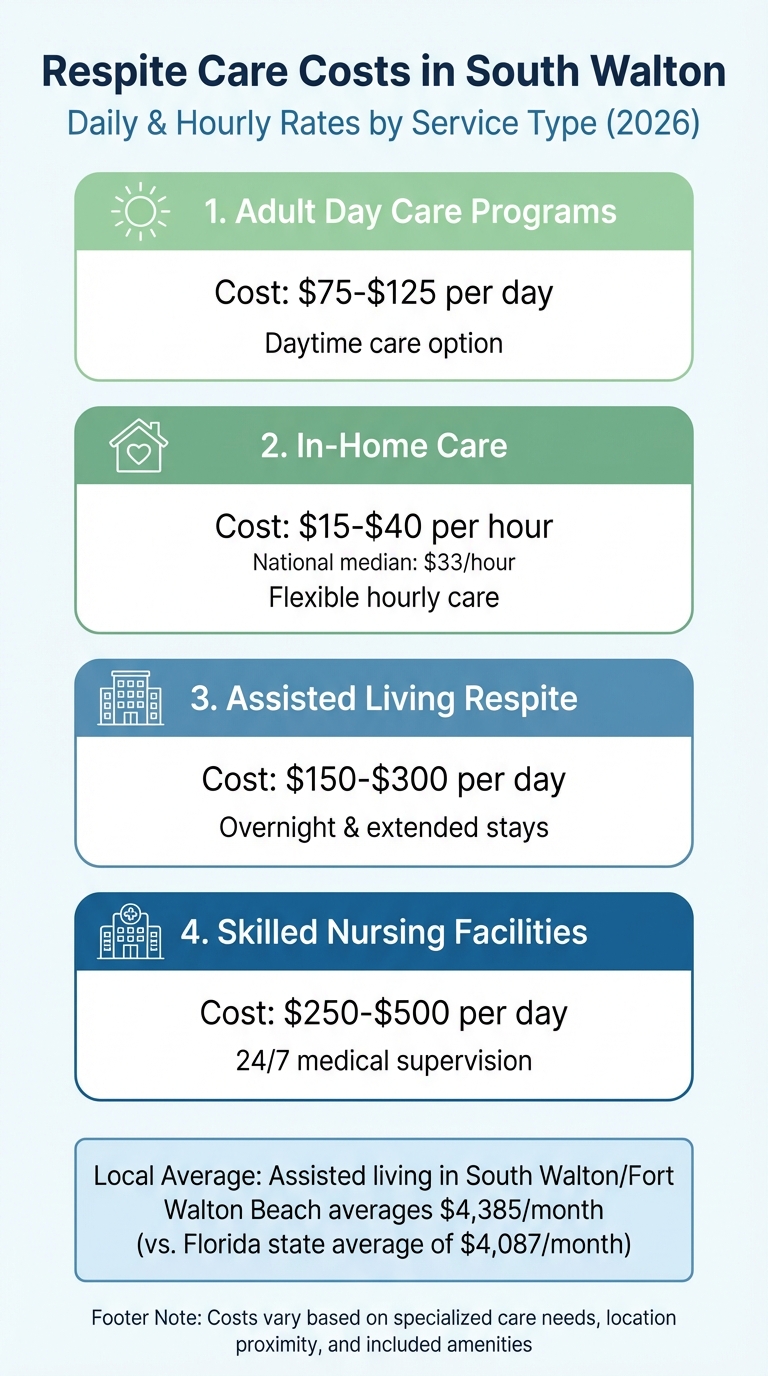
Respite Care Costs in South Walton: Daily Rates by Service Type
Average Costs of Respite Care
The cost of respite care in South Walton depends on the type of service and the level of medical care required. For adult day care programs, prices generally fall between $75 and $125 per day, offering a cost-effective daytime option. If you’re considering in-home care, rates range from $15 to $40 per hour, with the national median landing around $33 per hour. For overnight or extended stays, assisted living respite care typically costs $150 to $300 per day, while skilled nursing facilities with round-the-clock medical supervision charge between $250 and $500 per day.
In South Walton and nearby Fort Walton Beach, the average monthly cost for assisted living services is $4,385, which is higher than Florida's state average of $4,087. Factors such as proximity to the coast, specialized care needs (like dementia support), and included amenities - such as transportation or recreational activities - can drive costs up. To avoid surprises, ask for a detailed breakdown of base fees and any additional charges. Once you understand the costs, explore available financial assistance programs to help manage them.
Financial Assistance Programs
Families in South Walton have access to several programs designed to ease the financial burden of respite care. The Northwest Florida Area Agency on Aging (NWFLAAA) offers state and federally funded resources for residents aged 60 and older, including caregiver support and long-term care assistance. For eligibility details and service information, call the Elder Helpline at 850-494-7100 or toll-free at 866-531-8011.
Another resource is Caring & Sharing of South Walton, which provides crisis relief to low-income residents in Walton County. This includes financial help with prescriptions, overdue rent, and utility bills. In 2024 alone, the organization supported over 900 families each month and offered financial aid to 114 clients. They also assist with Medicaid and food stamp applications at their Santa Rosa Beach office (112 Lynn Drive) during the hours of 9 AM to 2 PM on Monday, Wednesday, and Friday.
Veterans may find respite care support through VA benefits, while Medicare Part A can cover up to five days of inpatient respite care for individuals already receiving hospice services. However, note that a 5% co-payment is usually required for this coverage.
Evaluate Care Quality and Environment
Inspect the Facility or Home Setting
The environment of a care facility speaks volumes about its dedication to safety and comfort. During your visit, take note of the cleanliness in both common areas and private rooms. Many local providers include regular housekeeping services, with some even offering daily cleaning routines. Look for essential safety features, such as secure spaces for residents with Alzheimer's or dementia, and accommodations like roll-in showers and handicap-accessible restrooms.
"Let us provide the 24 hour care in a secure and comfortable environment." - Emerald Coast Health and Rehab
It’s also a good idea to request detailed floor plans to confirm room sizes, which typically range from 320 to 660 square feet. To get a full picture of the facility's operation, visit at various times throughout the day, especially during busy periods. Ask if there are specialized areas designed for specific needs, such as memory care neighborhoods tailored for residents with cognitive challenges. Once you've assessed the environment, the next step is to consider staffing levels, which play a crucial role in ensuring personalized care.
Review Staff-to-Resident Ratios
Staffing levels directly influence the quality of care your loved one will receive. Top-notch facilities in South Walton maintain licensed nursing staff on-site 24/7 to address residents' medical needs promptly. During your tour, observe how staff interact with residents and ask about staff-to-resident ratios, particularly during busy times like meals or medication rounds. It's equally important to confirm that staff members are licensed, bonded, and have passed recent criminal background checks. Adequate staffing ensures that residents receive individualized care plans that can be adjusted as their needs evolve.
Consider Location and Accessibility
Location Convenience
Santa Rosa Beach stands out as a prime spot for respite care along South Walton's Scenic Highway 30A. If you're looking for a central location, focus on the 32459 zip code - it provides easy access to all 16 beach neighborhoods, from Seaside to Rosemary Beach, along this picturesque 18-mile stretch.
One notable option is Watercrest Senior Living Group, which operates a purpose-built facility in Santa Rosa Beach offering assisted living and memory care. They describe their environment as "LifeBUILT" with "resort-style" services. Facilities near key intersections like US Highway 331 and Scenic Highway 30A make daily visits more convenient, especially if you're staying in nearby neighborhoods like WaterColor or Grayton Beach. When planning visits, it’s helpful to map out travel times to ensure accessibility. These well-placed locations also make it easier to connect with essential transportation services, which are detailed below.
Transportation and Local Resources
Transportation plays a vital role in providing quality respite care. Providers like Home Instead offer transportation services to help seniors attend medical appointments, run errands, or participate in social activities. It’s important to confirm whether the transportation covers a mix of social outings and medical visits or is limited to one type.
South Walton’s accessibility features are another highlight. Six out of the nine regional beach access points are ADA accessible, and from March 1 through October 31, the South Walton Fire District offers free beach wheelchairs at locations like Ed Walline and Inlet Beach. For added support, ask potential care providers if they collaborate with groups like Coastal Seniors of South Walton. These organizations can help seniors stay socially engaged and provide extra assistance during respite care periods.
Review Policies and Trial Options
When considering care options, it's crucial to review trial periods and cancellation policies to ensure your investment in care is protected.
Trial Periods and Short-Term Stays
Short-term stays can serve as a great way to test a facility before committing to a permanent placement. For example, in South Walton, facilities like Somerby Santa Rosa Beach (Assisted Living Facility #12667) offer "Short-Term" and "Seasonal Stays." These stays are designed for caregiver relief or post-surgery recovery and come with perks like customized care plans, access to fitness programs, and chef-prepared meals made with locally sourced ingredients.
In Florida, nursing homes limit respite stays to 14 consecutive days. If the stay exceeds this limit, a full assessment and care plan are required. Most residential communities also have minimum stay requirements, typically ranging from one week to a month.
State law mandates that facilities maintain an "abbreviated plan of care" for short-term residents. This plan must include details like nutritional needs, medication orders, physician instructions, and nursing assessments. Requesting a copy of this plan can help you determine how well the facility can meet your loved one's specific needs. Additionally, before admission, you'll need to provide a physician's order and physical exam documentation. These documents can enable intermittent respite care for up to 12 months.
Once you've explored trial options, the next step is to examine cancellation policies to ensure your agreement is secure.
Cancellation and Liability Policies
Clear cancellation policies are just as important as trial options. To avoid surprises, request a written contract at least two weeks before the stay begins. Florida law requires nursing homes to outline charges for services, emergency medical care, and medication administration policies. Reviewing these details early can help you spot hidden fees or penalties if plans change unexpectedly.
It's also important to verify release protocols. Ensure that residents are only discharged to the designated primary caregiver. Check if the facility allows your loved one to retain their personal physician and whether transportation is provided for essential medical services like physical or speech therapy. If the facility permits the use of personal medications, make sure a physician's order accompanies them to avoid liability issues during administration. Finally, label all personal belongings and medical equipment clearly to prevent loss or disputes.
| Requirement Type | Timeline | Key Documentation to Review |
|---|---|---|
| Medical Review | 2 Weeks Before | Medication lists, allergies, dietary needs |
| Administrative | 1 Week Before | Facility forms, emergency contacts, POA |
| Arrival Day | Day of Stay | Medication schedule, staff introductions |
Conclusion
Finding the right respite care in South Walton requires a careful approach: verifying credentials, tailoring care to individual needs, and tapping into local resources. Start by ensuring that providers meet all safety and training requirements to address both medical and daily living needs effectively.
"Knowing how to best find, assess and select a respite service or provider is important to help ensure the safety and quality of respite care."
This initial step lays the groundwork for choosing care that genuinely supports your loved one. Look for providers who create a welcoming environment, engage your loved one in their favorite activities, and maintain attentive, compassionate interactions. Once you've identified a potential match, solidify the arrangement with a clear, written agreement outlining care tasks, fees, and emergency procedures.
Don't forget to lean on local resources and trial options to guide your decision. Organizations like Caring & Sharing of South Walton and the Visit South Walton Visitor Center can connect you with trusted providers and community support. Trial periods can also help ensure compatibility before committing to long-term care. By combining thorough vetting, multiple visits, and local support networks, you can find respite care that meets your family’s needs while offering peace of mind.
For more information on respite care services in South Walton, visit sowal.co.
FAQs
What should I look for when selecting respite care in South Walton?
Choosing respite care in South Walton requires thoughtful planning to ensure your loved one gets the care they need while giving you peace of mind. Start by verifying that the provider is licensed, accredited, and has a team of skilled professionals experienced in addressing specific needs like dementia care or mobility challenges. It's also important to look for flexible care options - whether you need support for a few hours, overnight, or throughout the weekend. Decide on a setting that works best for your situation, whether that's at home, in a community center, or at a dedicated facility.
Proximity matters too. A nearby provider can make visits more convenient, reduce travel-related stress, and allow for quicker responses in emergencies. Don’t overlook costs and payment options - compare hourly rates, check what insurance covers, and explore sliding-scale fees or Medicaid eligibility if needed. Lastly, take the time to evaluate the provider's reputation and compatibility. Read reviews, ask for references, and, if possible, visit the facility to make sure it aligns with your family’s expectations and values.
South Walton offers local resources to help you compare providers and find the right match. By following these steps, you can make an informed decision that balances practical needs with the unique lifestyle of the area.
How can I check if a respite care provider in South Walton is licensed and qualified?
To confirm a respite care provider’s licensing and qualifications in South Walton, start by visiting the Florida Department of Children and Families (DCF) licensing database. You can search using the provider’s name or ZIP code to ensure they have an active license. Legitimate providers should openly share their license number and provide a copy if you ask. It’s always a good idea to cross-check this information directly in the DCF database for accuracy.
Next, take a closer look at the caregiver’s credentials. Request proof of certifications, such as Certified Nursing Assistant (CNA) or Home Health Aide (HHA), and make sure their background checks are up to date. If your loved one has specific care needs, ask about any relevant specialty training or certifications. Providers affiliated with agencies that meet recognized standards, like CARF accreditation, often deliver a higher level of care.
Lastly, seek out local feedback. Connect with other families in South Walton, read community reviews, and check resources like sowal.co for additional insights. By combining official records, caregiver qualifications, and input from the community, you can make a well-informed choice about the provider’s reliability and the quality of care they offer.
What are the financial assistance options for respite care in South Walton?
Respite care in South Walton doesn't have to be a financial burden, thanks to various assistance programs available to families. Local organizations, such as Caring & Sharing of South Walton, help ease the strain by covering essential costs like rent, utilities, and prescriptions. This support can free up resources for families to invest in respite care. They also assist with navigating applications for Medicaid and other state benefits that may include respite services.
On a broader scale, Florida's Lifespan Respite Care Program offers stipends or vouchers to qualified caregivers. These can be used for in-home or community-based care, providing much-needed relief. Medicaid's Home and Community-Based Services (HCBS) waivers also often cover respite care as part of their benefits. Beyond these, some private foundations and faith-based groups in the area may offer low-cost or even free respite care options.
For a detailed guide to local resources and assistance programs in South Walton, including how to connect with Caring & Sharing and other community services, check out the sowal.co guide tailored for families in the 30A area.