Coastal Dune Lakes and Marine Ecosystem Balance
Rare coastal dune lakes filter runoff, support brackish habitats and nurseries, stabilize dunes, and face threats from development and invasive species.
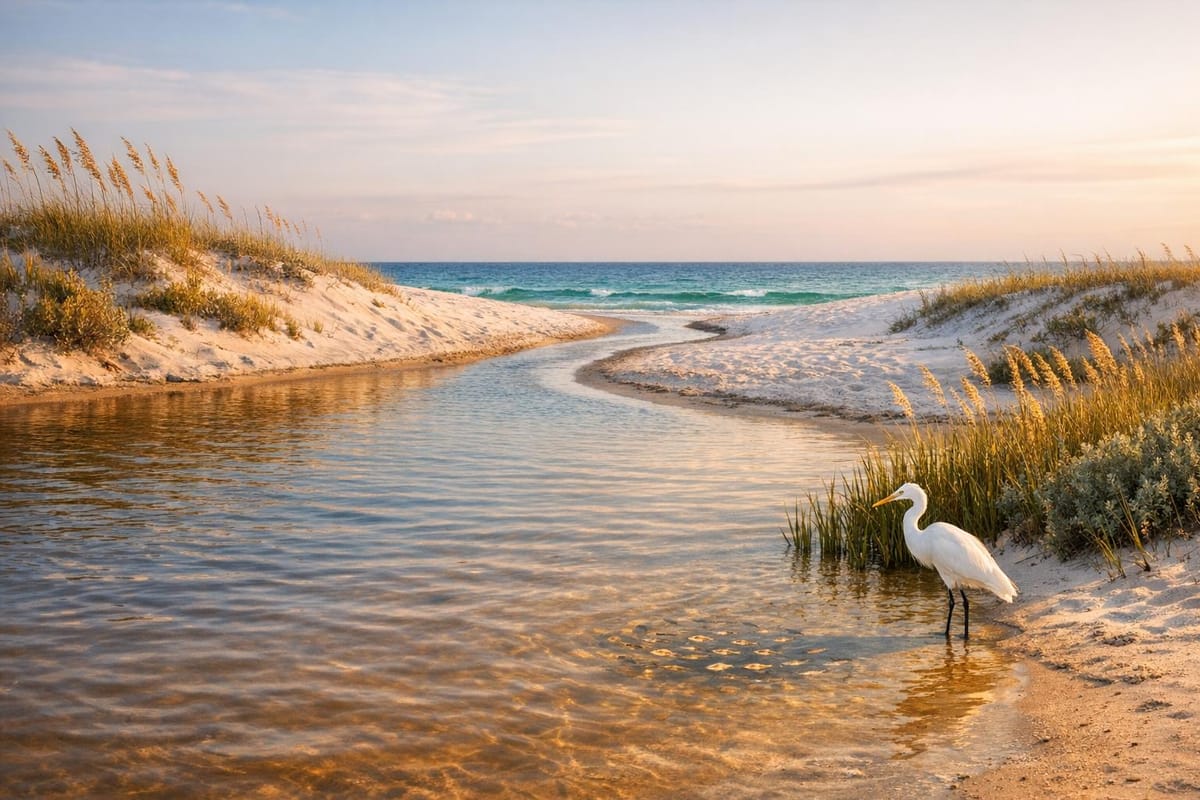
Coastal dune lakes are rare ecosystems found in only a handful of locations worldwide, including Northwest Florida. These shallow lakes naturally form where freshwater meets saltwater, creating a brackish mix that supports a diverse range of species. Their intermittent connection to the Gulf of Mexico - through temporary outfalls - enables the exchange of water, nutrients, and marine life, maintaining a delicate balance.
Key highlights:
- Water filtration: These lakes act as natural filters, managing runoff and improving water quality.
- Unique habitats: They support species like bass, redfish, sea turtles, and the Red Cockaded Woodpecker.
- Coastal protection: By stabilizing dunes and managing excess water, they help prevent erosion and flooding.
- Threats: Development, pollution, and species disruption endanger their balance.
- Conservation efforts: Projects like the restoration of Oyster Lake and community programs focus on protecting these fragile ecosystems.
Without careful management, these globally rare lakes face severe risks. However, through local initiatives, monitoring, and community participation, their future can be safeguarded for generations. Many visitors enjoy paddling these unique waters to experience their beauty firsthand.
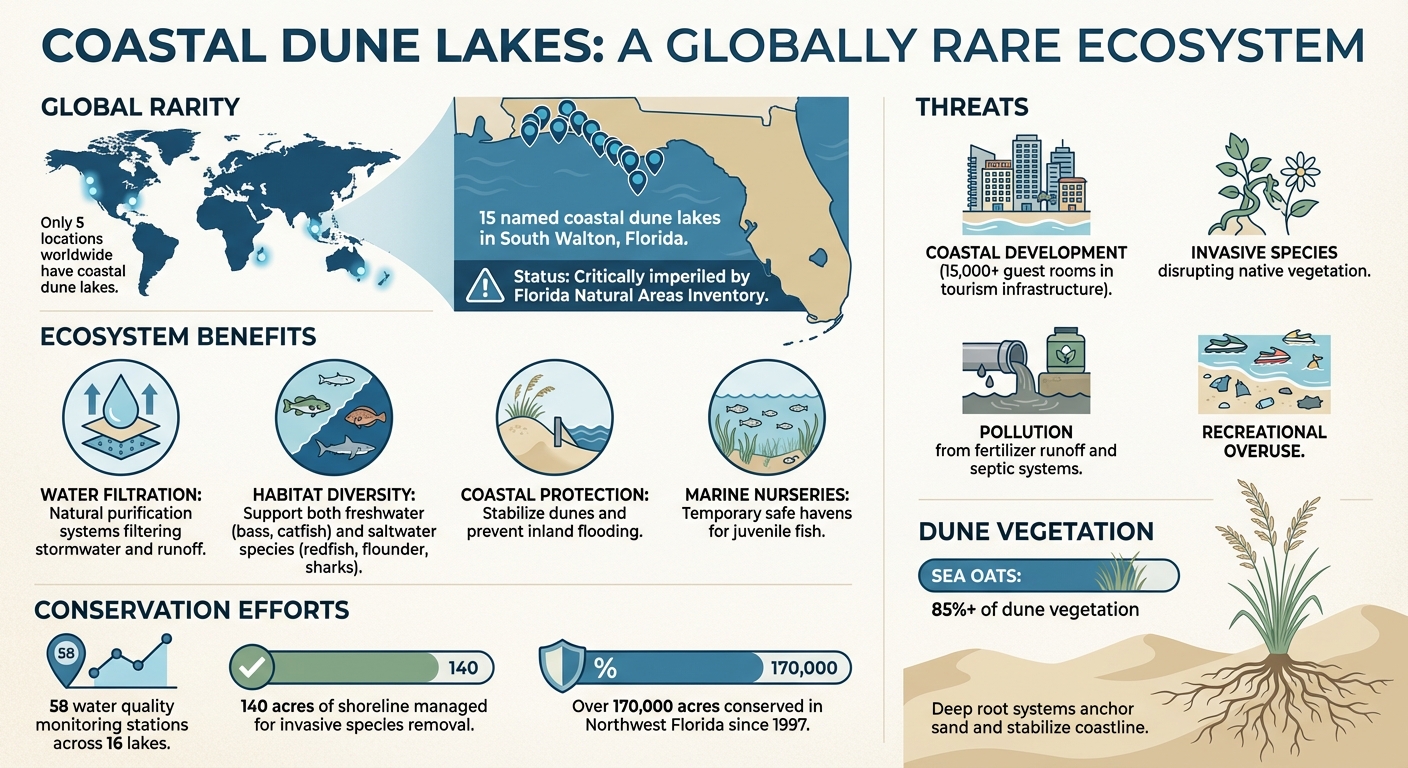
Coastal Dune Lakes: Key Facts and Conservation Impact
COASTAL DUNE LAKES JEWELS OF FLORIDA'S EMERALD COAST
Why Coastal Dune Lakes Matter for Ecosystem Health
Coastal dune lakes play a crucial role in maintaining the health of both land and marine ecosystems. Nestled between upland areas and the Gulf, these rare ecosystems act as natural laboratories where freshwater meets saltwater, creating unique conditions for life to flourish.
Water Filtration and Nutrient Flow
These lakes are nature's water purification systems. They filter stormwater and runoff that often carries fertilizers and septic byproducts, with the tea-colored water hinting at active organic processing at work.
When water levels rise and outfalls breach the dunes, filtered water flows into the Gulf. This periodic exchange helps manage nutrient levels, preventing harmful buildups and ensuring a balance of organic matter in coastal waters. A great example of these efforts is the 2009 restoration of Oyster Lake by the Choctawhatchee Basin Alliance. This project involved removing roads, installing bridges, studying sediments, controlling invasive species, and replanting native vegetation to enhance the lake's natural filtration abilities.
Habitat for Endangered Species
Beyond their role in water quality, coastal dune lakes support a remarkable range of life. Their fluctuating salinity levels - spanning from fresh to full seawater concentrations - create a rare habitat where species like freshwater bass and catfish coexist with saltwater redfish, flounder, and even sharks. This brackish environment fosters biodiversity like few other places.
"Coastal dune lakes are imperiled globally because of rarity and critically imperiled in the state of Florida because of extreme rarity." - Florida Natural Areas Inventory
The surrounding vegetation transitions from pine flatwoods and freshwater wetlands to maritime hammocks and salt marshes, offering habitats for threatened species like the Red Cockaded Woodpecker, Gopher Tortoise, and sea turtles. When the outfalls open, the lakes temporarily serve as nurseries for juvenile marine life, providing a safe haven for young fish before they venture into the open sea.
Coastal Dune Stabilization
These lakes also play a vital role in protecting the coastline. Acting as natural pressure valves, they release excess water from heavy rains or storm surges into the Gulf, reducing the risk of inland flooding.
Sea oats, which make up over 85% of dune vegetation, anchor the sand with their deep root systems. The lakes, in turn, maintain the moisture needed to support this vegetation, ensuring the dunes remain stable. Together, the lakes and dunes form a natural defense against erosion and storm damage, protecting both ecosystems and nearby communities.
Research on Dune Lake Ecosystems
The Florida LAKEWATCH program, launched in 2006, has provided valuable insights into South Walton's coastal dune lakes through over a decade of consistent monitoring.
Florida LAKEWATCH Insights
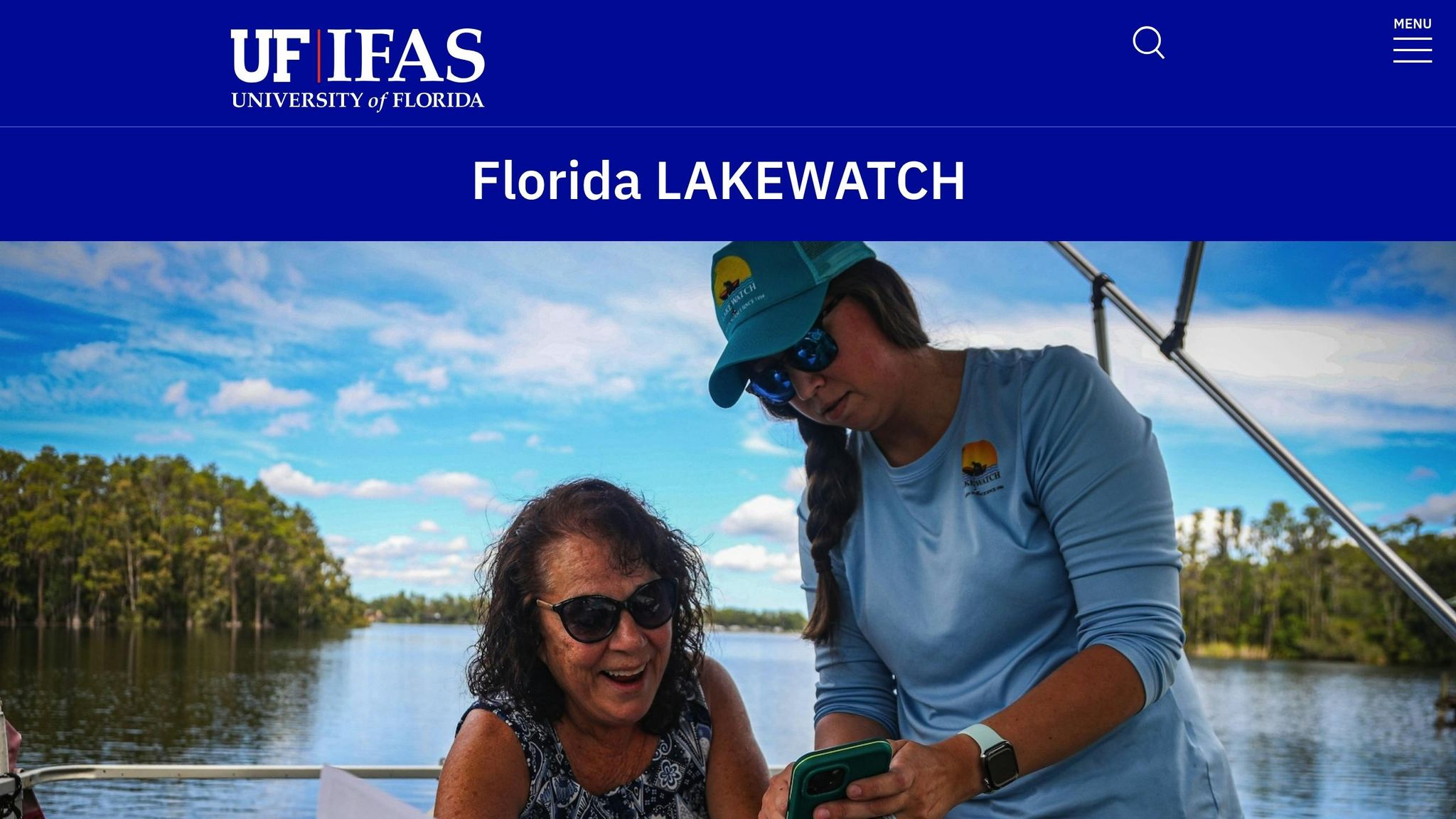
As part of the University of Florida IFAS, the program organizes volunteer-led monitoring for all 15 named coastal dune lakes in Walton County. These lakes offer unique opportunities for coastal dune lake paddling and wildlife observation. Volunteers collect monthly data from three stations on each lake, measuring nutrients, chlorophyll, water clarity, and salinity. This long-term effort has established baseline data that highlights intriguing patterns in these lakes' behavior.
Salinity levels, for instance, can change drastically within weeks, depending on rainfall, evaporation, and whether the lake's outfall has breached. These shifts range from entirely fresh to brackish or hypersaline. These salinity changes play a critical role in shaping the distribution of Submerged Aquatic Vegetation (SAV), which forms the backbone of the lake's ecosystem.
The lakes' distinctive tea-colored water is another key indicator, reflecting organic matter processing. Monitoring efforts also track human influences, such as fertilizer runoff and septic overflows during heavy rain.
In addition to routine observations, extreme weather events provide further insights into the resilience and dynamics of these ecosystems.
Hurricane Impacts on Biodiversity
Hurricanes, in particular, have a dramatic and immediate effect on these fragile lakes. Storm surges can quickly alter salinity levels, introducing Gulf saltwater and marine species into what was previously a freshwater environment.
"Florida's coastal dune lakes are also tremendously impacted by hurricane activity (i.e., storm frequency, strength, and duration)." - Choctawhatchee Basin Alliance
To explore the long-term effects of hurricanes, researchers are employing paleotempestology, which examines prehistoric storm patterns. By studying geochemical markers in sediment cores, scientists can trace hurricane landfall frequencies over centuries. This research helps predict future storm impacts on these ecosystems, which are considered critically imperiled.
How Coastal Development Affects Dune Lakes
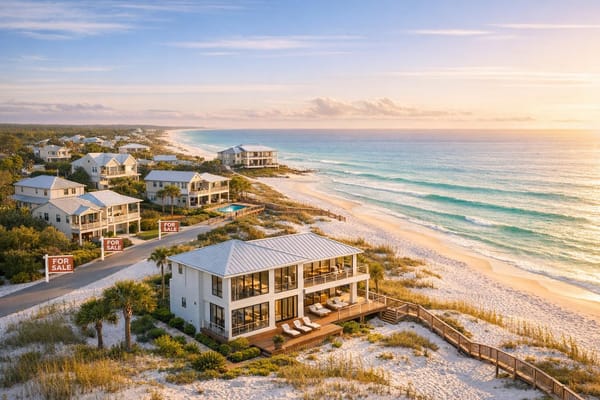
Coastal development, much like the shifts in water quality discussed earlier, disrupts the delicate balance of dune lake ecosystems. In South Walton, where 15 coastal dune lakes exist, the rapid pace of development is putting strain on these unique environments. This region has over 15,000 guest rooms catering to tourists and about 40% of its 56,000 acres designated for conservation. Balancing economic growth with environmental preservation is a constant challenge .
Tourism and Population Growth
The growth of tourism infrastructure has direct and often harmful effects on these fragile ecosystems. For instance, in January 2026, Walton County Tourism proposed the Eastern Lake Regional Beach Access project to improve public access to the area. Deputy Director Ryan Adams shared a proposed construction schedule spanning 2027 to 2029, funded by tourism development taxes. However, the project faced unanimous opposition, including a petition signed by 1,600 individuals, halting its progress.
"Access to this location hasn't changed in all those years, and making it into a regional access won't enhance this place, but only degrade stormwater, runoff, erosion, and the proliferation of vendors are just a few ways this beautiful, unique place would be degraded."
– Garrett Horn, Resident
Increased foot traffic damages sea oats, which are critical for stabilizing dunes. Construction runoff further pollutes water, while permanent structures near lake outfalls interfere with the natural flood control systems. These systems are essential for the lakes to function as temporary estuaries and nurseries for marine life . Such disruptions not only weaken the lakes' ability to filter water but also create conditions where invasive species can thrive.
Managing Non-Native Species
The intensification of development has ripple effects that destabilize native ecosystems. One significant issue is the introduction of invasive species, which often outcompete native plants and disrupt the natural structure of dunes. These invasive plants, better suited to disturbed environments, replace native vegetation, altering dune shapes and increasing the risk of coastal flooding.
"Invasive species can alter the succession of ecological communities because they are often adapted to the disturbed conditions that initiate succession."
– Aaron S. David et al., Department of Ecology, Evolution, and Behavior, University of Minnesota
In response, local organizations are taking action. Volunteer-led programs focus on removing invasive plants in areas like Eden Gardens State Park and Topsail Hill Preserve State Park. Since 1997, The St. Joe Company has played a significant role by conserving over 170,000 acres in Northwest Florida. Their efforts have supported the establishment of state parks and forests, emphasizing sustainable forest management and wetland protection. These collaborative initiatives aim to counteract the effects of development and safeguard South Walton's rare and endangered dune lakes.
Restoration and Conservation Efforts
Coastal development has placed significant pressure on dune lakes, prompting a range of restoration efforts aimed at protecting these unique ecosystems. These initiatives not only help sustain the delicate balance of marine habitats but also ensure the long-term health of these natural areas. Leading the charge is the Choctawhatchee Basin Alliance (CBA), which focuses on removing invasive species, restoring natural water flow, and involving the community in its conservation strategies.
Choctawhatchee Basin Alliance Projects
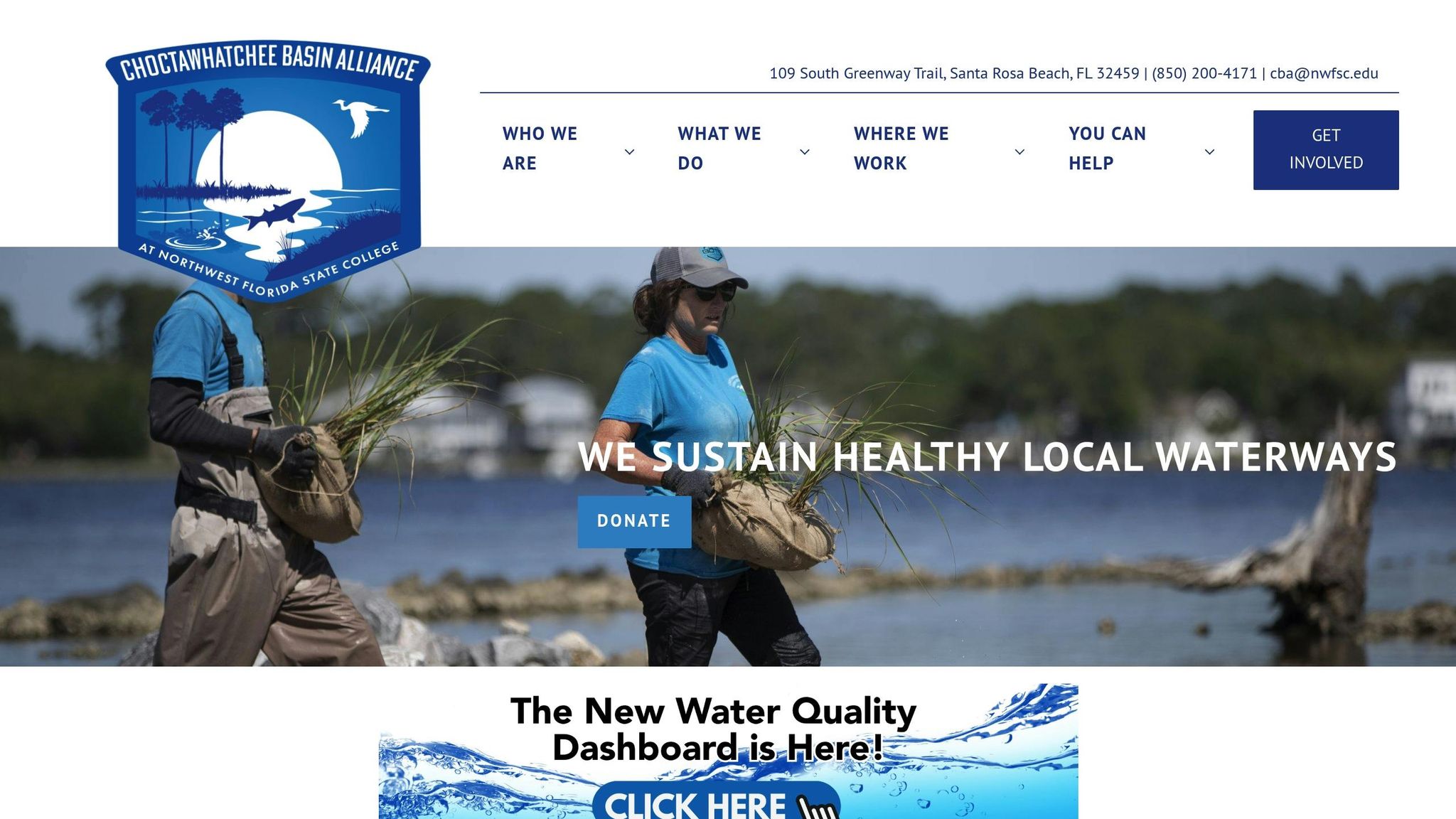
The CBA plays a key role in managing invasive species across 140 acres of shoreline surrounding the dune lakes. One standout effort is the restoration of Oyster Lake, which included student-led planting of native vegetation, controlling non-native plants, and installing educational signage. This project received funding from organizations like Three Rivers R&CD, the Five-Star Restoration Grant, and the U.S. Fish and Wildlife Service.
"An invasive plant will out-compete a native plant for habitat and resources. And so a native plant is there to support the greater native ecosystem. It serves the animals that live there."
– Alison McDowell, Director of the Choctawhatchee Basin Alliance
The CBA also operates 58 water quality monitoring stations across 16 coastal dune lakes, gathering monthly data that informs decisions made by state and federal agencies. Follow-up treatments, supported by Five-Star grants, focus on controlling aggressive invasive species like Phragmites.
Community Involvement in Conservation
Beyond technical projects, the CBA emphasizes community participation in its conservation mission. One of its standout programs, Dunes in Schools, involves middle school students in growing sea oats in classroom nurseries. Each spring, these students plant the grasses along the coastline, contributing directly to habitat restoration. In 2018, the program received a $1,000 donation from 30A Coastal Dunes Wine Company, ensuring all students could take part.
"Our goal is to get students involved in hands-on, experiential learning, and this support allows us to do just that."
– Brittany Tate, Education Coordinator, Choctawhatchee Basin Alliance
Local residents also play a vital role through the Coastal Dune Lakes Advisory Board, which meets quarterly to advise the Walton County Board of Commissioners on conservation and land management policies. Additionally, volunteer citizen-scientists contribute valuable long-term data through the Florida LAKEWATCH program. Property owners can access the "Home Owner's Guide to Living On a Coastal Dune Lake", which offers practical steps to reduce chemical runoff from fertilizers and septic systems, helping safeguard water quality for future generations.
Conclusion
South Walton's coastal dune lakes are part of a rare group - one of only five such ecosystems in the world. Beyond their beauty, these lakes act as natural filters, manage floods, and serve as vital nursery grounds, bridging freshwater and marine environments seamlessly. This unique interaction supports diverse wildlife while also shielding nearby coastal areas.
The Florida Natural Areas Inventory has identified these lakes as critically imperiled. Unfortunately, they face growing threats from development, invasive species, and excessive recreational use. Without careful management, their future hangs in the balance.
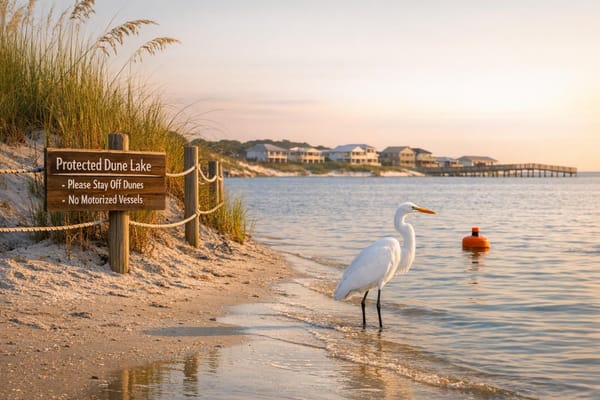
Community involvement plays a key role in their preservation. Simple actions, like staying on marked trails, protecting dune vegetation, using non-motorized boats, and maintaining septic systems to reduce runoff, can make a big difference.
The restoration of Oyster Lake is a great example of what can be achieved through teamwork. Efforts like these, combined with ongoing scientific monitoring, empower better management and encourage local stewardship. When residents take part as citizen-scientists or students plant native vegetation, they actively help protect these globally important lakes.
Every mindful choice - whether in recreation or property upkeep - helps ensure these rare ecosystems thrive for generations to come. Together, we can safeguard the future of these extraordinary waters.
FAQs
What makes South Walton’s coastal dune lakes so special?
Coastal dune lakes are rare gems of nature, found in only a handful of places worldwide - one of which is South Walton, Florida. What makes these lakes so special is their fleeting connection to the Gulf of Mexico through temporary outfalls. These outfalls form when rising water levels break through the surrounding dunes, allowing freshwater and saltwater to mingle. The result? A constantly shifting ecosystem unlike any other.
These shallow, irregularly shaped lakes experience fluctuating salinity levels, influenced by rainfall, tides, and storms. This ever-changing environment supports a wide variety of plant and animal species. Acting as temporary estuaries and nurseries, they play a crucial role in the life cycles of marine organisms. South Walton’s coastal dune lakes are more than just rare - they’re ecological treasures.
How do coastal dune lakes help protect South Walton's shoreline from erosion?
Coastal dune lakes play an important role in safeguarding South Walton's shoreline by managing water flow and controlling erosion naturally. These rare lakes occasionally connect to the Gulf of Mexico through outfalls, which act as drainage points during heavy rains or storm surges. This connection helps prevent flooding and reduces the strain on nearby dunes, lowering the risk of erosion.
Beyond water management, these lakes serve as natural shields against storm surges and high tides. By absorbing and slowing the impact of waves and water movement, they help protect dunes and nearby areas, ensuring the coastline remains stable. This delicate relationship between the lakes and the Gulf is crucial for preserving South Walton's marine ecosystem.
What are the biggest threats to coastal dune lakes and their ecosystems?
Coastal dune lakes face a range of challenges, with human development standing out as a major concern. Building too close to these lakes can interfere with their natural connection to the Gulf of Mexico, disrupting water flow and degrading water quality. For example, altering shorelines or constructing near the lakes can damage their distinctive outfalls and harm the surrounding ecosystems.
Another critical issue is storm activity, particularly hurricanes. Storm surges and heavy rain can lead to erosion, sediment accumulation, and shifts in salinity levels, all of which threaten native plants and wildlife. On top of that, urban runoff introduces pollutants like excess nutrients, chemicals, and even invasive species, further upsetting the delicate balance of these habitats.
Conservation efforts are essential to safeguard these unique ecosystems. This includes minimizing disruptive construction, protecting natural vegetation, and ensuring the lakes' hydrological processes remain intact to support their long-term health.