Friends of South Walton Sea Turtles: Overview
Volunteer nonprofit educating residents and visitors to protect nesting sea turtles in South Walton with the CleanDarkFlat campaign, Beach Ambassadors, school programs, and donations.
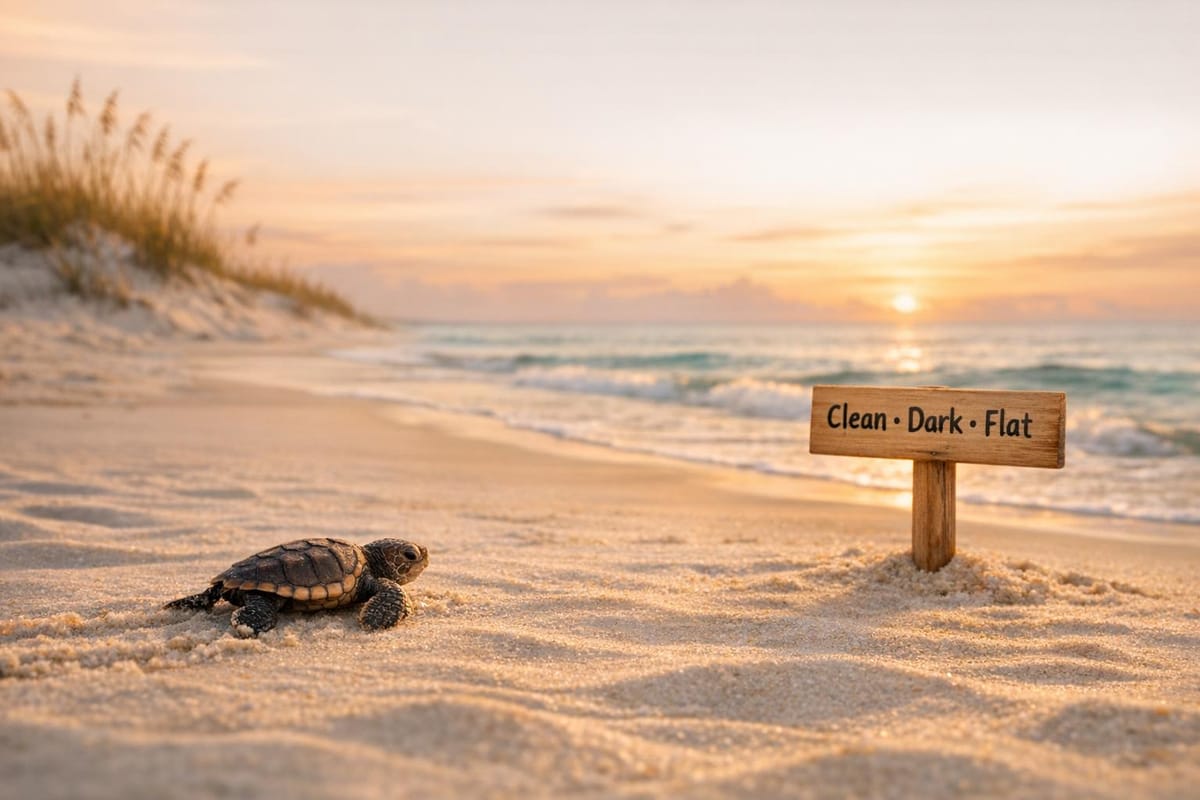
Friends of South Walton Sea Turtles (FOSWST) is a volunteer-run nonprofit focused on sea turtle conservation through education and outreach in Walton County, Florida. Established in 2015, the group works alongside South Walton Turtle Watch (SWTW), which handles nest monitoring and protection. FOSWST’s mission is to inform locals and visitors about how daily beach activities impact sea turtles, especially during nesting season (May 1–October 31).
Key Highlights:
- Focus Areas: Public education, community programs, and awareness campaigns.
- Main Initiative: #CleanDarkFlat - encouraging clean beaches, proper lighting, and leveled sand to protect turtles.
- Volunteer Opportunities: Join as a Beach Ambassador for $5/year or assist with school programs, events, or behind-the-scenes tasks.
- Partnerships: Collaborates with schools, businesses, and SWTW to maximize conservation efforts.
- How to Help: Volunteer, donate, or follow simple beach practices like removing furniture and filling in holes.
Every effort counts - whether it’s spreading awareness, donating, or making small changes to your beach habits. Together, we can protect South Walton’s sea turtles.
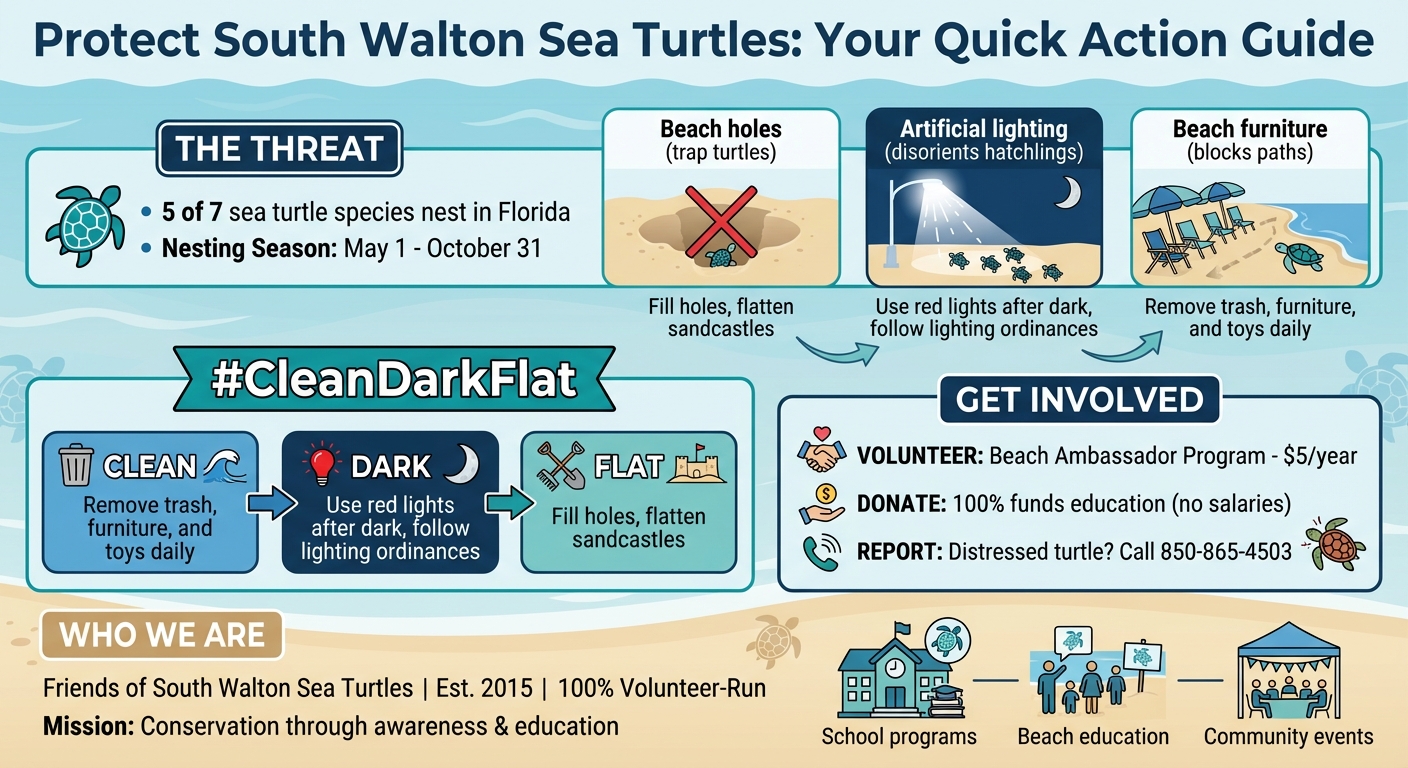
How to Support Sea Turtle Conservation in South Walton: Quick Action Guide
South Walton Turtle Watch says sea turtle nesting season is off to a great start
Mission and Goals
Friends of South Walton Sea Turtles operates with a clear mission: "Conservation through awareness & education". Since its inception in early 2015, the organization has dedicated itself to promoting sea turtle conservation along Walton County's beaches. Their main goal is to educate both local residents and the countless visitors who flock to the 30A coastline, helping them understand how their daily beach activities can directly impact the survival of sea turtles. This mission serves as the foundation for all their educational and outreach efforts.
"Through education, the organization seeks to increase awareness of the delicate balance that exists between the land and the sea. Every creature has a purpose to fulfill, and it must be preserved." - SoWal Business Profile
The group tackles education on two fronts: community programs designed for both children and adults, and direct visitor engagement. Unlike South Walton Turtle Watch, which focuses on nest monitoring and protection, Friends of South Walton Sea Turtles aims to minimize human-related threats through education, helping improve conservation efforts.
Why Sea Turtle Conservation Matters
Florida’s waters are home to five of the world’s seven sea turtle species - Loggerhead, Leatherback, Green Turtle, Hawksbill, and Kemp’s Ridley. These ancient creatures play a crucial role in sustaining healthy ocean ecosystems, but they face numerous challenges during nesting season along South Walton’s beaches.
Human activity poses some of the greatest risks to nesting turtles and their hatchlings. For example, large holes left in the sand can trap mother turtles or block hatchlings trying to reach the water. Unattended beach furniture creates physical barriers, while artificial lighting from beachfront properties can disorient hatchlings, leading them inland where they face dehydration or predators . These threats highlight the importance of community involvement and proactive education to protect these vulnerable species.
Education and Public Awareness
To support its mission, the organization runs a variety of educational initiatives. One standout program is the Volunteer Beach Ambassador (VBA) program, which trains volunteers to serve as approachable resources for locals and tourists alike. These ambassadors address human-caused threats by educating beachgoers about wildlife, promoting the #CleanDarkFlat initiative, and encouraging responsible beach behaviors like filling in holes and removing personal belongings at the end of the day.
"By wearing your VBA shirt, the public knows that you are a person they can approach with their questions about our area." - Friends of South Walton Sea Turtles
For younger audiences, the organization has developed hands-on conservation programs for schools in Walton and Okaloosa Counties, engaging students in meaningful learning experiences.
The group also distributes educational materials - such as activity books, placemats, magnets, and stickers - to local restaurants, hotels, and vacation rentals . This ensures that even short-term visitors are informed about how their actions can affect turtle nesting success. Additionally, volunteers host presentations at libraries, seasonal resident gatherings, and community events to educate year-round residents about their role in safeguarding local wildlife .
All of these efforts center around three key practices: keeping beaches clean by removing trash, dark by following lighting ordinances, and flat by filling in holes and leveling sand structures . The organization also provides clear guidance for reporting distressed turtles. If you encounter one, you can call the South Walton Turtle Watch Hotline at 850-865-4503 or the FWC Wildlife Alert Hotline at 888-404-3922.
Programs and Activities
Friends of South Walton Sea Turtles runs engaging, hands-on programs that bring the community together to support sea turtle conservation. These initiatives cater to a wide audience, from K–12 students to vacationing beachgoers, offering year-round educational opportunities for those planning a South Walton vacation.
Educational Materials and Awareness Campaigns
The group creates and shares a variety of educational materials throughout South Walton. These resources are strategically placed to ensure visitors learn about sea turtle conservation as soon as they arrive. One standout effort is the #CleanDarkFlat campaign, which spreads its message through social media, printed materials, and direct conversations with trained Beach Ambassadors. This campaign strengthens other programs by consistently driving home key conservation principles.
Beach Ambassador Program
The Volunteer Beach Ambassador (VBA) program is a cornerstone of the organization’s efforts during the sea turtle nesting season, which runs from May 1 to October 31. For an annual fee of $5, volunteers receive training and an official t-shirt, making them visible and approachable sources of information about local wildlife. Their tasks include filling in holes, flattening abandoned sandcastles, and picking up trash to protect sea turtle habitats. Beyond the beach, these ambassadors visit schools to host interactive programs for kids and represent the organization at regional community events. Friends of South Walton Sea Turtles also collaborates with local partners to expand the reach and impact of these conservation activities.
Partnerships with Local Organizations
To extend its educational reach, the organization works alongside local partners to connect with various community groups. Through a Memorandum of Understanding with Walton and Okaloosa County schools, it offers interactive classroom programs like "Sea Turtle Jeopardy" and "Rehab & Release" simulations, followed by "Fun @ the Beach" field trips. Beyond schools, the organization teams up with law enforcement, tourism groups, and community organizations to promote conservation awareness. Its partnership with South Walton Turtle Watch (SWTW) ensures a well-rounded approach: SWTW focuses on monitoring and protecting sea turtle nests, while Friends of South Walton Sea Turtles emphasizes education and community outreach. As they put it:
"Sea turtles need us all to work together in this effort and we are proud to work collaboratively with all conservation-minded individuals, businesses, government agencies, aquariums, and nonprofit organizations to do just that!"
How to Volunteer
Available Volunteer Positions
Friends of South Walton Sea Turtles offers a variety of volunteer opportunities to fit different interests and skills. If you enjoy spending time outdoors, the Volunteer Beach Ambassador (VBA) role might be for you. VBAs work directly on the beach, answering visitor questions and promoting initiatives like #CleanDarkFlat and Leave No Trace. Wearing the official VBA t-shirt makes ambassadors easy for the public to recognize and approach.
For those who love working with kids, the Education Team focuses on teaching in local schools across Walton and Okaloosa Counties, hosting storytime at libraries, and running fun, interactive activities like "Sea Turtle Jeopardy." As the organization puts it:
"If you have a heart for children and education, we would love to have you volunteer on our education team!"
Prefer working behind the scenes? Roles in graphic design, content writing, event planning, and fundraising are also available. These positions are perfect for anyone with skills in communication, education, design, or collaboration.
Once you’ve found a role that aligns with your talents, it’s easy to get started.
Steps to Join as a Volunteer
To begin, fill out the sign-up form on the Friends of South Walton Sea Turtles website. Training sessions for the 2026 season are held between January and February, so check the local guides and event calendars to secure your spot. Every volunteer must attend at least one training session annually to stay active, and there’s a $5 membership fee collected during training.
After completing training, you’ll gain access to helpful resources like educational videos on the group’s YouTube channel and the VBA Toolkit. If you’re interested in hands-on fieldwork, such as monitoring nests during morning beach walks, reach out to South Walton Turtle Watch (SWTW). Friends of South Walton Sea Turtles focuses specifically on education and awareness efforts, leaving fieldwork to SWTW.
Donations and Financial Support
Where Donations Go
FOSWST runs entirely on volunteer efforts, which means every donation directly funds its conservation and education programs. As the organization puts it:
"As a completely volunteer-run organization, donations to FOSWST do not support salaries or administrative costs."
Your contributions help produce and distribute educational materials like coloring books, activity books, placemats, magnets, and stickers. These materials are shared with vacation rentals, hotels, restaurants, and stores across South Walton, spreading the #CleanDarkFlat message and teaching visitors how to protect nesting sea turtles.
Donations also make in-person education possible, funding programs in Walton and Okaloosa County schools, library story times, and community events like the Earth Day Expo. They also cover operational needs such as website hosting and social media outreach. With no paid staff, FOSWST relies on private donations, local business donation jars, fundraisers, and grants to sustain these efforts.
If you'd like to support these initiatives, there are several easy ways to contribute.
How to Donate
You can give directly through the organization's website to back ongoing awareness campaigns. Keep an eye out for donation jars at local businesses and "turtle-friendly" spots in South Walton.
Businesses can get involved by sponsoring events or hosting educational materials like placemats and magnets for their customers. For individuals, joining the Volunteer Beach Ambassador program is another way to help - membership costs just $5 annually, offering an affordable way to take part in conservation efforts.
Conclusion: Get Involved in Sea Turtle Conservation
Since its start in 2015, Friends of South Walton Sea Turtles has shown how education can inspire meaningful action. Through efforts like distributing materials to vacation rentals and restaurants, training Volunteer Beach Ambassadors, and hosting interactive programs for students, the organization has built a strong, community-focused initiative to protect nesting turtles from May 1 to October 31 each year.
Even small actions can create a ripple effect. Educational resources help spread awareness and conservation values, reaching both locals and visitors.
You don’t need special training to make a difference. Simple habits - like removing beach chairs and toys at the end of the day, using red lights after dark, and reporting injured or distressed turtles to the South Walton Turtle Watch (SWTW) Hotline at 850-865-4503 - can have a big impact. Sharing these practices on social media can also help inform visitors as they plan their South Walton itinerary before they even arrive.
For those looking to take it a step further, a $5 annual Volunteer Beach Ambassador membership opens the door to organized efforts and a like-minded community. Ambassadors take on tasks like filling in holes, flattening sandcastles, and educating beachgoers about the #CleanDarkFlat principles, all of which remove obstacles for nesting turtles. Whether you’re volunteering your time or donating to support educational initiatives, your contributions help protect these incredible creatures.
As the organization emphasizes:
"Sea turtles need us all to work together in this effort, and we are proud to collaborate with all conservation-minded individuals to do just that!"
Whether you choose to volunteer, donate, or simply follow the nesting season guidelines, every effort counts. Together, we can give South Walton’s sea turtles a brighter future.
FAQs
How do I volunteer as a Beach Ambassador with Friends of South Walton Sea Turtles?
If you’re interested in becoming a Beach Ambassador with Friends of South Walton Sea Turtles, the first step is to sign up through their program. Once you’ve registered, you’ll attend a training session designed to teach you how to inform beachgoers about sea turtle conservation and the importance of protecting nesting habitats.
After completing the training, you’ll be ready to hit the beaches. Your role will involve interacting with visitors, sharing knowledge about sea turtles, and helping to safeguard their nesting areas. It’s a meaningful way to support the preservation of South Walton’s stunning coastline and its wildlife.
What are the biggest threats to sea turtles during nesting season in South Walton?
Sea turtles in South Walton face numerous challenges during nesting season. One of the biggest problems is artificial lighting. Bright lights along the shore can confuse both nesting females and hatchlings, leading them away from the ocean instead of toward it. This disorientation can have serious consequences for their survival.
Human activities on the beach also create obstacles. Leaving beach furniture out overnight, damaging dunes, or littering can disturb nesting sites and make it harder for turtles to safely lay their eggs or for hatchlings to reach the water. On top of that, natural threats such as storms and predators can destroy nests or harm young turtles.
Thankfully, the Friends of South Walton Sea Turtles are dedicated to addressing these challenges. They focus on educating the public, keeping an eye on nests, and promoting simple but impactful habits like turning off beachside lights and ensuring beaches are free of trash. These small actions can play a huge role in helping protect these vulnerable creatures.
What is the #CleanDarkFlat initiative, and how does it help protect sea turtles?
The #CleanDarkFlat initiative is a grassroots effort aimed at safeguarding endangered sea turtles by creating safer nesting environments on South Walton beaches. It revolves around three straightforward actions:
- Keep beaches clean: Remove trash and debris to prevent hazards for sea turtles.
- Reduce artificial lighting: Limit light pollution to avoid confusing hatchlings.
- Maintain flat beaches: Fill in holes and smooth out sandcastles to ensure hatchlings can reach the ocean without obstacles.
Artificial lighting poses a significant threat to sea turtles. Hatchlings instinctively move toward the brightest light, which is typically the moon reflecting off the ocean. However, artificial lights can disorient them, leading them away from the water and exposing them to predators or dehydration. By minimizing light pollution, the initiative helps hatchlings stay on the right path.
Additionally, ensuring beaches are free of debris, holes, and other barriers makes it easier for nesting females and hatchlings to navigate. These simple actions, taken during the nesting season from May through October, allow residents and visitors to play an active role in protecting these remarkable creatures.