Guide to Acupuncture on 30A
Acupuncture on 30A offers effective, personalized care for pain, stress, digestive and hormonal issues — this guide details benefits, costs, session steps, and top local clinics.
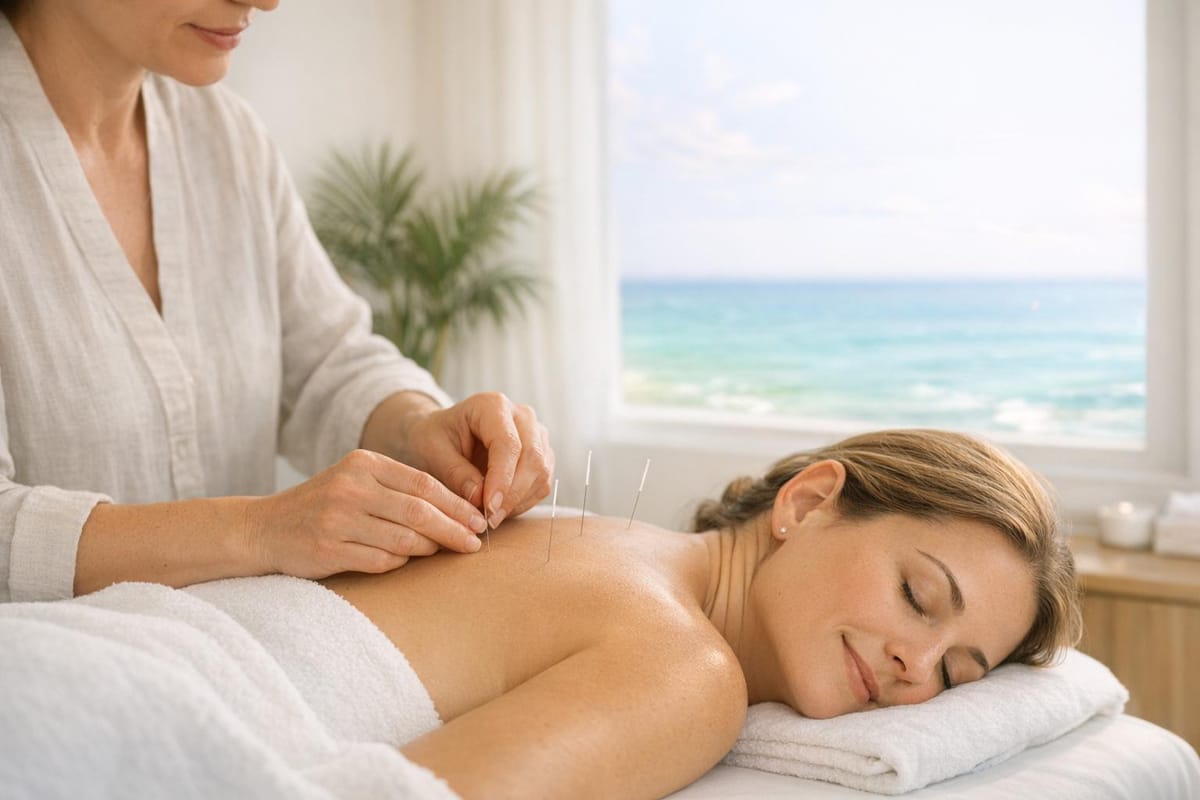
Looking for acupuncture along 30A? This guide covers everything you need to know about the practice, its benefits, and the best local providers. Whether you're managing pain, addressing stress, or exploring wellness options, 30A offers skilled practitioners to meet your needs. Here’s a quick overview:
- What is Acupuncture?: A practice rooted in Traditional Chinese Medicine (TCM) that uses thin needles to balance energy (Qi) and stimulate the body’s healing processes.
- How it Works: From a TCM perspective, it restores energy flow; scientifically, it stimulates the nervous system, releases natural painkillers, and improves circulation.
- Common Uses: Pain relief, stress reduction, digestive health, hormonal balance, and respiratory issues.
- Local Providers: Top clinics include Awakening Wellness, 30A Wellness Studio, and Tortoise Clinic, each offering unique specialties like women’s health, cosmetic acupuncture, and neuro-acupuncture.
Whether you're a local or a visitor, you can use a South Walton itinerary generator to plan your wellness trip, as acupuncture on 30A offers personalized care to address physical and emotional well-being. Keep reading for detailed insights into the practice, benefits, and provider options.
What Happens During an Acupuncture Session?
What is Acupuncture?
Acupuncture is a key practice within Traditional Chinese Medicine (TCM), with a history stretching back over 3,000 years. It involves inserting ultra-thin, sterile needles - roughly the width of a human hair - into specific points on the body to restore balance and promote healing.
At its core, acupuncture revolves around the concept of Qi (pronounced "chee"), which represents the body's vital energy. According to TCM, Qi flows through pathways called meridians, which connect to the body's major organs. When Qi is disrupted - whether blocked, stagnant, or out of balance - it can lead to illness or discomfort. Acupuncture targets precise points along these meridians to clear blockages and restore the natural flow of energy. This process also focuses on balancing Yin and Yang, two complementary forces that TCM believes are essential for overall health and proper body function.
"The Chinese theory for how Acupuncture works is that the energy flowing through our bodies or Qi (pronounced chee) can be influenced and balanced by stimulating specific points on the body." - April Bradley, Acupuncture Physician, 30A Wellness Studio
From a modern medical perspective, acupuncture is understood differently. Research shows that needle placement stimulates the nervous system, prompting the release of natural chemicals like endorphins, serotonin, and melatonin in the brain, spinal cord, and muscles. These chemicals help reduce pain and support the body's natural healing processes. Functional MRI (fMRI) studies have even revealed that acupuncture activates brain areas involved in managing stress and processing pain.
How Acupuncture Works
Acupuncture operates at the intersection of ancient philosophy and modern science. The insertion of needles at over 2,000 acupoints triggers responses that go beyond the physical site of insertion.
From the TCM viewpoint, needles release stagnant Qi and restore balance between Yin and Yang, enabling the body to heal itself naturally. Scientifically, the process activates nerve fibers, which then signal the spinal cord and brain to release pain-relieving and regulatory chemicals.
"Modern scientific research shows that acupuncture works by stimulating the nervous system, increasing blood flow, reducing inflammation and releasing endorphins, the body's natural painkillers." - Dr. Mary Lambert, AP, DOM
Whether you see it through the lens of TCM or modern medicine, acupuncture leads to the same result: improved energy flow and biochemical balance that supports both physical and emotional health. Its credibility has grown so much that top medical institutions like the Mayo Clinic, Johns Hopkins, and Cleveland Clinic have incorporated acupuncture into their treatment programs.
This combination of ancient wisdom and modern science explains why acupuncture is effective for a wide range of conditions.
Common Uses of Acupuncture
Acupuncture is widely recognized for its ability to address a variety of health concerns. Chronic pain relief is one of its most popular uses, helping patients manage back and neck pain, sciatica, arthritis, migraines, and sports-related injuries. In fact, the U.S. military uses acupuncture to treat PTSD, highlighting its effectiveness in addressing both physical and emotional pain.
Beyond pain management, acupuncture is frequently used for mental health issues like stress, anxiety, depression, and insomnia. Many along 30A also turn to acupuncture for digestive problems such as IBS, nausea, and gastritis, as well as hormonal concerns like menopause symptoms, PMS, fertility challenges, and pregnancy-related nausea. It’s also effective for tackling respiratory issues, including allergies, sinusitis, and asthma.
Its applications don’t stop there. Acupuncture is used to support addiction recovery (including smoking cessation), relieve carpal tunnel syndrome, manage fibromyalgia, and even ease dental pain. In Florida, acupuncturists are recognized as primary care providers, reflecting how deeply the practice has been integrated into mainstream healthcare. Between 2002 and 2022, acupuncture use among U.S. adults more than doubled, increasing from 1.0% to 2.2%. Globally, the World Health Organization reports that acupuncture is practiced in 103 of 129 reporting countries.
Next, we’ll dive into how these applications translate into real physical and emotional benefits for those along 30A.
Benefits of Acupuncture
Acupuncture offers a wide range of benefits for both physical and mental health by engaging the nervous system, releasing natural painkillers, reducing inflammation, and promoting overall balance. For instance, a 2018 review of 12 studies involving 8,003 participants found acupuncture to be more effective than no treatment for back or neck pain, with results comparable to nonsteroidal anti-inflammatory drugs (NSAIDs). Another analysis of 20 studies with 6,376 participants showed that pain relief for back pain and headaches could last for up to a year after treatment. These findings highlight acupuncture's measurable impact on health.
Physical Health Benefits
Acupuncture is particularly effective in managing various types of pain, whether chronic or acute. On 30A, it’s commonly used to treat conditions like back and neck pain, osteoarthritis, migraines, sciatica, and sports injuries. By improving blood flow, reducing swelling, and relaxing muscles, acupuncture also helps alleviate digestive issues such as irritable bowel syndrome (IBS), peptic ulcer disease, Crohn’s disease, and nausea related to chemotherapy. Additionally, it supports immune and respiratory health, providing relief for allergies, asthma, and sinusitis. A study even found that approximately 66% of women with stress incontinence experienced a significant reduction - over 50% - in leakage after undergoing electroacupuncture treatment.
But acupuncture’s benefits don’t stop at physical health; it also has a profound effect on emotional well-being.
Mental Health Benefits
When it comes to mental health, acupuncture can help reduce stress, anxiety, and depression by regulating neurotransmitters like serotonin and dopamine, which play a key role in emotional balance. Functional MRI (fMRI) studies have shown that acupuncture influences brain regions tied to mood and emotion. A 2016 study found that acupuncture increases the release of natural mood-enhancing chemicals like dynorphin, endorphin, and encephalin. For those dealing with sleep issues, acupuncture encourages deep relaxation and helps address insomnia by restoring internal balance. Research from 2022 even suggested that combining acupuncture with antidepressants might lead to greater reductions in depressive symptoms while minimizing medication-related side effects. The therapy has also been integrated into military healthcare programs to assist with managing post-traumatic stress disorder (PTSD).
"Acupuncture works by regulating the nervous system, improving circulation, and restoring balance to the body's internal systems. That's why it benefits both physical and emotional health."
– Dr. Lisa Forsythe, Licensed Acupuncturist, The Tortoise Clinic
The growing recognition of acupuncture’s benefits is evident in the expansion of insurance coverage in the U.S., which increased from 41.1% in 2010–2011 to 50.2% in 2018–2019. This growing acceptance underscores why acupuncture continues to gain popularity among both residents and visitors on 30A.
Acupuncture Providers Along 30A
If you're looking for acupuncture options along 30A, you're in luck. This area is home to a range of clinics offering treatments that blend traditional techniques with modern approaches. Here's a closer look at some standout providers.
Awakening Wellness
Nestled in the Gulf Place Courtyard at 90 Spires Lane, Unit 8A, Santa Rosa Beach, Awakening Wellness delivers a boutique experience. Led by Shannon Faulk, an Acupuncture Physician, Reiki Master-Teacher, and Licensed Massage Therapist since 2005, the clinic offers over two decades of expertise. Their services include Red Light Therapy, Acu-Point Injection, and organic facials. For those interested in natural beauty solutions, the clinic specializes in cosmetic facial acupuncture as an alternative to traditional procedures. Additional offerings like cupping, Chinese herbal medicine, and AromaPoint therapy with essential oils round out their holistic approach.
30A Wellness Studio

Recently relocated to 1414 County Rd 283 South, Suite D, Grayton Beach, Santa Rosa Beach, 30A Wellness Studio takes a special interest in functional medicine and women’s health. Dr. April Bradley, a Board Certified Acupuncture Physician and Certified Functional Medicine Practitioner, brings over 24 years of experience to her practice. The studio uses advanced diagnostic tools like Hair Tissue Mineral Analysis (HTMA), Zyto Nutritional Scans, and DUTCH hormone testing alongside acupuncture treatments.
"For over 24 years I've had the pleasure of helping thousands of patients with all kinds of issues and I could not love my life's work more!"
While the clinic doesn’t accept insurance directly, they provide superbills for HSA/FSA reimbursement. Given the clinic's popularity, it’s recommended to book your initial and follow-up sessions together. Note that cancellations with less than 24 hours' notice incur a $50 fee.
Tortoise Clinic
With a history spanning 30 years, the Tortoise Clinic in Santa Rosa Beach is one of the most established integrative health practices in the area. They’ve served more than 34,000 patients. The clinic adopts an integrative primary care model, boasting the largest Chinese herb dispensary in Northwest Florida and the region’s only neuro-acupuncturist within a 300-mile radius. Patients often praise the attentive care of team members like Ms. Karen. As patient Nell Gambino shared:
"Ms Karen is so attentive to my concerns. I can't ask for better holistic medical services"
In addition to acupuncture, the clinic offers water fasting programs, telemedicine consultations, and cosmetic facial acupuncture. Their philosophy emphasizes a steady, long-term approach to health:
"Wellness is a marathon, not a sprint - and we're with you every step of the way"
What to Expect During an Acupuncture Session
When you book an acupuncture session along 30A, the focus is on creating a personalized experience to help restore your body’s balance efficiently.
Initial Consultation
Your first visit typically lasts between 60 and 90 minutes. During this time, the practitioner will take a detailed look at your health history. They’ll ask about your medical background, current symptoms, diet, exercise habits, sleep quality, and emotional well-being. Using Traditional Chinese Medicine diagnostic methods, they’ll also check your pulse and examine your tongue. As 30A Wellness Studio explains:
"Your acupuncturist will also feel your pulse and look at your tongue in order to gain more information about what's going on internally."
Based on this assessment, your practitioner will design a treatment plan that may include targeted needle placement, herbal remedies, and suggestions for lifestyle changes. To make the process smooth, wear loose, comfortable clothing and avoid eating a heavy meal before your appointment.
The Treatment Process
Once your plan is set, the treatment begins. Your practitioner will insert 5 to 20 ultra-thin sterile needles into specific points along your body’s meridians. These needles are so fine that several can fit into the tip of a standard hypodermic needle, making the process almost painless. After the needles are placed, you’ll rest on a padded table for 20 to 40 minutes, often with calming music or gentle heat lamps to enhance relaxation. It’s not uncommon for patients to feel deeply relaxed - some even drift off to sleep.
During this time, your practitioner may lightly twirl the needles or apply heat to optimize the treatment. Depending on the clinic, additional therapies like cupping, gua sha, or essential oils might be included at no extra cost, creating a well-rounded experience.
Costs and Session Duration
The cost of an initial session ranges from $90 to $100, covering 60 to 90 minutes. Follow-up sessions, which last 45 to 60 minutes, usually cost between $75 and $100. While most local providers don’t accept insurance directly, they can provide a superbill for HSA or FSA reimbursement. Be aware that some clinics charge a $50 fee for cancellations made less than 24 hours in advance.
To maximize the benefits, many practitioners suggest starting with at least two sessions close together, often scheduling one per week.
Comparing Acupuncture Providers on 30A
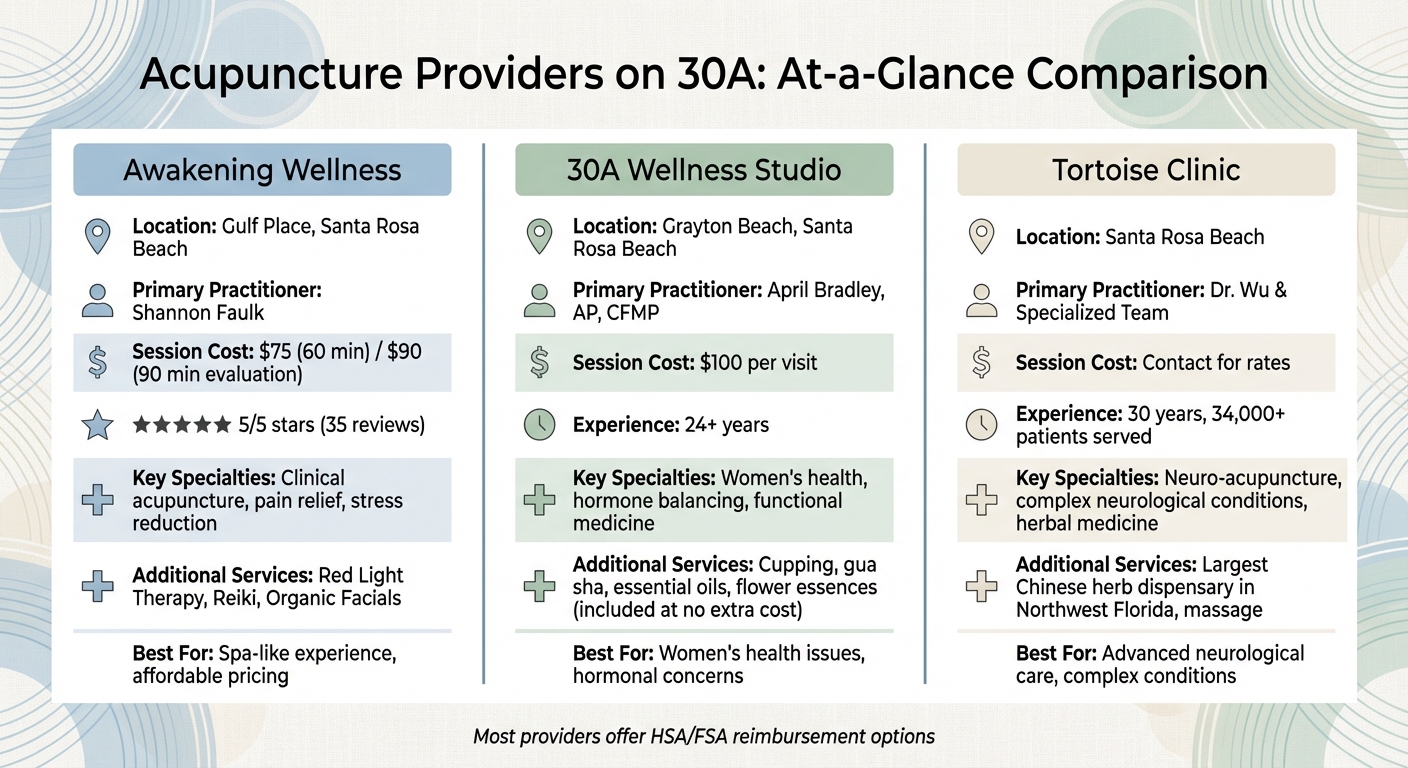
Comparison of Acupuncture Providers on 30A: Services, Costs, and Specialties
If you're exploring acupuncture options on 30A, you’ll find that each clinic brings something different to the table. Awakening Wellness, located at Gulf Place on the west end of 30A, is celebrated for its spa-like ambiance and affordable pricing. With a stellar 5 out of 5 stars from 35 reviews, it offers traditional acupuncture alongside extras like Red Light Therapy, Reiki, and Organic Facials.
At 30A Wellness Studio in Grayton Beach, the focus is on functional medicine, particularly for women’s health issues such as hormonal imbalances and digestive concerns. Led by Acupuncture Physician April Bradley, each session costs $100 and includes treatments like cupping, gua sha, and essential oils at no extra charge.
For those with complex neurological conditions, Tortoise Clinic stands out as the only provider in the area offering specialized neuro-acupuncture. With over 34,000 patients served, it’s a go-to for advanced care.
Comparison Table
| Provider | Location | Primary Practitioner | Session Cost | Key Specialties | Additional Services Included |
|---|---|---|---|---|---|
| Awakening Wellness | Gulf Place, Santa Rosa Beach | Shannon Faulk | $75 (60 min) / $90 (90 min eval) | Clinical acupuncture, pain relief, stress reduction | Red Light Therapy, Reiki, Organic Facials |
| 30A Wellness Studio | Grayton Beach, Santa Rosa Beach | April Bradley, AP, CFMP | $100 per visit | Women's health, hormone balancing, functional medicine | Cupping, gua sha, essential oils, flower essences |
| Tortoise Clinic | Santa Rosa Beach | Dr. Wu & Specialized Team | Contact for rates | Neuro-acupuncture, complex neurological conditions, herbal medicine | Chinese herb dispensary (largest in Northwest Florida), massage |
This table breaks down the costs, specialties, and added services to help you decide. Whether you’re seeking relaxation at Awakening Wellness, targeted women’s health care at 30A Wellness Studio, or advanced neurological treatments at Tortoise Clinic, there’s an option tailored to your needs.
As April Bradley explains:
"Whether you're a local needing help for a chronic issue or you're here on vacation and need a little stress reduction or pain relief, I would love to create a custom treatment just for you!"
Conclusion
With its deep historical roots and growing recognition in modern healthcare, acupuncture along 30A offers a pathway to improved physical and mental well-being. This natural, drug-free approach addresses a variety of concerns, from chronic pain and hormonal imbalances to stress and sleep challenges.
The 30A area is home to skilled practitioners who customize treatments to suit individual needs. Many also incorporate complementary therapies like cupping, red light therapy, and Reiki into their sessions. As April Bradley, Acupuncture Physician, explains:
"Eastern Medicine is about bringing the body into balance naturally."
Whether you're a local managing a long-term condition or a visitor looking to unwind during your beach vacation, acupuncture can enhance your self-care routine. Many providers accept HSA/FSA payments and can provide superbills for insurance reimbursement. For chronic issues, a series of treatments - typically around five sessions - can deliver noticeable improvements.
Browse the profiles above to find the right practitioner for you and discover the benefits of acupuncture firsthand.
FAQs
How many acupuncture sessions will I need?
The number of acupuncture sessions you'll need largely depends on your specific condition and treatment goals. For acute issues, you might require anywhere from 4 to 12 treatments, while chronic conditions often call for a longer-term approach with more sessions spread out over time.
Each session typically lasts between 20 and 60 minutes, with the first visit often being longer to allow for a thorough consultation. Practitioners regularly assess your progress and adjust the treatment plan as needed. For ongoing care, some people opt for periodic sessions as part of a maintenance routine.
It's essential to consult with a licensed acupuncturist to develop a treatment plan that's tailored to your unique needs and situation.
Does acupuncture hurt or have side effects?
Acupuncture generally doesn’t cause pain because the needles are incredibly thin - about as wide as a strand of human hair. Most people experience little to no discomfort when the needles are inserted. Some describe feeling a mild tingling or slight pressure, while others feel nothing at all. In fact, many find the experience so calming that they even drift off to sleep during the session.
Side effects are uncommon and usually minor, like slight soreness or faint bruising at the needle site. When done by a licensed professional, acupuncture is considered safe and well-tolerated.
How do I choose the right acupuncture clinic on 30A?
To find the best acupuncture clinic on 30A, start by checking the practitioners' qualifications and certifications - experience matters when it comes to effective treatment. It’s also important to choose a clinic that prioritizes safety and cleanliness, while offering reasonable pricing. If you have insurance, confirm whether the clinic accepts it to help manage costs.
Another great way to evaluate a clinic is by reading reviews and testimonials; they can give you insight into patient satisfaction and the quality of care. For instance, some clinics in Santa Rosa Beach are known for offering personalized treatments delivered by skilled professionals, making them worth considering.