How to Help Protect 30A Sea Turtles
Follow Clean, Dark, Flat rules on 30A beaches: remove debris, use turtle-safe lighting, fill holes, report nests/strandings, and volunteer.
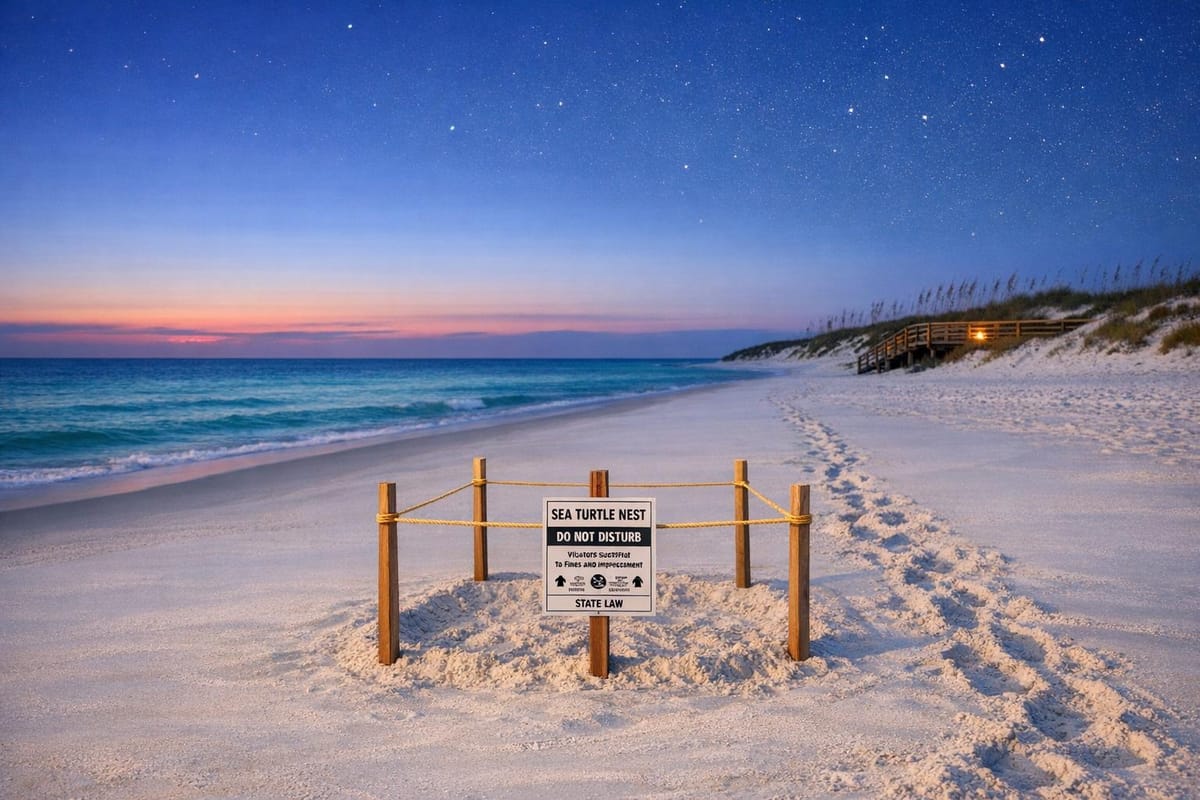
Sea turtles in South Walton, Florida, rely on its beaches for nesting, but human activity poses serious risks to their survival. During sea turtle nesting season, simple steps like clearing beach debris, reducing artificial light, and filling sand holes can protect these endangered species. Loggerhead, Green, Leatherback, and Kemp’s ridley turtles depend on these beaches, with only 1 in 1,000 hatchlings surviving to adulthood. Follow the Clean, Dark, Flat rules: keep beaches clear, lights low, and sand smooth. Report sightings or emergencies to local hotlines and consider volunteering with South Walton Turtle Watch to make a direct impact. Together, we can ensure sea turtles thrive for generations to come.
WHAT YOU CAN DO // Help Turtles While at the Beach!
Know the Nesting Season and Sea Turtle Behavior
Understanding sea turtle nesting habits is key to avoiding unintentional harm. Nesting season runs from May 1 to October 31, a time when these creatures are at their most vulnerable. During this period, strict beach rules are in place to protect both nesting mothers and their hatchlings. By being mindful of their behaviors, you help support conservation efforts in South Walton.
Sea turtles nest and hatch almost exclusively at night. Female turtles come ashore under the cover of darkness to dig their nests and lay eggs, while hatchlings emerge from the sand roughly 50 days later. Below, you'll find an overview of the species that nest along the coastline and tips for identifying nests and hatchlings.
Sea Turtle Species and Nesting Habits in 30A
South Walton’s coastline is home to four sea turtle species, each with unique traits and conservation challenges. Here’s a closer look:
- Loggerhead turtles: These are the most common species, with 1,499 nests recorded across seven Gulf coast counties in 2015. They average 275 pounds and are easily recognized by their large, blocky heads.
- Green sea turtles: Weighing about 350 pounds, these turtles are mostly vegetarian as adults. They typically nest from June through late September.
- Leatherback turtles: The largest of the group, they can grow up to 6 feet long and weigh between 500 and 1,500 pounds. Unlike other species, leatherbacks have leathery skin instead of a hard shell, featuring seven distinct ridges. A leatherback track in the Panhandle once measured an impressive 83 inches wide.
- Kemp’s ridley turtles: The rarest and most endangered of all sea turtles, Kemp’s ridleys weigh between 85 and 100 pounds. Unlike other species, they sometimes nest during daylight hours, making daytime beach activities a potential risk.
A single female can lay over 100 eggs per nest, but survival rates are heartbreakingly low - only about 1 in 1,000 hatchlings makes it to adulthood. Every nest is crucial for the survival of these species.
Now that you know the species, here’s how to safely identify nests and hatchlings.
How to Identify Nests and Hatchlings
In South Walton, volunteers from the South Walton Turtle Watch mark protected nests with yellow signs, wooden stakes, and flagging tape. These markers are placed near the "toe of the dune", a favored nesting spot for sea turtles. You might also notice wide tracks in the sand resembling tire treads - these are left by nesting females as they crawl from the water.
If you come across a nesting turtle, it’s important to stay at least 50 feet away. If the turtle appears to stop, turn, or retreat to the water, it’s a sign that you’re too close. Avoid crossing in front of or surrounding the turtle, as noise and movement can cause a "false crawl", forcing her to abandon her nesting attempt.
Hatchlings, only a few inches long, emerge at night and instinctively follow the natural light of the surf to reach the Gulf. Artificial lights, however, can disorient them. If you see hatchlings, do not touch or move them. Their journey from the nest to the ocean is vital - it allows them to imprint on the beach's magnetic and chemical signatures, which they’ll rely on to return as adults. Interfering with this process isn’t just harmful; it’s also illegal.
"Interfering with a sea turtle hatchling's trek to the ocean can have fatal consequences. It's very important to leave them undisturbed."
- Robbin Trindell, FWC Sea Turtle Biologist
Follow the Clean, Dark, Flat Beach Rules
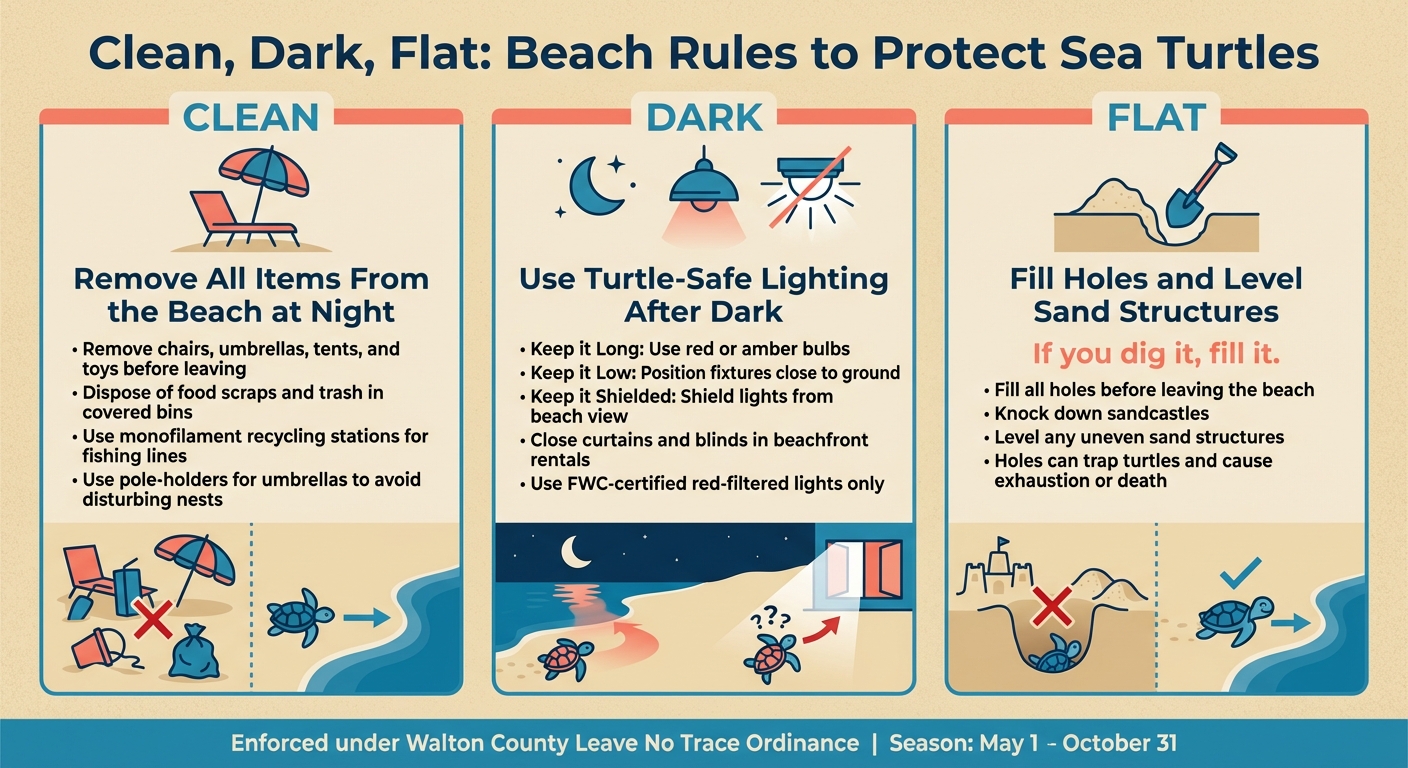
Clean Dark Flat Beach Rules to Protect 30A Sea Turtles
South Walton's Clean, Dark, Flat principle is the backbone of sea turtle protection efforts, ensuring safe nesting and hatching along the beaches. These three guidelines address the challenges turtles face during nesting season, helping to eliminate physical and sensory barriers that could hinder mother turtles or hatchlings on their journey to the Gulf. And it’s not just a suggestion - Walton County enforces these rules under its Leave No Trace ordinance.
Here’s what each principle stands for: Clean means clearing away obstacles that block turtles from reaching the nesting area. Dark focuses on reducing artificial light that can confuse hatchlings. Flat ensures the sand remains smooth and accessible for turtles.
Remove All Items From the Beach at Night
Before leaving the beach, make sure to remove all personal belongings and trash. Items like chairs, umbrellas, tents, and toys left behind - especially near the "toe of the dune", a prime nesting area - can block a mother turtle or trap hatchlings. Even something as simple as a beach chair can become a deadly obstacle.
Food scraps and trash are another concern, as they attract predators like raccoons and crows that prey on turtle eggs and hatchlings. To minimize risks, dispose of waste in covered trash cans. If you're fishing, use designated monofilament recycling stations to safely discard fishing lines, which can entangle and harm marine life. When setting up umbrellas, use pole-holders or sleeves to avoid disturbing nests.
Use Turtle-Safe Lighting After Dark
Hatchlings depend on the natural glow of the moon and stars reflecting off the water to find their way to the Gulf. Artificial lighting can confuse them, leading them inland, where they face dehydration, predators, or exhaustion. To protect them, Walton County requires beachfront properties to use turtle-safe lighting, and everyone visiting the beach should follow suit.
Stick to the "Keep it Long, Keep it Low, Keep it Shielded" rule: use long-wavelength red or amber bulbs, keep fixtures close to the ground, and shield lights so they aren’t visible from the beach. If you’re staying in a beachfront rental, close curtains and blinds after dark to prevent indoor light from spilling onto the sand. Instead of standard flashlights or phone lights, opt for FWC-certified red-filtered lights.
Additionally, clear the sand of any structures or debris to ensure a safe, direct path for hatchlings.
Fill Holes and Level Sand Structures
Flat, undisturbed sand is essential for nesting turtles and hatchlings. While building sandcastles or digging holes might be fun during the day, these need to be smoothed out before leaving. Uneven sand or holes can trap turtles, leading to exhaustion or even death. Unlike some coastal areas, the Gulf’s tides don’t always reach high enough to naturally erase these hazards overnight.
As South Walton Turtle Watch advises:
"If you dig it, fill it."
So, before heading home, knock down sandcastles and fill in any holes to leave the beach safe for its most vulnerable visitors.
Report Sea Turtle Sightings and Emergencies
If you spot a sea turtle - whether it’s a nest, hatchling, or a stranded turtle - report it immediately. Quick action is crucial to safeguarding these animals and is also required by law.
Emergency Contacts for Sea Turtle Incidents
During nesting season (May 1 through October 31), keep these numbers saved for emergencies:
- South Walton Turtle Watch Hotline: 850-865-4503
Use this number to report sea turtle sightings or incidents involving sick, stranded, or entangled turtles. - FWC Wildlife Alert Hotline: 1-888-404-3922 or text Tip@MyFWC.com
Report dead, injured, or harassed turtles to this hotline. You can also call *FWC or #FWC from your cell phone. - Walton County Sheriff's Office: 850-892-8111 or 850-267-2000
Contact them if you see any disturbance to turtles or their nests. - Florida Marine Patrol: 850-233-5150 (24-hour hotline)
When reporting, include the exact GPS location and, if possible, clear photos. These details help responders locate and assist the turtle quickly and efficiently.
What to Do When You Encounter Nests or Hatchlings
It’s essential to avoid touching or disturbing turtles or hatchlings. Handling them without the proper permits is illegal. South Walton Turtle Watch emphasizes:
DO NOT PUSH OR ASSIST STRANDED ANIMALS BACK TO THE WATER.
Attempting to help can cause more harm and violates the law. If you see a stranded turtle or hatchlings heading in the wrong direction, keep a minimum distance of 50 yards (150 feet) and call for help immediately. Also, turn off any flashlights, phone lights, or camera flashes to prevent disorienting the turtles.
For live stranded turtles, stay at least 50 yards away and ensure others, including pets, maintain a safe distance. If you come across a nesting female, give her plenty of space to lay her eggs without interference.
Participate in Local Sea Turtle Conservation Programs
Get involved in protecting South Walton's sea turtles by joining local conservation initiatives. The South Walton Turtle Watch (SWTW) is a dedicated volunteer group working to safeguard sea turtle nests across the area. These efforts go beyond promoting responsible beach behavior, encouraging the community to take an active role in ensuring the survival of these incredible creatures. You can learn more about these initiatives through guided events and volunteer opportunities.
Attend Guided Turtle Walks and Hatchling Releases
While public viewings of nesting turtles are not allowed in South Walton to avoid disturbances, SWTW offers alternative ways to learn about sea turtle conservation. As the group explains:
"When nature is at work, there is no predicting when activities will happen so we aren't able, nor are we permitted to conduct public viewings of turtles."
Instead, you can attend "Wild Sea Turtle Wednesdays" at The Big Chill (7000 E. County Hwy. 30A) from 9:00 am to 11:00 am, held weekly from late May through July. These events focus on sea turtle conservation and the #cleandarkflat initiative. During the nesting and hatching season, you can also watch live-streamed nest excavations on SWTW’s Facebook page. For families with young kids, The Hidden Lantern in Rosemary Beach hosts sea turtle storytime on Tuesdays or Thursdays during the season.
In addition to these educational opportunities, volunteering offers a more hands-on way to contribute.
Volunteer With South Walton Turtle Watch
SWTW provides several volunteer opportunities for those ready to make a direct impact. Survey Team volunteers must be at least 18 years old, live locally, and commit to at least two days per week from May 1 through October 31. This role involves locating and marking nests throughout the season. Volunteers are required to complete training mandated by the Florida Fish and Wildlife Conservation Commission (FWC) and additional field training with SWTW staff. In 2025, the team monitored 41 Loggerhead nests and 25 Green sea turtle nests, resulting in 2,951 Loggerhead hatchlings and 2,024 Green turtle hatchlings.
Another way to help is by joining the Hole Patrol. This team ensures the beaches are safe for nesting mothers and hatchlings by filling in holes at the end of each day. Volunteers must commit to at least two months. Keep an eye on SWTW’s Facebook and Instagram pages for updates on volunteer openings.
If you’re unable to volunteer, you can still support SWTW by purchasing the "Save Our Sea Turtles" coffee blend. For every purchase, $1 goes directly to conservation efforts.
Conclusion: Small Actions Lead to Big Results
Every small effort - filling a hole, turning off a light, or clearing items from the beach - creates a ripple effect in safeguarding South Walton's sea turtles. By embracing the #CleanDarkFlat rule along the 30A coastline, individuals contribute to a collective effort that profoundly impacts these endangered animals.
Sharon Maxwell, founder of South Walton Turtle Watch, emphasizes this point: "I know we've been saying our same spiel since 1995, 'turn off the lights,' '[clear debris].' But it really makes a difference". Her words highlight how consistency in conservation efforts leaves a lasting legacy. Each hatchling that reaches the ocean may return decades later - 20 to 25 years - to nest on the same beach, continuing a cycle that relies on our actions today.
With only about 1 in 1,000 hatchlings surviving to adulthood, every nest counts. Preventing disorientation from artificial lights or removing obstacles like debris can save a hatchling that might one day return as a nesting mother, laying hundreds of eggs and sustaining the population.
Robbin Trindell, a biologist with the FWC Sea Turtle program, offers a hopeful reminder: "By keeping beaches dark and giving sea turtles space, we can make sure that our children and grandchildren can also enjoy watching them make this amazing journey". Acting now - saving conservation hotline numbers, following beach guidelines, and spreading awareness through Friends of South Walton Sea Turtles - ensures a brighter future for these remarkable creatures. Whether you're a local or a visitor, your actions matter. Sea turtles can't shield themselves from human impact, but together, we can. Every small step today helps secure a thriving tomorrow for South Walton's sea turtles.
FAQs
How can I get involved with protecting sea turtles in South Walton?
You can join the South Walton Turtle Watch as a Beach Ambassador to help spread the word about sea turtle conservation. Ambassadors educate the public on #CleanDarkFlat practices, assist during nesting season, and play a key role in protecting these amazing animals.
You can also get involved by attending Wild Sea Turtle Wednesdays, where you'll gain insights into sea turtles and ways to support their survival. Another option is donating - your contributions help fund resources like signs that safeguard nesting areas.
If you come across a distressed or stranded sea turtle, call the South Walton Turtle Watch Hotline at 850-865-4503. This hotline is essential for emergencies, ensuring turtles get the care they need.
What should I do if I see a stranded sea turtle?
If you find a stranded sea turtle, the most critical step is to get help from professionals. Call the South Walton Turtle Watch hotline at 850-865-4503 to report the situation. It's important not to touch or move the turtle - this could cause more harm and is not allowed without proper authorization.
While waiting for help to arrive, keep an eye on the turtle from a safe distance. Take note of details like its size, condition, and exact location. If you can, snap some photos or record the GPS coordinates to give responders accurate information. Acting quickly and carefully can play a key role in safeguarding these amazing animals!
Why is it important to keep the beaches dark at night for sea turtles?
Keeping beaches dark at night plays a critical role in protecting sea turtles. Artificial lights can disrupt the natural behaviors of both nesting turtles and their hatchlings. Here's why: hatchlings are naturally drawn to the light of the horizon, which helps them find their way to the ocean. But bright, artificial lights can confuse them, leading them away from the water and into dangerous situations. This misdirection can leave them vulnerable to dehydration, predators, or sheer exhaustion.
Nesting turtles face challenges too. They often avoid brightly lit areas, which means fewer nests on the beach. This avoidance can directly impact the number of turtles successfully reproducing.
Taking simple actions to reduce artificial lighting can make a big difference. Turning off outdoor lights, closing curtains, or installing turtle-friendly lighting are just a few easy ways to support these incredible creatures and help them thrive.