Hidden Shelling Spots in South Walton
Quiet South Walton beaches hide sand dollars, lightning whelks, scallops and more. Learn best spots, tides, tools and dune-lake tips for better shelling finds.
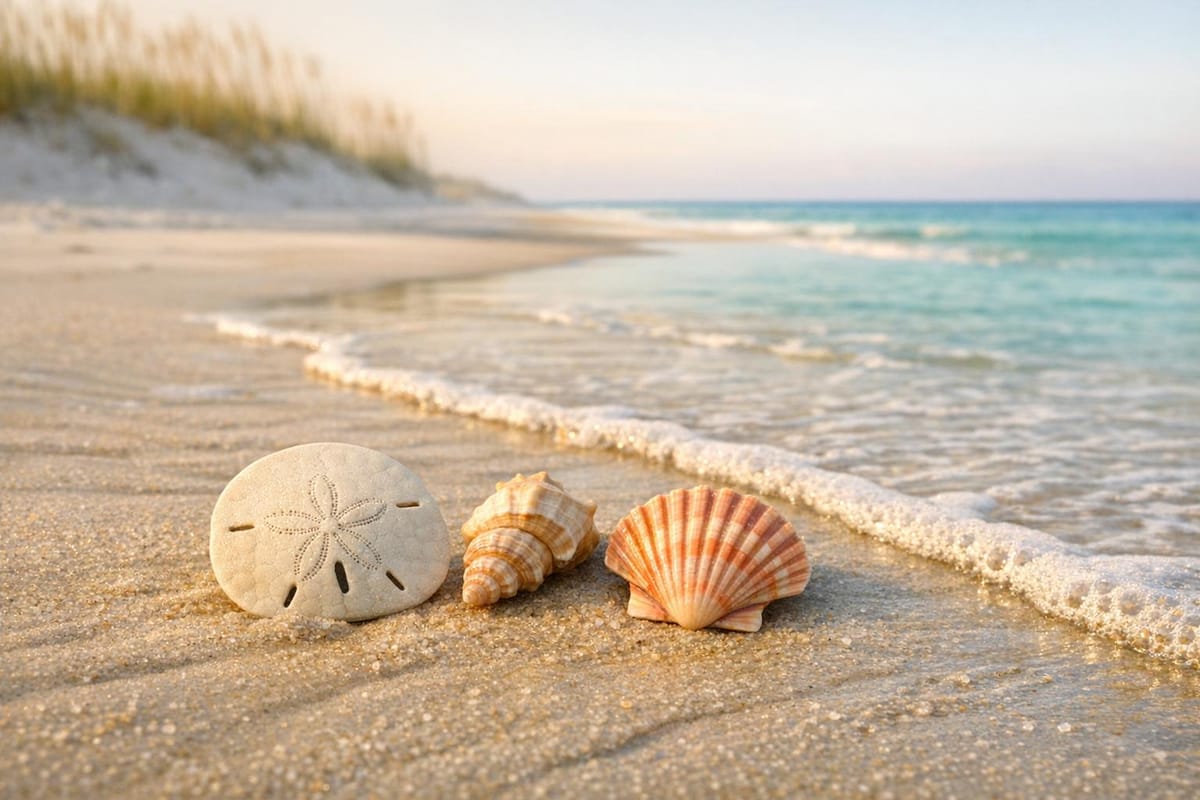
South Walton offers peaceful beaches perfect for shelling enthusiasts. Unlike crowded Florida hotspots, its 26-mile coastline features quiet areas where sand dollars, lightning whelks, and scallops await discovery. Key spots include Grayton Beach State Park, Topsail Hill Preserve, and Deer Lake State Park - each offering serene access to shells without the crowds. Timing matters: visit early mornings, during low tide, or after storms for better finds. Bring tools like a mesh bag and polarized sunglasses to enhance your experience. South Walton’s coastal dune lakes add unique biodiversity, making this region a must-visit for shell seekers.
What Makes These Spots Good for Shelling
The hidden beaches of South Walton are a treasure trove for shelling enthusiasts, thanks to their ideal conditions. One major advantage is the low number of visitors. State parks like Grayton Beach and Topsail Hill are often quiet, giving shells the chance to accumulate undisturbed over multiple tide cycles. As ASH, Beach Fanatic, puts it:
"The trick is to... get away from people. It will usually take a good mile to start leaving all the other walkers behind and the quantity of shells picks up."
This peaceful atmosphere allows natural processes to reveal and preserve these coastal treasures.
The area's natural features also play a big role in creating prime shelling spots. The swash zone - the shallow area where waves meet the shore - acts like nature's own rock polisher, smoothing shells over time. If you snorkel in this zone, you might spot sand dollars and other bivalves as they tumble ashore. Low tide often exposes sandbars, which are known for hiding large, intact shells.
Spring brings wrack lines of Sargassum seaweed, which trap delicate shells as they wash up. While these lines might look messy, they often hide beautiful finds. Plus, the seaweed itself serves an important purpose:
"It is quite beneficial to beach building and provides protection and food to a wide variety of marine life." - SoWal.com
Seasonal changes also boost shelling opportunities. Winter storms and the two-hour window around low tide uncover more beach area, revealing hidden treasures. Full and new moons, which bring stronger tidal currents and lower tides, expose sandbars and shells that are usually out of reach. As Gabi De la Rosa explains:
"After a storm, the ocean deposits fresh treasures along the shoreline, and during a full moon, stronger currents and lower tides can reveal hidden shells that were once out of reach." - Gabi De la Rosa
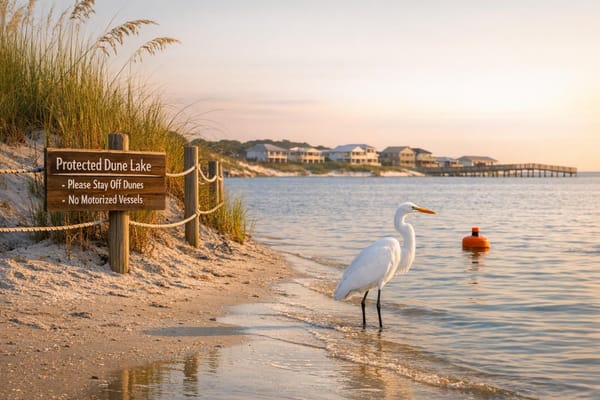
South Walton’s 15 coastal dune lakes add another layer of uniqueness. When these rare lakes connect to the Gulf, their outflows create temporary estuaries where fresh and saltwater mix. This dynamic environment is described by SoWal.com:
"The changing condition of water chemistry in the coastal dune lakes makes them dynamic, biologically diverse ecosystems." - SoWal.com
These ever-changing conditions make South Walton a haven for shelling enthusiasts, offering both variety and abundance in its hidden spots.
Best Hidden Shelling Locations in South Walton
If you're looking for serene spots to find coastal treasures, South Walton has some exceptional hidden locations worth exploring.
Grayton Beach State Park
Spanning 1,133 acres, Grayton Beach State Park is home to a rare 100-acre coastal dune lake. The unique meeting point of the lake's outfall and the Gulf creates perfect conditions for shelling. You might stumble upon sand dollars, blood arks, strawberry cockles, red-tinted scallops, and sunrise tellins (Donax variabilis). The park is easily accessible via Scenic 30A, just east of Grayton Beach, with a nature trail conveniently starting near the beach parking area.
Topsail Hill Preserve State Park
Topsail Hill Preserve State Park boasts 3.2 miles of quiet, white-sand beaches framed by quartz dunes that tower over 25 feet high. Accessible by a tram service from the main parking area at 7525 W. County Highway 30A, this spot is a haven for shell seekers. Look out for large cockle shells - some as big as your hand - and various types of whelks. There’s a small $6 vehicle entry fee.
Point Washington State Forest Access
For those who prefer more secluded areas, Point Washington State Forest offers 15,000 acres of untapped beauty. With nine public entry points, Highway 395 serves as the main access route. The remote beach areas here feature untouched swash zones and wrack lines where shells naturally collect. The lack of human activity allows tidal movements to continually uncover new finds. With 40% of South Walton’s 56,000 acres protected by the state, this forest provides a tranquil retreat for any shell enthusiast.
Eastern Lake Beach Access
Nestled in Seagrove Beach, Eastern Lake Beach Access is where a coastal dune lake merges with the Gulf. The currents at this junction create concentrated deposits of shells along the wrack line. Here, you might find lightning whelks - distinctive for their left-sided openings - along with venus clams and sea beans, some of which have traveled vast distances from places like the Amazon. A nearby parking area ensures easy access to both the Gulf and the lake outfall.
Deer Lake State Park
Deer Lake State Park spans 1,920 acres and features a boardwalk that leads over high dunes to a peaceful half-mile stretch of beach. Known for its large stands of Curtiss' sand grass, one of Florida’s rarest plants, this park is also a prime spot for shelling. After high tide, its wrack lines often reveal venus clams and sea beans. Situated on Scenic 30A, just east of Seagrove Beach, the park offers a mix of convenience and solitude.
How to Find More Shells in South Walton
Looking to uncover even more treasures along South Walton's stunning beaches? These tips, paired with our hidden location guide, will help you make the most of your shelling adventures.
Best Times to Go Shelling
When it comes to shell hunting, timing is everything. Early mornings, especially around sunrise (6:00 AM to 7:00 AM), are prime opportunities to explore untouched sands before the crowds arrive. As SoWal Insider Rudyjohn shares:
"I've always found many shells at sunrise, when the beach unveils untouched treasures."
Winter is another fantastic season for shell collectors. With fewer beachgoers and frequent storms, shells are often brought ashore in abundance. Karen Parker from the Florida Fish and Wildlife Conservation Commission notes:
"Winter is a perfect time for the beach and for collecting seashells... maybe it's because less people are on the beach, or maybe it's the cold weather and winter storms washing them ashore."
For the best results, plan your outings during low tide when more of the shoreline is exposed. Additionally, full moon cycles create stronger currents that can reveal hidden shells.
How to Search Wrack and Swash Zones
Two key areas to focus on are the swash zone and the wrack line. The swash zone, where waves actively break on the shore, is ideal for spotting shells like sand dollars as they roll in with each wave. Walk through the shallow water and keep an eye on the waves as they recede.
The wrack line, located further up the beach, is a ribbon of debris left by high tide. This area often holds sun-bleached shells with vibrant colors. It's also a goldmine for finding sea beans and drift seeds. Look around rocks or debris piles, as storm waves tend to deposit unique items in these spots.
Once you’ve mastered these techniques, having the right tools can make your shelling experience even better.
Recommended Tools and Resources
To maximize your success, consider bringing along some handy tools:
- Mesh bag: Perfect for holding your finds while letting sand and water drain away.
- Sand dipper: An adjustable-handled tool that helps you pick up shells without constant bending.
- Polarized sunglasses: These reduce glare on the water, making it easier to spot submerged treasures.
- Water shoes or scuba boots: Essential for protecting your feet from sharp fragments.
- Sand flea rake: Great for uncovering hidden shells buried just below the surface.
For identification, a guidebook like Florida's Living Beaches: A Guide for the Curious Beachcomber can help you learn about species such as Olive shells, Fighting Conchs, and Scotch Bonnets. With these tools and resources, your shelling adventures are sure to be both fun and rewarding.
Shelling Location Comparison
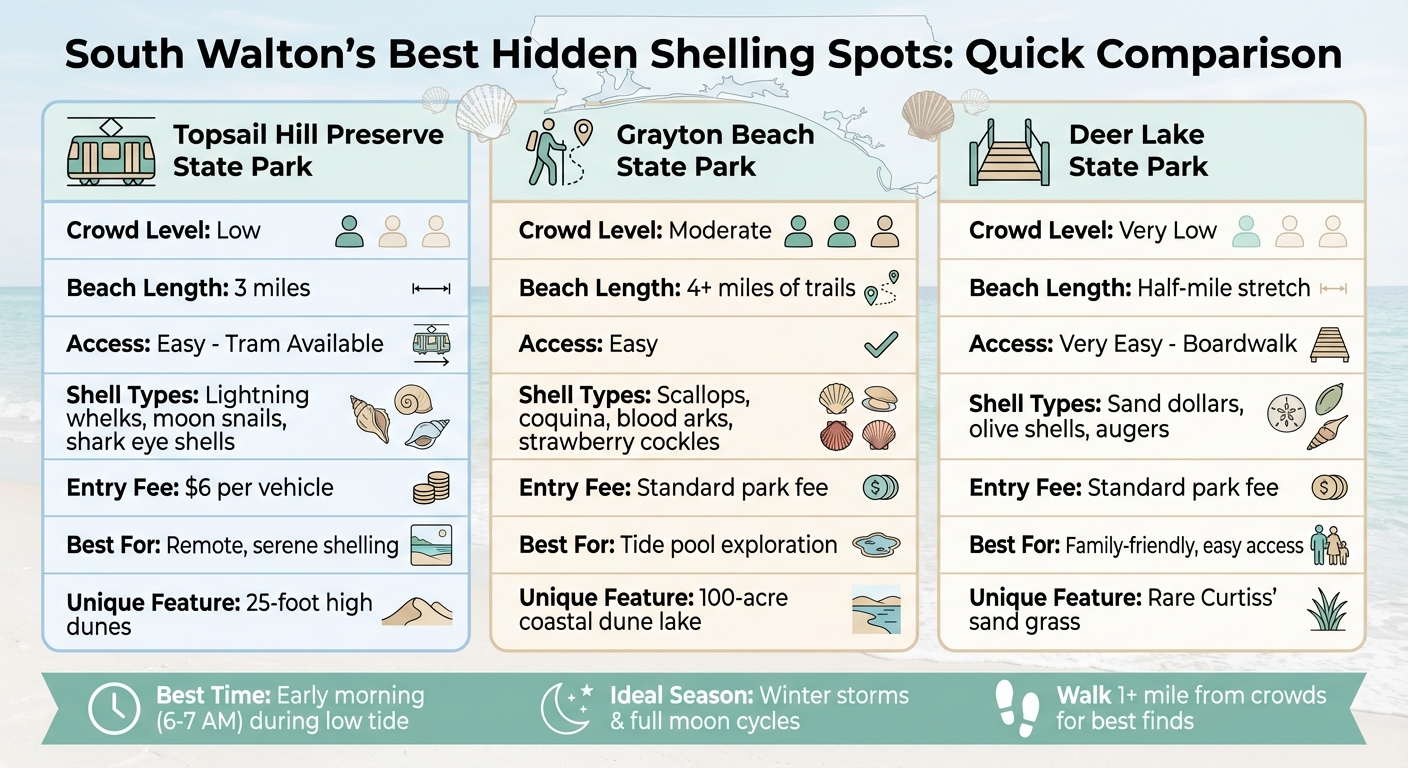
South Walton Hidden Shelling Locations Comparison Guide
Discover South Walton's hidden shelling gems and choose the perfect spot for your next adventure.
Topsail Hill Preserve State Park boasts 3 miles of untouched shoreline framed by dunes that soar up to 25 feet high. For just $6 per vehicle, you can enjoy a convenient tram service to reach the park's most remote and serene areas. The low crowds and unique tram access make this location an ideal choice for a relaxing shelling trip. It's a hotspot for larger predatory shells like lightning whelks, moon snails, and shark eye shells.
Grayton Beach State Park spans nearly 2,000 acres, offering over four miles of trails. While the park's natural beauty remains unspoiled, its proximity to a lively neighborhood means moderate crowd levels are common. The tide pools here are a treasure trove for delicate finds like scallops and coquina, which are less commonly found elsewhere.
Deer Lake State Park is a dream for those who prefer easy access. A boardwalk across the dunes leads straight to the beach, making it a great option for minimal hiking. This quiet and secluded spot is perfect for families or anyone seeking a peaceful outing. Shell seekers will find sand dollars, olive shells, and augers in abundance here.
Here's a quick breakdown to help you compare these locations:
| Location | Crowd Level | Access | Shell Types | Entry Fee |
|---|---|---|---|---|
| Topsail Hill Preserve | Low | Easy; tram available | Lightning whelks, moon snails, shark eye shells | $6 per vehicle |
| Grayton Beach State Park | Moderate | Easy | Scallops, coquina, blood arks, strawberry cockles | Standard park fee |
| Deer Lake State Park | Very Low | Very Easy; boardwalk | Sand dollars, olive shells, augers | Standard park fee |
These locations offer a mix of shell types, access options, and crowd levels, catering to different preferences. To maximize your shelling experience, aim to arrive early in the morning at low tide, especially during winter storms, when the best treasures are often revealed.
South Walton's Hidden Shelling Spots
South Walton's lesser-known shelling spots offer something special that crowded tourist beaches simply can't replicate - the excitement of discovery. In these quieter areas, stumbling upon an intact lightning whelk or a flawless sand dollar feels like uncovering a hidden treasure. The relative scarcity of shells along this stretch of coastline makes each find feel personal and meaningful.
These five secluded locations boast serene, unspoiled shorelines, far removed from the bustling scenes of high-rise-lined beaches. Beyond shelling, visitors can marvel at the rare coastal dune lake ecosystems - natural wonders found in only a few places on Earth, such as New Zealand and Australia. The soft, sugar-white quartz sand adds a picturesque backdrop to your shelling adventure.
Winter low tides are the perfect time to visit, as seasonal storms often wash up fresh shells and reveal delicate treasures along the wrack line. And while you're exploring, don't forget to embrace ethical shelling practices - leave any live organisms undisturbed and stick to marked paths to help preserve the fragile dunes.
For those willing to wander off the beaten path, these hidden gems offer a peaceful escape and a deeper connection to South Walton's natural beauty. Bring a mesh bag, head out early in the morning, and immerse yourself in the tranquil charm of these quiet coastal treasures.
FAQs
When is the best time to go shelling in South Walton?
The best time to go shelling in South Walton is early in the morning, especially around low tide. During low tide, more of the beach is exposed, making it easier to spot interesting shells scattered along the shoreline. If you plan your visit about an hour before or after low tide, your chances of finding unique treasures increase significantly.
Another prime opportunity for shelling is right after storms or high tides. These natural events churn up the water and often leave a variety of shells washed ashore. Winter months can also offer great conditions, as the cooler weather and morning low tides make for an ideal beachcombing experience. To enjoy a more peaceful outing, consider exploring South Walton's quieter, less-visited beaches.
How do coastal dune lakes enhance shelling in South Walton?
Coastal dune lakes are a fascinating feature that adds a special touch to the shelling experience in South Walton. These rare lakes, found in only a handful of places around the world, are shallow bodies of water separated from the Gulf of Mexico by sand dunes. Occasionally, when water levels rise, these lakes connect to the Gulf, creating unique estuarine environments that influence the types and distribution of shells along the nearby beaches.
The blend of saltwater and freshwater in these ecosystems supports a wide variety of marine life, which plays a big role in the abundance and diversity of shells that wash up onshore. Plus, the natural flow of water and the constant shifting of sand around these lakes ensure the shoreline is always changing. For shell collectors, this means fresh opportunities to discover rare and eye-catching finds. These dynamic landscapes make South Walton a standout spot for anyone passionate about beachcombing and shelling.
What should I bring for a great shelling trip in South Walton?
To get the most out of your shelling trip in South Walton, make sure to bring along a few handy items. A bucket or mesh bag will help you carry your finds, while a small shovel or scoop can make digging through the sand easier. Don't forget water shoes or flip-flops to keep your feet safe from sharp shells or rocks. If you want to add a bit of excitement, pack a magnifying glass to get a closer look at tiny shells, or a camera to document your favorite discoveries. With these essentials, you'll be all set for a relaxing and enjoyable day of treasure hunting on the beach!