5 Hidden Spots for Eco Kayaking in South Walton
Paddle quiet coastal dune lakes and estuaries in South Walton — five lesser-known kayak launches, access info, wildlife notes, fees, and eco tips.
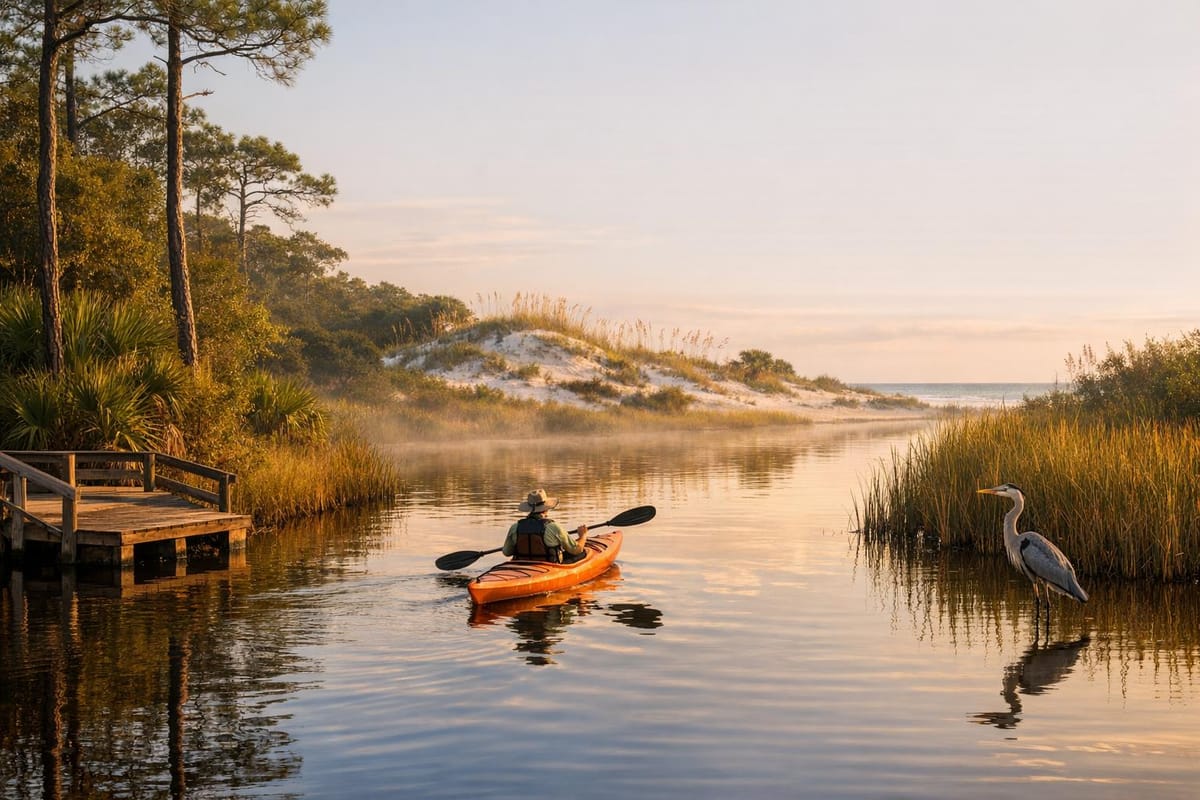
South Walton, known for its rare coastal dune lakes, offers some of the best spots for eco kayaking in the U.S. These shallow lakes, found in only a few places globally, mix freshwater and saltwater, creating habitats for diverse wildlife. The calm, tannin-rich waters make it perfect for beginners and nature enthusiasts alike. Here are five must-visit locations:
- Western Lake: Located in Grayton Beach State Park, it features calm waters, wildlife like bald eagles, and a $5 vehicle entry fee.
- Choctawhatchee Bay: Launch from Grady Brown Park for access to a rich estuary with dolphins and seasonal Gulf sturgeon.
- Deer Lake State Park: Paddle through a 38-acre lake surrounded by rare plants and wildlife. Entry costs $3 per vehicle.
- Topsail Hill Preserve: Explore Campbell Lake with rentals only, as personal kayaks aren't allowed. Entry fee: $6 per vehicle.
- Camp Creek Lake: Quiet and motor-free with a new ADA-accessible launch facility. Parking is limited.
Each spot offers serene paddling experiences while showcasing South Walton's unique ecosystems. Always follow Leave No Trace principles to protect these fragile environments. For maps and access details, visit sowal.co.
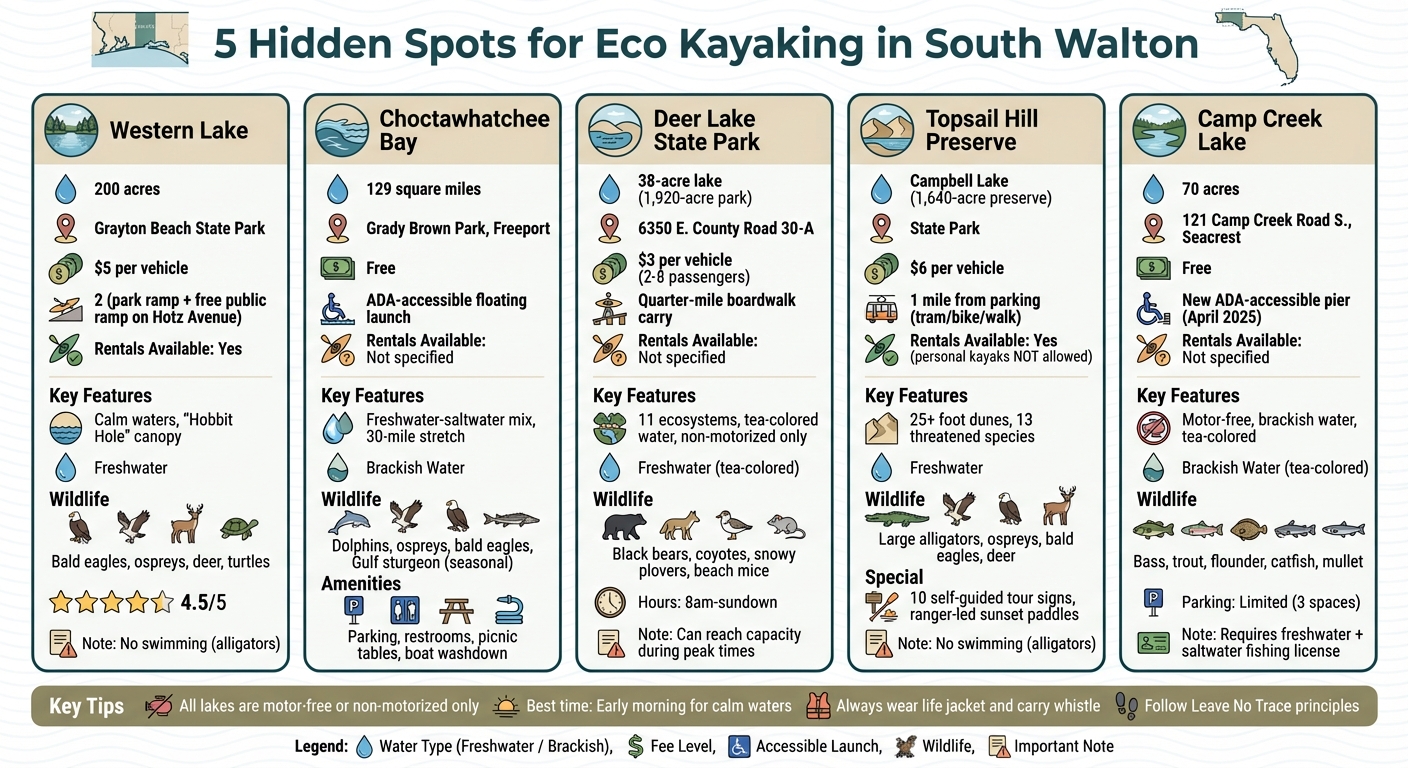
5 Best Eco Kayaking Spots in South Walton: Quick Comparison Guide
1. Western Lake in Grayton Beach State Park
Western Lake combines natural beauty with calm waters, making it a standout spot for beginner paddlers and a highlight of South Walton's eco-kayaking scene.
Covering 200 acres, Western Lake is one of the largest coastal dune lakes in South Walton. Its shallow, tranquil waters are perfect for those new to kayaking. The shoreline is framed by a striking "Hobbit Hole" canopy, formed by scrub oaks and magnolias shaped by salt-laden winds. Local experts at FloridaPanhandle.com gave it a 4.5 out of 5 rating, applauding its unique geological features and peaceful paddling environment.
There are two main launch points for kayakers. The first is inside Grayton Beach State Park, where a $5 vehicle fee grants access to a boat ramp, plenty of parking, picnic spots, and restrooms. The second is a free public ramp on Hotz Avenue near the Red Bar, though parking here is limited. Kayak rentals are conveniently available at the state park launch through the Friends of Grayton Beach and Deer Lake State Parks.
Wildlife enthusiasts will find plenty to admire, from bald eagles and ospreys to white-tailed deer and turtles. The lake is also home to the endangered Choctawhatchee beach mouse. However, swimming isn't advised due to the presence of alligators. This blend of fascinating geology and diverse wildlife highlights South Walton's commitment to eco-friendly outdoor activities.
"Western Lake is the centerpiece of the park, one of our rare, freshwater coastal dune lakes." – Manny Chavez, Photojournalist
Despite its popularity, Western Lake remains a peaceful retreat. While the main beach area can get crowded, the lake's marshes and winding wetlands offer a more secluded paddling experience. Arriving early not only ensures entry but also provides the chance to capture stunning sunrise photos, adding a special touch to your South Walton adventure.
2. Choctawhatchee Bay from Grady Brown Park
Choctawhatchee Bay spans 129 square miles, where freshwater mingles with Gulf saltwater across a 30-mile stretch. This estuary offers a tranquil escape from the bustling Gulf-side beaches while supporting a rich and dynamic ecosystem.
Wildlife thrives here, both above and below the water. Dolphins are often spotted fishing for mullet in the shallows, while ospreys and bald eagles glide gracefully overhead. Beneath the surface, the bay teems with life - redfish, speckled trout, flounder, shrimp, oysters, and blue crabs all call these brackish waters home. It’s also a seasonal migration route for the endangered Gulf sturgeon, adding to its ecological importance.
"Choctawhatchee Bay is home to an abundance of redfish, speckled trout, shrimp, oysters, gulf menhaden, blue crab, flounder, striped mullet, white mullet, and of course, the ever-delightful dolphins." – 30A
For those eager to explore the bay, Grady Brown Park in Freeport (20940 US Highway 331 South) provides an excellent starting point. The park features a floating, ADA-accessible kayak launch, making it easy for everyone to enjoy the water. Visitors will also find plenty of parking for cars and boat trailers, restrooms, picnic tables, grills, and even a boat washdown station to rinse off salt and sediment after a day on the water. These thoughtful amenities complement the area's ongoing efforts to preserve its natural beauty.
The park’s serene atmosphere is perfect for paddlers looking to uncover the bay’s hidden corners. You can even include this stop in a custom South Walton itinerary. Shoreline vegetation not only adds to the scenery but also plays a vital role in stabilizing the coastline, filtering pollutants, and improving water clarity - all of which support the bay's ecosystem. Don’t forget to pack eco-friendly sunscreen to protect both yourself and this incredible estuarine habitat.
3. Deer Lake State Park
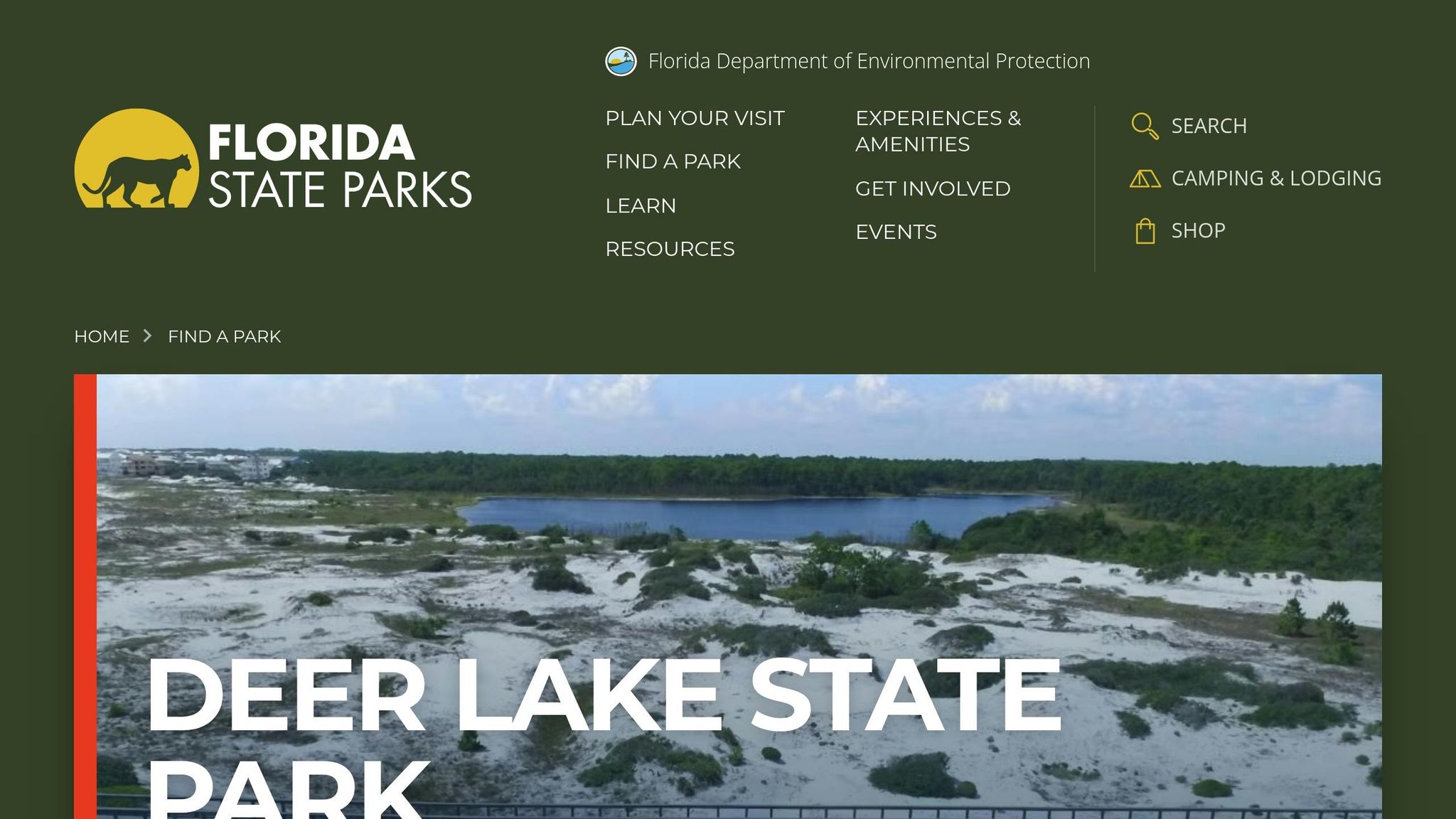
Deer Lake State Park is home to a rare 38-acre coastal dune lake, a natural phenomenon found in only four countries worldwide: the United States, New Zealand, Australia, and Madagascar. This unique feature makes the park a standout destination for paddling enthusiasts. Spanning 1,920 acres, the park boasts 11 distinct ecosystems, ranging from ancient beach dunes to cypress domes and blackwater streams.
For those seeking a peaceful, eco-conscious paddling experience, Deer Lake delivers. Only non-motorized kayaks are allowed, ensuring a quiet, pollution-free environment. The water's tea-like hue, caused by tannins from decaying leaves, adds to the park's serene and natural beauty. Wildlife is abundant here - look out for Florida black bears, coyotes, snowy plovers, and the endangered Choctawhatchee beach mouse along the shoreline. Plant lovers will also appreciate the rare native flora, including Gulf Coast lupine, spoonflower, and pitcher plants.
The park is located along one of the scenic drives in South Walton at 6350 E. County Road 30-A. Entry fees are $3 per vehicle (2–8 passengers) or $2 for pedestrians and bicyclists, payable via an honor box. Open daily from 8 a.m. to sundown, the park often reaches capacity during peak times, so plan ahead to avoid temporary closures.
"The key to the enjoyment of the park is the solitude and the back-to-nature atmosphere." – SoWal
Visitors should be prepared to carry their kayak a quarter mile over the boardwalk using a cart or wagon. Amenities include restrooms, picnic shelters, and two nature trails near the parking area, offering simple but thoughtful facilities for a day immersed in nature.
4. Topsail Hill Preserve State Park Lakes
Topsail Hill Preserve State Park boasts two stunning coastal dune lakes - Campbell Lake and Morris Lake - that are among the most secluded paddling spots in South Walton. These lakes are part of an incredibly rare natural phenomenon found in only a few places worldwide. Spanning 1,640 acres, the preserve safeguards 13 threatened species and features towering dunes that reach over 25 feet. This unique environment makes Campbell Lake an exceptional launch point for kayakers.
Campbell Lake is the main hub for paddling adventures. This nearly freshwater lake rarely connects to the Gulf, creating a stable habitat for fish and other wildlife. Kayakers gliding through its waters will navigate past cypress domes and water lilies while spotting wildlife like large alligators, ospreys, bald eagles, and white-tailed deer. These efforts emphasize South Walton’s dedication to eco-conscious recreation.
"Their very existence is a rare phenomenon we are so fortunate to have here in South Walton. And by most accounts, SoWal has the greatest collection of dune lakes on the planet!" – Park Ranger Christopher Horkman
Reaching Campbell Lake requires a bit of a journey - it’s about a mile from the parking lot. Visitors can get there by tram, bike, or on foot. The tram operates twice daily along the paved tram road. To protect the fragile ecosystem, personal kayaks aren’t allowed; instead, rentals are available at the park store. The park entrance fee is $6 per vehicle.
To make the experience even more rewarding, take advantage of the park’s educational features. Ten self-guided tour signs around Campbell Lake provide insights into the native plants and animals. For a guided experience, consider joining a ranger-led sunset paddle to explore this serene environment with expert commentary. Keep in mind, swimming is off-limits due to alligator activity.
5. Camp Creek Lake
Camp Creek Lake offers a peaceful kayaking experience in South Walton, spanning 70 acres of pristine, motor-free waters. Here, the only sounds you'll hear are the rhythmic splashes of paddles and the soothing hum of nature. It's the perfect retreat from the bustling spots along 30A, providing a quiet escape.
What sets this lake apart is its rare brackish ecosystem, created by an occasional connection to the Gulf. This unique blend of fresh and saltwater supports a diverse array of fish, such as bass, trout, flounder, catfish, and mullet. Adding to its charm, the lake's tea-colored water is enriched with natural tannins. At its northern edge, the lake flows into protected parklands, offering a fantastic chance to spot wildlife in their natural habitat.
"These coastal dune lakes are perfect for kayaking, canoeing, paddle boarding, because we don't allow motorized boats in here." – Tony Anderson, Walton County Commissioner
Accessing the lake is simple, thanks to a state-of-the-art launch facility at 121 Camp Creek Road S. in Seacrest. Opened in April 2025, this $970,000 facility includes an ADA-accessible pier and a dedicated launch for kayaks and other non-motorized watercraft. However, parking is limited to just three spaces, so arriving early or finding alternative transportation is highly recommended.
If fishing is on your agenda, you'll need a combination freshwater and saltwater fishing license due to the lake's brackish conditions. Local enthusiasts also suggest using kayaks with wheels for the short transfer from the parking area to the launch ramp. Surrounded by private property and adjacent to Deer Lake State Park, Camp Creek Lake offers a tranquil setting that feels like a hidden gem, far removed from the crowded beaches just a short drive away. Its serene, eco-conscious environment leads seamlessly into the next section, where we'll dive into essential kayaking tips for South Walton.
Eco Kayaking Tips for South Walton
Exploring South Walton's coastal dune lakes by kayak is an incredible way to connect with nature, but it’s important to paddle responsibly to protect these fragile ecosystems. Start with the basics: wear a life jacket and carry a whistle. As Kurt, a SoWal admin, wisely advises:
"Don't forget life jacket and whistle. Sunscreen and a hat."
In case of an emergency, remember the signal: blow your whistle three times and listen for two blasts in response.
Mornings are often the calmest and best time to head out, as afternoon winds can make paddling back more challenging. Pack essentials like reef-friendly sunscreen, polarized sunglasses to spot underwater wildlife, a small dry bag to keep electronics safe, and a reusable water bottle to stay hydrated. A small trash bag is also a good idea for any waste you may create or find along the way.
To protect these unique waterways, always follow Leave No Trace principles. For instance, lift your paddle in shallow areas to avoid harming seagrasses. Stick to designated launch points to prevent trampling delicate dune vegetation. Additionally, Walton County ordinance requires all personal property, including kayaks, to be removed from beaches and waterways between one hour after dusk and one hour before sunrise.
If you're new to eco kayaking, consider joining a guided eco-tour. These tours, such as those at Camp Helen State Park or offered by Coldwater Excursions, provide valuable insights into the area's natural communities and are perfect for beginners.
When observing wildlife, remember to keep your distance. If an animal, like a turtle, dolphin, or bird, changes its behavior as you approach, it’s a sign you’re too close. During sea turtle nesting season (May 1 – November 1), make sure to clear all gear from the shoreline at night to avoid obstructing nesting paths. As Destin Dreamers puts it:
"Treat the lakes like outdoor galleries - look, enjoy, and leave them just as you found them."
Conclusion
South Walton's kayaking spots offer a rare glimpse into dynamic ecosystems where freshwater and Gulf saltwater meet, creating habitats for sea turtles, herons, ospreys, and unique native plants. The tea-colored waters and quiet shores provide a calm escape from the hustle of crowded beaches.
As you enjoy these natural wonders, it’s important to tread lightly. Be a responsible visitor - stick to marked trails, use non-motorized watercraft, leave no trace, and ensure you leave these fragile environments just as you found them.
Whether you're gliding across the 200-acre expanse of Western Lake or the peaceful waters of Camp Creek Lake, every paddle stroke brings you closer to an extraordinary natural experience. Grab your paddle, follow eco-friendly practices, and dive into the beauty of South Walton. For maps, guides, and detailed access points to all 15 coastal dune lakes, check out sowal.co - a valuable resource for uncovering the area's hidden outdoor gems.
FAQs
Do I need a permit or launch fee to kayak these spots?
Whether or not you need a permit or have to pay a launch fee depends entirely on the location. For instance, Camp Creek Lake Access provides a kayak launch with ADA-accessible features, but parking is limited, and specific usage rules might apply. In Walton County, many public access points allow kayaking without fees. However, permits may be required for other activities like beach driving or fishing. Always double-check local regulations before heading out.
What’s the safest way to kayak near alligators and dolphins?
When kayaking near alligators, it's important to keep your distance and avoid any actions that might provoke them. Stick to well-traveled or designated routes as these are generally safer. While alligators are usually shy, they can behave unpredictably, so it’s best to respect their space and remain cautious.
If you encounter dolphins, admire them from a respectful distance. Getting too close can disturb these marine animals, so observing from afar is not only safer for you but also better for them. Stay aware of your surroundings and follow any local wildlife guidelines to ensure a safe and enjoyable kayaking trip.
When is the best time of day to avoid wind and crowds?
The ideal time for eco kayaking in South Walton, especially if you want to dodge wind and crowds, is in the morning. Early hours usually bring calmer waters and a quieter atmosphere, perfect for a peaceful paddle. This is particularly important during busy times like late spring and summer when winds often pick up as the day progresses. Heading out early ensures you enjoy the best conditions.