High-End Green Rentals on 30A: Guide
Compare 30A neighborhoods, costs, fees, and eco-friendly features to book a luxury rental with fewer surprises and lower impact.
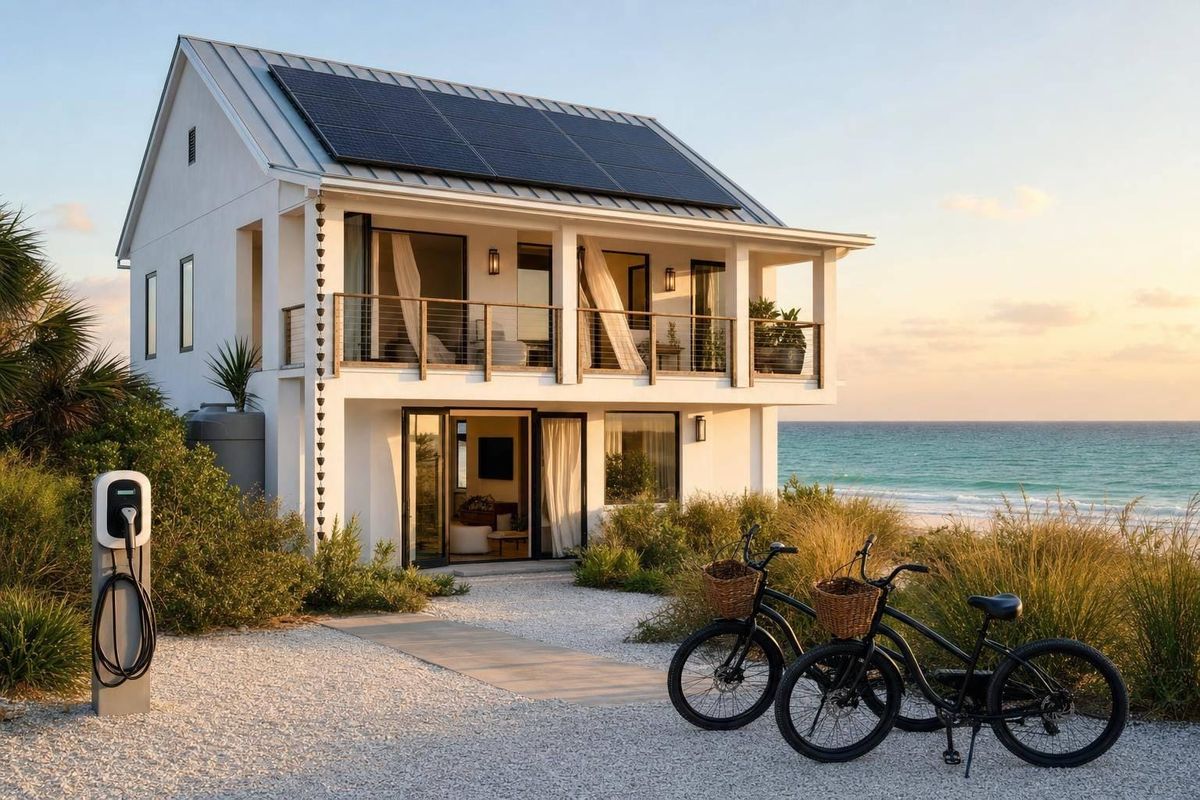
If I wanted a luxury 30A rental with less day-to-day impact, I’d start with the neighborhood, not the house. On 30A, a walkable stay in Seaside or Rosemary Beach can cut car use fast, while WaterColor, Alys Beach, WaterSound, Grayton Beach, and Dune Allen each change the mix of privacy, beach access, pools, trails, and fees.
Here’s the short version:
- Luxury on 30A usually starts around $700 to $1,500+ per night, with large peak-season homes in Rosemary Beach reaching $1,200 to $3,000+.
- Summer bookings average about 104 days in advance, and peak weeks often need 6 to 12 months of lead time.
- Extra fees matter: cleaning can run $150 to $500+, pool heat often adds $40 to $100 per night, and some communities charge amenity or parking fees.
- The best lower-impact picks often have walkable beach access, bike access, LED lighting, smart thermostats, efficient HVAC, and clear house rules.
- Rules can change the stay just as much as the nightly rate: occupancy caps, pet limits, quiet hours, parking rules, wristbands, and golf cart restrictions all come up often.
In other words: this isn’t just about finding a nice house. It’s about booking a place where location, fees, home systems, and rules all fit how you plan to travel.
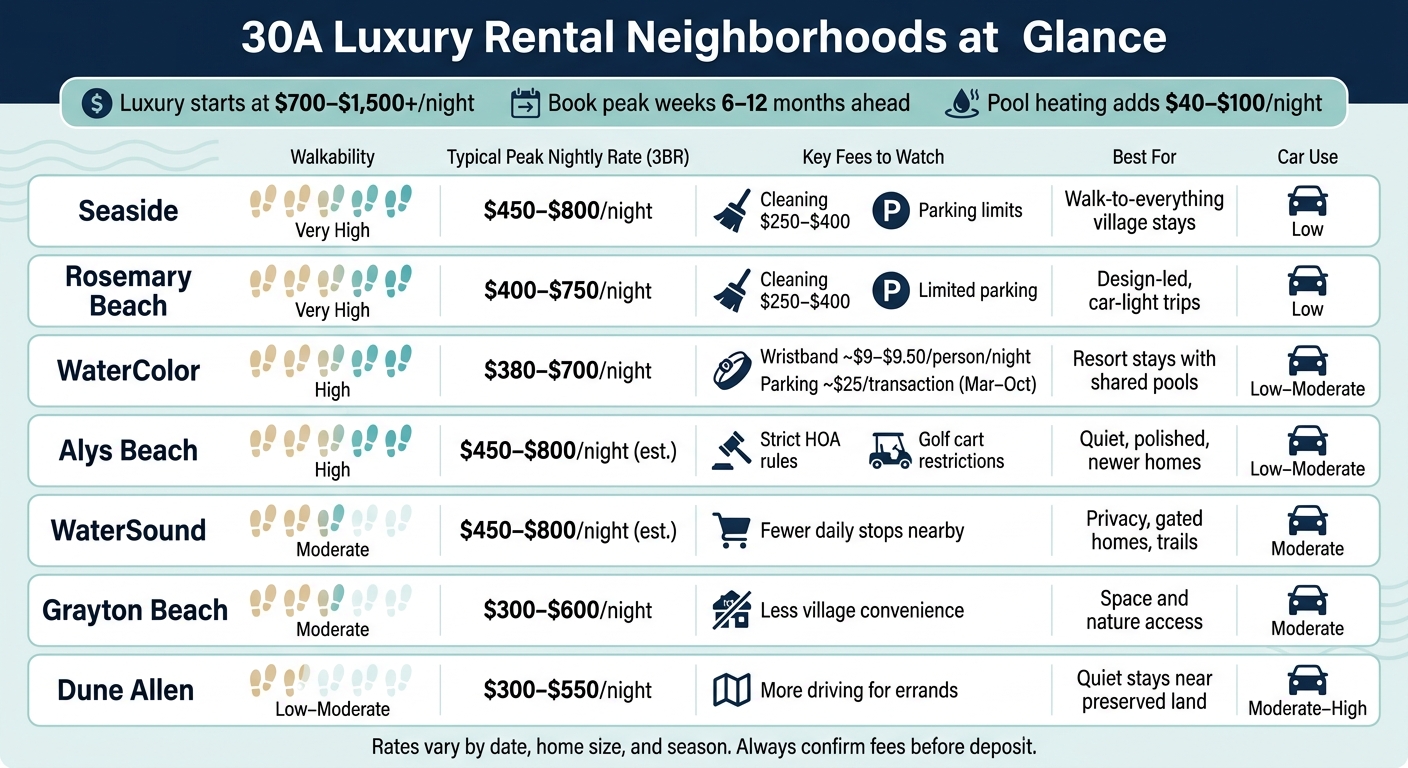
30A Luxury Rental Neighborhoods: Cost, Walkability & Fees Compared
Quick Comparison
| Area | Best For | Car Use | Typical Cost Level | Watch For |
|---|---|---|---|---|
| Seaside | Walk-to-everything village stays | Low | High | Parking limits, shared access rules |
| Rosemary Beach | Design-led, car-light trips | Low | High | Tight parking, beach access rules |
| WaterColor | Resort stays with many shared pools | Low to moderate | High | Wristband fees, seasonal parking fees |
| Alys Beach | Quiet, polished, newer homes | Low to moderate | High | Strict community rules |
| WaterSound | Privacy, gated homes, trails | Moderate | High | Fewer close daily stops |
| Grayton Beach | More space and nature access | Moderate | Mid to high | Less village-style convenience |
| Dune Allen | Quiet stays near preserved land | Moderate to high | Mid | More driving for errands |
My takeaway: I’d book the place that lets me walk more, bike more, and pay fewer surprise fees. Then I’d confirm public vs. private beach access, parking, pool heat terms, and house rules before I pay the deposit.
sbb-itb-d06eda6
Choose the Right 30A Neighborhood for Luxury and Low-Impact Travel
On 30A, your neighborhood choice affects almost everything: how much you can walk, how private the stay feels, and how often you’ll need the car. It makes sense to pick the neighborhood first, because that choice sets the tone for the whole trip.
Seaside and Rosemary Beach: Walkable Village Luxury
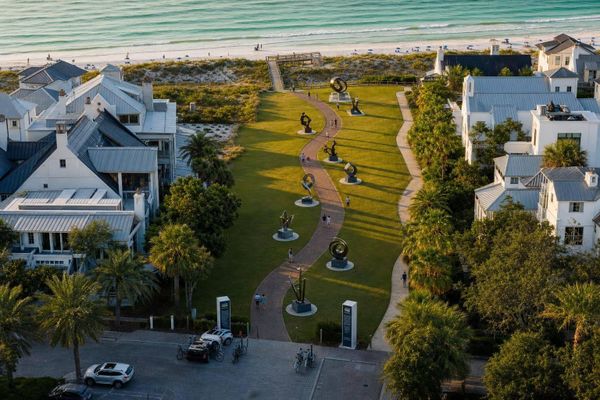
Seaside is a planned pedestrian-first town with 423 residential units, 42 specialty retail shops, and 12 restaurants laid out in a compact, pedestrian-oriented plan. That setup makes day-to-day movement simple. You can get to meals, shops, and the beach without turning every errand into a drive.
Rosemary Beach works in much the same way. The streets are tight, the building rules keep the look consistent, and the town center puts daily needs close together. Parking is limited, so walking and biking do a lot of the heavy lifting. And because community pools are common, a private pool usually isn’t the first thing people look for.
WaterColor, Alys Beach, and WaterSound: Resort Access, Design, and Privacy
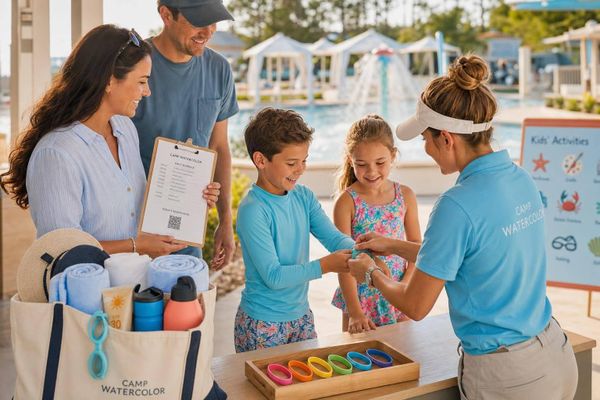
WaterColor leans into the resort model, with access to roughly 10 pools across the community, including three Gulf-front Beach Club pools and three Camp WaterColor pools with a lazy river. For many guests, that means more built-in amenities and fewer reasons to leave the neighborhood.
Alys Beach feels quieter and more polished, with a consistent look and modern efficiency. WaterSound is the most private of the three - gated, green, and close to dune lakes and nature trails, with larger homes and less foot traffic.
Each one cuts down on driving in a different way. WaterColor relies on shared amenities, Alys Beach keeps things close with compact streets, and WaterSound benefits from the paved Timpoochee Trail running across the area.
Grayton Beach and Dune Allen: Space, Character, and Nature Access
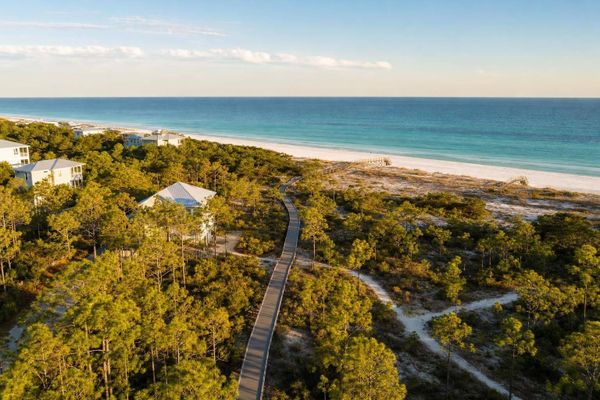
If you want more space and a slower pace, Grayton Beach and Dune Allen stand out. Grayton Beach State Park, Topsail Hill Preserve State Park, and Deer Lake State Park put preserved land close to these neighborhoods. That changes the feel of the stay right away. It’s less polished village life, more room to breathe.
This stretch of 30A also gives you some of the best access to South Walton’s 15 coastal dune lakes, rare ecosystems found in only a few places worldwide. For guests who care about privacy, quiet, and easy access to protected natural areas, these neighborhoods tend to fit better than the busier village-style options.
Use the quick comparison below to narrow the best fit fast.
| Neighborhood | Luxury Style | Walkability | Beach Access | Low-Impact Advantages |
|---|---|---|---|---|
| Seaside | Planned pedestrian-first village | Very high | Community walkovers | Minimal driving; walkable daily needs |
| Rosemary Beach | Design-forward village | Very high | Deeded walkovers | Car-optional stay; compact layout |
| WaterColor | Resort-oriented/family | High | Beach Club access | Shared amenities; bike trails |
| Alys Beach | Design/modern | High | Neighborhood walkovers | Newer efficient construction |
| WaterSound | Private/gated | Moderate | Quieter beach access | Green space; dune lake proximity |
| Grayton Beach | Character/relaxed | Moderate | State park + local access | State park access; low density |
| Dune Allen | Nature/private | Low–Moderate | State park access | Dune lake access; preserved land |
Booking Seasons, Rates, and Fees to Budget Before You Reserve
Once you’ve picked the right neighborhood, the next move is simple: time the booking well and price out the full stay, not just the nightly rate.
Peak, Shoulder, and Off-Peak Booking Windows on 30A
On 30A, prices and availability change fast based on season and how far ahead you book. Peak season runs from Memorial Day through Labor Day. July 4, Thanksgiving, and Christmas–New Year's week bring the highest demand and the highest rates. Spring Break and Fall Break also push occupancy and pricing up.
Shoulder season sits between those busy stretches, mostly late March through May and late September through October. Off-peak months - November, December, January, and February outside holiday weeks - give you the most room to work with.
A good rule of thumb:
- Peak weeks: book 6–12 months ahead
- Summer: book 6–9 months ahead
- Shoulder season: book 4–6 months ahead
- Off-season: book 2–4 months ahead
That lines up with booking data, too. Summer travelers to the Santa Rosa Beach and 30A area book about 104 days ahead on average, and nearly 7 in 10 reserve at least three months in advance.
How Rates Change by Home Size, Week, and Community
Bedroom count is one of the clearest signs of price. Across the market, 3-bedroom homes often land around $300–$600+ per night in normal seasons. For 4-bedroom homes and larger, rates can hit $400–$800+ per night before peak-season markups even kick in.
In places like WaterColor and Rosemary Beach, 3-bedroom peak summer pricing often falls around $380–$750. Well-located 4- to 6-bedroom homes in Seaside, Rosemary Beach, WaterColor, and Seagrove can run $600–$2,500+ per night in peak summer. For example, a 4-bedroom luxury home with private beach access and a rooftop deck has been listed at about $967 per night for a May stay.
You’ll usually see higher pricing in Seaside, Rosemary Beach, WaterColor, and Alys Beach because supply is tighter and beach access is better. Homes within walking or biking distance of the beach and town centers also cost more, as do homes inside gated, architecturally distinctive communities like Alys Beach.
Private pools can push the rate up, especially if they’re heated or saltwater, compared with similar homes that use community pools. In shoulder season, Rosemary Beach family homes with 3–4 bedrooms often drop to $500–$900 per night, while smaller cottages tend to fall into the $300–$500 range.
Common Fees That Change the Real Cost of a Luxury Stay
The nightly rate gets attention, but fees are what shape the final total.
Cleaning fees are usually charged once per stay and tend to scale with home size and finish level. Expect about $150–$300 for smaller condos and homes, and $300–$500+ for larger luxury properties. Some high-end homes also charge separate linen or restocking fees for longer stays or mid-stay housekeeping, which can add another $75–$200.
Pool heating is often seasonal and usually adds $40–$100 per night. That can move the total more than people expect. Before booking, check:
- the exact heating season
- whether the charge is per night or per stay
- whether a minimum number of heated days is required
Amenity fees can show up in resort-style communities, either as a required charge or bundled into the stay. WaterColor, for example, charges guest wristbands at about $9–$9.50 per person, per night and also applies seasonal paid parking of about $25 per transaction at key resort locations from March 1 through October 31.
Optional add-ons can pile on fast. Bike rentals often run $10–$20+ per bike per day, golf cart rentals $75–$150+ per day, and beach gear packages $40–$100+ per day. If you’re comparing two listings that look close on price, these extras can be the tie-breaker.
Use these patterns to compare listings fast.
| Neighborhood | Typical Booking Window | Nightly Rate Pattern (Representative 3BR Peak) | Cleaning Fee | Pool Heating Fee | Amenity Fee | Parking / Registration |
|---|---|---|---|---|---|---|
| Seaside | 4–6 mo. peak; 2–3 mo. shoulder | about $450–$800/night | $250–$400 | about $40–$60/day (seasonal, if offered) | Varies; some homes include village/beach access in rate | 1–2 spaces; verify pass requirements |
| Rosemary Beach | 4–6 mo. peak; 2–3 mo. shoulder | about $400–$750/night | $250–$400 | about $40–$60/day (seasonal, if offered) | HOA pool/beach access varies | Limited village parking; 1–2 spaces |
| WaterColor | 4–6 mo. peak; 3–4 mo. shoulder | about $380–$700/night | $250–$450 | about $40–$60/day (seasonal, if offered) | about $9–$9.50/person/night (wristband) | about $25/transaction (seasonal) |
| Dune Allen / Quieter Areas | 3–4 mo. peak; 2–3 mo. shoulder | about $300–$550/night | $200–$350 | about $40–$60/day (seasonal, if offered) | Few or none | Typically included; few formal fees |
Rates and fees vary by date, inventory, home size, and community rules.
Amenities That Matter Most: Pools, Parking, Beach Gear, and Home Tech
Amenities affect both comfort and total cost, so it helps to focus on the features your group will use every day. Start with the ones that have the biggest impact on day-to-day living: pools, parking, beach setup, and climate control.
Private Pools vs. Community Pools and Pool Heating Rules
A private pool gives your group its own space and makes it easier to keep an eye on kids. If you don’t need a full-size pool, a plunge pool can still give you that cool-down moment while using less water and power.
Community and resort-style pools in places like WaterColor, Seaside, and Rosemary Beach are shared. They often use wristbands, coded gates, or amenity cards, and they usually have posted hours plus rules for glass, food, and noise.
Pool heating is usually optional, seasonal, and costs extra. Keeping the water in the low-to-mid 80s can help limit waste. That tradeoff matters most in cooler months, when heating rules can change both comfort and price.
Parking, Golf Carts, Bikes, and Beach Gear
On 30A, bikes and low-speed vehicles (LSVs) can cut down on car trips and are often the simplest lower-impact way to get around. The multi-use path along Scenic 30A links most communities, and many luxury rentals either include cruiser bikes or can set up delivery through a local partner.
Parking is where details matter. Most high-end homes fit 2–4 vehicles in the driveway, but HOA rules in places like Seaside, Rosemary Beach, and Alys Beach often ban street parking and may limit oversized vehicles, trailers, and boats. Break those rules, and you could end up with fines or towing. Some communities also limit rental carts and require a valid driver’s license.
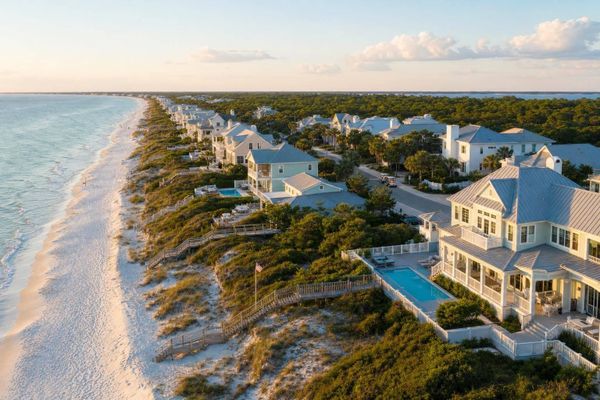
For beach gear, check whether chairs and umbrellas are part of the nightly rate or need to be booked through a separate vendor. And when you head to the sand, use boardwalks instead of crossing dunes. That helps protecting sea turtle nesting areas.
On 30A, the best lower-impact stay usually comes down to walking more, biking more, and driving less.
Smart Home Systems and Energy-Efficient Features Worth Looking For
When you’re sizing up a luxury rental, check for smart thermostats, zoned HVAC, LED lighting, and ENERGY STAR appliances. Those features can cut energy use without making the house less comfortable.
Some newer luxury homes also come with remote pool controls and all-in-one home hubs. That can make it easier to adjust lighting, temperature, and shades from one place instead of bouncing from room to room.
The key is simple: these features only add value if they also help cut power use.
Outdoor Kitchens, Elevators, and Extra Features to Weigh Carefully
Extras like outdoor kitchens, elevators, and covered parking can be worth the money, but only if they match how your group plans to travel and spend time.
An outdoor kitchen makes sense for groups that expect to cook most meals at home and hang out outside at night. Shaded dining areas can also help you rely less on indoor AC during meals, which matters in Gulf Coast heat and humidity.
Elevators can make a big difference for multigenerational groups or anyone hauling luggage across several floors. Covered parking also helps during longer summer stays by protecting vehicles from sun and salt air.
Pay for these upgrades when they fit the trip you’re actually taking.
House Rules, Green Screening, and Final Booking Checklist
House Rules That Affect the Stay Experience
After you compare neighborhoods, fees, and amenities, look closely at the rules. That’s the part that tells you whether those nice features are actually usable.
30A luxury rentals often come with a long rule sheet, and those rules shape the trip in a big way. They also matter if you're trying to travel with less impact. In walkable villages, shared pools, beach access, and tight parking only work when guests follow the standards set by the community.
Occupancy limits are strict, and infants often count toward the maximum. If you go over that limit, you could face immediate eviction and lose your booking charges. Smoking is often banned across the entire property, including balconies and pool decks, and cleaning fees for breaking that rule are often around $500.
Pet rules are all over the map. Many luxury homes, especially in Alys Beach and WaterSound, do not allow pets at all. When pets are allowed, nonrefundable fees often run $150–$350 per dog. Bring an unauthorized pet, and the charge can climb as high as $2,000. Events and parties usually need written approval. Quiet hours often run from 10:00 p.m. to 7:00 or 8:00 a.m., and Walton County’s noise ordinance backs that up.
In places like Seaside and Rosemary Beach, amenity access may depend on wristbands or RFID cards issued to registered guests. Lose one, and you may pay about $100 per item at checkout. Golf cart rules also catch a lot of people off guard. Several East 30A communities, including Seacrest Beach and Alys Beach, ban guest carts or only allow them for documented mobility needs.
How to Identify a Truly Green Luxury Rental Before You Book
Once the rules make sense, the next step is to screen the listing for signs of lower-impact design and walkability.
Treat "eco-friendly" like a sales claim until the listing proves it. A rental that names the exact beach access point and gives a walking distance says a lot more than a vague line like "steps from the beach." If your goal is fewer car trips, village-center homes usually make more sense.
On the amenity side, look for listings that clearly mention LED lighting, ENERGY STAR appliances, smart thermostats, and high-efficiency HVAC. Those details matter. Newer homes also tend to have better insulation and tougher coastal materials. And when a listing spells out seasonal heating rules, that usually points to more deliberate energy use.
You can also double-check walkability with neighborhood maps and sowal.co, which covers the feel, bike paths, and practical layout of each 30A community.
Questions to Ask Before You Pay the Deposit
Use these checks to fill in the gaps a listing may leave out.
| What to Confirm | Why It Matters |
|---|---|
| Exact beach access point and walking route | Some boardwalks are resident-only or have gear restrictions |
| Number of driveway/garage spaces and vehicle rules | Confirm driveway and garage space, plus vehicle limits |
| Pool heating availability dates and warm-up time | Confirm the heat charge and warm-up time |
| Amenity wristband count and guest registration process | Bands are limited to registered guests; extras may not be available |
| Whether community amenities require separate HOA registration | Some resort communities require pre-arrival registration for pool or beach club access |
| Quiet hours, outdoor speaker rules, and visitor policies | HOA enforcement in walkable villages is active, not just advisory |
| HVAC set-point limits | Some contracts restrict AC below 68°F or heat above 78°F |
Final Takeaways
On 30A, low-impact luxury usually comes down to three things: the neighborhood, the amenities, and the rules. A walkable location, efficient systems, clear pool policies, and plainspoken fee disclosure matter more than a polished listing. Check those basics before you pay the deposit.
FAQs
Which 30A neighborhood best fits my trip?
It comes down to the kind of trip you want. Alys Beach is known for its prestige and high-end design. Rosemary Beach and Seaside work well if you want a social, walkable stay with restaurants and shops close by.
For families, WaterColor has resort-style amenities, trails, and beach clubs. WaterSound Beach fits travelers who want gated privacy. Blue Mountain Beach and Dune Allen tend to feel quieter and more residential.
How can I spot hidden rental fees early?
Review all HOA covenants and community bylaws before you book. Those documents often spell out added costs that don't show up in the nightly rate, like mandatory club fees, capital contributions, and transfer fees.
You should also confirm the full tax total for short-term stays in South Walton. That includes the 12.0% combined tourist and sales tax. On top of that, check for property-specific management or booking rules. Some communities have them. Alys Beach, for example, may require exclusive management arrangements.
What makes a luxury rental truly low-impact?
A luxury rental on 30A has a lighter footprint when it blends high-end comfort with features that help protect the coast.
That can mean energy-efficient appliances, eco-friendly materials, smart climate control, native landscaping that needs less water and fewer chemicals, and stormwater features like rainwater catchment and permeable surfaces.
The payoff is simple: a polished, upscale stay with less impact on the local ecosystem.