
How 30A's Monarch Art Trail Blends Art and Nature
A mile-long outdoor gallery on 30A where sculptures and native pollinator gardens double as habitat for migrating Monarch butterflies.
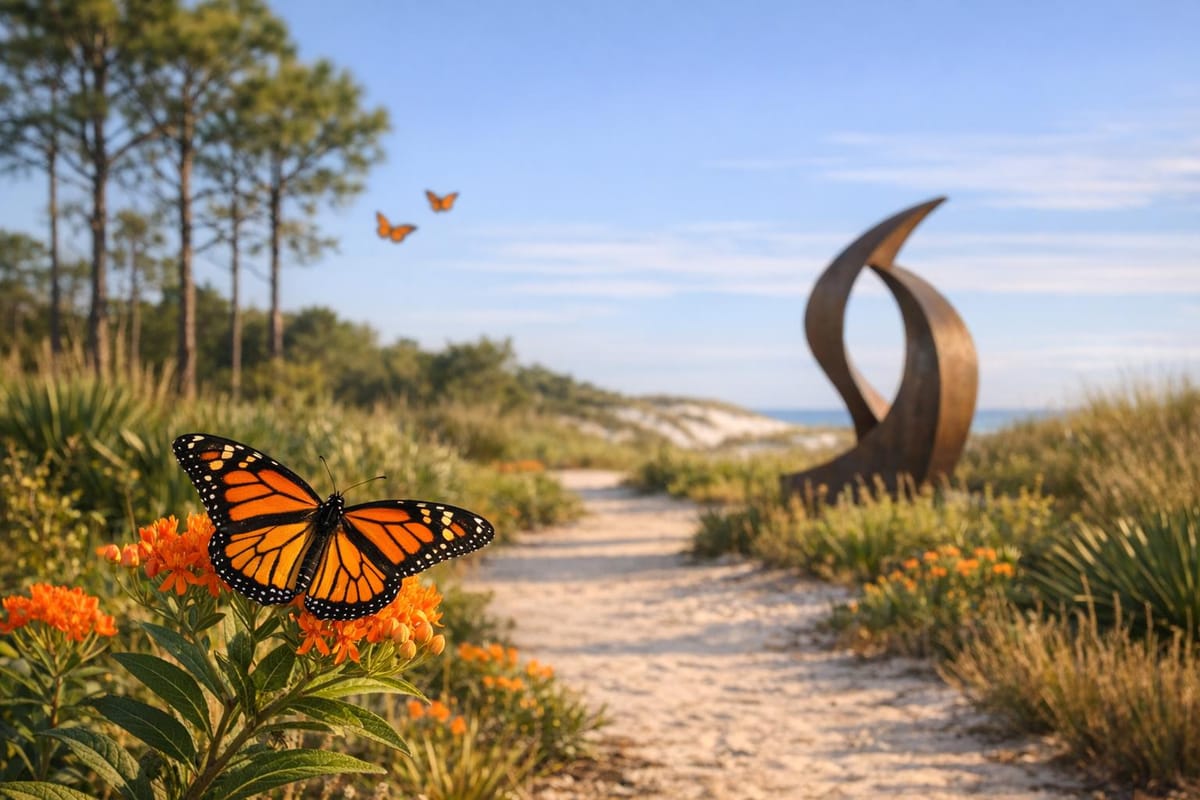
The Monarch Art Trail in South Walton, Florida, is where art meets nature. This one-mile outdoor gallery celebrates the Monarch butterfly's epic migration with eight sculptures surrounded by native pollinator gardens. Located near the Gulf of Mexico, the trail is free to visit and offers solar lighting, custom benches, and an audio guide via the Otocast app. Here's why it's worth exploring:
- Sculptures: Eight pieces inspired by Monarchs, created by artists using durable materials like stainless steel and copper.
- Pollinator Gardens: Milkweed, Blue Sage, and other plants vital for Monarch survival.
- Conservation Focus: Highlights the Monarch butterfly's 80% population decline and offers a habitat to support their migration.
- Best Time to Visit: Fall (September–November) during the Monarch migration.
- Location: South Watersound Parkway, connecting Highway 98 and Scenic 30A.
Plan your visit to enjoy art, learn about pollinators, and witness Monarch butterflies in action.
The Monarch Butterfly Connection
Each fall, as Monarch butterflies embark on their 3,000-mile migration, they find rest on beautifully designed sculptures along the trail. These eight sculptures act as more than just art - they serve as essential perches where butterflies can rest, puddle, and roost, blending creativity with conservation.
This trail addresses a pressing conservation issue. Over the past few decades, the eastern North American Monarch population has declined by about 80%. At the same time, habitat loss in the United States continues at an alarming pace, with roughly 6,000 acres disappearing daily. In response, the trail offers a sanctuary filled with native plants critical to Monarch survival, creating a space where art and ecology meet.
The native plants - Milkweed, Seaside Goldenrod, Blue Sage, and Lantana - were chosen with care. Milkweed, essential for Monarch eggs and caterpillars, plays a central role, while the other plants provide the nectar adult butterflies need. Sam Mello from Sandhills Native Nursery selected these drought-tolerant, low-maintenance species to ensure a dependable food source throughout the year.
"This phase emphasizes sustainability while ensuring ongoing public enjoyment of both the art and native plantings." - Jennifer Steele, Executive Director, Cultural Arts Alliance
The trail goes beyond providing a haven for butterflies. It educates visitors about the importance of pollinators in local ecosystems. Monarchs, while strikingly beautiful, are also vital pollinators for plants and crops like squash and blueberries. By protecting these butterflies, the trail contributes to the health of coastal ecosystems while fostering eco-tourism and environmental awareness.
Location and Visitor Information
The Monarch Art Trail spans a one-mile stretch along South Watersound Parkway, a paved path linking U.S. Highway 98 to Scenic Highway 30A in the Inlet Beach area. Just a mile from the Gulf of Mexico, this trail combines stunning art with a lively natural backdrop. Its location, running north to south, makes it an easy and scenic stop for those exploring the 30A coastline.
How to Get There
Parking is simple and convenient. You can park at the Magnet Innovation Center at the north end of the trail, near the entrance to the Watersound Origins community. Alternatively, there's parking at the Watersound Town Center on Highway 98, which has a crosswalk leading directly to the trail. Cyclists can also hop on the trail via the 18-mile Timpoochee Trail, with access points at Seacrest and Alys Beach on the southern end. The sculptures are arranged from south to north, numbered 1 through 8, so you can begin your journey from either end.
With your starting point set, you're ready to dive into the features that make this trail special.
Trail Amenities
As you explore, you'll notice thoughtful touches that enhance your experience. Local craftsman Jim Foley has created custom benches for resting along the way, and solar-powered lighting ensures the trail remains inviting even after sunset. Informative signage helps guide you, while the surrounding landscape showcases a restored longleaf pine forest. To make your visit even more engaging, download the free Otocast app. It offers a self-guided audio tour featuring artist recordings and detailed descriptions of each sculpture as you approach.
The Sculptures Along the Trail
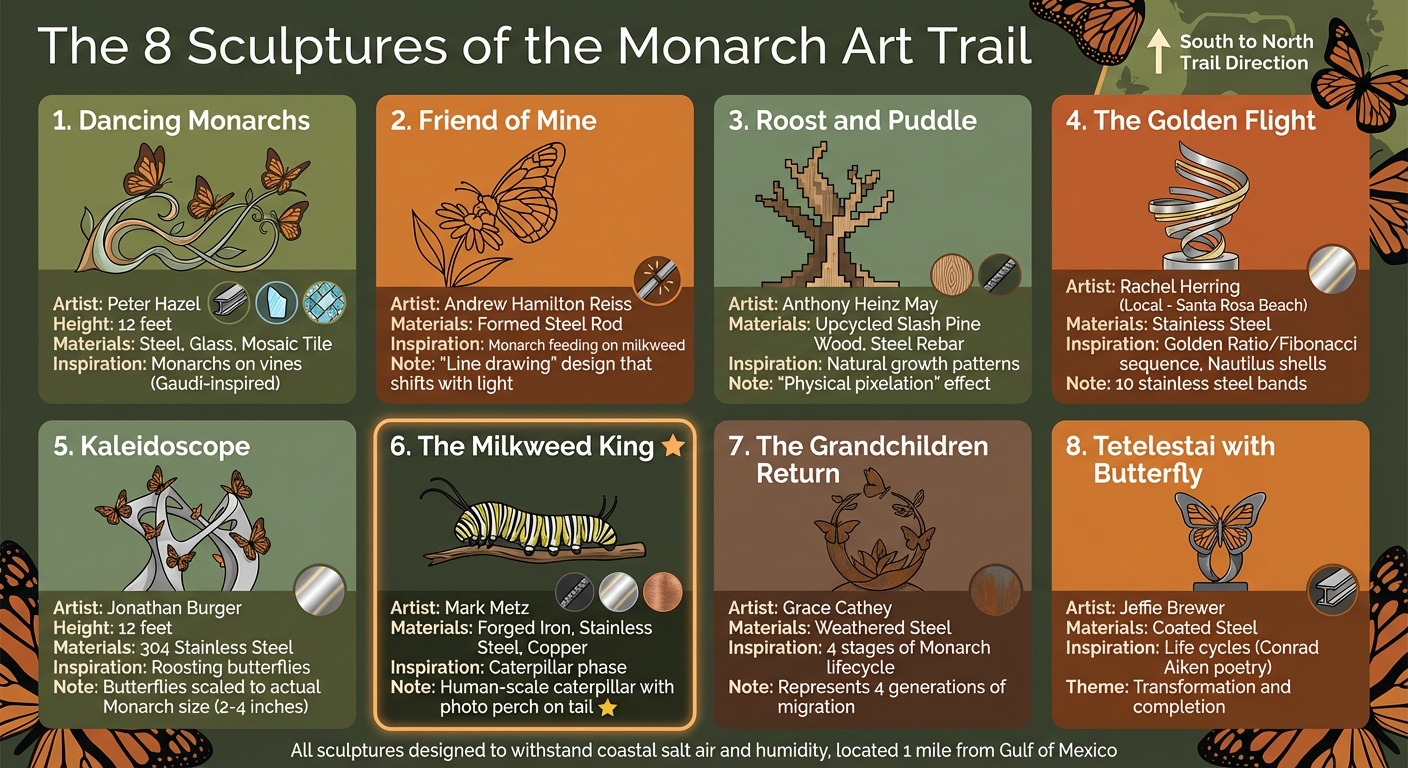
8 Sculptures of the Monarch Art Trail: Artists, Materials & Inspirations
Eight sculptures line the mile-long trail, each celebrating the Monarch butterfly's migration and the surrounding coastal ecosystem. In 2021, the Cultural Arts Alliance of Walton County brought together artists from across the U.S., giving them fewer than five months to craft durable works that could withstand the salt air and humidity of a location just a mile from the Gulf of Mexico. These sculptures not only tell the story of the Monarch's journey but also reflect the artists' thoughtful use of materials designed to thrive in harsh coastal conditions.
To endure the elements, the sculptures incorporate materials like stainless steel, weathered steel, forged iron, and copper. For instance, Peter Hazel's Dancing Monarchs - a towering 12-foot piece - features mosaic-accented steel vines and thick glass butterflies, drawing inspiration from Antoni Gaudí. Similarly, Jonathan Burger's Kaleidoscope, also 12 feet tall, uses 304 stainless steel butterflies, each scaled to the size of an actual Monarch (two to four inches), symbolizing their communal roosts for warmth.
Some pieces take a different approach, blending industrial metals with natural or repurposed materials. Anthony Heinz May's Roost and Puddle uses upcycled slash pine waste, fragmented into wood cubes and mounted on steel rebar, creating a striking "physical pixelation" effect. Mark Metz’s The Milkweed King is a whimsical, human-scale caterpillar crafted from forged iron, stainless steel, and copper, complete with a tail designed as a playful photo perch.
| Sculpture Name | Artist | Primary Materials | Natural Inspiration |
|---|---|---|---|
| Dancing Monarchs | Peter Hazel | Steel, Glass, Mosaic Tile | Monarchs on vines |
| Friend of Mine | Andrew Hamilton Reiss | Formed Steel Rod | Monarch feeding on milkweed |
| Roost and Puddle | Anthony Heinz May | Upcycled Wood, Steel Rebar | Natural growth patterns |
| The Golden Flight | Rachel Herring | Stainless Steel | Golden Ratio, Nautilus shells |
| Kaleidoscope | Jonathan Burger | Stainless Steel | Roosting butterflies |
| The Milkweed King | Mark Metz | Iron, Stainless Steel, Copper | Caterpillar phase |
| The Grandchildren Return | Grace Cathey | Weathered Steel | Metamorphosis stages |
| Tetelestai with Butterfly | Jeffie Brewer | Coated Steel | Life cycles |
Artistic Themes and Inspirations
Beyond their materials, these sculptures explore themes tied to the Monarch's lifecycle, weaving in mathematical patterns, poetic elements, and natural cycles. Rachel Herring, the only local artist from Santa Rosa Beach, created The Golden Flight using the Fibonacci sequence. Its 10 stainless steel bands evoke images of nautilus shells, rolling ocean waves, and delicate butterfly wings. Grace Cathey’s The Grandchildren Return, made from weathered steel, represents the four stages of the Monarch's lifecycle, a nod to the four generations required to complete their 3,000-mile migration.
"The inspiration for The Milkweed King comes from a neighbor of mine who propagates milkweed and shares the seeds and seedlings with people all over the country."
- Mark Metz, Artist
Andrew Hamilton Reiss used repurposed steel rods to create Friend of Mine, a depiction of a Monarch feeding on milkweed - a plant essential to the species’ survival. The sculpture’s "line drawing" design shifts with changing light, adding a dynamic quality. Meanwhile, Jeffie Brewer’s Tetelestai with Butterfly, inspired by Conrad Aiken’s poetry, uses coated steel to explore themes of transformation and completion. Together, these sculptures celebrate the beauty of nature while highlighting the importance of Monarch conservation.
Tips for Your Visit
To make the most of your time on the trail, here are some helpful suggestions to enhance your experience.
Plan your visit for October or November to catch the Monarch butterflies in action and enjoy the pleasant fall weather. During these months, tens of thousands of Monarchs migrate through South Walton on their 3,000-mile journey to Mexico. This natural spectacle transforms the trail into a stunning blend of art and nature. If you're lucky, your trip might coincide with the Flutterby Arts Festival, a beloved event held in mid-November at Watersound Town Center, celebrating over 33 years of tradition.
Download the Otocast app before you go to dive deeper into the trail's artistic side. This free app offers geo-located audio guides, where each of the eight featured artists shares insights about their work and materials. With its GPS feature, the app identifies nearby sculptures, allowing you to explore the trail in any order. The sculptures are numbered 1 through 8, running south to north.
For details on parking and trail access, check the "How to Get There" section above. The trail’s paved path is perfect for walking, jogging, or cycling and conveniently connects to the 30A bike path for extended exploration.
"Every fall tens of thousands of Monarchs can be seen enjoying the indigenous flora growing here. It's one of the best aspects of fall on 30A."
- Tess Farmer, 30A.com
Be sure to stop by "The Milkweed King" (Sculpture #6) for a memorable photo. The sculpture features a photo perch cleverly placed on the caterpillar's tail - perfect for capturing a unique moment.
Other Eco-Tourism Activities in South Walton
South Walton offers a fascinating blend of art and ecological experiences, extending well beyond the Monarch Trail. One standout example is the Underwater Museum of Art (UMA), created by the Cultural Arts Alliance of Walton County. This is North America's first permanent underwater sculpture park, located 0.93 miles off Grayton Beach State Park at a depth of 58 feet. The UMA features sculptures that double as artificial reefs, supporting marine life like sea turtles, dolphins, and a variety of fish species. Just like the Monarch Trail, the UMA combines artistic expression with environmental purpose. Each year, new sculptures are added through a juried selection process. For 2025, artist Nathan Hoffman will contribute "The Neptunian Oak", a sculpture resembling a dead tree, complete with hollow spaces for marine life and surfaces for algae growth, symbolizing the interconnected cycles of life in the Gulf.
Another natural treasure in South Walton is its coastal dune lakes, rare ecosystems where freshwater and saltwater meet, creating unique habitats. These lakes, found in only a few places worldwide, are perfect for paddling and wildlife observation. For land-based adventures, the Point Washington State Forest offers an extensive network of biking trails through serene longleaf pine forests.
"The Underwater Museum of Art is more important than we all know... It is a positive movement in the right direction leading by example to create net positives for our oceans."
- Zachery Long, Artist
The Timpoochee Trail, spanning 19 miles, connects the Monarch Art Trail to nearby beach towns, nature preserves, and other art installations, including the sea turtle sculptures at Turtle Bale Green in Alys Beach. Visitors can enhance their experience by using the Otocast app, which provides self-guided tours of eco-art sites throughout the area.
Combining the Trail with Other 30A Attractions
South Walton makes it easy to pair the art trail with a variety of eco-friendly activities. With convenient parking at the Magnet Innovation Center or Watersound Town Center, the trail is a perfect starting point for exploring the 30A area. The southern end connects directly to Seacrest, Alys Beach, and Rosemary Beach, where you can combine nature walks with dining and boutique shopping. If you're visiting during the fall migration season (late September through November), you might catch the breathtaking sight of thousands of Monarch butterflies in the morning along the trail. Afterward, head to Grayton Beach State Park for coastal adventures or join a dive boat tour to explore the UMA.
Conclusion: Where Art and Nature Meet
The Monarch Art Trail showcases a harmonious blend of creativity and environmental care. This mile-long outdoor gallery not only celebrates artistic expression but also serves as a crucial habitat for Monarch butterflies during their epic 3,000-mile migration. It’s a space where conservation and artistry come together seamlessly, with eco-conscious design playing a key role in its mission.
One of the trail’s most captivating features is its seasonal transformation. In November, during the Monarchs' fall migration, thousands of butterflies can be seen resting on the sculptures and native plants, creating a living, breathing art experience. Every detail of the trail, from the upcycled materials used in the sculptures to the drought-tolerant native gardens, emphasizes a commitment to sustainability.
Whether you're drawn to art, nature, or simply enjoy unique outdoor adventures, the Monarch Art Trail offers an experience like no other. It also connects beautifully with South Walton's rich eco-tourism scene, which includes attractions like the Underwater Museum of Art and the stunning beaches along 30A.
Discover more about the Monarch Art Trail and other hidden treasures along the 30A coastline by visiting sowal.co. You'll find detailed guides, event listings, and insider tips to make the most of your South Walton experience.
FAQs
How long does the Monarch Art Trail take to walk?
The Monarch Art Trail spans approximately one mile and offers a paved path adorned with eight sculptures along South Watersound Parkway. Perfect for a self-guided adventure, you can walk or bike the trail, allowing you to enjoy both the artwork and the surrounding nature at your own rhythm.
Is the trail stroller- and wheelchair-friendly?
The Monarch Art Trail is thoughtfully designed to accommodate everyone, including those using strollers or wheelchairs. With paved paths and accessible parking, it ensures a smooth and hassle-free experience for visitors with mobility devices.
What should I do to avoid disturbing Monarch butterflies?
To help protect Monarch butterflies, stick to marked trails, reduce artificial light during their nesting season, and back efforts aimed at conserving their habitats and migration routes. These small steps can play a big role in maintaining the fragile balance between these butterflies and their environment.