Long-Term Bike Rentals vs. Buying a Bike on 30A
Compare long-term bike rentals and buying on 30A — costs, convenience, maintenance, and homeowner programs.
Should you rent or buy a bike on 30A? It depends on how long you're staying and how often you’ll ride. Renting is great for short visits or seasonal stays, offering convenience with delivery, maintenance, and roadside assistance. Buying makes sense for frequent visitors or full-time residents, giving you unlimited access but requiring storage and upkeep.
Key points to consider:
- Renting: Costs $10–$17/day for cruisers (weekly plans) or $220–$300/week for e-bikes. Includes helmets, locks, and maintenance. Long-term plans, like the House Bike Program, can cost as little as $1/day.
- Buying: A good option for frequent riders or residents. Choose cruisers or hybrids for paved trails, mountain bikes for rough terrain, or e-bikes for longer rides. Maintenance costs range from $200–$400 annually.
Quick Comparison:
| Factor | Renting | Buying |
|---|---|---|
| Cost | $70–$120/week (cruisers) | $200–$400/year (maintenance) |
| Convenience | Delivery, maintenance, and roadside help | Requires storage and self-maintenance |
| Best For | Short stays, seasonal visitors | Full-time residents, frequent visitors |
Rent if you're visiting briefly or want hassle-free transportation. Buy if you're a regular or plan to live on 30A. For property owners, programs like the House Bike Program offer a middle-ground option.
How Long-Term Bike Rentals Work on 30A
Long-term bike rentals on 30A are designed with flexibility in mind, offering options that cater to the varying lengths of visitors' stays. To help organize your trip, you can use a South Walton itinerary generator to map out your daily rides. Rental companies understand that many people spend weeks, not just days, in the area. To accommodate this, they provide contracts that range from daily to yearly, so you’re never stuck with a plan that doesn’t fit. Once you choose your rental plan, the bike is typically delivered right to your vacation rental or home - simple and hassle-free.
Rental Costs and Duration Options
The longer you rent, the more you save. For example, a cruiser bike might cost $15–$35 per day for a short-term rental, but opting for a weekly plan reduces the daily rate to around $10–$17, with weekly totals ranging from $70–$120. Electric bikes are pricier but offer great value for avid explorers, with weekly rates between $220–$300. Their 40–60-mile battery range makes them ideal for frequent rides along trails like the Timpoochee.
For homeowners and property managers, there’s the “House Bike Program,” which offers year-round contracts. These plans can bring the cost down to as little as $1 per day per bike. Most rentals also include essentials like helmets, locks, and sometimes baskets - though baskets may come as a small add-on for about $10. If your stay exceeds four days, it’s worth asking for the weekly rate since some companies charge the same for four days as they do for a full week. These cost-saving options make long-term rentals a practical choice.
"Adding bikes to your vacation rental isn't just a nice extra - it's a feature that guests actively look for when booking a home on 30A." - 30A Bike Rentals
Maintenance and Repair Coverage
One of the biggest perks of long-term rentals is that maintenance is entirely handled by the rental company. Routine tune-ups, repairs, and general upkeep are included, with some companies scheduling these services quarterly, monthly, or even bi-weekly. If you run into trouble mid-ride - like a flat tire - many providers offer 24/7 roadside assistance. And if a bike is damaged beyond repair, a replacement is usually provided quickly.
Premium plans might include extras like GPS tracking and theft insurance, which covers replacement costs if your bike is stolen. However, it’s important to always use the provided lock, as failing to do so could result in a replacement fee of up to $350. This level of support makes renting an appealing and worry-free option, especially for short-to-medium stays.
When Renting Is the Right Call
Renting is a smart choice for anyone staying on 30A for weeks or months rather than years. It’s a great way to explore the area without committing to a long-term purchase. Families, in particular, will appreciate that Florida law (Florida Statute 316.2065) requires helmets for riders under 16, and rental companies include helmets as part of their packages.
Seasonal visitors can also take advantage of off-season discounts, with many providers offering rates that are 30–40% lower between November and February. For snowbirds or remote workers spending a winter on 30A, long-term rentals strike a balance between affordability and convenience.
sbb-itb-d06eda6
Buying a Bike for Life on 30A
For those living on or frequently visiting 30A, owning a bike means freedom from rental contracts and return deadlines, giving you instant access whenever you need it. However, the coastal environment does bring some unique challenges when it comes to maintenance. The next step is finding the right bike to tackle 30A’s diverse terrain.
Picking the Right Bike for 30A
Your bike choice should match the terrain you’ll be riding. The 18.5-mile Timpoochee Trail, with its flat and paved surface, is ideal for a beach cruiser or hybrid bike. Cruisers provide a smooth, comfortable ride on boardwalks and packed sand, while hybrids are versatile enough for both paved paths and neighborhood trails, such as those in WaterColor.
If you’re aiming to explore the 27 miles of trails in Point Washington State Forest, a mountain bike is your best bet. Its knobby tires are designed for rougher terrain and dirt paths.
For frequent riders or those covering longer distances, e-bikes are worth considering. Areas like Blue Mountain Beach, with dunes reaching up to 65 feet, can be challenging on a standard bike. An e-bike’s motorized assist makes those steep climbs far easier. And if you plan to ride on soft, dry sand, like the beaches near Dune Allen, a fat bike with oversized tires is a must.
To handle the salty air, look for bikes with aluminum frames or corrosion-resistant coatings to prevent rusting.
Purchase Costs and Ongoing Expenses
Local bike shops in the area offer a range of options, and some even apply your previous rental fees toward the purchase of an e-bike. Keep in mind, though, that the coastal environment speeds up wear and tear. Annual maintenance can run between $200 and $400, so plan for these costs. Scheduling tune-ups during the off-season (September through February) is a smart move since mechanics are more readily available .
Storage and Practical Ownership Considerations
Space can be tight on 30A properties, with many lots measuring just 50×100 feet. To protect your bike from the salty air and high humidity, store it indoors - whether in a garage or on a covered porch .
Invest in a sturdy lock, especially if you’ll be parking your bike in busy areas. Mobile repair services are also available during the summer months, offering at-home tune-ups, flat tire fixes, and adjustments for added convenience.
"Establish relationships with trusted service providers during your first off-season. Most long-term 30A residents have a reliable contact for each trade." - Andy Beal, Realtor, Living on 30A Florida
Long-Term Rentals vs. Buying: A Direct Comparison
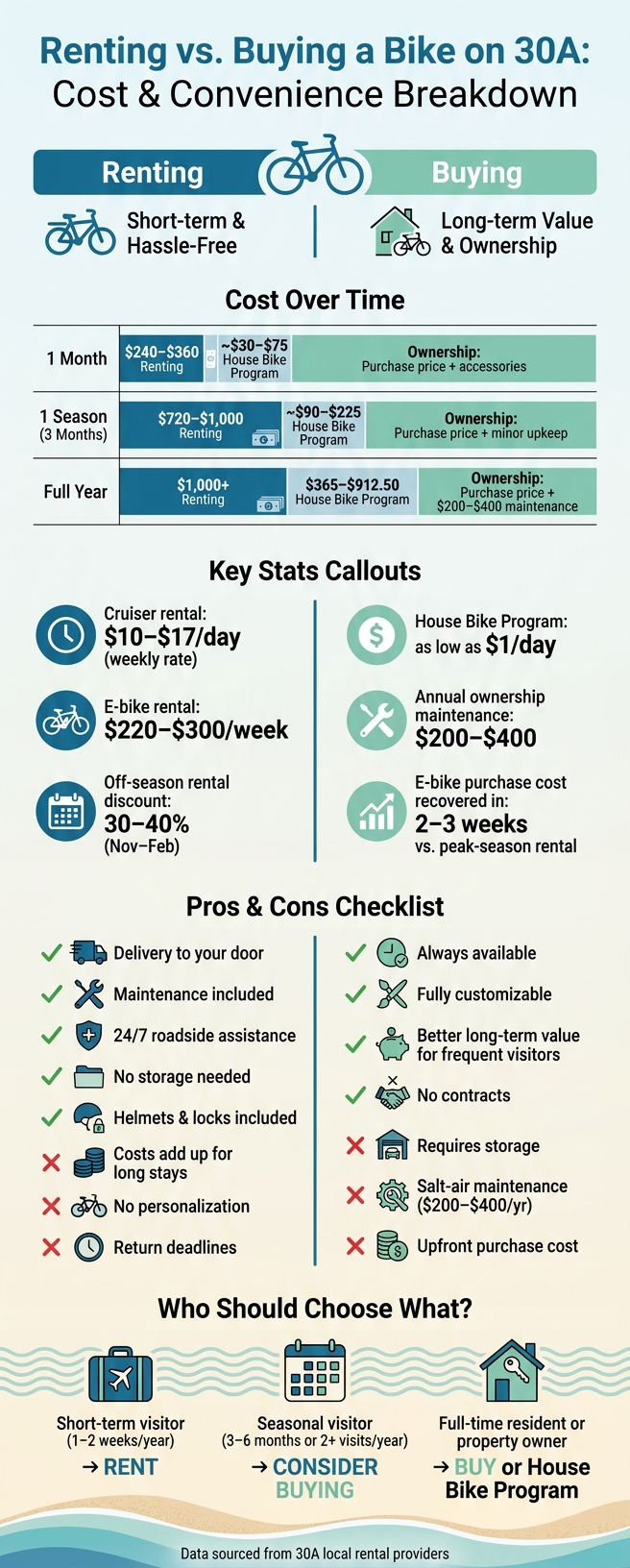
Renting vs. Buying a Bike on 30A: Cost & Convenience Breakdown
With a clear understanding of the pros and cons of rentals and ownership, let’s dive into a direct comparison to help you decide which option fits your needs best.
Cost Comparison Over Time
When you break it down, the cost differences between renting and owning become more apparent over time. Renting a beach cruiser costs $240–$360 per month, which works fine for a short vacation. Stretch that to a full season (three months), and you’re looking at $720–$1,000. Compare that to the House Bike Program, which offers a more budget-friendly option at $1–$2.50 per day per bike - totaling as little as $365 per year, with maintenance included.
| Duration | Rental (Cruiser) | House Bike Program | Ownership (Estimated) |
|---|---|---|---|
| 1 Month | $240 – $360 | ~$30 – $75 | Purchase price + accessories |
| 1 Season (3 Months) | $720 – $1,000 | ~$90 – $225 | Purchase price + minor upkeep |
| Full Year | $1,000+ (est.) | $365 – $912.50 | Purchase price + salt-air maintenance |
For e-bikes, the math tips even further in favor of buying. Peak-season rental rates mean you can recover the cost of purchasing an e-bike in just 2–3 weeks.
Convenience and Flexibility
Rentals are all about ease of use. Many 30A rental companies deliver bikes directly to your vacation home or resort, often for free with weekly bookings or orders of four or more bikes. If you don’t meet those criteria, pickup fees are typically $10–$25. When your trip ends, the company retrieves the bikes - no need to worry about storage or maintenance.
Ownership, however, gives you unmatched availability. Your bike is always ready to go, no need to schedule deliveries or pickups. Plus, you can personalize it to fit your needs, whether that’s adding panniers, a child seat, or a phone mount - features you won’t find in standard rental fleets. The downside? You’re responsible for storage, which can be tricky on a compact 30A lot, and you’ll need to keep up with maintenance to combat salt-air corrosion, which can wear down bikes faster than in-land environments.
"Renting offers flexibility - but not long-term control over your costs." - Heather Curry, Local Realtor, EC Home Collective
These trade-offs are key to deciding which option aligns with your lifestyle.
How Your 30A Plans Affect the Decision
How often you visit 30A plays a big role in your choice. If you’re coming once a year for a week or two, renting is the no-brainer - no commitment, no maintenance, no storage headaches. But if you’re visiting more than twice a year, those rental costs can quickly add up to more than the price of buying a decent cruiser or hybrid.
For full-time residents or those planning a permanent move to 30A, ownership is typically the better long-term investment. However, you’ll need to budget for the “paradise tax” - the higher upkeep costs associated with living near the coast. The House Bike Program offers a middle-ground solution for property owners who want bikes available for themselves or guests without having to handle repairs and maintenance personally.
Conclusion: Which Option Fits Your 30A Lifestyle?
The best choice depends on how often you visit 30A and how you plan to use a bike. If you're only in the area for a week or two each year, renting might be the smarter move. It eliminates the hassle of storage, maintenance, and upfront costs. However, if you're spending three to six months on 30A or visiting multiple times a year, buying a cruiser or hybrid bike could save you money in the long run, as outlined above.
For property owners, the House Bike Program offers a convenient solution. At just $1–$2.50 per day, it keeps your guests happy without requiring you to handle repairs. As 30A Bike Rentals explains, "Adding bikes to your vacation rental isn't just a nice extra - it's a feature that guests actively look for when booking a home on 30A."
Another option to consider is Eventure Florida, which allows you to apply rental fees toward a future bike purchase. This gives you a chance to try out different bike styles on the Timpoochee Trail before deciding to buy.
Ultimately, your decision should reflect how you plan to enjoy 30A - whether you're a first-time visitor, a seasonal regular, or someone who calls the area home. For more tips and local insights, sowal.co is a great resource for navigating life on 30A.
FAQs
At what point does buying cost less than renting on 30A?
The decision to buy or rent a bike on 30A boils down to how often you’ll use it, along with factors like maintenance and storage. If you’re someone who rides frequently and can handle the upkeep, owning a bike might save you money over time. On the other hand, renting is perfect for shorter trips or occasional visits, giving you the convenience of no maintenance or long-term responsibility. Weigh your usage habits and overall expenses to figure out the best option for your needs.
What’s included in a long-term bike rental on 30A?
Long-term bike rentals on 30A are often paired with convenient, full-service packages tailored for extended stays. These packages usually feature well-maintained bikes equipped with locks and baskets, ensuring a hassle-free experience. Services often include regular maintenance, scheduled either monthly or bi-weekly, along with 24/7 roadside assistance for unexpected issues.
Many providers also offer delivery and pickup, making it easy to get started without extra effort. Some even provide discounts on additional gear, like e-bikes or paddleboards, for those looking to expand their adventures. For added peace of mind, optional insurance is frequently available to cover theft or damage, and some packages even include GPS tracking for extra security.
How do I protect a bike from salt air if I buy one?
To keep your bike safe from 30A's salty air, start by rinsing it with low-pressure fresh water after each ride to wash away any salt. Once clean, dry it completely to prevent moisture from lingering. Whenever possible, store your bike indoors or in a dry, semi-enclosed area. For extra protection, apply bike wax or a frame protectant to its surfaces. Additionally, use anti-corrosion sprays or marine-grade grease on the chain, fasteners, and any exposed metal parts to guard against rust and damage.