Manatee Sightings in 30A: Local Stories
When and where to spot manatees along 30A, plus viewing tips, legal protections, local encounters, and how to report injured or distressed animals.
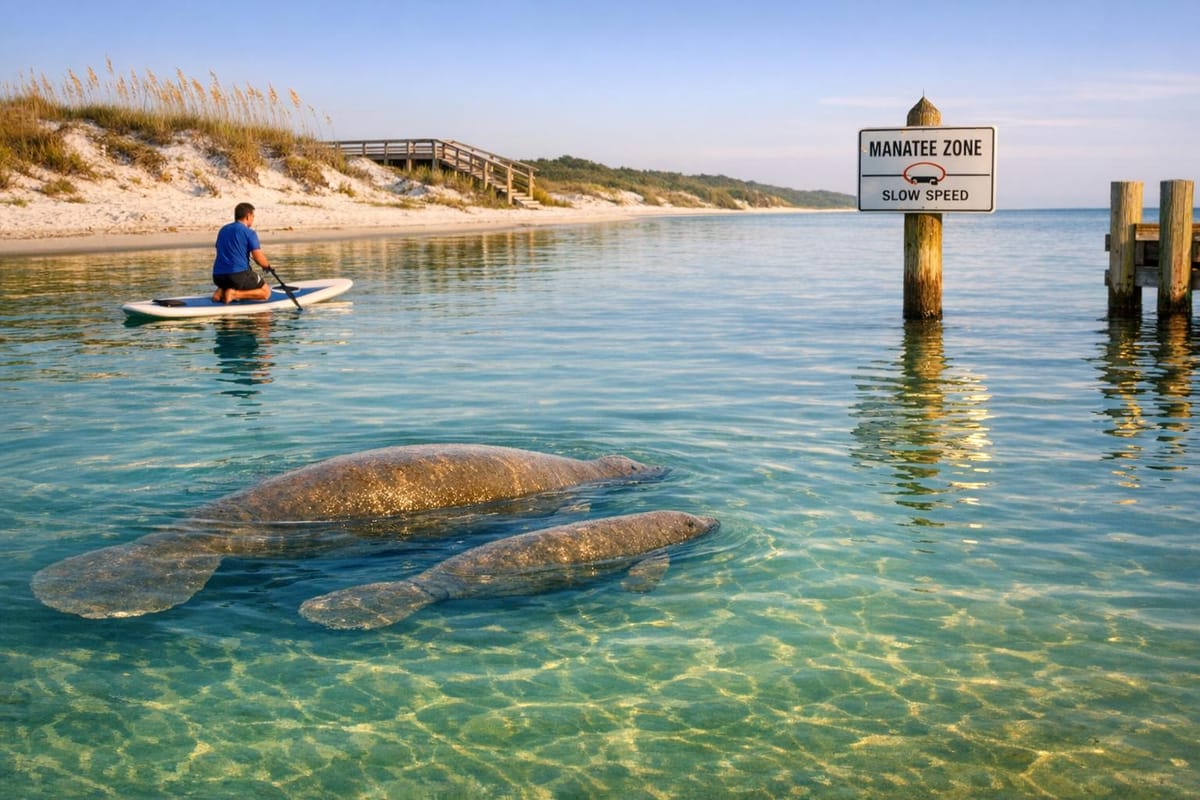
Manatees are a rare but cherished sight along 30A, particularly in areas like Choctawhatchee Bay, coastal dune lakes, and nearby bays. These gentle animals migrate based on water temperature, needing waters warmer than 68°F to survive. During colder months, they retreat to warm-water refuges like springs or power plant discharge areas. From April 1 to November 15, as water temperatures rise, manatees return to nearshore areas, offering better chances for sightings.
Key highlights:
- Best viewing times: Spring through fall when waters warm up.
- Common locations: Choctawhatchee Bay, bayous, canals, and coastal dune lakes.
- Viewing tips: Stay at least 50 feet away, use polarized sunglasses, and avoid feeding or touching them.
- Legal protections: Harassing manatees is illegal and can result in fines up to $100,000 or prison time.
Local encounters, like paddleboarders spotting manatees in the bay or kayakers meeting them near dune lakes, showcase how these animals connect with the community. Always report injured or distressed manatees to the FWC Wildlife Alert Hotline (888-404-3922) to ensure their safety. Respecting their space helps preserve these special moments for future generations.
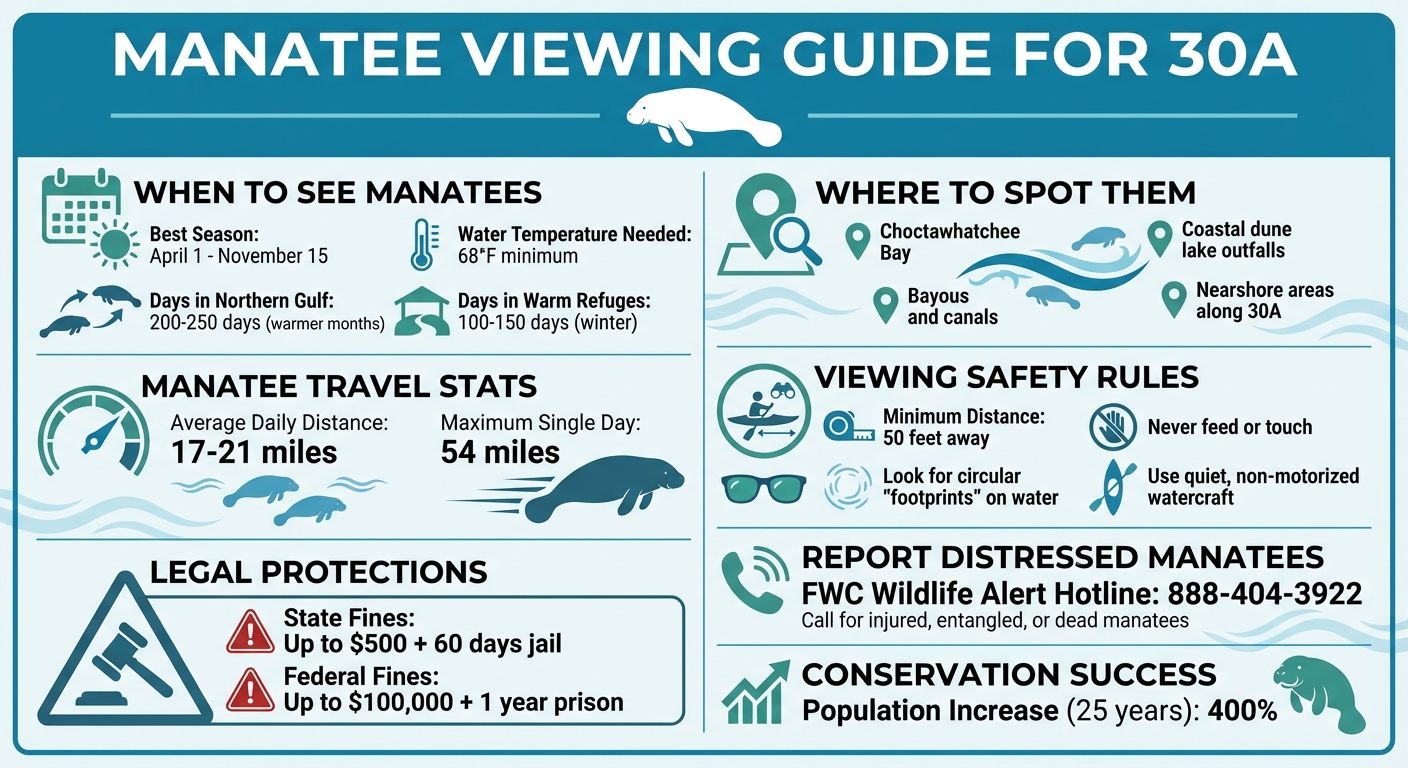
Manatee Viewing Guide for 30A: Best Times, Locations, and Safety Guidelines
Manatees in 30A Waters
Common Sighting Locations
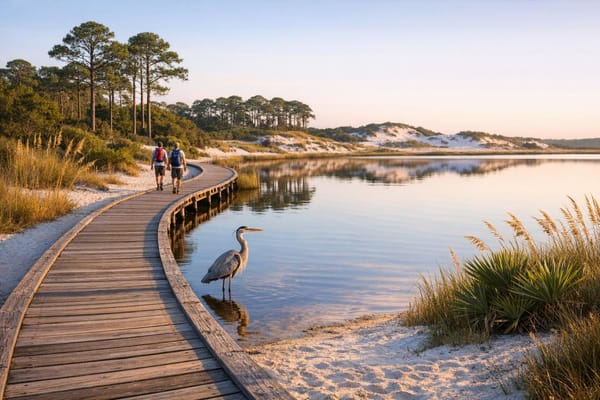
Manatees are often spotted in specific areas along 30A. One of their main habitats is Choctawhatchee Bay, where the calm, shallow waters provide the perfect environment for feeding and resting. Additionally, manatees are drawn to the bayous and canals throughout Walton County, particularly those connected to the bay system.
Another hotspot includes the coastal dune lake outfalls, where the mix of freshwater and saltwater creates a unique feeding ground. As Ron from the South Walton Community Forums puts it:
In Walton County we get manatees along the beach, in the bays and bayous!
These locations play a critical role in the manatees' seasonal migration patterns.
Seasonal Patterns and Water Conditions
Water temperature plays a huge role in determining when and where manatees appear in the 30A area. According to the Florida Fish and Wildlife Conservation Commission (FWC), manatees rely on warm water - at least 68°F - to survive during colder months. They often gather in Florida springs, power plant discharges, and other warm-water sites during winter.
Manatees are also impressive travelers. On average, they cover 17 to 21 miles daily during migration, with some traveling as far as 54 miles in a single day. During the warmer months, they spend about 200 to 250 days in the Northern Gulf of Mexico. In contrast, they only spend 100 to 150 days in Florida's warm-water refuges before heading back as winter approaches and water temperatures drop below their comfort zone of 68°F.
Wildlife Etiquette and Legal Protections
Given their presence across various habitats, it's essential to follow proper etiquette and respect legal protections for manatees. Both federal and state laws prohibit feeding, harassing, or harming these animals. If you spot a manatee, maintain a safe distance and move slowly to avoid disturbing them. Wearing polarized sunglasses can help you spot manatees underwater, reducing the risk of accidental encounters. Look for their telltale "footprints" - smooth, circular ripples on the water's surface - to identify their presence.
If you come across an injured, distressed, or deceased manatee, contact the FWC Wildlife Alert Hotline at 888-404-3922 immediately. Additionally, seasonal speed zones, enforced from April through mid-November, are in place to protect manatees during their peak activity in local waters.
Local Stories of Manatee Encounters
Paddleboard Encounter in Choctawhatchee Bay
In June 2019, Daniel Lickers noticed some unusual splashing near the northern end of the U.S. Highway 331 bridge in Freeport. At first, he assumed it was dolphins leaping out of the water. But upon closer inspection, he realized it was a mating herd of about 20 manatees gathered in Choctawhatchee Bay. Lickers shared his initial reaction:
I first thought it was dolphins jumping... I just couldn't believe it.
Excited by the rare sight, he contacted his friend Bill Fletcher to come and witness the scene. A Walton County sheriff's deputy later confirmed this was typical behavior for a mating herd, and the Florida Fish and Wildlife Conservation Commission validated the sighting. Reflecting on the experience, Lickers remarked:
makes you appreciate living down here in Walton County.
This encounter was one of many that have brought locals closer to these gentle sea creatures along the 30A area.
Kayaking Near a Coastal Dune Lake Outfall
In June 2008, at Grayton Beach State Park, a local resident known as "mikecat adjuster" had an unforgettable experience while kayaking with his 8-year-old son. They came across a massive manatee, covered in barnacles, swimming near the sandbar. The manatee was longer and wider than their 9.5-foot kayak and was accompanied by two large barracudas.
Later that same day, another observer spotted the same manatee near Eastern Lake between 1:30 p.m. and 2:00 p.m., describing it as resembling a "10-foot log" gliding along the sandbar. These encounters showcase how manatees often venture close to paddlers in the area, offering a glimpse into their natural behavior and habitats.
Dockside Surprise in a Bayou Community
Manatee sightings along 30A are as varied as they are thrilling. In August 2011, a resident named Kirkus had a close encounter while paddling an inflatable kayak in Seagrove. A manatee surfaced just five feet away, circled his kayak, and then approached a nearby woman on a paddleboard before continuing its journey east along the coast. Kirkus described the moment:
I was within five feet - it was either a manatee or a large seal. It was thrilling.
These firsthand accounts reveal the unique ways manatees interact with their environment and the people lucky enough to spot them.
Tips for Respectful Manatee Viewing
Guidelines for Safe and Ethical Encounters
Seeing manatees in their natural habitat is an incredible experience, but it’s important to ensure that our presence doesn’t harm these gentle creatures. Always maintain a safe distance - at least 50 feet - to avoid disturbing their natural behavior. Using polarized sunglasses can help you spot their "footprints" (circular patterns on the water's surface) without causing glare.
It’s crucial to avoid touching, feeding, or giving water to manatees. Physical interaction can make them less cautious around humans and boats, putting them at greater risk. The Florida Manatee Sanctuary Act of 1978 clearly states:
"It is unlawful for any person, at any time, intentionally or negligently, to annoy, molest, harass, or disturb any manatee."
Disrupting their behavior not only endangers the animals but also violates these legal protections.
If you’re on a kayak or paddleboard, keep your movements quiet and avoid splashing. Non-motorized watercraft are the safest options as they minimize noise and eliminate propeller risks. For those swimming in permitted areas, stay at the surface and use snorkel gear rather than SCUBA equipment, as the sound of bubbles can startle manatees.
Should you encounter an injured or distressed manatee despite following these guidelines, it’s important to know how to report the situation.
Reporting Injured or Distressed Manatees
If you see a manatee that seems injured or in distress, call the FWC Wildlife Alert Hotline at 888-404-FWCC (888-404-3922) and press "7" to reach an operator. The FWC emphasizes:
"Early reporting sets the rescue team in motion so that the animal(s) can be saved."
Signs of distress to watch for include:
- Struggling to dive and floating unusually high in the water
- Fresh pink or red wounds
- Rapid or labored breathing
- Visible ribs or signs of malnourishment
- Fishing gear entanglement
Keep a safe distance while observing the manatee, and never try to push a stranded one back into the water. Instead, be ready to provide detailed information, such as whether the manatee is alive or deceased, its exact location, the time you saw it, its approximate size, and the nearest public boat ramp. If possible, take photos or videos from afar to help biologists assess the situation or identify the animal.
Violating manatee protection laws can lead to serious consequences. State penalties include fines up to $500 and up to 60 days in jail, while federal violations can result in fines as high as $100,000 and up to one year in prison. Respecting these guidelines ensures both the safety of manatees and compliance with the law.
Manatee passing Miramar Beach in November #seacow #manatees #gulfcoast
Conclusion
The 30A coastline offers a rare opportunity to see manatees thriving in their natural Gulf Coast habitat, away from the crowded winter refuges found elsewhere. From the calm waters of Choctawhatchee Bay to the unique outflows of coastal dune lakes, these gentle creatures are a testament to conservation efforts. Over the past 25 years, Florida's manatee population has increased by an impressive 400%, a reminder of the impact we can have when we work together to protect wildlife.
Every manatee sighting in South Walton is a chance to connect with nature while respecting these animals' space. Whether you're gliding in a kayak, cruising carefully through a bayou, or observing from the shore, it's crucial to prioritize their safety. The Florida Fish and Wildlife Conservation Commission emphasizes that "Boat strikes continue to be a major threat to Florida manatees", making it essential for everyone on the water to remain alert and cautious.
These interactions are more than just memorable moments - they're a symbol of successful conservation that requires ongoing care. Spotting those signature circular ripples on the water is a reminder of how far we've come, but also of the responsibility we share in protecting this progress.
South Walton's bond with manatees reflects a larger dedication to preserving the area's natural beauty. By adhering to speed limits, giving manatees plenty of space, and reporting injured or distressed animals, we can help ensure that future generations experience the joy of encountering these gentle giants. For more stories about 30A manatees and local tips, visit sowal.co.
FAQs
What should I do if a manatee swims close to my kayak or paddleboard?
If a manatee comes near your kayak or paddleboard, it's important to back away and give it space. This helps ensure you don't disrupt its natural behavior. Avoid touching, feeding, or surrounding the manatee, as these actions can make it less wary of boats, putting it at greater risk of harm. Always keep a respectful distance to safeguard both the manatee and yourself.
How can I tell if a manatee is injured or in distress?
To spot an injured or distressed manatee, watch for unusual behaviors or physical signs. These might include uncontrolled buoyancy (like rolling or spinning), lethargy, difficulty swimming, or frequent surfacing for air. Visible injuries, such as boat scars, or behaviors like uncoordinated movements and odd head positioning, can also signal distress. Manatees impacted by red tide toxins often appear lethargic or disoriented. If you suspect a manatee is in trouble, contact your local wildlife authorities right away.
Are there manatee speed zones near 30A, and when are they enforced?
Yes, manatee speed zones near 30A are in effect seasonally from April 1 to November 15. During this time, boaters are required to slow down or idle to help protect manatees. These rules are crucial for safeguarding these gentle animals in their natural environment.