Native American Heritage Along 30A: Key Sites
Ancient ceremonial mounds, museums, and sacred landscapes along 30A reveal a 12,000-year Native American legacy.
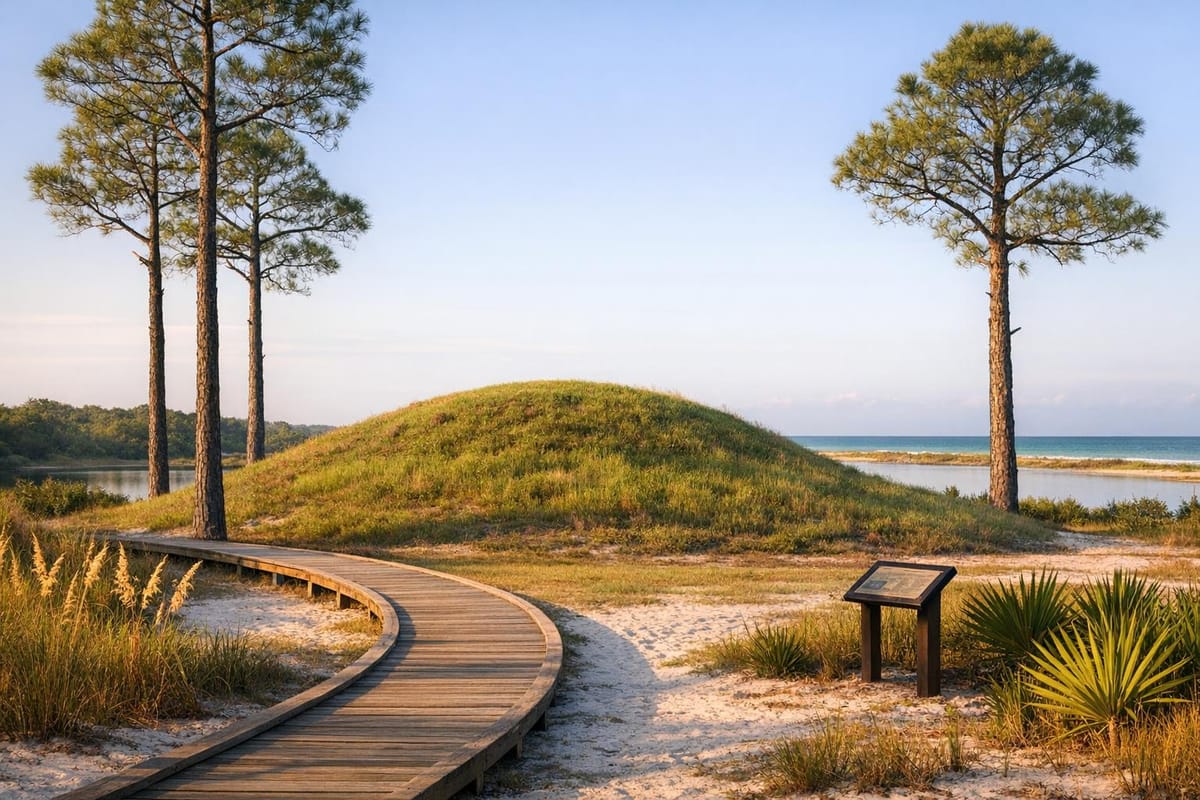
Native American history along Florida's 30A corridor spans over 12,000 years, marked by impressive archaeological sites, ceremonial mounds, and preserved artifacts. This guide highlights key locations where you can learn about the region's indigenous past:
- Fort Walton Mound: A 17-foot ceremonial mound, once the center of a thriving city, built by the Mississippian culture. Now part of the Indian Temple Mound Museum.
- Indian Temple Mound Museum: Located in Fort Walton Beach, this museum showcases over 1,000 artifacts, including unique prehistoric ceramics. Admission starts at $5 for adults.
- South Walton Mound Site: A crescent-shaped mound near Mack Bayou, surrounded by shell middens and evidence of early European contact. Managed as a sacred site by the Creek Indian Nation.
- Eden Gardens State Park: Former home to the Euchee Indians, featuring the historic "Wedding Tree" and trails along Tucker Bayou.
Each site offers insights into the daily life, trade, and spiritual practices of the region's earliest inhabitants. Visitors can enjoy self-guided tours, museum exhibits, and scenic natural settings. Admission fees and purchases help preserve these important landmarks.
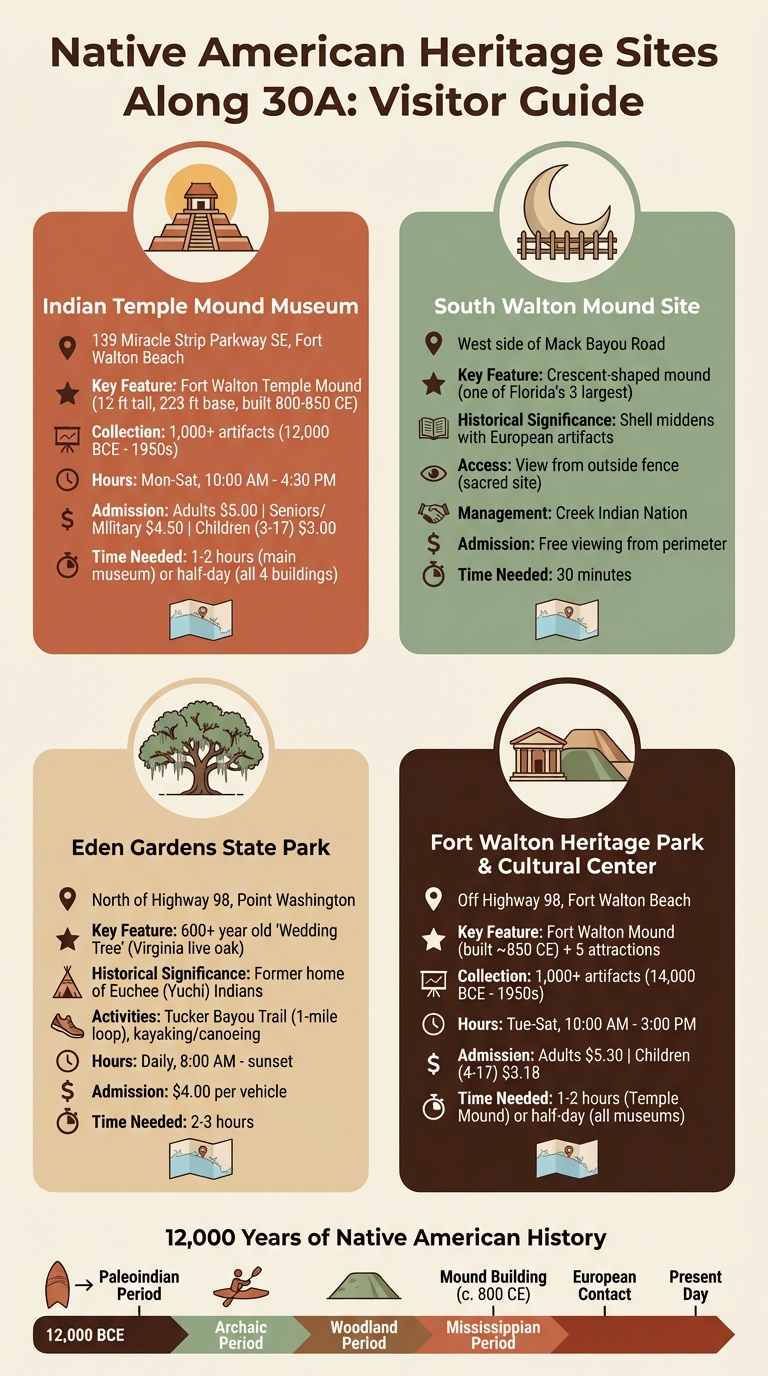
Native American Heritage Sites Along 30A Florida Visitor Guide
Indian Temple Mound Museum
Sitting at 139 Miracle Strip Parkway SE in Fort Walton Beach, the Indian Temple Mound Museum has been a cornerstone of Florida's historical preservation since its opening in 1962. It holds the distinction of being the state's first municipally owned and operated museum. At the heart of the site is the Fort Walton Temple Mound, a massive ceremonial structure created between 800 and 850 CE by the Pensacola culture - a regional branch of the Mississippian culture. The mound stands 12 feet tall, with a base spanning 223 feet, requiring an estimated 100,000 cubic feet of sand, clay, and shell for its construction. In recognition of its historical importance, it was designated a National Historic Landmark in 1964. This site provides a tangible connection to the rich history of the Native peoples who once thrived in the area.
Gail Meyer, the museum's manager, explains the mound's multifaceted role: it served as a platform for a temple, a residence for the chief, and an elite burial site. In 1976, a replica temple was placed atop the mound to give visitors a sense of how the original structure might have looked. This historical setting offers a gateway to the museum's extensive collection, which delves into Florida's indigenous heritage.
Main Exhibits and Collections
The museum showcases over 1,000 artifacts made from materials like stone, bone, clay, and shell, spanning a timeline from 12,000 BCE to the 1950s. Among its treasures is one of the most impressive collections of prehistoric ceramics in the Southeastern United States. A highlight of the exhibit is a pottery bowl featuring a crashing wave pattern, a design unique to the Native peoples of the Fort Walton Beach area. Meyer notes:
"The patterns on the pottery are how archaeologists distinguish different tribes. Look for the bowl with a crashing wave pattern, which represented the Indians that lived in Fort Walton Beach"
In addition to these artifacts, the museum offers supplementary exhibits that explore the early interactions between Native inhabitants and non-indigenous peoples.
Hours, Admission, and Visit Tips
The museum is open Monday through Saturday, from 10:00 AM to 4:30 PM. However, some of the historic buildings on-site may close earlier, at 3:00 PM. Admission tickets provide access to all museums within the Heritage Park & Cultural Center, including the Camp Walton Schoolhouse Museum, Garnier Post Office Museum, and the Civil War Exhibits Building.
| Visitor Type | Admission Price |
|---|---|
| Adults (18–64) | $5.00 |
| Seniors (55+) and Military | $4.50 |
| Children (3–17) | $3.00 |
| Children (under 3) | Free |
Parking is free and conveniently located on-site. Comfortable walking shoes are a must, as the park includes several buildings to explore. Most visitors spend one to two hours at the main museum, but a half-day is ideal if you want to visit all four historic buildings. Keep in mind that walking on the mound is prohibited due to its sacred nature and vulnerability to erosion. Instead, take photos from the base to capture its grandeur. The museum offers self-guided tours, allowing you to explore at your own pace.
South Walton Mound Site
Tucked away on the west side of Mack Bayou Road, hidden among dense trees, lies the South Walton Mound Site - one of Florida's three largest mounds. Its crescent moon shape hints at its past life as a bustling settlement and resource hub.
This location was carefully chosen by Native Americans for its prime access to both Choctawhatchee Bay and the Gulf of Mexico. The surrounding geography, including Horseshoe Cove, Filler Lake, Morris Lake, and Campbell Lake, points to an ancient Gulf-to-Bay connection that supported trade and daily life. According to Friends of Scenic 30A, "This strategic position allowed the Indian settlement to harvest crab and shellfish from the bay and to fish the Gulf waters." Freshwater streams flowing into nearby bayous further cemented this area's suitability for a permanent community.
Archaeological Findings
The site's location wasn't its only draw - archaeological digs have uncovered a rich history of Native American activity. Florida State University conducted an excavation here, leaving behind a "deep cut" that still runs through the mound. This and other studies unearthed European artifacts, offering a glimpse into early interactions between explorers and Native peoples. Surrounding the mound, researchers found large shell middens - essentially ancient trash heaps filled with discarded crab, oyster, and other shellfish remains. These layers of refuse tell a story of a thriving, long-term settlement heavily reliant on coastal resources.
Protection and Maintenance
Today, the site is safeguarded by chain-link fencing and managed by the Creek Indian Nation as a sacred ancestral resting place. While visitors can't access the mound directly, they are welcome to view it from outside the fence. Photography from the perimeter is encouraged as a way to admire and honor the site's historical importance without disturbing its protected status.
Eden Gardens State Park
Eden Gardens State Park, located just north of Highway 98 near Point Washington, spans 163 acres steeped in history. This land was once home to the Euchee (Yuchi) Indians, led by Chief Sam Story, also known as Timpoochee Kinnard. The Euchee thrived here, drawing sustenance from the abundant resources of Tucker Bayou and Choctawhatchee Bay.
How Native Americans Used the Land
The Euchee people had a deep understanding of the local environment. They relied on the waterways for fishing and the forests for hunting and gathering. As described by 30A.com:
"The tribe's days revolved around fishing, hunting, and learning different ways to properly live off the land."
Tucker Bayou wasn’t just a food source; it was also a natural transportation route, connecting the Euchee to Choctawhatchee Bay and the Intracoastal Waterway. When European settlers arrived, the Euchee shared their knowledge of the land before eventually being displaced.
One of the park’s most striking features is the "Wedding Tree", a sprawling Virginia live oak draped in Spanish moss. This tree, estimated to be over 600 years old, stood tall during the height of the Euchee era, bearing silent witness to their history. Today, it continues to stand as a symbol of the area's rich past.
Visiting the Park Today
Visitors can immerse themselves in the landscape that was once essential to the Euchee way of life. The Tucker Bayou Trail offers a one-mile loop through upland habitats along the water, showcasing native plants that once provided food and materials for the tribe. For a deeper connection, you can launch a kayak or canoe from the boat ramp to trace the historic routes along Tucker Bayou.
Admission to the park is just $4 per vehicle, and it’s open daily from 8:00 a.m. until sunset year-round. March is a particularly vibrant time to visit, as the ornamental gardens reach their peak bloom. Observation decks along the bayou provide stunning views of the wildlife and marine ecosystems that once sustained the Euchee. Eden Gardens State Park offers a glimpse into the enduring legacy of Native American land stewardship, adding a layer of historical depth to the 30A area.
Fort Walton Heritage Park and Cultural Center
Tucked just off Highway 98 in Fort Walton Beach, this heritage park brings 12,000 years of human history to life. At its heart lies the Fort Walton Mound, a ceremonial platform constructed around 850 CE. This site once served as a temple and an elite burial ground, offering a glimpse into the spiritual and social practices of the time. Much like other heritage sites along the 30A corridor, the center combines archaeological discoveries with engaging exhibits to honor the Native American legacy of the region.
Admission costs $5.30 for adults and $3.18 for children (ages 4–17), covering entry to all five attractions within the park. Among these is the Indian Temple Mound Museum, which showcases over 1,000 artifacts dating from 14,000 BCE to the 1950s.
What to See at the Cultural Center
The museum offers a fascinating look into the lives of early inhabitants, displaying tools and everyday items made from bone, shell, stone, and clay. Visitors can marvel at clay effigies, burial items, and intricately designed pottery, all of which highlight the creativity and craftsmanship of prehistoric communities. A replica temple structure, reconstructed in 1976, sits atop the mound, giving visitors a sense of how the site originally appeared.
For those eager to dive deeper, educational programs include hands-on demonstrations of skills like weaving, fire-starting, and drilling techniques. The museum store also offers artifact replicas, such as pottery and shell carvings, with proceeds supporting educational initiatives. Plan to spend one to two hours exploring the Temple Mound and Museum, or extend your visit to a half-day to experience all four museums on the property. This immersive setup offers a rich understanding of the daily life and spiritual practices of prehistoric peoples.
Learning About Prehistoric Cultures
The center goes beyond static displays to provide a fuller picture of prehistoric life. By combining the ceremonial significance of the mound with artifacts tied to cooking, hunting, and crafting, visitors can appreciate both the spiritual and practical aspects of Native American culture.
The facility operates Tuesday through Saturday from 10:00 a.m. to 3:00 p.m., with the grounds open from 8:00 a.m. to 5:00 p.m.. Parking is free, and the museum is handicap accessible, though some walking between buildings is necessary.
Tips for Visiting Heritage Sites Along 30A
Creating Your Itinerary
Heritage sites near popular 30A communities like Santa Rosa Beach, Seaside, and Rosemary Beach are just a short drive away. A standout destination is the Fort Walton Beach Heritage Park & Cultural Center, which offers four attractions under one admission ticket: the Indian Temple Mound Museum, Camp Walton Schoolhouse Museum, Garnier Post Office Museum, and Civil War exhibits. For a well-paced visit, plan for one to two hours at the Indian Temple Mound, and allow extra time if you want to explore all the attractions in the park.
Since many of these sites, including the Indian Temple Mound and Eden Gardens State Park, involve outdoor exploration, comfortable walking shoes are a must. One important tip: the Indian Temple Mound is sacred, so avoid walking on it to respect its historical significance.
When to Visit
The best times to explore these heritage sites are during the shoulder seasons of April to May and September to October. October is especially pleasant, with temperatures ranging from the mid-70s to low 80s, lower humidity, and fewer crowds. If you’re after a quieter experience, consider visiting in January or February, when crowds are minimal. However, cooler temperatures (40°F–60°F) during winter mean you’ll want to pack layers. For year-round convenience, mid-week visits typically offer easier access to both the sites and nearby dining spots.
| Season | Temperature Range | Crowd Level | Best For |
|---|---|---|---|
| Spring (Mar–May) | 60°F – 83°F | Moderate | Outdoor exploration & biking |
| Summer (Jun–Aug) | 70°F – 89°F | High (Peak) | Families & water activities |
| Fall (Sept–Nov) | 50°F – 86°F | Low to Moderate | Photography & quiet tours |
| Winter (Dec–Feb) | 42°F – 65°F | Very Low | Solitude & budget travel |
Choosing the right season can elevate your visit, but combining heritage tours with other activities can make the experience even more enriching.
Pairing Heritage Sites with Other Activities
Downtown Fort Walton Beach is an excellent spot to mix history with leisure. After touring the Heritage Park, you’ll find local favorites like Maas Coffee Roasters, Burrito del Sol, and The Boardroom Pub and Grub just a short walk away. If you’re looking to unwind, take a stroll at Fort Walton Beach Landing Park or head to Ross Marler Park on Okaloosa Island for swimming and boating opportunities.
For those who want to connect history with nature, consider stopping by Grayton Beach State Park, Topsail Hill Preserve State Park, or Deer Lake State Park. These parks showcase the natural landscapes that Native Americans once called home, adding depth to your understanding of the region’s history. For more ideas on combining heritage tours with beach outings and dining, check out curated guides at sowal.co for inspiration along the 30A corridor.
Conclusion
The 30A coastline holds an incredible 12,000-year history tied to Native American heritage. Landmarks such as the Indian Temple Mound Museum, South Walton Mound, Eden Gardens State Park, and Fort Walton Heritage Park & Cultural Center showcase the enduring legacy of the region's earliest inhabitants. The ceremonial mound is a striking example of indigenous craftsmanship, and the Indian Temple Mound Museum boasts an extraordinary collection of over 6,000 ceramic artifacts, making it the largest collection of southeastern Native American pottery in the United States.
Preserving these sites is essential, as they are more than historical landmarks - they are sacred spaces where ancestors rest. Gail Meyer, Museum Manager for the City of Fort Walton Beach Heritage Park & Cultural Center, emphasizes this sentiment:
"The temple mound is considered sacred by modern Native Americans... It is a place where human beings lie at rest and deserves all the respect afforded a cemetery."
By visiting these sites, you directly support preservation efforts. Admission fees and museum store purchases play a vital role in protecting these irreplaceable locations from threats like erosion and hurricanes. The South Walton Mound, one of the three largest in Florida, is now under the stewardship of the Creek Indian Nation, highlighting its enduring significance. The prehistoric "Fort Walton" culture even takes its name from the local temple mound, further underscoring its historical importance.
Exploring these heritage sites offers more than just a glimpse into ancient civilizations - it’s a chance to connect with a rich and sophisticated history. Your visit not only deepens your appreciation for the past but also helps ensure that this legacy continues to inspire and educate future generations.
FAQs
Which sites are closest to 30A for Native American history?
The Indian Temple Mound Museum and the Indian Temple Mound in Fort Walton Beach offer a glimpse into Native American history near 30A. These sites showcase artifacts and structures that reflect more than 12,000 years of Native American heritage in the region.
Can you go on the mounds at Fort Walton or South Walton?
Visitors can explore the Fort Walton Temple Mound, an important ceremonial site. However, due to ongoing renovations at the Indian Temple Mound Museum, certain sections might be off-limits. It's a good idea to check for the latest updates before planning your visit.
What’s the best time of year to visit these heritage sites?
The best time to explore the Native American heritage sites along 30A is in the shoulder seasons of April–May and September–October. These months offer mild weather, fewer crowds, and perfect conditions for taking in the history and beauty of the area.