New Urbanism in South Walton
How New Urbanism reshaped South Walton's 30A into walkable, mixed-use towns with green practices, strong community ties, and high property values.
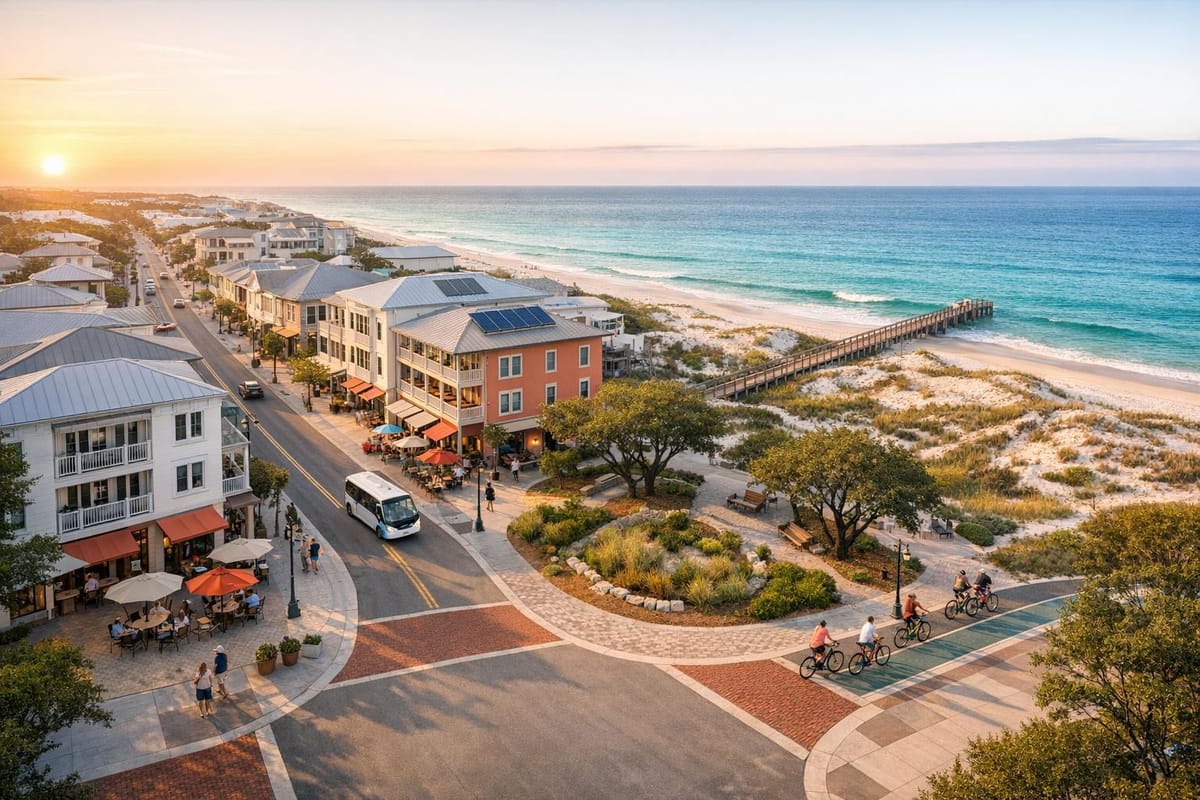
New Urbanism is reshaping how neighborhoods are built, focusing on walkable communities instead of car-centric suburbs. South Walton, Florida, became a pioneer of this concept with the creation of Seaside in the 1980s. Along the scenic 30A highway, towns like Seaside, Rosemary Beach, and Alys Beach showcase compact layouts, mixed-use spaces, and architecture that encourages interaction. These principles reduce car dependency, promote social connections, and preserve the coastal environment.
Key Highlights:
- Seaside: The birthplace of New Urbanism with pastel cottages, narrow streets, and a central square.
- Rosemary Beach: Combines Southern charm with cobblestone streets and private beach access.
- Alys Beach: Features white stucco homes, shaded lanes, and a focus on shared public spaces.
These communities prioritize walkability, limit building heights, and integrate green practices like preserved land and waste reduction. By blending smart design with local character, they’ve achieved high real estate values and created vibrant, connected neighborhoods.
Read on to explore how South Walton’s towns bring these principles to life.
How New Urbanism Started in South Walton
Seaside: Where New Urbanism Began
In 1978, Robert Davis inherited 80 acres of coastal land from his grandfather and envisioned something different from the typical suburban sprawl or isolated condos. Instead, he dreamed of creating a walkable, traditional beach town.
To bring this idea to life, Davis teamed up with his wife, Daryl Davis, and enlisted architects Andrés Duany and Elizabeth Plater-Zyberk (DPZ). The team spent months studying old Florida and Southern towns, traveling extensively to understand historic layouts. They also collaborated with urban designer Léon Krier, whose ideas about "traditional cities" and compact, walkable communities heavily influenced Seaside's design.
Construction kicked off in 1981 with just two houses and a single street - a small-scale start to test the waters. By 1982, the team had developed the Seaside Urban Code, a groundbreaking set of architectural guidelines. These rules emphasized homes with front porches facing the street to encourage neighborly interaction. Streets were designed to be narrow and shaded, slowing down traffic and making walking more appealing. A network of white-sand footpaths further prioritized pedestrians over cars. The quarter-mile concept, inspired by Krier, ensured that every home was within a five-minute walk of Central Square.
"We were aware that we were making a statement about how American small town urbanism could and should be revived, and that Seaside... was a critique of the soul-sapping sprawl that had covered over so many fields and forests by 1981."
– Robert Davis, Founder, Seaside
Seaside wasn't just a design experiment - it became a financial success, boasting some of Florida's highest real estate values per square foot. Its influence reached far beyond South Walton. In 1993, the Congress for the New Urbanism (CNU) was established to promote these principles on a national scale. Even King Charles III (then Prince of Wales) sought advice from Seaside's founders before starting his own New Urbanist project, Poundbury, in England.
Today, Seaside is home to over 300 cottages, standing as a testament to how thoughtful planning can transform communities. Its success laid the groundwork for other New Urbanist developments along 30A, proving that walkable, people-centered design isn't just idealistic - it works.
Seaside, Florida
New Urbanist Communities Along 30A
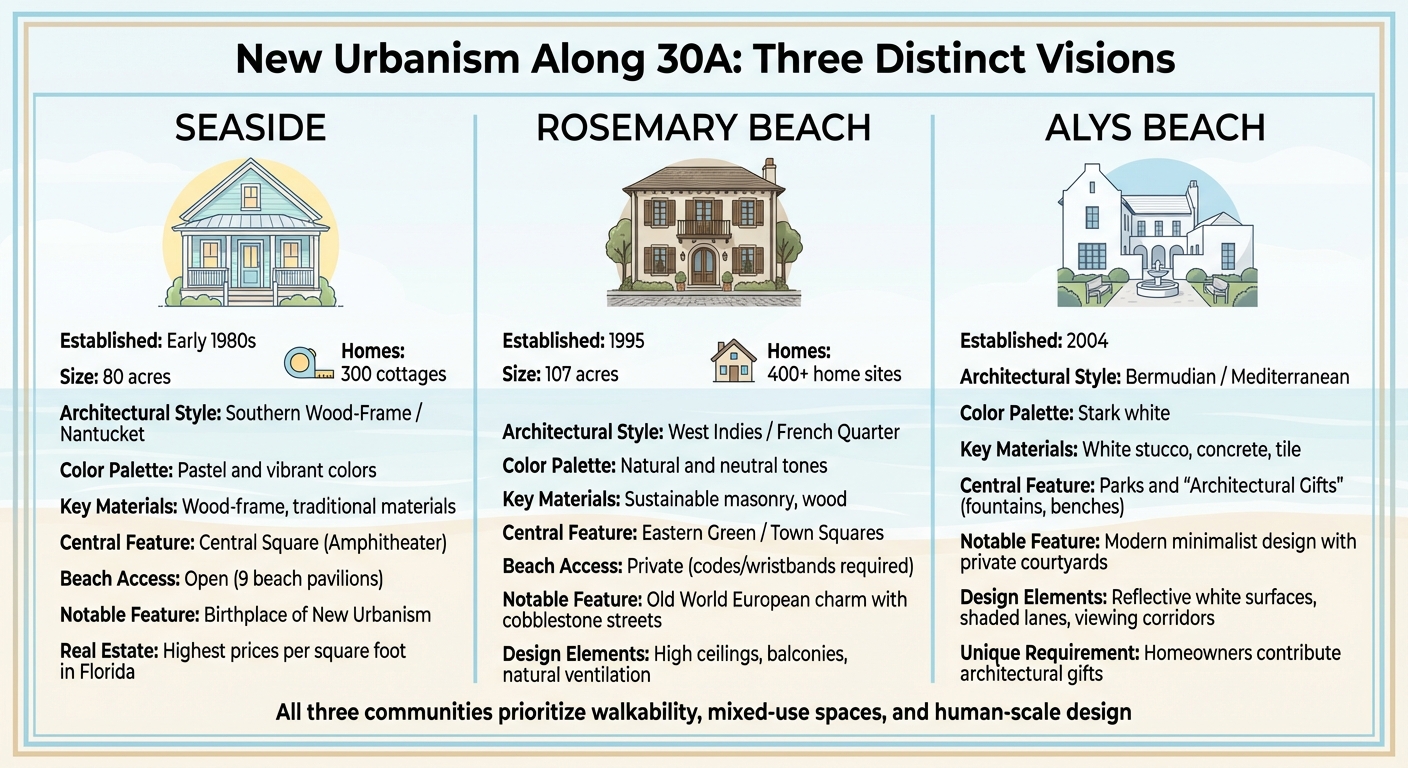
Comparing Three New Urbanist Communities Along Florida's 30A: Seaside, Rosemary Beach, and Alys Beach
The success of Seaside inspired the creation of other communities along 30A, each putting its own spin on the principles of walkability and fostering connections. By building on Seaside's model, these communities strike a balance between honoring tradition and introducing fresh design elements.
Seaside: Walkable Town Centers
Seaside covers 80 acres and is home to 300 pastel-colored, wood-frame cottages that reflect the area's coastal roots. At the heart of the town is Central Square, a pedestrian-only hub filled with shops, restaurants, and galleries - all within a five-minute walk of every home and the local hotel. White sand paths connect neighborhoods to the beach, while nine distinct beach pavilions serve as gateways to the Gulf.
"Seaside embodies a way of life inspired by the notion that architecture and design should be used to enable people to live in community and have access to walk and move freely." – Seaside Official Site
Seaside’s appeal extends beyond its design; its real estate consistently commands some of the highest prices per square foot in Florida.
Rosemary Beach: Southern Architecture Meets Coastal Living
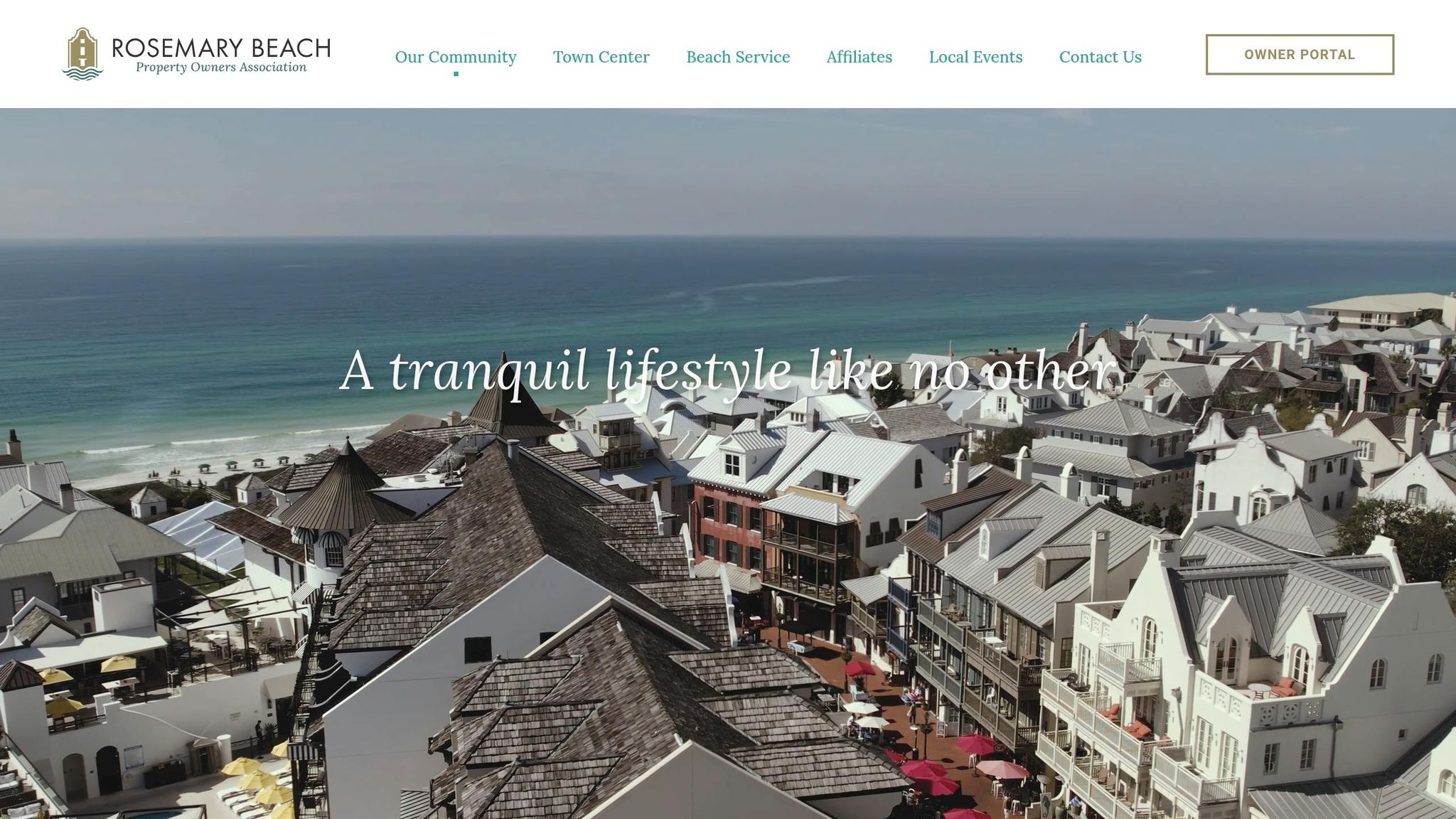
Rosemary Beach, established in 1995 on a 107-acre site, offers a more traditional take on New Urbanism. Its architectural style draws from Charleston, the French Quarter, St. Augustine, and the West Indies. Unlike Seaside's vibrant palette, Rosemary Beach opts for neutral tones, masonry construction, and sustainable materials.
The town features over 400 home sites connected by narrow cobblestone streets and walking paths that evoke a European "Old World" charm. Homes are designed with high ceilings for natural ventilation and balconies that encourage outdoor living. Communal spaces like the Eastern Green and town squares host farmers' markets and events, while shaded streets make walking comfortable, even during hot summers.
"Rosemary Beach is my absolute favorite. The architecture is a mix of old-world charm with a contemporary feel." – Patti Smith, Publisher, GO! Christian Magazine
Beach access in Rosemary Beach is private, requiring codes or wristbands for residents and guests, in contrast to Seaside's open approach.
Alys Beach: Modern Design with Environmental Focus
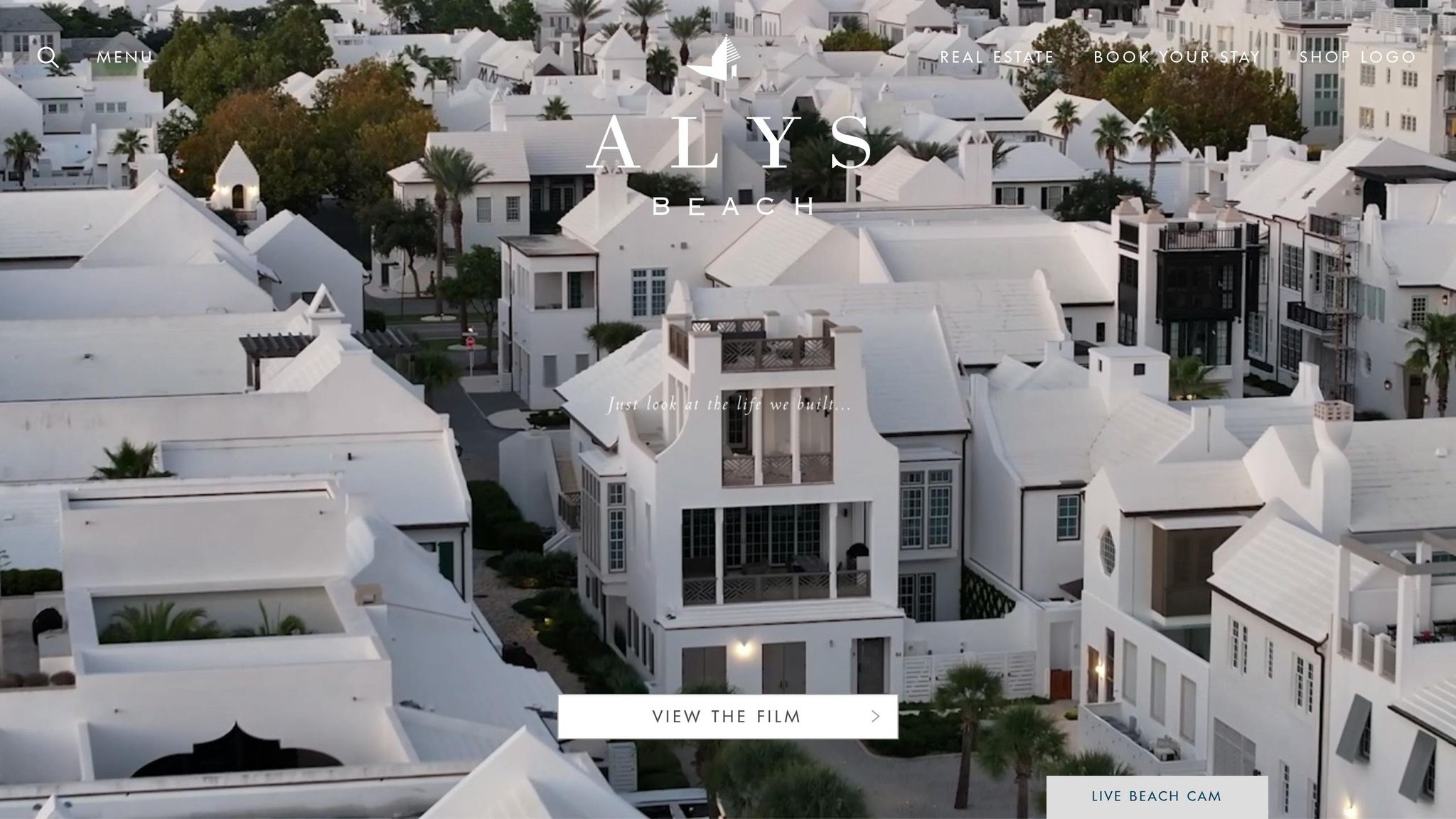
Founded in 2004, Alys Beach represents a more modern interpretation of New Urbanism. Its striking white aesthetic, influenced by Bermudian and Mediterranean styles, is a defining feature. Homes are constructed from white stucco with tiled roofs and are centered around private courtyards, blending personal spaces with a cohesive streetscape.
The reflective white exteriors help counter the intense coastal sun, while shaded lanes and strategically designed viewing corridors create a comfortable walking environment. Alys Beach also requires homeowners to contribute an "architectural gift" - like a fountain or bench - to enhance shared spaces, creating a curated environment that balances private luxury with communal beauty.
Comparing Key Features
| Feature | Seaside | Rosemary Beach | Alys Beach |
|---|---|---|---|
| Primary Style | Southern Wood-Frame / Nantucket | West Indies / French Quarter | Bermudian / Mediterranean |
| Color Palette | Pastel and vibrant colors | Natural and neutral tones | Stark white |
| Key Materials | Wood-frame, traditional materials | Sustainable masonry, wood | White stucco, concrete, tile |
| Public Space | Central Square (Amphitheater) | Eastern Green / Town Squares | Parks and "Architectural Gifts" |
| Established | Early 1980s | 1995 | 2004 |
These three communities share the core principles of New Urbanism - walkable streets, vibrant town centers, and designs that prioritize people over vehicles. Yet, each offers its own unique experience, shaped by distinct architectural styles and design philosophies. Together, they showcase how New Urbanism continues to shape South Walton's 30A coastline.
Environmental Practices in New Urbanist Communities
Blending an emphasis on walkability with a commitment to environmental responsibility, New Urbanist communities in South Walton go beyond aesthetics to create a sustainable coastal lifestyle. These communities integrate environmental protection into their planning, ensuring that every design element serves a purpose beyond visual appeal. From streets designed to reduce car usage to strict building codes that harmonize with the natural landscape, the focus is on reducing ecological impact while maintaining the area's charm.
Building for Walkability
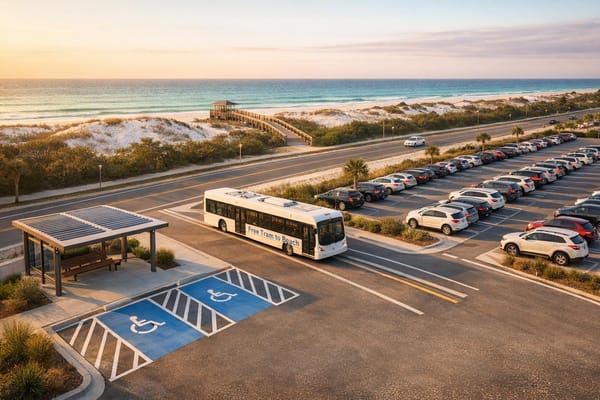
One standout feature of these communities is their compact, mixed-use design. Streets are interconnected, with short blocks and narrow, shaded lanes that slow traffic and encourage walking. This setup provides residents with multiple pedestrian-friendly routes to amenities, further supported by the Timpoochee Trail, a multi-use path connecting various neighborhoods along 30A.
The Timpoochee Trail acts as a hub for non-motorized transportation, weaving through the region to link communities. In Rosemary Beach, additional foot trails and boardwalks extend these options, making it easy to navigate without a car. Buildings are designed to face the street, featuring porches and doorways that encourage pedestrian activity.
"Urban places should be framed by architecture and landscape design that celebrate local history, climate, ecology, and building practice." – Charter of New Urbanism
South Walton has also maintained a 50-foot building height limit since the 1980s, a rule now protected by a supermajority requirement as of May 2021. This ensures that structures remain in proportion to their surroundings, preserving coastal views and avoiding the environmental challenges associated with high-rise developments. These thoughtful design choices not only promote movement but also support eco-friendly construction practices.
Green Building and Land Management
In addition to walkability, these communities embrace sustainable building practices and careful land management. Approximately 40% of South Walton is set aside for nature, including state parks, forests, and the area's rare coastal dune lakes. Since 1997, The St. Joe Company has permanently conserved over 170,000 acres, further protecting the region's ecosystem.
Local businesses also play a role in reducing environmental impact. For instance, Bud & Alley's in Seaside became the first restaurant on Highway 30A to eliminate plastic, opting for paper straws, containers, and reusable glass alternatives. Amavida Coffee offsets all its CO₂ emissions through its "Atmosphere" blend, achieving carbon-neutral status. Meanwhile, The 30A Company produces cotton t-shirts made from eight recycled plastic bottles each. These initiatives highlight a shared commitment to balancing modern conveniences with environmental care.
Strict development guidelines, aligned with FEMA flood maps and Florida Building Code elevation standards, help mitigate risks from coastal flooding and rising sea levels. Form-based codes oversee everything from construction materials to landscaping, ensuring that buildings work with the natural terrain rather than against it. Alys Beach exemplifies these principles with community gardens like "Mojito Alley" and the "Soup Garden", seamlessly weaving sustainable land use into daily life.
| Practice | Implementation | Environmental Benefit |
|---|---|---|
| Walkability | Short blocks, Timpoochee Trail, narrow streets | Reduces vehicle emissions |
| Land Preservation | 40% of the area preserved, dune protection | Supports biodiversity and buffers storms |
| Building Height | 50-foot limit | Preserves coastal views and human scale |
| Waste Reduction | Plastic-free policies in restaurants | Cuts down on plastic pollution in waterways |
Economic and Social Impact of New Urbanism
Supporting the Local Economy
Since Seaside's debut in 1982, South Walton's New Urbanist communities have consistently led Florida in real estate values per square foot, reshaping the area's economic profile. Xavier Iglesias, Senior Project Manager at DPZ CoDESIGN, highlights Seaside as a game-changer, proving that resort developments can be both profitable and sustainable.
These communities thrive on mixed-use designs, where ground-floor shops and restaurants create vibrant streetscapes. This setup ensures steady foot traffic from both residents and visitors throughout the year, unlike traditional resorts that rely on peak tourist seasons.
"In locations where New Urbanist places have been built... they have always proven to be very popular and quickly have property values that reflect that." – Mark Schnell, New Urbanist Designer
The walkable streets and cohesive design also appeal to tourists looking for more immersive and authentic experiences. This combination of economic opportunity and community-focused design has inspired further developments like Rosemary Beach (1995) and Alys Beach (2004), which refine Seaside's original blueprint while staying true to New Urbanist principles.
Beyond economic growth, the structure of these communities plays a vital role in strengthening social ties.
Building Community Connections
New Urbanist design prioritizes social interaction through thoughtful architectural choices. Porches close to sidewalks and narrow streets naturally encourage friendly exchanges between neighbors and passersby, fostering a sense of connection.
Community life thrives in shared spaces like central squares, amphitheaters, and greens, which host regular events and cultural activities. Beach pavilions serve dual purposes, offering coastal access while acting as informal gathering spots. The compact layout ensures that daily routines - whether walking to a café, a shop, or the beach - bring residents together, reinforcing a strong sense of belonging.
This design philosophy moves away from the seclusion of traditional luxury developments. Instead of sprawling private yards, New Urbanist communities favor smaller individual lots and expansive communal areas. This approach prioritizes interaction and shared experiences, creating neighborhoods where people feel genuinely connected.
The Future of New Urbanism in South Walton
South Walton’s New Urbanist communities prove that walkable, human-centered development can succeed both economically and aesthetically, all while preserving the area’s coastal charm. With some of the highest real estate values in Florida, these communities have become a model that developers across the country are now studying and adapting.
The economic success of these communities has led to protective measures to ensure their longevity. For instance, in May 2021, Walton County Commissioners passed an amendment requiring a supermajority vote - 4 out of 5 commissioners - to alter the 50-foot building height limit for areas south of Choctawhatchee Bay. This move is designed to resist the pressures of high-rise development, which has transformed other beachfront counties, and to safeguard the New Urbanist identity of the region.
Looking to the future, new developments are refining the original Seaside model. These communities aim to address challenges like balancing privacy with opportunities for social interaction, all while maintaining the walkability and mixed-use designs that have become hallmarks of the movement. As New Urbanist Designer Mark Schnell noted:
"Not content to just imitate Seaside, several of the towns that followed attempted to build a different and better version, while following the same principles."
The influence of New Urbanism is now growing beyond coastal towns, finding its way into urban centers and infill developments. By introducing interconnected street grids and accessible services, these principles offer a practical alternative to car-dependent suburban sprawl.
Private sector leadership continues to play a critical role in driving innovation, even as state and local regulations often favor more conventional development patterns. The ongoing challenge will be striking the right balance between growth, affordability, and preserving the community character that has made these towns so appealing.
Find more local insights at sowal.co.
FAQs
What makes a community “New Urbanist”?
A "New Urbanist" community focuses on creating spaces where walking is the primary mode of transportation, blending residential, commercial, and public areas seamlessly. These neighborhoods are intentionally designed to make shops, services, and shared spaces easily accessible, cutting down on the need for cars. Key elements include compact layouts, a variety of housing options, and thoughtfully designed public areas that promote social connections. Examples like Seaside, Rosemary Beach, and Alys Beach showcase this approach, combining accessibility, environmental awareness, and visual charm to support lively, connected lifestyles.
How do Seaside, Rosemary Beach, and Alys Beach differ?
Seaside, Rosemary Beach, and Alys Beach are three standout communities along Florida’s 30A corridor, each reflecting New Urbanism principles in its own unique way.
- Seaside: Known as the birthplace of New Urbanism, Seaside charms visitors with its pastel-colored homes, walkable streets, and a warm, small-town atmosphere.
- Rosemary Beach: Inspired by European design, this community features cobblestone streets, stylish boutiques, and a sophisticated, polished ambiance.
- Alys Beach: With its striking white architecture and minimalist design, Alys Beach offers a serene and elegant environment, perfect for those seeking tranquility.
How does New Urbanism protect South Walton’s coast?
New Urbanism plays a key role in preserving South Walton’s coastline by focusing on development practices that prioritize the environment. This approach emphasizes features like walkable neighborhoods, mixed-use spaces, and interconnected streets, which help cut down on traffic and emissions. The result? A healthier coastal ecosystem.
Communities such as Seaside and Rosemary Beach are prime examples of this philosophy in action. They incorporate conservation efforts, protect natural landscapes, and maintain native vegetation, ensuring the area’s environment thrives alongside development. Additionally, height restrictions and eco-friendly planning prevent overdevelopment, helping to preserve South Walton’s natural beauty and protect its fragile ecosystems for generations to come.