Seagrove Beach Neighborhood Q&A
Practical overview of Seagrove Beach: access, traffic, parking, rental rules, pet policies, and storm/insurance considerations for buyers.
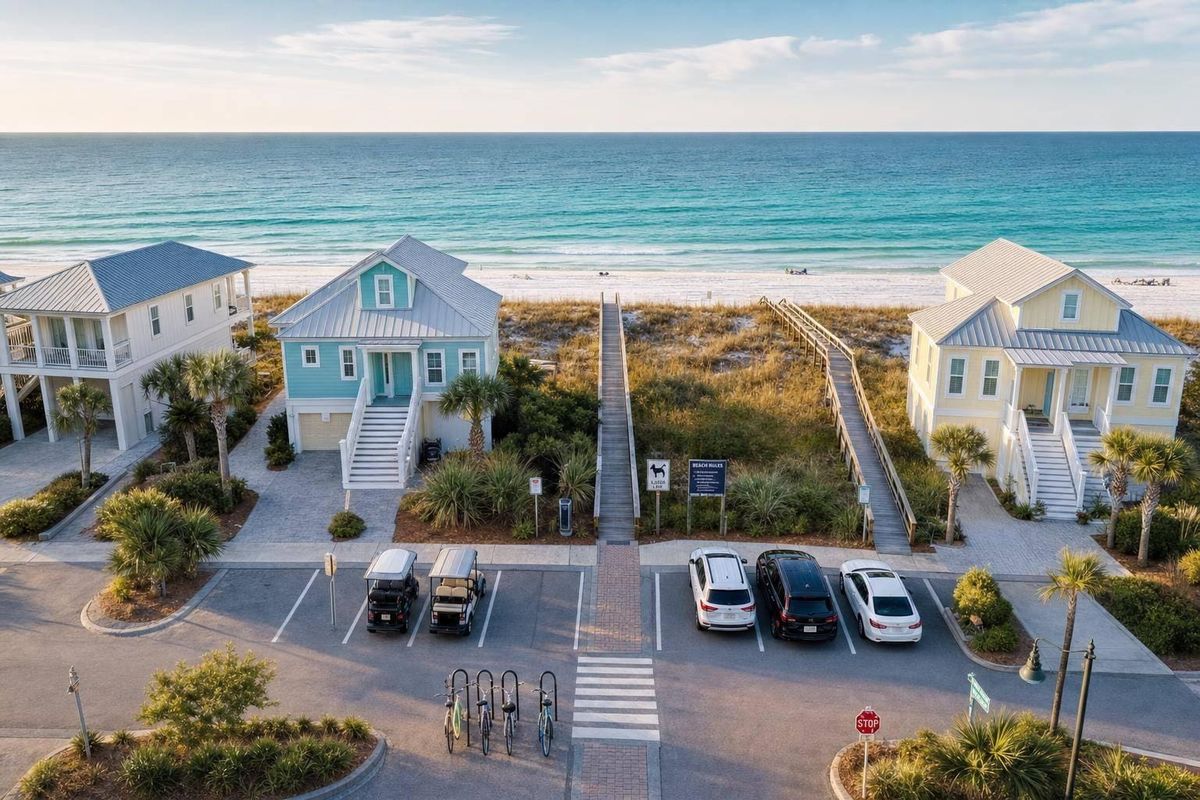
If I had to sum up Seagrove Beach in one line: it works well if you want beach access and a more residential feel, but you need to plan for traffic, parking, rental rules, and storm costs.
Here’s the short version:
- Location: Seagrove sits in a central part of 30A, near Seaside, so getting around is easy when traffic is light.
- Busy season: Traffic and parking get tougher during Spring Break and late May through August.
- Housing: I’d expect a mix of older cottages, condos, and newer homes, with very different street feel from block to block.
- Prices: The broader Santa Rosa Beach Zillow Home Value Index was about $848,079 on 01/31/2026.
- Rentals: Short-term rental rules are not the same for every property. HOA rules, county rules, and state licensing all matter. (See our Walton County rental permit guide for specific steps.)
- Quiet areas: Interior streets and places farther from beach access points often feel calmer than gulf-front or walk-to-beach spots.
- Pets: Dog rules depend a lot on the property. Condos often have more limits than detached homes.
- Errands: For groceries and basics, I’d plan to drive to Santa Rosa Beach or the U.S. 98 corridor.
- Storm prep: Flood zone, wind coverage, and insurance deductibles need close review before buying.
- Beach use: Access is good, but parking near public access points can be tight in peak months.
If you’re trying to figure out whether Seagrove fits your day-to-day life, I’d focus on four things first: how close you are to beach access, whether rentals are allowed nearby, how much parking comes with the property, and what insurance may cost.
The article below walks through those points in plain terms so you can judge the area block by block, not just by the name on the map.
Touring NatureWalk at Seagrove: One of 30A's Best Values?
sbb-itb-d06eda6
Traffic, Parking, and Getting Around
Seagrove’s wider layout means traffic, parking, and walkability can change a lot from one block to the next.
How Traffic Changes by Season
Spring Break and the stretch from late May through August are the busiest times of year. Fall and late spring are more moderate, while winter is the quietest. If you visit in winter, traffic is lighter and parking is much easier. You can use an itinerary generator to plan your seasonal activities.
Where Parking Is Easy and Where It Gets Tight
Most parking in Seagrove comes from private driveways and condo lots. Public beach access lots usually fill up first during peak season. That squeeze shows up most clearly at beach access points and in the busiest retail blocks.
Parking gets toughest near the Seaside border, where shops and dining are clustered. Smaller condos often have dedicated parking lots. Older cottages, on the other hand, may depend on smaller driveways or limited street-side parking.
Those same beach access points also affect how easy it is to get around without a car.
Walking, Biking, and the Timpoochee Trail
Walkability is best near beach walkovers, where shady streets make it easy to take a short trip to the water. North of 30A and farther east, day-to-day errands usually mean getting in the car.
The Timpoochee Trail gives residents a direct bike route along 30A. That makes it much easier to reach dining, coffee, and beach access without driving.
Housing, Short-Term Rentals, and Quiet Streets
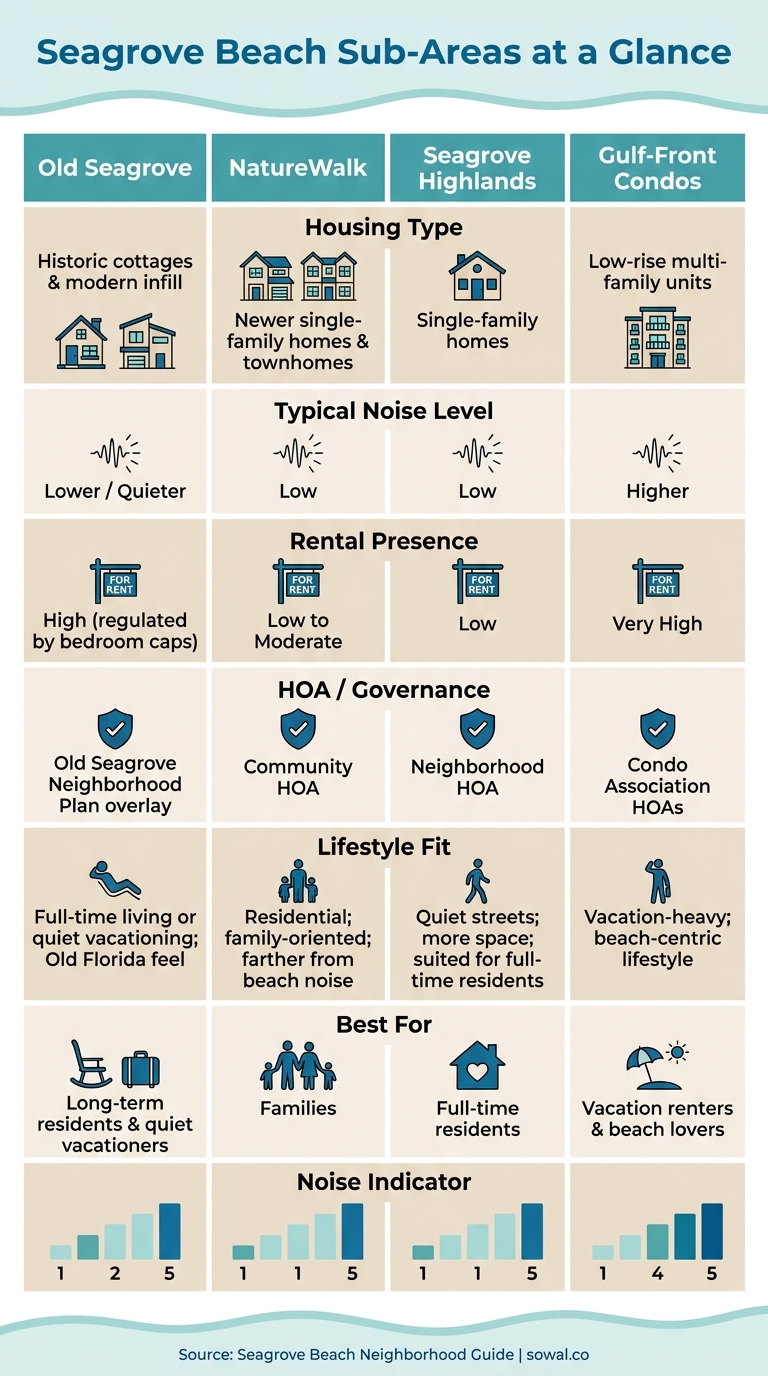
Seagrove Beach Sub-Areas Compared: Housing, Rentals & Lifestyle
The same block-by-block patterns that shape traffic also affect rental rules and street noise. In Seagrove, there isn't one rule for every home. What you can do with a property often depends on a mix of Walton County rules, state licensing, and the HOA or condo documents tied to that community.
How Short-Term Rental Rules Vary by Property
Before you buy or lease, read the HOA or condo documents closely. Some communities don't allow short-term rentals at all. Others allow them, but with limits like minimum stay rules or a required management program.
In most cases, legal operation also means having the state vacation-rental license, the county rental certificate, and collecting the 5% Tourist Development Tax.
Which Areas Feel More Residential
Gulf-front and walk-to-beach properties usually have the highest short-term rental concentration and the most turnover. That tends to bring more cars, more arrivals and departures, and more activity week to week.
Interior streets often feel calmer and more residential. And in Seagrove, small distance changes can matter a lot. A home just a few blocks away from a beach access point can feel much quieter, with less turnover and less street noise.
Old Seagrove, NatureWalk, Seagrove Highlands, and Gulf-Front Condos Compared
Old Seagrove has an overlay that limits height, setbacks, and bedroom counts on new rental-heavy builds. As Allison Richards of The Richards Group puts it:
"The Old Seagrove Neighborhood Plan also includes limits on new STR‑oriented bedroom counts to discourage oversize builds." - Allison Richards, Lead Agent, The Richards Group
Here's how the main sub-areas stack up:
| Area | Housing Type | Typical Noise Level | Rental Presence | HOA / Governance | Lifestyle Fit |
|---|---|---|---|---|---|
| Old Seagrove | Historic cottages & modern infill | Lower / quieter | High, but regulated by bedroom caps | Old Seagrove Neighborhood Plan overlay | Full-time living or quiet vacationing; Old Florida feel |
| NatureWalk | Newer single-family homes & townhomes | Low | Low to moderate | Community HOA | Residential; family-oriented; farther from beach noise |
| Seagrove Highlands | Single-family homes | Low | Low | Neighborhood HOA | Quiet streets; more space; suited for full-time residents |
| Gulf-Front Condos | Low-rise multi-family units | Higher | Very high | Condo association HOAs | Vacation-heavy; beach-centric lifestyle |
If you're buying for full-time living, ask the seller for 3 to 5 years of rental statements and booking calendars. That record gives you a much clearer picture of actual turnover than a polished listing ever will.
Those location differences also shape pet access, errands, and day-to-day convenience.
Pets, Shopping, Dining, and Everyday Convenience
Beyond rental patterns and street noise, daily life in Seagrove often comes down to simple stuff: pets, errands, and the places people drift to during the week.
What Pet Life Looks Like in Seagrove Beach
Old Seagrove's shaded streets make day-to-day dog walks pretty easy. That said, pet rules can change a lot depending on the property. Detached cottages on inland lots often allow more room to work with, while smaller condo communities tend to set tighter breed and weight limits.
Short-term rentals can get even trickier. In some communities, pet-friendly rentals are allowed for owners but not for guests. That's why it helps to read the HOA documents and HOA records before you book or sign anything. A place may look pet-friendly at first glance, then come with rules that say otherwise.
Those same quieter interior streets also give this part of Seagrove a more residential feel, instead of feeling packed with shops and foot traffic.
Where Residents Handle Groceries and Basic Errands
Seagrove doesn't have much neighborhood retail, so most day-to-day shopping happens outside the beach blocks. For most errands, you'll want a car. Residents usually head to Santa Rosa Beach and the U.S. 98 corridor for larger grocery stores, pharmacies, and other retail needs.
For coffee, meals, and a change of scene, most people go just beyond the neighborhood itself.
Local Food, Coffee, and Community Resources
Seaside's town square is a short bike ride or drive away, and many residents treat it as a regular stop for coffee and a more village-like setting. Watersound Town Center offers more retail and event options. If you want local food tips, event updates, or relocation help, sowal.co is a useful place to start.
Storm Prep, Beach Access, and Final Takeaways
Living in Seagrove also means thinking ahead about storms and knowing which beach access points fit your day-to-day life.
What to Know About Hurricane Season
Start with your property's flood zone by checking the FEMA Flood Map Service Center. If the home is in a high-risk flood zone, your lender will almost certainly require flood insurance. Coastal homes also tend to need separate wind coverage, and those policies often come with higher deductibles than a standard homeowners' policy.
During due diligence, it helps to get out in front of these costs. Ask for an Elevation Certificate, get firm wind and flood insurance quotes early, and keep a dedicated reserve fund for big-ticket items like roofs, HVAC systems, and appliances. Salt air and coastal weather can wear those out faster than many buyers expect. For evacuation zones and reentry rules after storms, follow Walton County emergency guidance.
Beach Access Points and Nearby Nature
Beach access in Seagrove is handy, but it isn't the same on every block. If you're close to the neighborhood walkovers along 30A, getting to the beach can be as easy as a short walk or bike ride. If you're on an inland lot or in a larger condo building, it may take a bit more planning.
Eastern Lake and Deer Lake State Park give you another side of Seagrove. They offer a quieter pace and easier access to nature when you want a break from the main beach scene.
Access changes block by block, so the best fit depends on where you live.
| Access or Nature Spot | Parking Availability | Crowd Level | Best Use |
|---|---|---|---|
| Neighborhood Beach Walkovers | Very Limited / Bike-in | Low to Moderate | Quick daily beach trips for nearby residents |
| Public Beach Accesses | Varies (some dedicated lots) | High (Seasonal) | Families with gear; visitors from inland lots |
| Eastern Lake | Limited | Moderate | Paddleboarding and exploring coastal dune lakes |
| Deer Lake State Park | Dedicated parking lot | Low | Nature hikes and secluded beach experiences |
Conclusion: Is Seagrove Beach Right for You
Seagrove offers a mix that a lot of buyers want: beach access, quieter streets, and solid day-to-day convenience. But there are tradeoffs. Seasonal traffic can slow things down, rental rules can vary by property, and insurance costs need attention early in the process. On the plus side, entry-level cottages and smaller condos give buyers more paths into the market than many nearby communities.
If you want a quieter, classic coastal neighborhood with easy beach access, Seagrove is worth considering.
"If you want a quieter, classic coastal neighborhood with more ways to buy in, Seagrove is compelling." - Allison Richards