Seasonal Fishing Rules in 30A
Clear guide to 30A seasonal fishing rules: licenses, bag and size limits, seasonal closures, state vs federal waters, permits and enforcement tips.
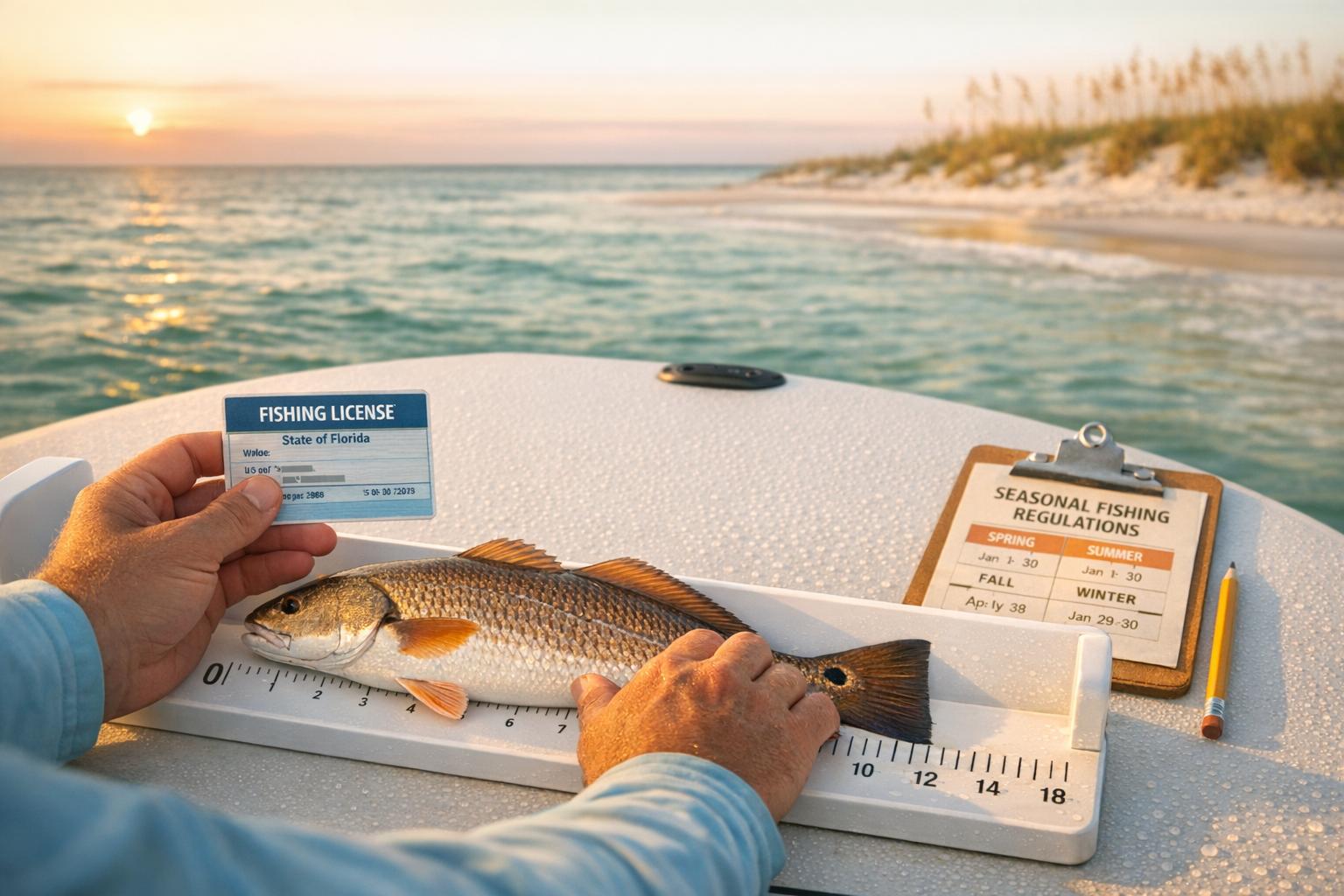
Fishing in the 30A area offers a variety of opportunities, but following seasonal regulations is critical. These rules help protect fish populations and ensure compliance with state laws. Here's what you need to know:
- Seasonal Closures: Some species, like Flounder (Oct 15–Nov 30) and Spotted Seatrout (Feb in Western Panhandle), have specific closed seasons.
- Fishing Licenses: Residents can get a saltwater license for $17 annually, while non-residents pay $47 for a year. Free Shoreline-Only licenses are available for residents fishing from shore.
- Bag and Size Limits: Popular species like Red Snapper (16-inch minimum, 2 fish/day) and Redfish (18–27 inches, 1 fish/day) have strict limits.
- Special Permits: Certain species, like Snook and Spiny Lobster, require additional permits.
- State vs. Federal Waters: Regulations differ depending on whether you're fishing within 9 nautical miles (state) or beyond (federal). Tools like the Fish Rules App can help you stay updated.
FISHING REGULATIONS: State waters VS Federal waters
Fishing Licenses and Requirements
30A Fishing Licenses: Resident vs Non-Resident Costs and Requirements
Resident and Non-Resident License Options
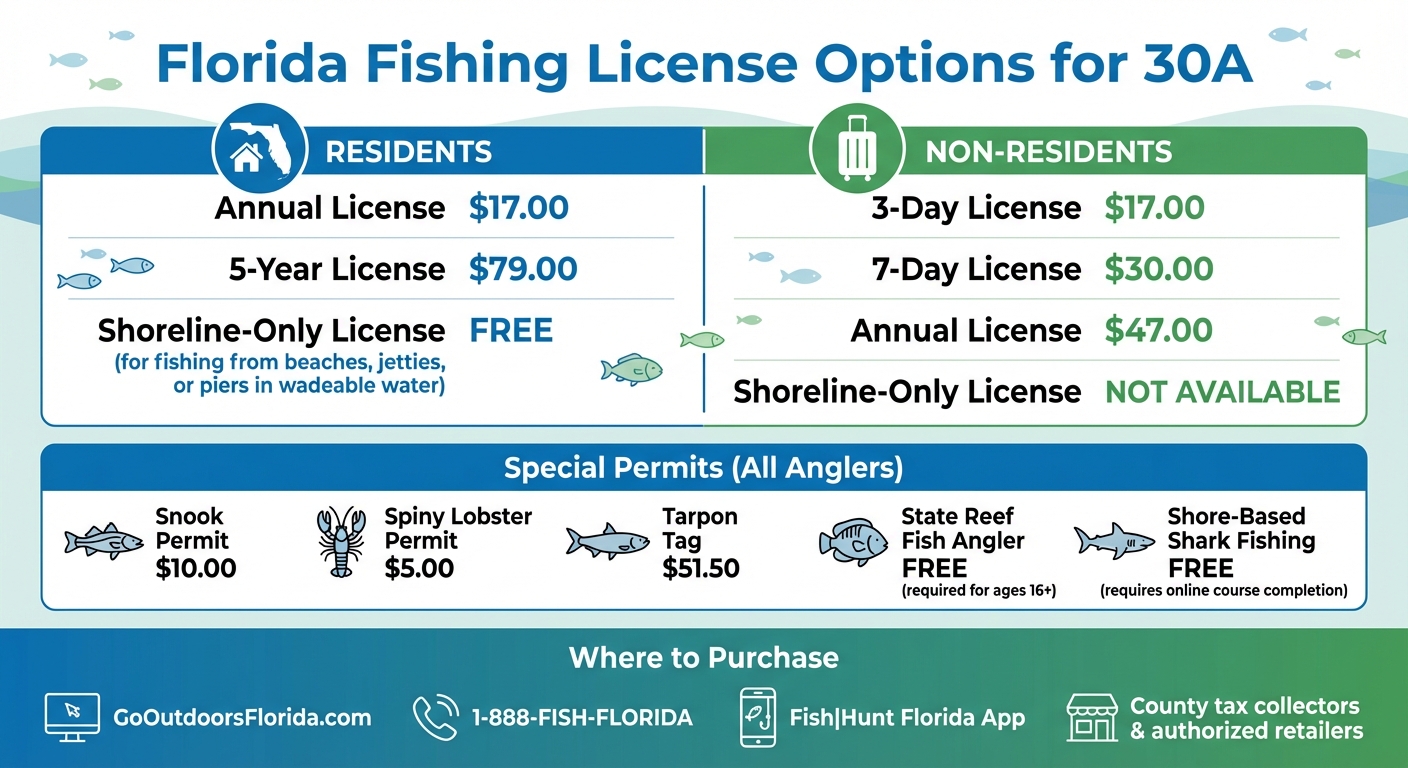
Florida offers a variety of fishing license options based on residency and fishing preferences. For residents, the annual saltwater license costs $17.00, while a five-year license is available for $79.00. If you're fishing from beaches, jetties, or piers and staying in shallow, wadeable water, you can get a no-cost Shoreline-Only license.
Non-residents have different pricing tiers: a 3-day license for $17.00, a 7-day license for $30.00, or an annual license for $47.00. However, non-residents are not eligible for the free Shoreline-Only license.
Licenses can be purchased at your convenience through GoOutdoorsFlorida.com, the Fish|Hunt Florida app, by phone at 1-888-FISH-FLORIDA, or in person at county tax collectors and authorized retailers. Starting in 2026, an auto-renew feature will make it easier to keep your license up to date.
Exemptions and Special Registrations
Certain groups are exempt from needing a standard fishing license. This includes children under 16 and Florida residents aged 65 or older, provided they have valid proof of age and residency. Additionally, if you’re fishing from a licensed charter boat or public pier - like the Russell-Fields Pier - you’re covered by the operator’s blanket license.
However, exemptions don’t apply to species-specific registrations. For instance, anglers aged 16 or older fishing for reef fish from a private boat must obtain the free State Reef Fish Angler designation. Similarly, shore-based shark fishing requires a free permit, which is only issued after completing an online course, and no exemptions are granted for this requirement. Other permits include:
- Snook permit: $10.00
- Spiny lobster permit: $5.00
- Tarpon tag: $51.50
"A Florida fishing license is required to land saltwater species in Florida regardless of where they are caught (state or federal waters)." - FWC
Be sure to check the seasonal calendar to plan your fishing trips around species availability.
Seasonal Calendar for 30A Fishing
Understanding which fish are in season can make your fishing trips more productive and keep you within legal limits. With about 230 sunny days a year in the 30A area, fishing is possible year-round, though each season offers different opportunities and regulations. Here's a breakdown of the best times to target popular species to help plan your next trip.
Spring and Summer Species
Spring fishing kicks off with Cobia in March and April, perfect for sight fishing in nearshore waters. Pompano also start showing up, with peak activity between March and May as the water warms. Speckled Trout are another spring highlight, with a size range of 15 to 19 inches and a daily bag limit of 3 per person in the Western Panhandle region.
"Spring fishing is here and the bite is fire! Redfish are still schooled up and sight fishing them with jigs is a blast!" - Local Angler Report, March 3, 2026
Summer is all about Red Snapper, with the season usually opening in June. Anglers can keep 2 Snapper per person daily, with a minimum size of 16 inches. Tarpon, often called the "Silver King", dominate the summer months from June to August. They’re primarily catch-and-release due to regulations requiring fish over 40 inches to remain in the water. Offshore enthusiasts can target Mahi Mahi and King Mackerel, which are most active in the summer heat. Spanish Mackerel are another summer favorite, available from May through September, with a generous 15-fish daily limit and a 12-inch minimum fork length.
Fall and Winter Species
As the weather cools, the fishing scene shifts, bringing new opportunities.
Fall is famous for the Bull Redfish run, where trophy-sized Redfish over 30 pounds move into the bays. While Redfish are available year-round, their activity peaks from October to December. Regulations allow just 1 Redfish per person, between 18 and 27 inches. Flounder also become more active in the fall as they migrate toward the Gulf. Outside of the closure period, anglers can keep up to 5 Flounder daily, provided they meet the 14-inch minimum size.
Winter fishing stays rewarding, even with cooler temperatures averaging around 60°F. Sheepshead thrive from December through March, especially around dock pilings and bridges. Live shrimp or fiddler crabs work best for these fish, which have a 12-inch minimum size and an 8-fish daily limit (with a vessel limit of 50 during March and April). Black Drum also become more active in winter, often found near jetties and piers.
"November, we're going after Redfish, Speckled Trout, Mangrove Snapper, Spanish Mackerel, Flounder… And then the Sheepshead bite actually starts picking up when it gets cooler, too." - Capt. Blake, Last Cast Charters
Size Limits, Bag Limits, and Closed Seasons
If you're planning a fishing trip along 30A, knowing the rules for size limits, bag limits, and closed seasons is essential. These regulations vary depending on the species and whether you're fishing in state or federal waters, so staying informed is key to having a lawful and enjoyable experience.
Regulations for Popular Species
Here's a breakdown of rules for some commonly targeted fish:
- Red Snapper: Must be at least 16 inches long, with a daily bag limit of 2 fish. The season is currently closed, with reopening dates typically announced in spring. Did you know? A single 24-inch female red snapper can produce as many eggs as 212 smaller 17-inch females.
- Greater Amberjack: Requires a minimum fork length of 34 inches, and you're limited to 1 fish per person per day. Federal waters are closed to amberjack fishing from November 1 through July 31, with the season reopening on September 1.
- King Mackerel: Needs to be at least 24 inches fork length, with a daily bag limit of 3 fish. Luckily, this species is available to catch year-round.
-
Grouper: Regulations differ by type, but most have a 4-fish daily aggregate limit.
- Gag Grouper: Requires a 24-inch fork length minimum and a 2-fish daily limit. However, it's currently off-limits due to a federal closure from January 1 through August 31.
- Red Grouper: Open year-round with a 20-inch total length minimum and a 2-fish limit, except for a closure from February 1 to March 31 beyond the 20-fathom line.
- Vermilion Snapper: Has a 10-inch minimum size requirement and a daily bag limit of 10 fish, with year-round availability.
If you're fishing for reef fish from a private recreational vessel, you must register for the State Reef Fish Survey and carry a "State Reef Fish Angler" designation. Keep in mind that reef fish must remain whole until they are landed, although removing gills and guts is allowed.
Next, let’s look at how these rules change when you venture into federal waters.
State vs. Federal Regulations
Fishing in areas where state and federal jurisdictions overlap can get tricky. Federal waters extend from 9 to 200 nautical miles offshore, and regulations often differ between the two zones. For example:
- Gray (Mangrove) Snapper: In state waters, the minimum size is 10 inches with a 5-fish daily limit. In federal waters, the minimum size increases to 12 inches, and the daily limit rises to 10 fish.
- Vermilion Snapper: The bag limit is 10 fish in both state and federal waters. However, catches in federal waters count toward a 20-fish reef aggregate limit, while those in state waters do not.
For species like Red Snapper, the State of Florida manages private recreational anglers and state-licensed charter boats even in federal waters. This delegation adds another layer of complexity, so it's important to stay updated.
To simplify things, use the Fish Rules App with location services enabled for the most accurate and site-specific regulations. When booking a charter, confirm whether the vessel is permitted for state or federal waters - this affects the applicable season dates and bag limits. Also, note that for-hire captains and crew cannot retain Red Snapper, Gag Grouper, Black Grouper, or Red Grouper in Gulf waters.
Fishing Practices and Local Enforcement
Approved Fishing Methods
The 30A region provides a variety of fishing options that are both enjoyable and mindful of the environment. Surf fishing is a favorite activity, and beginners can learn the ropes at Topsail Hill Preserve State Park or get equipped and informed at Stinky's Bait Shack in Dune Allen. For those seeking a quieter experience, kayak and paddleboard fishing in the serene coastal dune lakes and bayous is a great choice.
For a more unique adventure, flounder gigging combines fishing with a hunting-like experience, using underwater lights and a five-prong spear, as described by a local guide. If you're drawn to the thrill of deep-sea fishing, the Grayton Beach "Mosquito Fleet" offers chartered trips that launch directly from the beach. These charters typically include all necessary gear and licenses, making it convenient for participants.
No matter your preferred method, it’s essential to respect local regulations. Walton County Municipal Code 22-54(g) requires anglers to remove all fishing gear from the beach overnight - specifically from one hour after dusk to one hour before sunrise - or risk having it confiscated. Additionally, anglers must avoid damaging sand dunes, maintain a 15-foot clearance for emergency access, and refrain from disturbing vegetation. Entering the Gulf during double red flag conditions is strictly prohibited and can result in a $500 fine and criminal charges. For up-to-date Gulf conditions and flag warnings, text "SAFETY" to 31279. While enjoying these fishing methods, staying informed and compliant with local rules is just as important.
Reporting Violations and Staying Updated
Following enforcement policies is a key part of responsible fishing. If you observe violations, you can report them to the Florida Fish and Wildlife Conservation Commission (FWC) through the Wildlife Alert Reward Program by calling 888-404-FWCC. Reports can be made anonymously, and you won’t have to testify in court. To qualify for a possible reward, request a confidential code number when reporting and provide as much detail as you can, such as physical descriptions, vehicle information, and license plate numbers.
To stay informed about fishing regulations, the Fish Rules App is a handy tool, offering updates and tips in real-time. Local guides also provide valuable insights and alerts to help you stay compliant. For broader resources, including fishing guides and beach access maps, sowal.co is a go-to source for South Walton-specific information. If you need a temporary fishing license, you can quickly obtain one by calling 1-888-347-4356, allowing you to start fishing legally within minutes.
Conclusion
Fishing along 30A offers plenty of opportunities, but it also comes with responsibilities. Following seasonal regulations is key to protecting the area's delicate coastal ecosystem. These rules help safeguard vital habitats like seagrass beds, ensure fish populations remain healthy, and protect nesting sea turtles during their active season from May to October.
"Fishing is more than just a past time in South Walton – it's a way of life!" - SoWal.com
The future of this fishing community depends on each angler’s dedication to these practices. Make sure to follow all posted seasonal guidelines to stay compliant and contribute to the preservation of fish populations for generations to come.
Florida law requires anglers aged 16 and older to carry a valid saltwater fishing license unless exempt. Staying informed is critical - tools like the Fish Rules app and texting "SAFETY" to 31279 provide real-time updates. For catch-and-release fishing, using barbless hooks increases fish survival rates, and all gear must be removed from the beach overnight to comply with Walton County Municipal Code 22-54(g).
The 30A fishing community thrives when everyone plays their part. By respecting these seasonal rules, you’re helping to protect 30A’s coastal environment and ensuring its beauty and resources endure for years to come.
FAQs
How do I know if I’m in state or federal waters?
Florida's state waters stretch 3 nautical miles offshore along the Atlantic coast and 9 nautical miles offshore in the Gulf of Mexico. Beyond these points, federal waters take over and extend outward to around 200 nautical miles. If you're fishing within the state's limits, you're in state waters; once you go past them, you're in federal territory. For exact boundaries, it's always a good idea to consult official maps.
Do I still need a license if I’m on a charter or pier?
Yes, if you're planning to fish in saltwater in Florida, you'll need a fishing license - this applies to both residents and non-residents. This requirement includes fishing from piers or charter boats, whether you're in state or federal waters. Be sure to review local regulations to stay on top of seasonal rules and guidelines for protected species.
What permits do I need for reef fish or sharks?
To fish for reef fish or sharks in Florida's state waters, you'll typically need a recreational fishing permit. Keep in mind that specific species may have additional rules or restrictions, so it's important to review the most up-to-date regulations before heading out.