Top Fish to Catch on 30A by Season
Seasonal guide to the best fish to target on 30A — where and when to fish, top baits, techniques, and key Florida regulations for each species.
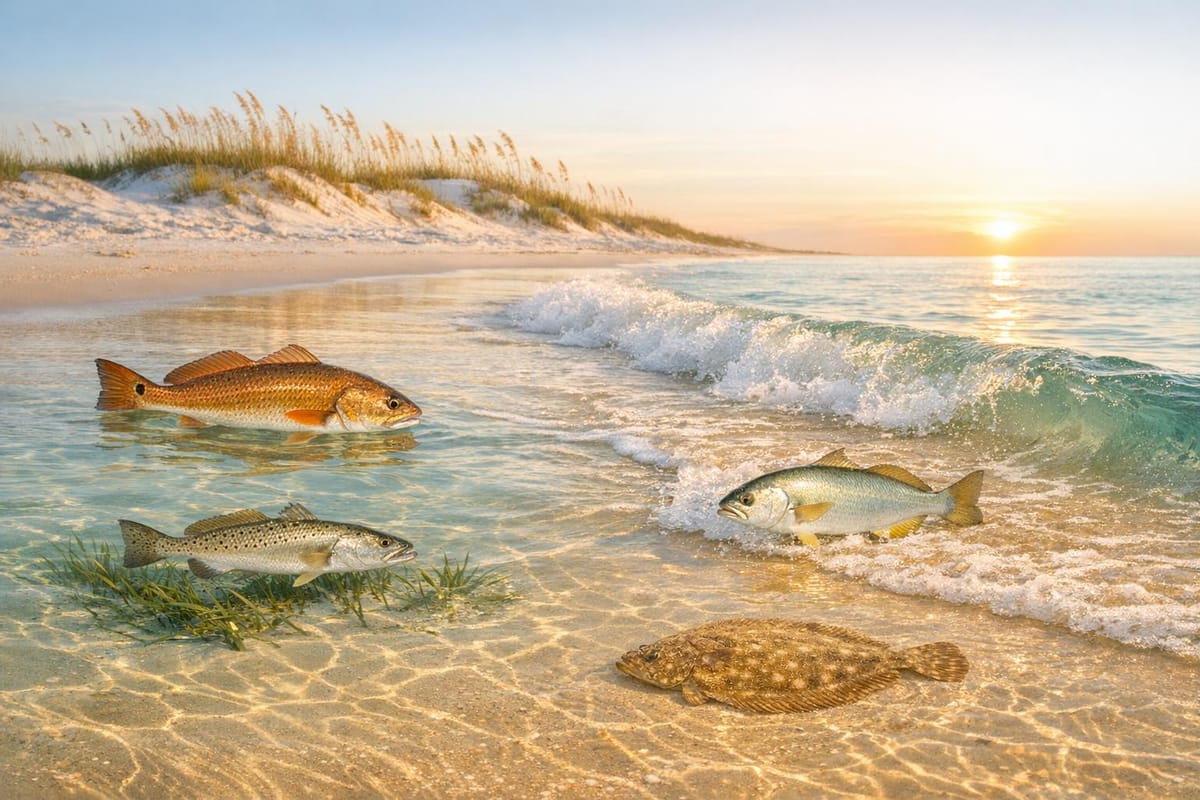
Fishing along 30A is all about timing and knowing where to cast your line. This guide breaks down the best fish to catch by season, covering key species like redfish, pompano, tarpon, and more. Here's a quick overview:
- Spring (March–May): Cobia, pompano, and jack crevalle dominate the waters, with cobia being a highlight for sight-fishing.
- Summer (June–August): Red snapper and tarpon take center stage. King mackerel and blacktip sharks are also abundant.
- Fall (September–November): Pompano returns, joined by bull redfish and speckled trout in cooler waters.
- Winter (December–February): Redfish and grouper are prime catches, especially in the bay and nearshore areas.
Each season brings unique opportunities, from surf fishing for pompano to targeting red snapper on offshore reefs. Always check local regulations, as size limits, bag limits, and seasonal closures apply to many species. For up-to-date fishing conditions and tips, visit sowal.co.
Keep reading for detailed tips on bait, gear, and locations for each fish species.
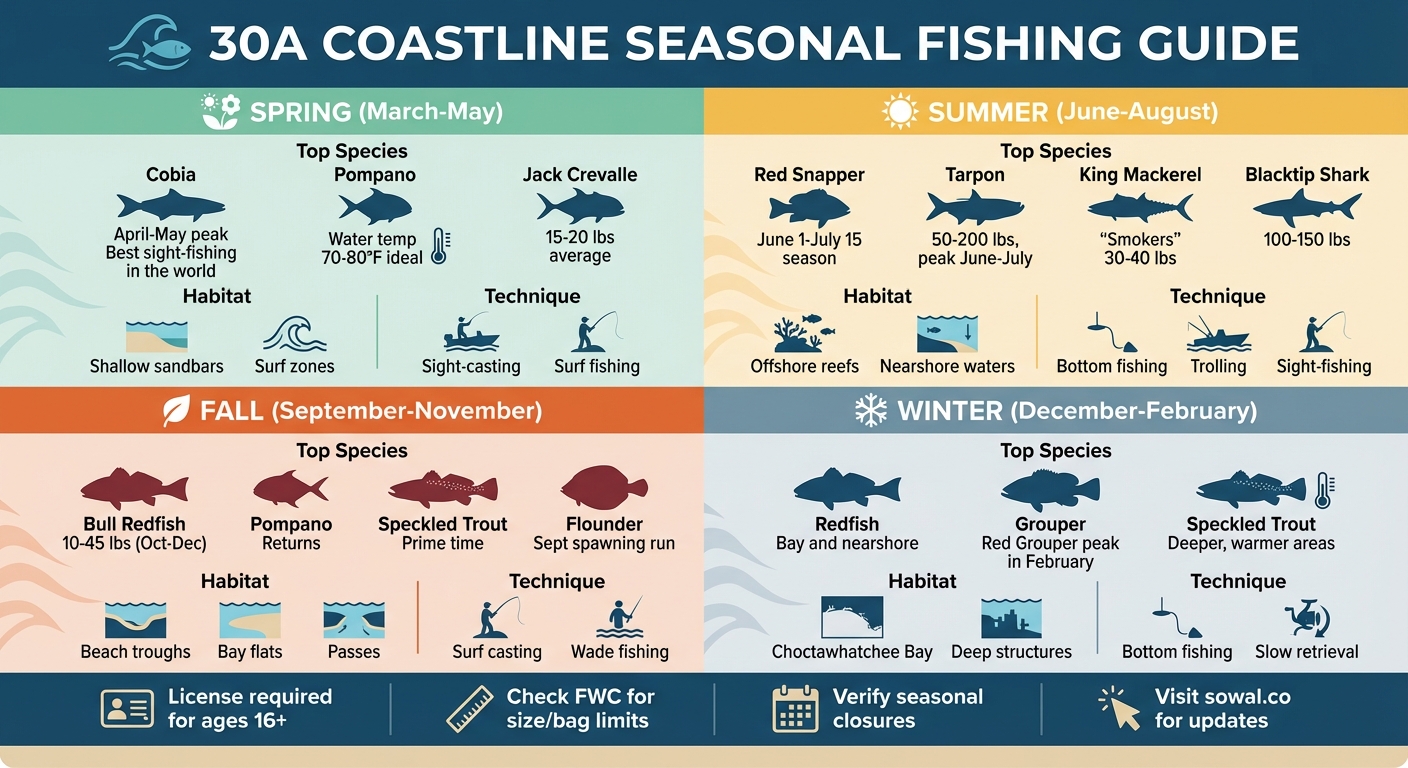
30A Fishing Calendar: Best Fish Species by Season
South Walton Fishing Adventures: Season 2, Ep. 11: Pompano Fishing Along 30A
1. Redfish
Redfish are a year-round favorite along the 30A coastline, with peak fishing running from March through October. However, the real excitement comes from October through December, when "Bull Reds" weighing between 10 and 45 pounds show up. These trophy-sized fish cruise the beach troughs, following baitfish migrations, and can grow up to 61 inches long, putting up an intense fight.
There are three main areas to target redfish along 30A. First, the Choctawhatchee Bay system is a hotspot, especially around the 331 Bridge at Pilcher Park, Point Washington, and Hogtown Bayou. These shallow flats are perfect for sight fishing. Second, the Gulf surf - from Rosemary Beach to Blue Mountain Beach - becomes a redfish haven in the fall when mullet gather along the beaches. Lastly, deeper structures like the Destin Bridge and nearby passes hold the biggest bulls throughout the year. For something different, paddle into Western Lake at Grayton Beach State Park. This brackish lake attracts redfish and is accessible by kayak, offering a more intimate fishing experience.
When it comes to bait, live shrimp and cut mullet on circle hooks are reliable choices, especially for dawn and dusk trips targeting bulls. If you’re into artificial lures, go for 3- to 5-inch white paddle tails on red jig heads or weedless gold spoons. In the bay’s stained waters, redfish tend to favor gold over silver. Winter fishing (December through March) can be trickier - look for "tailers" during low tides or try your luck around dock lights at night, where finesse is key.
Florida’s regulations allow anglers to keep one redfish per person per day, and it must measure between 17 and 27 inches to meet conservation rules. Any fish outside this slot must be released. That signature black spot on their tail? It’s nature’s trick to confuse predators.
For gear, a 7-foot medium-action rod paired with a 3500 series spinning reel works well. When using lures, move them slowly along the bottom - redfish are bottom feeders and can be easily spooked in shallow, waist-deep water.
2. Speckled Trout
After redfish season, speckled trout become the next big draw along 30A. These fish, technically a type of drum, are available all year, but the best times to catch them are during spring (April–June) and fall (September–October). For summer fishing, head out early in the morning or late in the evening to avoid the heat. In winter, slow down your approach and focus on deeper, warmer areas where trout tend to gather.
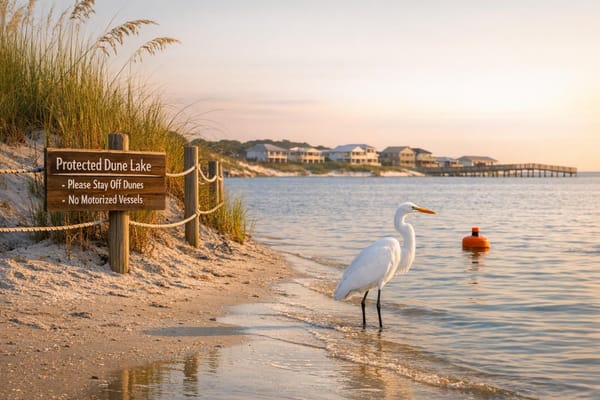
Speckled trout thrive in Choctawhatchee Bay's shallow grass flats and sandy pockets, making these spots perfect for wade fishing. Coastal dune lakes, like Western Lake in Grayton Beach State Park, are also prime locations. You can even find them in the Gulf surf near Santa Rosa and Rosemary Beaches.
For bait, live shrimp under a popping cork is a go-to option for natural movement. If you prefer artificial lures, try soft plastic jigs (1/8–1/4 oz), DOA shrimp, or topwater plugs - especially during low-light conditions. Pair your setup with a 7-foot medium-light spinning rod, 10–15 lb braided line, and a 15–25 lb fluorocarbon leader. Look for areas with moving water, as tides often bring baitfish, drawing in trout.
Before you hit the water, make sure to review the Florida Fish and Wildlife Conservation Commission's regulations for bag limits and size requirements. Anglers over the age of 16 will need a saltwater fishing license unless they’re fishing on a licensed charter vessel. Occasionally, you might come across a trophy-sized "Gator Trout" weighing over 6 pounds - some can even reach up to 18 pounds! Many local guides suggest releasing fish over 23 inches to help preserve the breeding population.
3. Pompano
Pompano are a favorite among surf anglers along 30A, prized for their predictable habits and tasty filets. Their prime seasons are spring (March–May) and fall (September–November), when water temperatures hover between 70°F and 80°F, with 75°F being the sweet spot.
The best places to target pompano are the Gulf surf zones at Santa Rosa Beach, Grayton Beach, Seaside, and Rosemary Beach. Focus on fishing the trough - the deeper, darker water between the beach and the first sandbar - where pompano feed. Local angler K. R. "Tuff" Smith explains, "They follow deeper water between the reef and beach". Early mornings during a rising tide often yield the best results.
For bait, live sand fleas are the top choice. If those aren’t available, fresh peeled shrimp or Fishbites-scented artificial bait work well too. Use a rig with two 1/0 to 2/0 circle hooks, a 20–30 lb fluorocarbon leader, bright floats, and a 1–4 oz pyramid sinker. Pair this setup with an 8–10 foot surf rod for optimal casting.
Most pompano caught in the surf weigh under 3 pounds, though some tournament-sized fish can reach up to 5 pounds. Florida fishing regulations require pompano to be at least 11 inches (fork length) to keep, with a daily bag limit of six fish per angler. Anglers over 16 years old must have a saltwater fishing license unless fishing on a licensed charter. Keep an eye out for "pompano birds" along the beach - they’re a good indicator of active sand fleas and feeding pompano.
4. Jack Crevalle
If you're ready for a fishing experience that combines explosive strikes and intense battles, Jack Crevalle along 30A won’t disappoint. As Shallow Water Expeditions explains:
"Jack Crevalle is pound-for-pound one of the hardest fighting fish you can catch".
The best time to chase these powerful fish is from March through September. In early spring, schools of Jack Crevalle, typically weighing 15–20 pounds, can be found feeding on mullet along shallow sandbars stretching from Rosemary to Blue Mountain Beach.
As the seasons change, so do the hotspots. During the fall, Choctawhatchee Bay becomes a prime location, especially north of Watercolor and Seaside. Here, you’ll witness dramatic surface feeding frenzies as the jacks tear through baitfish. Other productive areas include the Destin Pass jetties and the Mid-Bay Bridge, where these fish often push bait against structures.
When it comes to gear, surface lures like topwater poppers (e.g., Rapala X-Rap Magnum) or flashy spoons are highly effective. You can also free-line live bait such as mullet, menhaden, or pilchards on the surface. The trick? Reel as fast as you can - these aggressive predators thrive on speed, and it’s nearly impossible to retrieve too quickly. Keep an eye out for diving birds and surface activity, which often signal feeding schools.
In Florida, Jack Crevalle is classified as an "unregulated" species, with a bag limit of two fish or 100 pounds per person. Anglers aged 16 and older will need a saltwater fishing license. However, most anglers opt for catch-and-release, appreciating these fish more for their strength and fight than their culinary value.
5. Cobia
Spring is the perfect time to target cobia along the 30A coastline. According to Shallow Water Expeditions:
"Destin, 30A and Panama City Beach is one of the BEST places in the World to sight-fish for large Cobia!"
The prime months for cobia fishing are March through May, when water temperatures hover between 68°F and 72°F. During this time, cobia can be found cruising shallow sandbars along the beaches of 30A. They often follow manta rays, sharks, or sea turtles while searching for food. Anglers typically patrol the second sandbar, located in 15–30 feet of water, scanning for dark shapes moving westward along the shoreline.
For bait, live eels are the top choice, but blue crabs, pinfish, or small mullet are also effective. If you prefer artificial lures, try using a rod rigged with a 1–3 oz bucktail jig in bright colors like chartreuse, pink, or orange. Cast ahead of the fish to avoid startling them. This method works especially well in spring, before cobia head offshore as summer temperatures rise.
When Gulf waters warm into the mid-70s, cobia migrate to offshore reefs, wrecks, and markers. At this point, vertical jigging and chumming become the go-to techniques for catching them.
Keep in mind that Florida law requires cobia to measure at least 36 inches in fork length, with a bag limit of one fish per person or two per vessel. Anglers aged 16 and older must also have a valid saltwater fishing license. Be cautious when landing cobia, as they can thrash violently on the boat. Use a large net to secure them quickly and avoid injury from their sharp spines.
6. Red Snapper
Red snapper fishing hits its stride during the summer months - June, July, and August - when these sought-after reef fish are most active along the 30A coastline. The exact dates for the 2026 season are still pending, with the Florida Fish and Wildlife Conservation Commission expected to announce them in the spring.
Red snapper tend to gather around offshore structures like natural reefs, shipwrecks, and rocky ledges, typically in waters 60 to 200 feet deep. Some of the best fishing spots are close to shore, near Watercolor Resort and Seaside. Anglers can reach these areas via Destin Pass or Panama City Pass, or they can opt for a charter that departs straight from the sand at Grayton Beach. Keep in mind that larger red snapper often reside in federal waters (beyond 9 nautical miles), so booking a captain with a federal reef permit is a smart move, though it may take extra planning.
When it comes to bait, live options like pinfish, cigar minnows, and pogies are excellent choices. Dead squid and Boston mackerel also perform well. Captain Casey Price of Lady D Charters recommends:
"Use the smallest weight possible to get your bait down on the spot".
Bigger snapper often hover 10 to 50 feet above reef structures, so adjusting your bait depth can make a big difference in finding where the larger fish are feeding. Popular setups for bottom fishing include the knocker rig and fish finder rig.
Regulations and Costs
Current regulations require that red snapper measure at least 16 inches in total length, with a daily bag limit of 2 fish per person. Anglers must use non-stainless steel circle hooks and carry a dehooking tool. When a fish bites, use a steady reeling technique - often called "crank don't yank" - to ensure the circle hook sets properly.
For those planning a fishing trip, a private 4-hour charter in the 30A area typically costs around $688, while an 8-hour trip averages $1,676. Top-rated charters like Florida Panhandle, Old Town, and Got'em (all with 5.0/5 ratings) offer access to prime red snapper fishing spots.
7. Tarpon
Tarpon fishing along 30A hits its stride in June and July, coinciding with their migration through the Emerald Coast waters. While you might spot tarpon as early as May or as late as September, the peak season aligns with midsummer, when Gulf waters consistently hover around 75°F [53, 54]. These fish are no small fry - tarpon in this area typically weigh anywhere from 50 to over 200 pounds. A 100-pound tarpon, for example, is usually between 10 and 15 years old [53, 55]. Their migration patterns play a huge role in determining where and how to target them effectively.
Tarpon favor specific habitats, often swimming along beaches in water 10 to 20 feet deep, following sandbars and ledges that run parallel to the shore [54, 55]. Local piers are hotspots for spotting these schools, and boat sight-casting is another popular method [55, 6]. In shallower areas like Choctawhatchee Bay and Crooked Island Sound, tarpon can be found cruising waters only 4 to 8 feet deep [55, 6].
When it comes to bait, mullet reigns supreme, but live options like threadfin herring, menhaden, and crabs are also highly effective. For anglers using artificial lures, a 6-inch Berkley Swim Bait works wonders for both pier and boat fishing. Tim Broom, Manager at Half Hitch Destin, shares a crucial tip for handling tarpon:
"When you feel the tarpon nearing the surface and can anticipate the jump you need to lower the tip of the rod just as the tarpon jumps to relieve some of the pressure, so you do NOT pull the hook or break the fish off. This is where the term BOW TO THE TARPON comes from."
To avoid spooking these fish, it’s best to keep a low profile - use a trolling motor or anchor in their travel lanes. The early morning and late afternoon hours tend to provide the best action, as tarpon are more likely to spook under the bright midday sun. Keep in mind that tarpon fishing in Florida is strictly catch-and-release, and any fish over 40 inches must remain in the water. If you're chasing an IGFA world record, you'll also need a $50 annual tarpon tag.
8. King Mackerel
King Mackerel, often called "Smokers" due to their lightning-fast runs, are a popular catch along the 30A coast from May through October. The best times to target them are in spring (April–June) when the water warms to 68°F and again in fall (September–November) as baitfish migrate closer to shore.
These fierce predators prefer the open Gulf over shallow bays, often found near reefs, wrecks, and buoy lines at depths ranging from 20 to 200 feet. According to 30A Light Tackle Charters, once water temperatures hit 68°F, King Mackerel become abundant, making early-morning trolling in these areas highly effective. Fishing from Gulf piers is another reliable option.
Live cigar minnows are the go-to bait for King Mackerel around 30A, typically used with spinning tackle and freelining techniques. Other effective bait options include hardtails (blue runners), mullet, and menhaden. Anglers often employ high-speed trolling (7–10 knots) with spoons or diving plugs, or slow-trolling (1–2 knots) with live bait to mimic natural movement. A wire leader (20–40 lb test) is essential because of the mackerel’s razor-sharp teeth, which can easily cut through standard fishing lines.
Regulations for King Mackerel fishing currently require a minimum fork length of 24 inches and limit the daily catch to three fish per person. While these fish can grow up to 6 feet long and weigh nearly 100 pounds, most caught are smaller. Fishing at dawn and dusk is particularly productive, as these visual hunters are more active in low-light conditions. These characteristics make King Mackerel a prized target during the transitional seasons along the 30A coast.
9. Grouper
Grouper fishing along 30A varies with the seasons, offering year-round opportunities depending on the species. Red and Black Grouper are available throughout the year in Gulf state waters, while Gag Grouper typically has a short season, often limited to September 1–15. Summer and early fall are prime times to target multiple grouper species across Florida waters. For Red Grouper, February is particularly productive near Santa Rosa Beach. These seasonal patterns influence where you’re likely to find each type of grouper along 30A.
Grouper are bottom-dwelling fish that prefer reefs, wrecks, ledges, and rocky outcroppings off Santa Rosa, Grayton, and Miramar Beaches. Larger adults tend to inhabit deeper Gulf waters, sometimes as deep as 500 feet. However, Red Grouper, often called "shallow-water groupers", can be found inshore at depths as shallow as 10 feet. Juvenile groupers stick to grass beds and nearshore structures.
To catch grouper, bottom fishing over reefs and wrecks with live bait - like cigar minnows, blue runners, menhaden, shrimp, or crabs - is highly effective. Another popular method is slow-pitch jigging, where jigs are bounced off the seabed to stir up sand and provoke an ambush strike. Be prepared with heavy-duty gear: at least 80-pound-test braided line paired with a strong fluorocarbon leader. This setup is crucial since groupers often retreat into structures, risking cut lines.
When fishing for grouper, adhering to local regulations is essential. Gulf regulations require non-stainless steel circle hooks when using natural bait for reef fish. The daily aggregate bag limit is 4 fish per person, with specific limits of 2 Gag, 2 Red, and 4 Black Grouper. Minimum size requirements are 24 inches total length for Gag and Black Grouper, 20 inches for Red Grouper, and 16 inches for Scamp. If fishing from a private vessel, anglers must register annually for the State Reef Fish Angler Designation and carry a venting tool or descending device when in Gulf federal waters.
Always check the FWC website for updated Gag Grouper season dates, as they can change unexpectedly. Black Grouper can grow to over 180 pounds, though most catches average around 40 pounds. Gag Grouper, on the other hand, can reach a maximum weight of 80.47 pounds.
10. Blacktip Shark
Fishing for blacktip sharks along the 30A coastline is a thrilling experience. These sharks are most active nearshore during spring (March–May) and fall (September–November) as they migrate inshore. Summer (June–August) also offers good fishing opportunities thanks to the warmer waters. However, during the winter months (December–February), they move into deeper waters, making nearshore encounters less frequent [78, 79, 81].
Blacktip sharks tend to follow predictable patterns, often appearing in coastal hotspots. You can find them cruising the Gulf surf along crystal-clear beaches, in bays, and within estuaries. They’re known to shadow schools of Spanish mackerel or ladyfish, which makes areas like Santa Rosa Beach and Grayton Beach prime locations for targeting them. According to Shallow Water Expeditions:
"Once hooked the Blacktip puts on an incredible show of jumps and reel melting runs."
For bait, fresh, oily fish like mackerel, bonito, or mullet work best. Alternatively, try an 8-inch pencil popper rigged with a single hook. Pair this setup with a 10- to 12-foot heavy-duty surf rod, 65- to 100-pound braided line, and a 3-foot steel leader. When you feel a tug, wait about 5 seconds before setting the hook. Non-stainless steel circle hooks (sizes 7/0–10/0) are recommended for better hook sets and safer releases [80, 82, 83, 85].
In Florida, anglers aged 16 and older must complete a free online course to obtain a Shore-Based Shark Fishing Permit [83, 87]. If you plan to harvest a shark, it must remain whole, with the head and fins intact. The daily bag limit is one shark per person (or two per vessel), with no minimum size requirement. Blacktip sharks in these waters typically weigh between 100 and 150 pounds, with the Florida state record standing at 152 pounds.
11. Bonito
Bonito, often called "False Albacore" or "Albies" by locals, are some of the fastest and most thrilling fish to catch along 30A. Their prime season runs from April through October, with July and August offering peak opportunities as they gather in large schools.
These fish are commonly found in the Gulf surf, nearshore reefs, and even in bays during the spring. According to Shallow Water Expeditions, the key is spotting schools feeding at the surface. Casting directly into these frenzies can lead to almost guaranteed action.
Captain Tom Roller from WaterDog Guide Service shares his insight on the fight:
"Once hooked, Bonito put up a ferocious fight, sometimes shooting off 50 to 100 yards of line suddenly."
To handle their speed and power, especially during the summer, having the right gear is essential. A 7- to 9-foot medium-heavy spinning rod paired with a 2500- to 3000-series reel spooled with 15- to 30-pound braided line is recommended. Use a 25-inch, 10–20 lb test fluorocarbon leader to avoid break-offs, as bonito have sharp eyesight. For lures, silver spoons, Got-cha lures, metal jigs, and trolling feathers work well - just retrieve them quickly to mimic fleeing baitfish. If you prefer natural bait, live sardines, mullet, or pilchards are excellent choices.
Florida regulations permit a daily bag limit of two bonito per person, with no minimum size requirement. Most bonito weigh between 10 and 20 pounds, though some can reach up to 30 pounds. If you plan to eat your catch, it's crucial to bleed the fish immediately and keep it chilled, as the meat spoils quickly. Properly handled, bonito can be enjoyed as smoked fish or sashimi.
12. Flounder
Flounder are a rewarding catch along 30A, especially during late spring (May–June) and early fall (starting in September) when they spawn near passes and wrecks. These ambush predators are experts at camouflage, burying themselves in sand or mud until unsuspecting prey swims by.
You can find flounder in a variety of spots along 30A. Inshore areas like Choctawhatchee Bay, Hogtown Bayou, and Tucker Bayou are prime locations. If you prefer surf fishing, Grayton Beach, Seagrove Beach, and Inlet Beach are reliable options. For a quieter experience, coastal dune lakes such as Western Lake also hold healthy populations of flounder.
Each habitat requires a slightly different approach. A tried-and-true method for catching flounder is bottom bouncing with light jigs or live bait, especially during moving tides. As Wyatt Parcel puts it:
"Flounder plant themselves on the bottom waiting for an easy meal to swim by, so unless you put your lure right in front of their face, there's essentially zero chance of you catching one."
For bait, live shrimp, finger mullet, and mud minnows are excellent choices. Soft plastic paddle tails rigged on 1/4‑oz jig heads can also be effective. Another popular local method is night gigging, which involves using underwater lights and a five-prong spear to spot flounder lying flat on the bottom.
If you plan to harvest flounder, keep Florida’s regulations in mind. Fish must measure at least 14 inches in total length, with a daily bag limit of 5 fish per person. There’s also a harvest closure from October 15 through November 30 to protect spawning fish. During this period, only catch-and-release is allowed, so plan your trips accordingly.
When it comes to gear, light to medium-light tackle paired with a 2000-series reel is ideal. This setup helps detect the subtle "thump" of a flounder strike. Once you feel a bite, lift your rod tip quickly at a 45-degree angle while keeping the line tight. This technique avoids overly hard hooksets, which can cause you to lose the fish.
Seasonal Fishing Comparison Table
Plan your 30A fishing adventure with this handy seasonal guide. The table below outlines the peak seasons, habitats, best techniques, and key regulations for popular fish species in the area.
| Fish Species | Best Season | Preferred Habitat | Recommended Technique/Bait | Key Regulations |
|---|---|---|---|---|
| Redfish | Year-Round (Bulls: Oct–Dec) | Bay, Flats, Deep Passes | Live shrimp, cut mullet, soft plastics | 17–27" slot; 1 per person/day |
| Speckled Trout | Year-Round | Bay (Grassy Flats) | Soft jigs, top-water poppers, float rigs | Verify current FWC regulations |
| Pompano | Mar–May; Sept–Nov | Surf/Beach | Sand fleas, Fish Bites, jigs | Strict size and bag limits apply |
| Jack Crevalle | Mar–Sept | Surf, Sandbars, Bays | Surface plugs, flies | Pound-for-pound hard fighter |
| Cobia | April–May | Surf/Sandbars | Sight-casting with jigs or eels | Peak migratory period |
| Red Snapper | June–July (Varies) | Offshore Reefs & Wrecks | Bottom fishing with live/cut bait | Often June 1–July 15 only |
| Tarpon | May–August | Beach/Surf | Sight-fishing, fly, light tackle | Catch and release preferred |
| King Mackerel | May–October | Nearshore/Offshore | Live cigar minnow trolling | "Smokers" reach 30–40 lbs |
| Grouper | Year-Round | Offshore Reefs & Wrecks | Bottom fishing, live bait | Check seasonal closures |
| Blacktip Shark | June–August | Surf, Nearshore | Cut bait, live bait | Catch and release only |
| Bonito | April–July | Nearshore Waters | Trolling, casting spoons | Fast-moving schools |
| Flounder | Sept–Nov | Passes, Bays, Wrecks | Light jigs, live bait, night gigging | Closure Oct 15–Nov 30 |
Important Notes:
- Red Snapper season typically runs from June 1 to July 15.
- Flounder harvest is closed from October 15 through November 30 to protect spawning fish.
- For species without specific regulations, the recreational harvest limit is 100 pounds or two fish, whichever is greater.
All anglers aged 16–65 must have a Florida saltwater fishing license unless fishing on a licensed charter boat. Because the 30A area is within the Panhandle/Western Panhandle management zones, it's essential to verify current regulations with the Florida Fish and Wildlife Conservation Commission before heading out.
For the latest local fishing updates, visit sowal.co. For more detailed information on each species, refer to the sections above.
Conclusion
The 30A coastline is a haven for anglers, offering fishing opportunities throughout the year. Different species peak during various seasons, with year-round staples like Redfish and Speckled Trout in the bay. Migratory species, however, demand precise timing - Cobia are best from April to May, Tarpon from May to August, and Pompano light up the action in spring and fall. For those chasing trophy Bull Redfish, fall (October through December) is prime time.
As Castaway30a explains:
"Timing matters on the Emerald Coast. Pompano fire up in spring (March–May) and again in fall (September–November) when the surf is warm and clear."
Planning trips early, ideally before dawn, can significantly boost your chances of success.
The region’s diverse ecosystems, from the Gulf of Mexico to Choctawhatchee Bay and the rare coastal dune lakes, create habitats for a wide variety of fish. This ensures exciting fishing opportunities year-round, whether you’re targeting inshore species during winter or venturing offshore in the summer.
Before heading out, make sure to check the latest Florida Fish and Wildlife Conservation Commission (FWC) regulations, especially for species like Red Snapper, which typically has an open season from June 1 to July 15. Anglers aged 16 and older will also need a valid Florida saltwater fishing license unless they’re on a licensed charter boat.
For the latest updates and to plan your next fishing trip, visit sowal.co and stay ahead of the game.
FAQs
What are the best fishing techniques for each season along the 30A coastline?
Fishing along the 30A coastline shifts with the seasons, so adjusting your approach is key to success. During spring and summer, redfish, speckled trout, and flounder are prime targets. Try casting live bait or lures around marshes, grass flats, and structures - these spots are often the most productive. Heading out early in the morning can give you an edge, as fish tend to be more active in the cooler hours.
In fall and winter, the game changes. Redfish and sheepshead remain active, but you’ll want to focus on deeper waters and estuaries. Trolling or drifting with live bait or artificial lures can be particularly effective during these cooler months when fish retreat to deeper areas.
If you’re fishing year-round in places like Choctawhatchee Bay, techniques such as trolling, casting, and jigging can help you reel in trout and redfish no matter the season. For the best results, stop by local bait shops or consult guides who can offer the latest tips to match the seasonal conditions and boost your chances of success.
What bait and gear should I use to catch different fish on 30A?
Choosing the right bait and gear along the 30A coastline depends heavily on the type of fish you're after and the time of year. For redfish, using live bait like shrimp or crab is often a winning strategy. Pair these with rigs suited for shallow waters or bay fishing to increase your success. If you're targeting speckled trout or flounder, soft plastics, live bait, and light tackle are great options. On the other hand, larger fish like snapper or grouper typically call for heavier gear and either cut or live bait.
For better results, try fishing early in the morning when activity tends to peak. Visiting local bait shops or chatting with fishing guides can provide valuable, up-to-date advice based on current conditions. Keep in mind that seasonal shifts and water temperature changes can affect what works best, so staying adaptable and observant is key to a successful day on the water.
What permits and regulations do I need for fishing along 30A?
Before casting your line along 30A, you'll need a recreational saltwater fishing license. This is mandatory for anyone fishing or attempting to catch saltwater species in Florida. Licenses are available for both residents and non-residents, with fees starting at $17 annually for residents and $47 for non-residents. If you're just visiting or want a shorter option, you can choose 3-day or 7-day permits. Always double-check the latest licensing rules before you head out.
It's also important to follow species-specific regulations. These include rules on size limits, bag limits, seasonal closures, and gear restrictions to help maintain fish populations. For instance, red snapper and snook have strict guidelines about when and how they can be caught. To stay on the right side of the law, consult the Florida Fish and Wildlife Conservation Commission (FWC) for the most current regulations.
If you’re planning to drive onto certain beaches in Walton County, you may also need beach permits. Be sure to check local rules regarding beach access and designated fishing zones to ensure your trip is both enjoyable and legal.