Topsail Hill Wildlife: What to Know Before You Go
Practical guide to wildlife viewing at Topsail Hill Preserve: species, best trails and times, safety tips, park rules, and gear to bring.
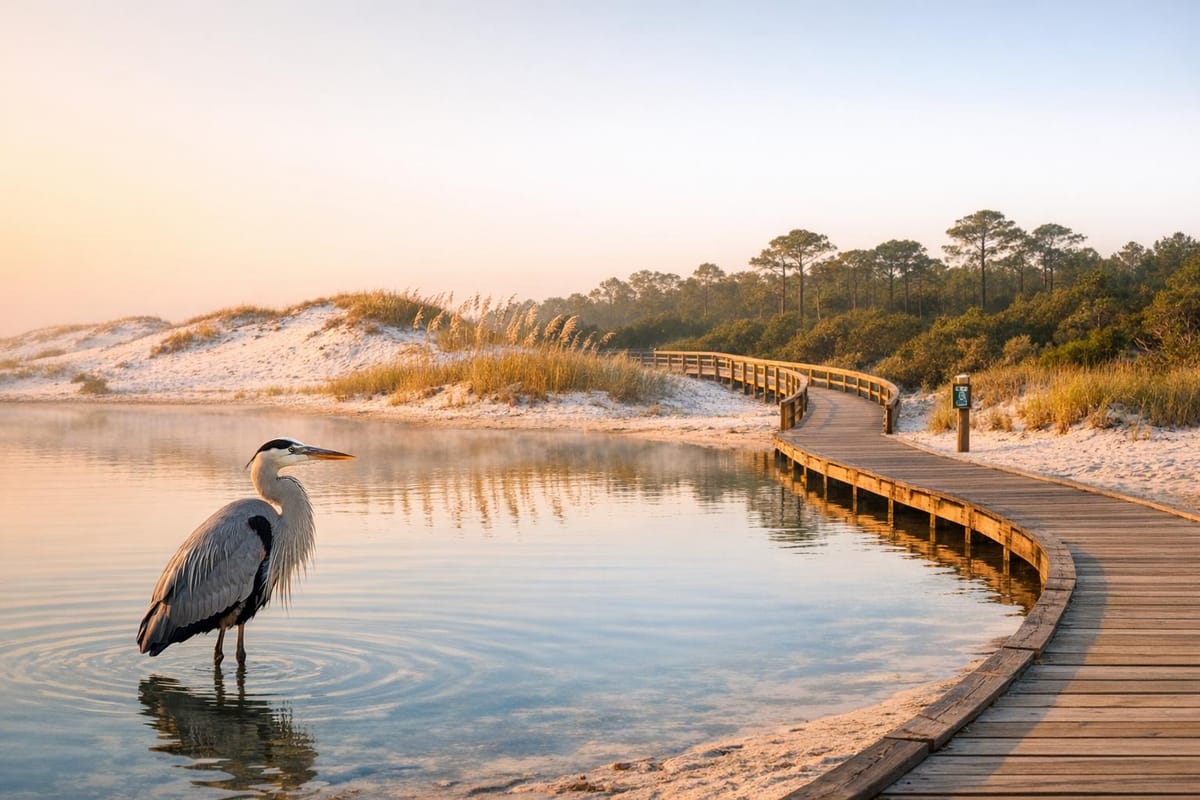
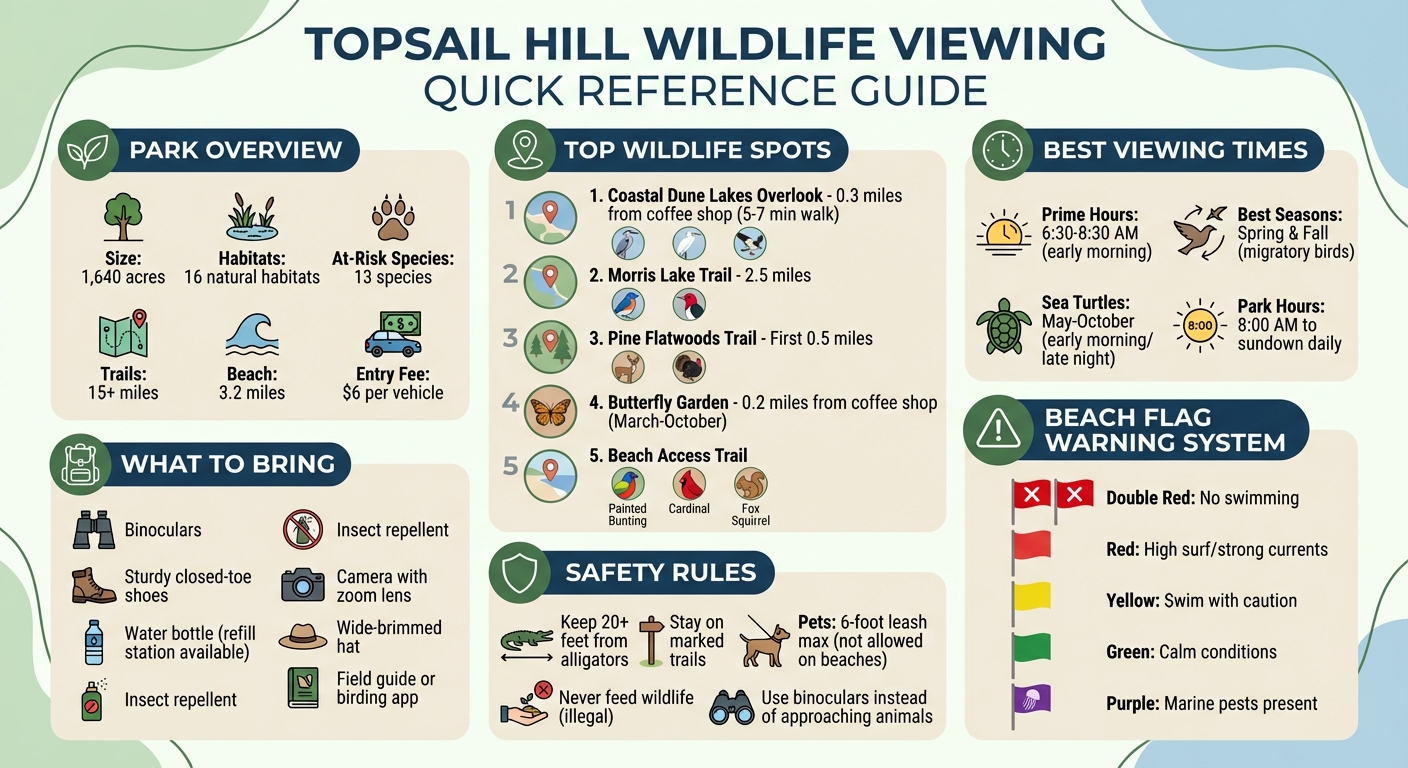
Topsail Hill Preserve State Park in South Walton is a 1,640-acre haven for wildlife enthusiasts. It features rare coastal dune lakes, 16 natural habitats, and 13 at-risk species. Visitors can see everything from loggerhead turtles to bobcats, colorful bird species, and even carnivorous plants. With over 15 miles of trails, a $6 entry fee per vehicle, and guided programs, the park offers an immersive experience for nature lovers. Here’s what to know:
- Wildlife Highlights: Spot Choctawhatchee beach mice, alligators, deer, and migratory birds like snowy plovers.
- Top Trails: Pine Flatwoods Trail for deer, Morris Lake Trail for birds, and Gopher Tortoise Trail for reptiles.
- Best Times: Early mornings (6:30-8:30 AM) or spring and fall for migratory birds.
- Safety Tips: Keep distance from wildlife, avoid feeding animals, and stay on marked trails.
- Essentials to Bring: Binoculars, sturdy shoes, water, and insect repellent.
Stick to boardwalks, respect the habitats, and follow park rules to enjoy this beautiful destination responsibly.
Essential Wildlife Viewing Guide for Topsail Hill Preserve State Park
Wildlife Species at Topsail Hill Preserve
Mammals and Reptiles
If you're exploring the Pine Flatwoods Trail at dawn or dusk, you might catch a glimpse of white-tailed deer moving quietly through the area. Meanwhile, fox squirrels can often be seen along the Beach Access Trail, especially where the maritime forest meets the dunes. The preserve is also home to the endangered Choctawhatchee beach mouse, a nocturnal resident of the park's high-quartz sand dunes. Spotting one of these elusive creatures, however, is a rare treat.
For those venturing onto the Gopher Tortoise Trail, keep an eye out for gopher tortoises among the saw palmettos and longleaf pines. The park's lakes and understories are bustling with reptiles, including American alligators, which can grow up to 12 feet long, and a variety of snakes such as the Florida Cottonmouth, Pygmy Rattlesnake, and Eastern Coachwhip. Lizards like the Six-lined Racerunner and the Green Anole also thrive in these habitats, darting through the vegetation.
Birds and Butterflies
Topsail Hill is a haven for bird enthusiasts, with a dazzling array of species to observe throughout the year. Permanent residents include Eastern Bluebirds, Cardinals, Ospreys, and Red-headed Woodpeckers, which are often seen in the maritime forests. During spring and fall, the park becomes a migratory stop for songbirds like Yellow-billed Cuckoos, Magnolia Warblers, and the striking Painted Buntings. Winter brings visitors like Piping Plovers, Common Loons, and Northern Gannets along the shoreline, while summer marks nesting season for Snowy Plovers on the beaches. For avid birdwatchers, the 2.5-mile Morris Lake Trail offers excellent opportunities to spot these feathered residents.
Adding to the park's vibrant ecosystem, butterflies bring bursts of color to the landscape. Seasonal butterfly sightings are particularly delightful, and guided tours throughout the year provide a chance to learn more about these delicate creatures.
Marine and Aquatic Life
The park's coastal dune lakes are a fascinating feature, serving as a meeting point for freshwater and saltwater species. For instance, Campbell Lake, which is almost entirely freshwater (99.9%), rarely connects to the Gulf. This unique environment supports species like largemouth bass, bream, and catfish. However, during rare breaches to the ocean, saltwater species such as flounder, striped mullet, red drum (redfish), and gray snapper find their way into the lake. As ranger Christopher Horkman explains:
Campbell Lake is 99.9% freshwater and rarely opens up to the Gulf as most dune lakes do.
These lakes also act as nurseries for smaller marine life, including clams, snails, and shrimp. Along the park's 3.2 miles of beach, surf anglers can try their luck catching pompano, Spanish mackerel, and even various shark species, adding an exciting dimension to the park's aquatic offerings.
Best Wildlife Viewing Locations
Coastal Dune Lakes Overlook
If you're looking for a great place to start your wildlife adventure, the Coastal Dune Lakes Overlook is a must-visit. Just a short 5–7 minute walk (about 0.3 miles) from the park's coffee shop, this elevated spot gives you a breathtaking view of the rare freshwater dune lakes. It's a fantastic location to watch Great Blue Herons, Snowy Egrets, Great White Egrets, and Ospreys fishing in the shallow waters. Early mornings, from 6:30 AM to 8:30 AM, are the prime time, especially on clear, calm days with light winds. Don’t forget your binoculars - you might even catch a glimpse of dolphins in the Gulf! After taking in the view, explore the nearby trails that wind through gardens and scrublands for more discoveries.
Trails and Butterfly Garden
For birdwatchers, the Morris Lake Trail is a gem. This trail is known for its variety of bird species, including Eastern Bluebirds, Red-headed Woodpeckers, and Brown-headed Nuthatches, which can be spotted year-round. If you're short on time, the first half-mile of the Pine Flatwoods Trail offers a great opportunity to see white-tailed deer and wild turkeys during the golden hour of early morning.
For a splash of color, head to the Butterfly Garden, located just 0.2 miles from the coffee shop. From March through October, this garden comes alive with Gulf Fritillary butterflies, Ruby-throated Hummingbirds, and native bees. For something different, check out the Deer Track Trail, which leads to views of Campbell Lake and showcases unique plant life like carnivorous pitcher plants and water lilies.
Beach Access and Scrubland
The park’s beachfront and scrublands offer even more opportunities for wildlife enthusiasts. The Beach Access Trail is particularly interesting at its midpoint, where the landscape shifts from maritime forest to coastal dunes. Here, you might spot Painted Buntings, Cardinals, and even fox squirrels. Along the park’s 3.2 miles of beachfront, you can see coastal birds like Snowy Plovers nesting in the summer, or Common Loons and Northern Gannets during the winter months.
The Turpentine Trail, which winds through pine forests, provides a chance to observe unique pine trees and various forest-dwelling creatures. Be sure to stick to the designated trails and boardwalks to protect the fragile habitat of the endangered Choctawhatchee beach mouse and prevent dune erosion. By doing so, you'll help ensure these wildlife experiences remain available for future generations.
When to Visit for Wildlife Viewing
Best Times of Day and Migration Periods
Plan to arrive at the park right at opening time (8:00 AM) to make the most of the prime wildlife viewing hours, typically between 6:30 and 8:30 AM. These early hours are when animals are most active, and during summer, mornings and late afternoons also help you avoid the midday heat.
Spring and fall are especially exciting for bird enthusiasts. In spring, you can catch northbound warblers and tanagers, while fall brings the chance to see southbound songbirds, raptors, and peregrine falcons - sunrise is the best time to spot them. For sea turtle sightings, head to the beach between May and October during early mornings or late at night. You might even find tracks from nesting mothers or tiny hatchlings making their way to the sea.
Thanks to the park's sunny climate, wildlife viewing is possible throughout the year. Seasonal changes bring their own unique highlights, with winter and breeding periods offering fascinating glimpses into animal behaviors.
Winter and Breeding Seasons
Winter welcomes species like Common Loons, Northern Gannets, Northern Pintail, Blue-winged Teal, and Redhead Ducks. While cooler months attract northern species with mild temperatures, spring and summer showcase breeding activities and heightened wildlife action that reflect the park’s rich biodiversity.
From March through May, Painted Buntings and Ruby-throated Hummingbirds are especially active. The Butterfly Garden is at its busiest from March to October, drawing in a variety of pollinators. Snowy Plovers nest along the beachfront during the summer, and Bald Eagles can be seen throughout the year. Entry to the park by standard vehicle costs $6.
Wildlife Safety Guidelines
General Safety Tips
When exploring wildlife areas, it’s crucial to maintain a safe distance from animals - for your safety and theirs. Instead of getting too close, use binoculars or a camera with a zoom lens to observe them without causing stress or disruption. As the Florida Fish and Wildlife Conservation Commission advises: "Give wildlife space – view wild animals through binoculars or from an adequate distance so wildlife doesn't feel threatened or become habituated to people".
Feeding wildlife is not only harmful but also illegal for some species in Florida. Animals that associate humans with food can become aggressive, which may lead to dangerous encounters and, in some cases, the removal or euthanization of the animal for public safety. Stick to marked trails and boardwalks to avoid disturbing sensitive habitats, such as nesting areas, and to protect the environment. Make sure to store food securely and pack out all trash to prevent attracting animals. By following these steps, you help safeguard the unique ecosystems and wildlife of Topsail Hill.
These general tips also prepare you for encounters with larger predators during your visit.
Alligators, Coyotes, and Other Predators
Topsail Hill’s freshwater systems are home to American alligators, some reaching up to 12 feet in length. Be vigilant around lakes and wetlands, and always keep at least 20 feet away from any alligator you see. If an alligator is blocking your path, try stomping your feet or hitting the ground with a hiking stick; the vibrations often encourage it to move away. If it doesn’t retreat, walk in a wide arc to maintain a safe distance.
When facing larger predators, never run - running might trigger their instinct to chase. Instead, stand tall, raise your arms to appear bigger, wave a jacket if you have one, and speak loudly and firmly. Keep pets on a short leash, no longer than 6 feet, to ensure their safety and avoid unwanted attention from predators. Also, steer clear of the water’s edge during dawn and dusk, as these are peak activity times for alligators. If you spot an alligator over 4 feet long approaching humans, report it immediately to the Florida Fish and Wildlife Conservation Commission at 866-FWC-GATOR.
Protected Species Guidelines
Topsail Hill serves as a sanctuary for 13 imperiled species, including the endangered Choctawhatchee beach mouse. To protect these habitats, always use designated boardwalks and crossovers when accessing the beach. Pets are not allowed on beaches or in dune areas, as they can disturb these fragile ecosystems. During summer, watch for signs marking Snowy Plover nesting sites and keep your distance from any roped-off sections to avoid disturbing these birds.
If you encounter wildlife that appears sick, injured, or abandoned, resist the urge to intervene directly. Instead, contact the FWC Wildlife Alert Hotline at 888-404-3922 for assistance. By respecting these guidelines, visitors can help protect the park’s rare and vulnerable species while enjoying its natural beauty.
Park Rules and Regulations
Trail and Habitat Guidelines
Topsail Hill Preserve is home to 16 unique ecosystems and 13 species that are at risk, making it crucial to stick to the park’s 15+ miles of marked trails. All plants, animals, and park property are protected, so activities like collecting, damaging, or disturbing natural or historical features are strictly forbidden. Walking on dunes is also off-limits because it leads to erosion and harms sea oats, which are legally protected and essential for keeping the dunes stable.
Trail etiquette is important here: cyclists must yield to everyone, and all visitors must yield to horseback riders. Stick to the right side of the trail unless you're passing, and if you're under 16 and riding a bike or horse, Florida law requires you to wear a helmet. Personal watercraft, such as paddleboards, kayaks, and canoes, are not allowed in the dune lakes to avoid introducing invasive plants. If you'd like to explore the water, rentals are available at the park store.
On the beach, some restrictions apply to keep the area safe and clean. Alcohol, glass containers, fires, and animals are not allowed. Before swimming, always check the warning flags posted at welcome stations:
- Double Red: No swimming allowed
- Red: High surf or strong currents
- Yellow: Swim with caution
- Green: Conditions are calm
- Purple: Marine pests, such as jellyfish, are present
Additionally, fireworks and hunting are prohibited throughout the state. These guidelines are in place to protect the park's ecosystems and ensure a safe, enjoyable visit for everyone.
Pet Policies and Feeding Restrictions
Pets are welcome on the park’s 15 miles of hiking trails and at RV and tent campsites, but they must always be on a leash no longer than 6 feet. However, pets are not allowed on the beach, tram, boardwalks, park buildings, cabins, bungalows, dunes, or near any lakes or ponds. Service animals, on the other hand, are permitted in all areas of the park, even in spaces where pets are typically restricted.
Feeding wildlife, including birds and squirrels, is not allowed. It can lead to aggressive behavior or health problems for the animals. To avoid attracting raccoons and other wildlife, secure all food, pet food, and scented items in a vehicle, RV, or hard-sided container. Make sure to clean up after your pet right away, and dispose of trash and food waste daily in the campground dumpsters to minimize odors that could attract predators.
The park operates daily from 8:00 a.m. to sundown, 365 days a year. Entrance fees are:
- $6 per vehicle (two to eight people)
- $4 for single-occupant vehicles or motorcycles
- $2 for pedestrians or bicyclists.
These rules and policies are designed to protect the park’s natural beauty while ensuring a safe and enjoyable experience for all visitors.
Exploring the beauty of Topsail Hill Preserve State Park // Santa Rosa Beach, Florida [EP 92]
What to Bring for Wildlife Viewing
Getting ready with the right gear not only enhances your wildlife viewing experience but also helps protect the park's fragile ecosystems.
Binoculars and Cameras
Binoculars are a must-have for spotting birds and animals along the 10+ miles of trails at Topsail Hill. They let you observe wildlife from a distance without disturbing their natural behavior. Pair them with a field guide or a birding app like Merlin Bird ID to identify the park's diverse species on the spot. As Florida State Parks explains, "Having binoculars on hand while out wildlife watching ensures that you'll always be able to get a good look at the animals you spot, whether they're well off the trail or high in the air."
For photography enthusiasts, a zoom camera (150–600mm for crop-sensor models) is ideal for capturing distant wildlife, especially around the scrublands and coastal lakes. A binocular harness can make extended viewing sessions more comfortable, while a compact tripod helps stabilize your camera for sharper images. With these tools, you'll be ready to document the incredible variety of wildlife along the trails.
Clothing and Accessories
Dress appropriately for the terrain and weather. Closed-toe trail shoes or hiking boots are essential for navigating trails that wind through scrubland, wetlands, and dunes that rise over 25 feet above sea level. Choose moisture-wicking layers, long pants, a UPF shirt, and a wide-brimmed hat for protection against bugs and the sun. Don’t forget insect repellent, especially near dune lakes and wetlands where mosquitoes are more common.
If you're heading out during cooler months or early mornings (6:30 a.m. to 8:30 a.m.), bring a fleece or light jacket to stay warm. For those biking the trails, high-visibility clothing and a helmet add an extra layer of safety.
Water and Snacks
Staying hydrated and energized is just as important as your gear. Florida's heat can ramp up quickly after sunrise, so bring plenty of water. The park provides a refillable water bottle station at the beach restroom, which is a great way to stay hydrated while cutting down on plastic waste.
Pack snacks in hard-sided containers or leave them secured in your vehicle to avoid attracting wildlife. Remember, feeding animals - including birds and squirrels - is strictly prohibited. For longer viewing sessions, especially at overlooks where you might spot white-tailed deer or gray foxes during their active hours, a small thermos can be handy for hot or cold drinks.
Conclusion
Topsail Hill Preserve offers an unforgettable glimpse into Florida's coastal wildlife in a beautifully preserved environment. From protecting 13 at-risk species to safeguarding rare coastal dune lakes - found in just five places worldwide - every visit provides a chance to experience ecosystems you won’t find elsewhere.
A little planning can make your trip even better. Pack binoculars for birdwatching, wear sturdy trail shoes, and bring plenty of water. Stick to the boardwalks to protect the sea oats that stabilize the park’s 25-foot dunes, and follow the #CleanDarkFlat guidelines to ensure nesting sea turtles can safely navigate the beach at night. These small actions can make a big difference in preserving the park's natural beauty.
Entry costs $6 per vehicle, and activities like "Breakfast with a Ranger" give visitors a chance to learn more for just $4. The park also offers a tram service to transport visitors to the beach, minimizing the impact on sensitive scrubland areas. Opting for park-provided kayak rentals instead of bringing your own helps protect the delicate dune lakes from invasive species.
Whether you’re spotting snowy plovers along the shore or watching raptors glide over the scrublands, responsible wildlife viewing is key. Keep your distance, secure your food, and respect the habitats that make Topsail Hill so extraordinary. By following these simple steps, you play a role in preserving this special place for future generations.
For more tips and insights on exploring South Walton’s natural wonders, check out sowal.co at https://sowal.co.
FAQs
Do I need a permit to fish here?
To fish at Topsail Hill Preserve State Park, you'll need a recreational fishing license. While a special permit usually isn't required, exceptions might apply in specific management areas. It's a good idea to review local regulations beforehand to ensure you're up to date on any changes or unique requirements.
Are there ranger-led wildlife programs?
Topsail Hill Preserve State Park offers a variety of ranger-led wildlife programs that add depth to your visit. One popular activity is "Coffee with a Ranger," where you can sip your coffee while learning about the park's fascinating history and diverse wildlife.
The park also hosts guided walks that focus on topics like sea turtles, alligators, shorebirds, and the unique coastal dune lakes. These programs provide an up-close look at the park's natural wonders and the conservation efforts that help protect them. Whether you're a nature enthusiast or just curious, these experiences are a great way to connect with the environment.
Is the beach tram free to use?
The beach tram at Topsail Hill Preserve State Park comes with a cost. Visitors need to pay for both parking and the tram service upon arrival at the park. For the most up-to-date rates and additional details, it's best to contact the park directly.