Ultimate Guide to Grayton Beach Photography
Practical guide to photographing Grayton Beach: best locations, golden hour timing, camera settings, essential gear, and wildlife tips for striking coastal shots.
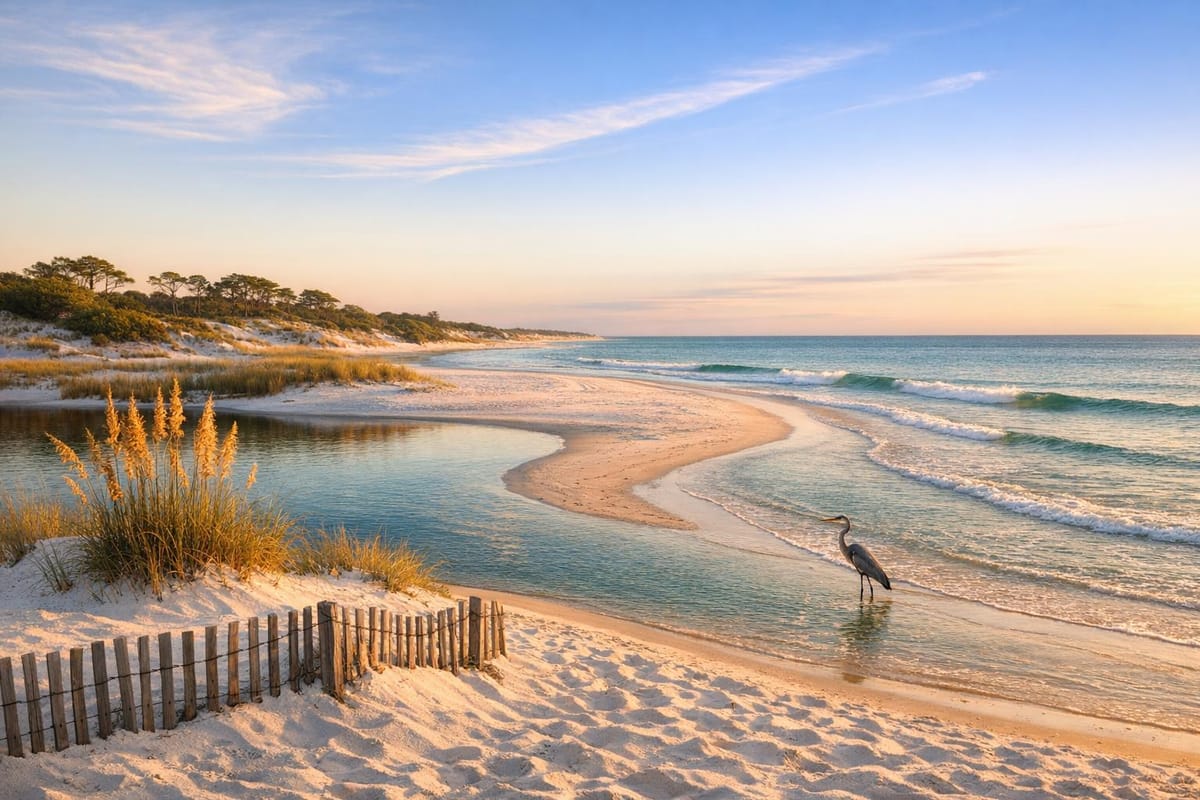
Grayton Beach, located along Florida's scenic 30A corridor, offers stunning photography opportunities with its white sand beaches, turquoise waters, and rare coastal dune lakes. This guide highlights the best spots, timing tips, and essential gear for capturing the park's diverse landscapes and wildlife.
Key Takeaways:
- Top Locations: Explore the pristine shoreline, Western Lake, and nature trails for unique shots.
- Best Times to Shoot: Golden hour (around sunrise or sunset) provides ideal lighting. In mid-February 2026, sunset is around 5:29 PM.
- Gear Essentials: Bring a tripod, polarizing filter, and a waterproof camera bag to protect your equipment.
- Wildlife Highlights: Spot Bald Eagles, dolphins, and sea turtles along the coast or rare shorebirds near coastal dune lakes.
- Seasonal Changes: Spring and fall offer quieter scenes, while summer is lively with beach activities.
Whether you're a beginner or a seasoned photographer, Grayton Beach's mix of natural beauty and wildlife ensures every visit offers something special. Let’s dive deeper into how to make the most of your photography trip.
Best Photography Locations at Grayton Beach
Grayton Beach State Park is a dream for photographers, offering a mix of stunning natural settings within a relatively small area.
The Shoreline and Ocean Views
This park boasts a one-mile stretch of pristine white sand beach, paired with shallow turquoise waters that perfectly capture the essence of the Gulf Coast. The Grayton Beach Pier is a standout spot, offering sweeping views of the Gulf. Its pilings create a natural frame, adding depth and interest to your shots. Nearby, the rolling sand dunes provide striking silhouettes, especially during sunrise or sunset.
"The combination of the golden hour lighting, the gentle sound of waves crashing, and the vibrant colors painting the sky make for truly enchanting photographs." – Crush 30a
Elevated dune walkovers give you a higher vantage point of the coastline, while footpaths winding through scrub oaks and saw palmettos can add texture and contrast to your compositions. For those bringing heavy equipment, Mobi-Mats at the day-use and cabin beach areas make transporting gear much easier.
Beyond the beach, Grayton Beach holds another hidden treasure for photographers: its rare coastal dune lakes.
Western Lake and Coastal Dune Lakes
Western Lake, covering approximately 100 acres, is a rare gem with tea-colored waters tinted by natural tannins. Coastal dune lakes like this are incredibly rare, found only in a few places worldwide, including the U.S., New Zealand, Australia, and Madagascar.
"Western Lake, Alligator Lake and Little Redfish Lake can all be accessed through Grayton Beach State Park where there are amazing hiking, kayaking and canoeing, and bird watching opportunities awaiting you." – SoWal
One of the most striking features is the "blowout", where the lake breaches the dunes and flows into the Gulf. This creates a dynamic scene with clear water merging into the ocean, perfect for capturing unique contrasts. Renting a kayak, canoe, or paddleboard opens up access to the lake's interior salt marshes, offering angles that are hard to reach from the shore. The lake outfalls, where brackish water meets the Gulf, are also prime spots for spotting and photographing rare shorebirds like snowy plovers and red knots. For those with larger setups, a boat ramp on Western Lake provides easy access, while quieter spots like Alligator Lake and Little Redfish Lake offer serene backdrops.
When you've finished capturing the water scenes, the park’s nature trails offer even more opportunities for diverse shots of wildlife and vegetation.
Nature Trails and Wildlife Areas
The park's nature trails are a haven for photographing local flora and fauna. The Grayton Beach Nature Trail, also called the Barrier Dunes Nature Trail, winds through sand dunes, pine flatwoods, and scrub ecosystems. Along the way, you'll find gnarled scrub oaks and wind-sculpted magnolias, which make for striking subjects.
"Scrub oaks – stunted, gnarled oak trees that have somehow thrived on the sand dune, despite the coastal wind and salty air." – Scott Holstein, Photographer
For those looking to explore further, the Timpoochee Trail spans 18 miles of paved paths, including a long bridge over Western Lake that provides elevated views of the lake and surrounding marsh. The Flatwoods Trail, located north of CR 30A, meanders through wet habitats that drain into Western Lake. While conditions can get soggy, the trail offers incredible chances to photograph unique wildlife and vegetation. Across the park’s 6.1 miles of trails, you might encounter woodpeckers, shorebirds, and a variety of plant life, all set against the backdrop of this diverse landscape. Entry to the park is $5 per carload or $4 for individuals.
When to Photograph Grayton Beach
Timing is everything when it comes to capturing stunning beach photos. At Grayton Beach, knowing the best times to shoot can transform your photography. You can even create a personalized South Walton travel plan to ensure you hit every location at the perfect moment.
Golden Hour and Sunset Photography
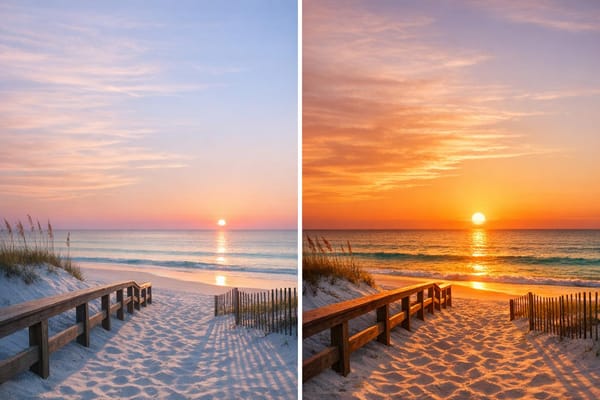
The magic begins about 30–45 minutes before sunset. This window, known as the golden hour, bathes the white sand and turquoise water in warm, soft light, creating breathtaking shots. In mid-February 2026, sunset happens around 5:29 PM, giving you about 11 hours of daylight to work with.
Arrive early to make the most of the changing light. Wet sand left behind by the receding tide acts as a natural mirror, reflecting the sky’s vibrant hues and adding depth to your photos. Western Lake is another gem at this time, as the golden light dances on its surface, offering unique compositions of water and sky.
Stick around for blue hour, the 15–20 minutes after sunset, when the sky shifts to deep blues, pinks, and purples. Photographer Scott Holstein describes this time as ideal for capturing dramatic textures:
"As the sun was sinking into the horizon, I made this image with the last light of the day".
This fading light is perfect for highlighting the rugged beauty of scrub oaks and saw palmettos on the dunes.
For early risers, first light begins around 6:03 AM in mid-February, about 25 minutes before sunrise. Morning sessions offer serene skies and a tranquil atmosphere, free from crowds. Plus, the free Grayton Beach Tram runs from 6:00 AM to 9:45 PM, making it easy to access the main beach for both sunrise and sunset photography.
| Date (Feb 2026) | First Light | Sunrise | Sunset | Last Light |
|---|---|---|---|---|
| Wed 11 Feb | 6:03 AM | 6:27 AM | 5:29 PM | 5:54 PM |
| Thu 12 Feb | 6:02 AM | 6:27 AM | 5:30 PM | 5:55 PM |
| Fri 13 Feb | 6:01 AM | 6:26 AM | 5:31 PM | 5:55 PM |
| Sat 14 Feb | 6:00 AM | 6:25 AM | 5:32 PM | 5:56 PM |
| Sun 15 Feb | 6:00 AM | 6:24 AM | 5:33 PM | 5:57 PM |
How Seasons Affect Your Photos
Seasonal shifts at Grayton Beach bring fresh opportunities for photographers. Each time of year offers something special.
Spring (March and April) is buzzing with energy due to Spring Break. You’ll find lively beach scenes and vibrant local activity. With the Spring Equinox landing on March 20, 2026, days grow noticeably longer, giving you more time to shoot.
Summer, from Memorial Day to Labor Day, is ideal for capturing action shots. Think fishing charters, paddleboarders on Western Lake, and families enjoying the Gulf. The Summer Solstice on June 21, 2026, marks the longest day of the year, perfect for extended photo sessions.
Fall offers a quieter, romantic vibe with fewer crowds and softer light. Events like the International Coastal Cleanup in September provide unique storytelling opportunities. The Autumnal Equinox on September 22, 2026, signals shorter days and a transition to the cozy tones of fall.
Winter, from Thanksgiving through Christmas, is a treasure trove for holiday-themed photography. Beach bonfires and festive decorations make for captivating night shots. While the Winter Solstice on December 21, 2026, brings the shortest day of the year, the dramatic winter light and sparse crowds more than make up for it. The evergreen scrub oaks and saw palmettos remain striking subjects no matter the season.
Camera Settings and Equipment
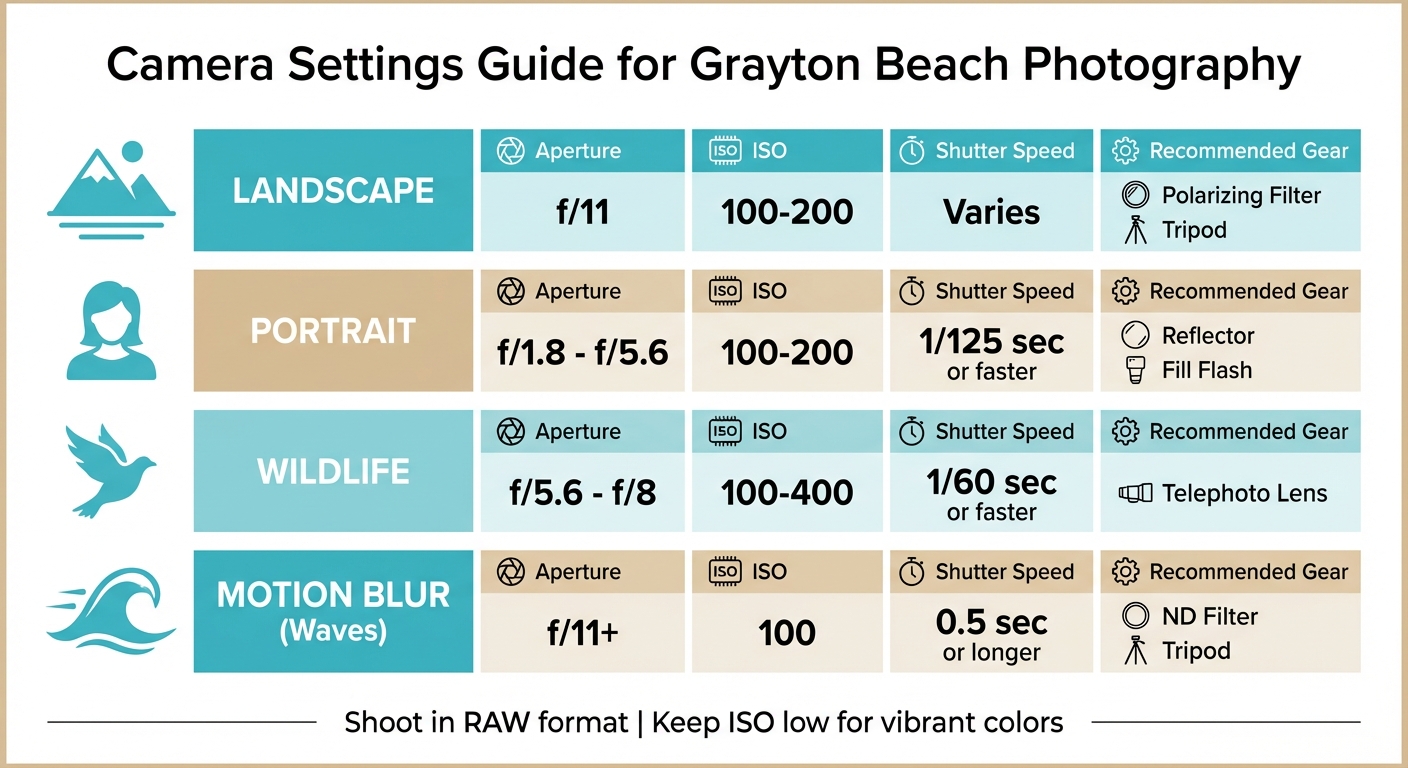
Grayton Beach Photography Guide: Camera Settings by Subject
Grayton Beach's turquoise waters, bright sands, and ever-changing light create a stunning backdrop for photography. To capture its beauty, you'll need the right gear and camera settings to handle the unique challenges of this coastal environment.
Camera Settings for Different Subjects
Start by shooting in RAW format. This gives you more control over exposure and color adjustments later, which is especially helpful when dealing with the high contrast of bright sand and reflective water. Keep your ISO low - around 100 or 200 - to minimize noise and maintain vibrant colors.
- Landscapes: Use an aperture of f/11 to keep details sharp from the foreground to the horizon. For a sunburst effect, choose f/11 or higher and position the sun partially behind an object, like the Grayton Beach Pier.
- Portraits: Opt for a wide aperture, such as f/1.8, to blur the background and make your subject pop. Pair this with a fast shutter speed (1/125 sec or faster) to freeze movement and keep your subject sharp.
- Wildlife and Action: Use a shutter speed of 1/60 sec or faster to capture crisp motion, whether it’s shorebirds in flight or people playing in the surf.
- Dreamy Water Effects: For silky, smooth waves, slow your shutter speed to 0.5 seconds or longer. Use a tripod and a Neutral Density (ND) filter to manage the bright light during long exposures.
Bright beach scenes can trick your camera into underexposing the image. To counteract this, adjust your exposure compensation to keep the whites of the sand bright and luminous.
| Subject | Aperture | ISO | Shutter Speed | Recommended Gear |
|---|---|---|---|---|
| Landscape | f/11 | 100-200 | Varies | Polarizing Filter, Tripod |
| Portrait | f/1.8 - f/5.6 | 100-200 | 1/125 sec or faster | Reflector, Fill Flash |
| Wildlife | f/5.6 - f/8 | 100-400 | 1/60 sec or faster | Telephoto Lens |
| Motion Blur (Waves) | f/11+ | 100 | 0.5 sec or longer | ND Filter, Tripod |
Gear to Bring for Beach Photography
The beach environment can be tough on your equipment, so bringing the right gear is crucial. A polarizing filter is a must-have for reducing glare and enhancing the ocean's blues. Pair it with a UV filter to protect your lens from sand and salt spray. As photographer Scott Davenport notes:
"Sand in the air will scrub away at the protective coating on your lens. Salt isn't good for it either. Over time, your filters will degrade but replacing them is far cheaper than replacing good glass."
A tripod is essential for sunrise, sunset, and long-exposure shots. For low-angle photos of shorebirds or tide pools, a ground pod (around $100) is a safer alternative to placing your camera directly on the sand. Conservation photographer Melissa Groo warns:
"Placing your camera directly on the sand for a low angle is an invitation to disaster."
When it comes to lenses, wide-angle options are great for capturing expansive landscapes, while prime lenses are more reliable in sandy conditions due to fewer moving parts. A lens hood can help reduce glare and prevent lens flare in bright conditions.
To protect your gear from the elements, use a rain sleeve like the LensCoat RainCoat (starting at $53) or even a simple plastic bag secured with an elastic tie. After your shoot, rinse your tripod legs with fresh water to prevent salt corrosion. Always carry a cleaning kit with essentials like:
- A hand-held air blower (e.g., Giotto Rocket Air Blaster, ~$15)
- A soft paintbrush for sand removal
- Microfiber cloths
- A spritz bottle with fresh water for cleaning salt residue
Minimize lens changes on the beach. If you need to swap lenses, do it in your car or under a clean towel to avoid sand and wind damage.
Composition Techniques
Once your settings and gear are dialed in, focus on composition techniques to make your photos stand out.
- Use Reflections: Wet sand and the mirror-like surface of Western Lake can create stunning symmetrical images, especially during golden hour.
- Layer Your Shots: Add depth by including sea oats in the foreground, sand dunes in the midground, and the Gulf horizon in the background.
- Leading Lines: Use the park’s boardwalks, nature trails, or the Grayton Beach Pier to guide the viewer’s eye through your photo.
- Capture Texture and Detail: Highlight the unique shapes of salt-wind scrub oaks, ripples in the sand dunes, or footprints in the sand.
- Add a Focal Point: Include a striking element like a lone beach chair, a rock formation, or a silhouette to give your photo a narrative.
- Rule of Thirds: Place the horizon along the upper or lower third of your frame for a more dynamic composition.
With thoughtful settings, the right gear, and creative composition, you’ll be well-equipped to capture the magic of Grayton Beach.
Planning Your Photography Trip
Thoughtful preparation can make your visit to Grayton Beach State Park both seamless and rewarding. From navigating the park to respecting its natural beauty, planning ahead ensures you're ready to capture its most stunning moments.
Getting to the Park and Finding Parking
Grayton Beach State Park is located at 357 Main Park Road, Santa Rosa Beach, FL 32459, with a $5 per vehicle entry fee. Covering nearly 2,000 acres, the park boasts Western Lake, pristine dunes, and over 4 miles of nature trails. Since the park often fills quickly, especially on weekends and holidays, arriving soon after the 8 a.m. opening is a smart move.
If your focus is photography around the village, including The Red Bar and Western Lake outfall, the Grayton Central parking lot is a convenient option. This lot has 204 free spaces and offers a complimentary tram service from 6 a.m. to about 10 p.m. daily. Another way to access the park is via the Timpoochee Trail, a 10-mile path for walking and biking along Scenic Highway 30A.
| Parking Location | Best For | Features |
|---|---|---|
| Main Park Road | Western Lake, trails, dunes | $5 fee, restrooms, boat ramp, close to coastal forest |
| Grayton Central Lot | Village area, Red Bar, downtown | 204 free spaces, tram service, air-conditioned waiting area |
| Garfield Street | Western Lake outfall, beach charters | Street parking, ADA access, freshwater showers |
Once you're there, remember to follow park rules to help protect this special environment.
Park Rules and Conservation Guidelines
Grayton Beach is home to a delicate ecosystem, so respecting conservation rules is essential. Use boardwalks to minimize erosion and protect native plants. The dunes are a critical habitat for the endangered Choctawhatchee beach mouse, so avoid walking off designated paths. Additionally, the beach serves as a nesting site for shorebirds like snowy plovers and least terns, as well as sea turtles - steer clear of marked nesting areas.
If you're bringing a pet, keep it leashed (6 feet max) and clean up after it. Florida law also requires all pets to be vaccinated against rabies. Stick to leave-no-trace principles by packing out all trash, and note that lifeguards are not present. Check the color-coded Warning Flag Signs for water conditions, and observe quiet hours from 11 p.m. to 8 a.m.
What to Pack
Packing the right items can make or break your photography trip. Grayton Beach's white sand dunes and pine flatwoods trails call for sturdy footwear. Photographer Nicole Bielenin recommends the short hike through the park's trails, describing it as well worth the effort.
- Clothing: Wear light-colored clothes, a wide-brimmed hat, and bring high-SPF sunscreen and insect repellent to combat the sun and humidity.
- Footwear: Comfortable hiking or walking shoes for the trails and sandals for the shoreline.
- Essentials: Carry plenty of water, especially if you're tackling the 4.5-mile trail around Western Lake.
For your photography gear, a waterproof camera bag is a must to protect against sand and water. A lightweight tripod can help you capture the perfect sunset shots. If you're staying overnight in the park cabins, don't forget beach towels, chairs, and umbrellas, as these aren't provided. Use the free tram service to easily transport your equipment around the park.
Conclusion
Grayton Beach stands out as a photographer's haven, offering a mix of landscapes that range from pristine shorelines and Western Lake to scenic nature trails and thriving wildlife habitats. This diversity ensures that every visit can inspire fresh perspectives, whether you're drawn to wildlife, coastal forests, or the charm of local architecture.
"Every click of the shutter captures a moment of pure magic." – Crush 30a
The natural beauty of Grayton Beach pairs perfectly with the techniques shared in this guide. By shooting in RAW format, using polarizing filters, timing your shots during the Golden Hour, and safeguarding your gear from sand and salt, you can capture the area's true essence. The coastal dune lakes - an extraordinary feature found in only four countries worldwide - make this spot even more special for landscape photographers.
Imagine hiking the trails at dawn, capturing the soft light filtering through stunted, wind-sculpted trees, or setting up your tripod to frame a breathtaking Gulf sunset. With these strategies in hand, you're ready to make the most of every photo opportunity.
So, pack your camera, plan your visit, and immerse yourself in the stunning coastal beauty. For more local insights and hidden photography spots along South Walton and the 30A coastline, head over to sowal.co.
FAQs
Do I need a permit for photography at Grayton Beach State Park?
Photography at Grayton Beach State Park typically doesn’t require a permit. That said, it’s important to stick to park rules and be aware of any restrictions, especially during peak times when access could be limited. To avoid any issues, review the park’s guidelines ahead of your visit.
What lens should I bring for Grayton Beach photos?
A wide-angle lens works perfectly for showcasing Grayton Beach’s sweeping landscapes, stunning sunsets, and intricate coastal features. To make those sunrise or sunset colors pop and cut down on glare, try using a polarizing filter. If you're focusing on close-ups - whether it’s wildlife, unique plants, or architectural details - a standard or telephoto lens is a great choice. Having a setup that includes both wide-angle and telephoto lenses gives you the freedom to capture a variety of scenes with ease.
How do I keep sand and salt off my camera gear?
When you're photographing at the beach, it's crucial to protect your camera gear from sand, dust, and salt. Here are some practical tips to keep your equipment safe:
- Use an air blower: After shooting, gently blow away sand and dust to prevent them from settling into sensitive parts of your camera.
- Carry a small brush: A soft brush can help you clean around buttons and lenses where debris might accumulate.
- Apply protective filters: Attach filters to your lenses to guard against scratches and salt spray. Always keep lens caps on when you're not shooting.
- Store gear in a waterproof bag: A waterproof bag adds an extra layer of protection, shielding your equipment from sand and moisture.
By taking these precautions, you can enjoy capturing stunning beach scenes without worrying about damaging your camera gear.