Ultimate Guide to Wildlife Paddling on 30A
Explore 30A’s coastal dune lakes to spot birds, dolphins, sea turtles, and alligators; includes top paddling spots, rentals, safety tips, and best times.
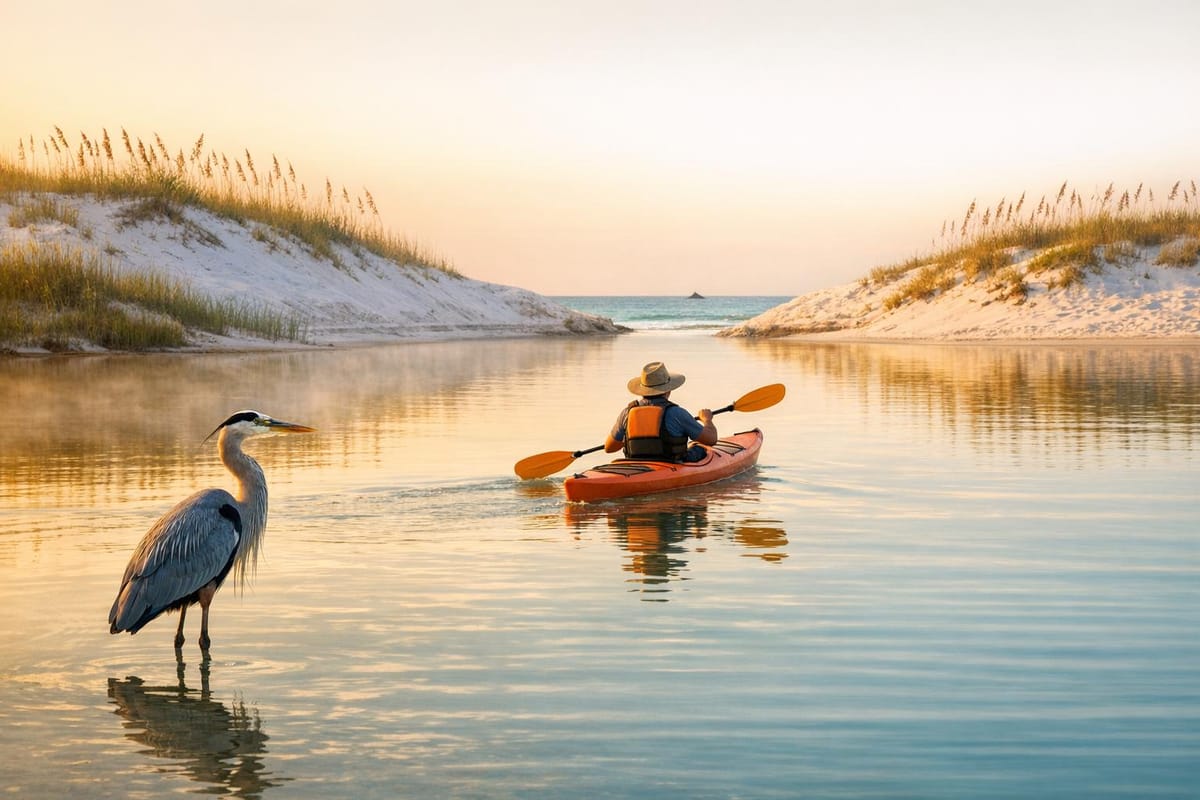
Paddling along Florida's 30A coastline offers a rare chance to experience its unique coastal dune lakes - ecosystems found in few places worldwide. These lakes, blending freshwater and saltwater, are home to diverse wildlife including herons, ospreys, alligators, and even dolphins. Early mornings provide the best opportunities for spotting active wildlife and enjoying calm waters.
Key highlights:
- Top Spots: Western Lake, Campbell Lake, Eastern Lake, and Deer Lake, each offering unique wildlife and scenery.
- Wildlife: Over 250 bird species, dolphins, sea turtle nesting season (May–October), and occasional black bear sightings.
- Gear Rentals: Options like The Rental Shop 30A and Glow Paddle provide equipment, including clear-bottom kayaks and paddleboards.
- Safety Tips: Wear life jackets, check water conditions, and maintain distance from wildlife to protect these delicate ecosystems.
Whether you're a beginner or a seasoned paddler, 30A's serene lakes and rich biodiversity make every trip unforgettable. Paddle responsibly, follow local guidelines, and enjoy the natural beauty of this exceptional region.
Top Paddling Spots for Wildlife on 30A
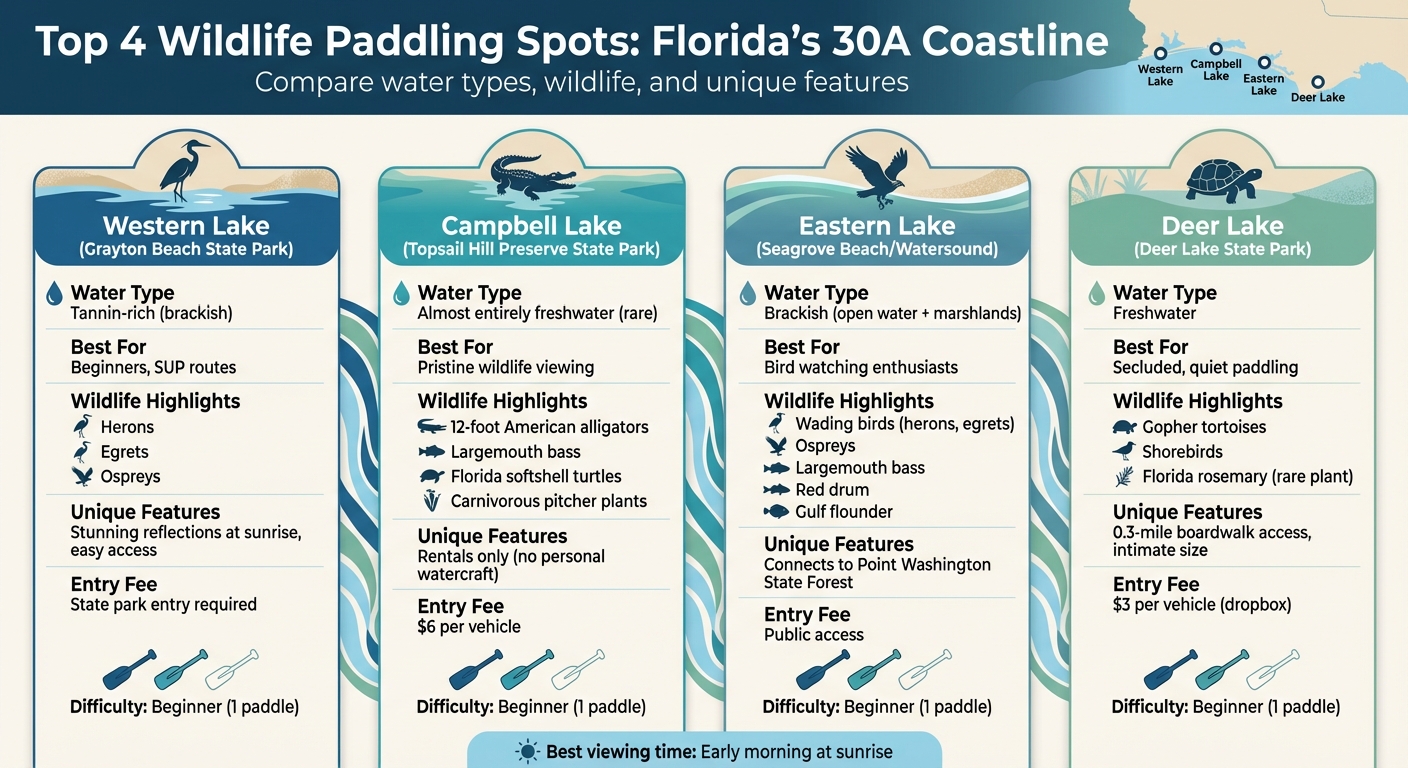
Top 4 Wildlife Paddling Spots on 30A Comparison Guide
The coastal dune lakes along 30A each have their own charm, offering diverse biodiversity, calm waters, and plenty of opportunities to spot wildlife. Whether you're a beginner or an experienced paddler, these serene spots are perfect for exploring nature.
Western Lake in Grayton Beach State Park
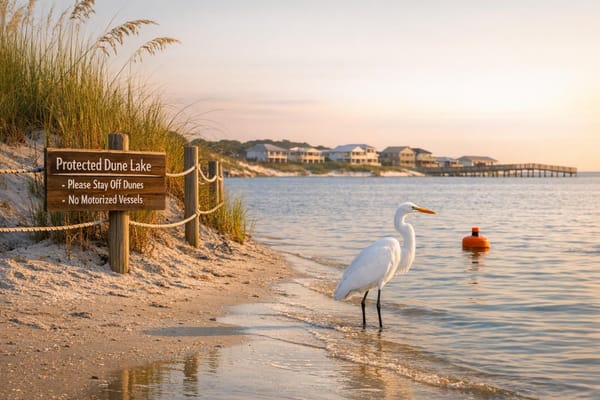
Western Lake is one of the most popular paddling destinations on 30A, known for its easy stand-up paddleboard routes and picturesque scenery. Nestled within Grayton Beach State Park, this lake is surrounded by habitats teeming with reptiles and amphibians. Early risers might catch sight of herons, egrets, and ospreys diving for their morning meal. The lake’s tannin-rich waters create stunning reflections, especially at sunrise. Its size and tranquil atmosphere make it a favorite for those seeking a peaceful paddle.
Campbell Lake in Topsail Hill Preserve State Park
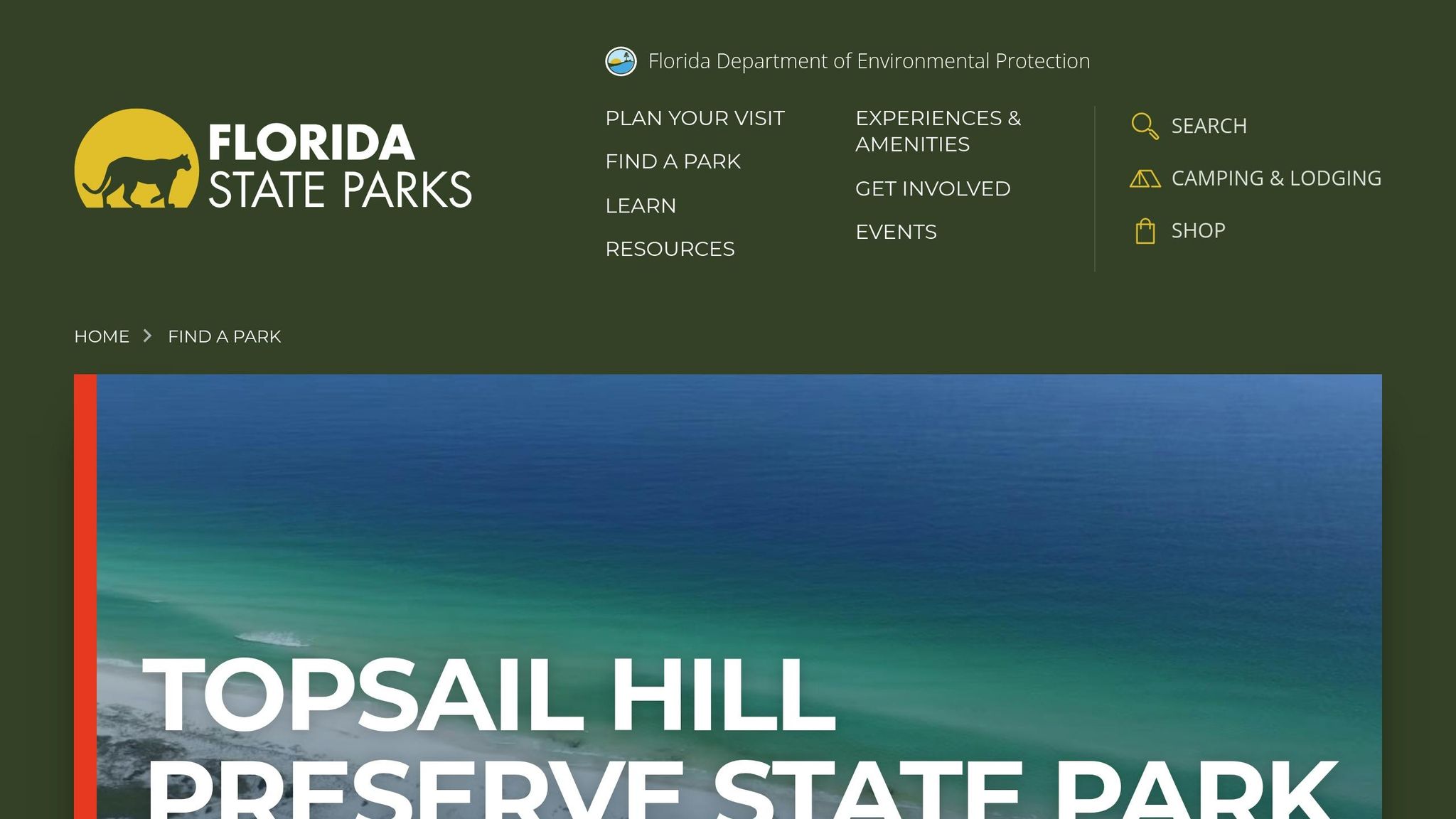
For a more pristine experience, head to Campbell Lake, a rare coastal dune lake that remains almost entirely freshwater. This unique environment supports a wide array of wildlife. Paddlers might encounter 12-foot American alligators, largemouth bass, catfish, and turtles like Florida softshells and pond sliders. Along the shoreline, carnivorous pitcher plants and other rare species thrive. Rentals are available at the park store, but personal watercraft aren’t allowed. Entry to the park costs $6 per vehicle.
"Alligators as large as 12‐feet long have been seen in the park." – Jill Tanner
Eastern Lake between Seagrove Beach and Watersound
Eastern Lake offers a unique blend of open water and marshlands, making it an excellent spot for wildlife enthusiasts. This lake connects to the Point Washington State Forest, giving paddlers seamless access to marshy areas rich with life. Wading birds like herons and egrets are common here, as are ospreys hunting in the shallows. The lake is also home to fish species such as largemouth bass, bluegill, striped mullet, red drum, and Gulf flounder. With its sandy shores and marshy edges, Eastern Lake is ideal for close-up encounters with birds and aquatic creatures.
Deer Lake in Deer Lake State Park
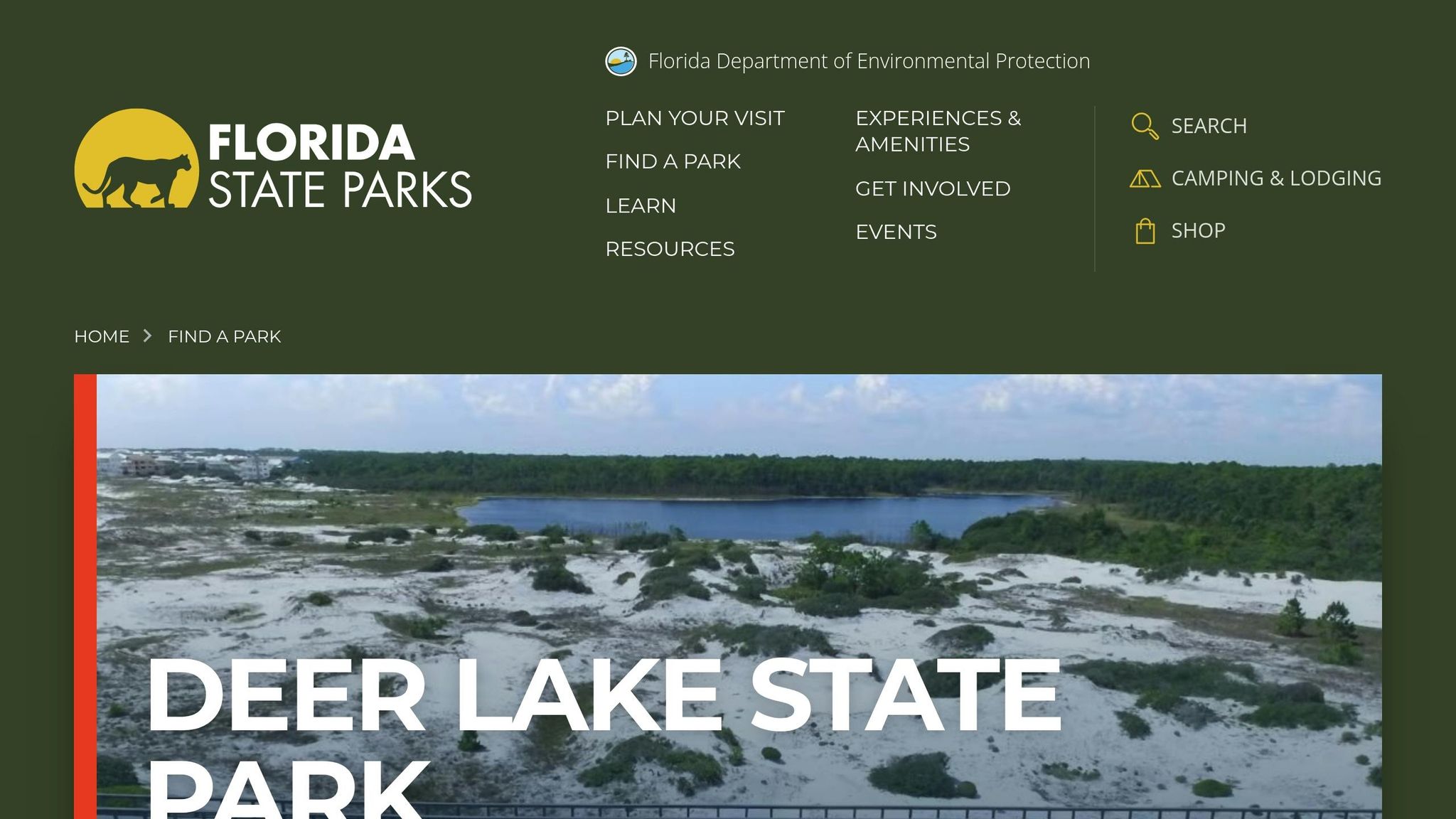
Tucked away among white sand dunes and pine flatwoods, Deer Lake promises a peaceful and secluded paddling experience. Accessed via a short 0.3-mile boardwalk, this lake is a haven for gopher tortoises, shorebirds, and rare plants like Florida rosemary, which produces a natural toxin to prevent other plants from growing nearby. The park charges a $3 entry fee per vehicle, payable through a dropbox. With its intimate size, Deer Lake is perfect for a quiet paddle, offering a chance to observe wildlife and unique plant life undisturbed.
These lakes highlight the incredible diversity of wildlife and landscapes along the 30A corridor, making each paddling adventure a memorable one.
Wildlife You Can See While Paddling
The coastal dune lakes and waterways along 30A are teeming with life, offering a chance to encounter over 250 bird species and a unique mix of freshwater and marine creatures. Every paddle trip feels like a new adventure - whether you're gliding over calm morning waters or navigating the marshy outflows. Here's a closer look at the wildlife you might encounter on your journey.
Dolphins and Marine Life in Gulf Outflows
Bottlenose dolphins are a common sight in the nearshore waters, especially where the coastal dune lakes connect to the Gulf of Mexico. Early mornings are prime time for spotting these playful creatures, as they often feed near the shore during these hours. The brackish waters in these areas also host mullet, redfish, and speckled trout. For a better view of the underwater activity, bring polarized sunglasses to spot fish and turtles moving beneath the surface.
South Walton is particularly special because it's the only place in the world where all five species of sea turtles - Loggerhead, Kemp's Ridley, Green, Leatherback, and Hawksbill - coexist. During nesting season, which runs from May to October, you might catch a glimpse of these incredible creatures. However, keep in mind that only about 1 in 1,000 baby sea turtles survive to adulthood. If you're paddling near outfalls, proceed carefully, as strong currents can occur when lakes breach into the Gulf.
Birds: Herons, Egrets, and Osprey
The dune lakes are a haven for waterfowl, with Great Blue Herons, Egrets, and Roseate Spoonbills being some of the most frequently spotted species. Great Blue Herons, with their striking size and long legs, are often seen patrolling the shorelines. During spring and fall migrations, flocks of Sandpipers also visit, feeding in the shallows before continuing their long journeys.
"We paddled Western Lake at sunrise and watched egrets lift off like clockwork. Quiet, calm, and so close to our rental." - Guest Review, Destin Dreamers
Osprey and Bald Eagles dominate the skies in this area, often seen perched high in the pines or diving into the water for fish. Osprey nests, typically built in tree canopies at least 30 feet high, are a common sight. As Rivard by Ocean Reef Vacation Rentals notes, "This apex predator [Osprey] is often found close to its mate, diving into bodies of water". To avoid disturbing the birds or their habitats, paddle slowly and keep your voice low near grassy areas or shallow shelves.
Land Mammals and Other Species
Beyond the waterways, the surrounding woodlands add another layer of wildlife to explore. These areas are home to whitetail deer, gopher tortoises, gray foxes, and marsh rabbits. Whitetail deer are especially abundant in Topsail Hill Preserve, often venturing to the water's edge during the cooler parts of the day. While rare, there’s also a chance of spotting a Florida black bear. Statewide, bear sightings have increased to nearly 6,200 annually. Catherine Rodriguez from the Walton County Sheriff's Office explains, "Bears have always occupied the woodlands around 30A, and even though 40 percent of the land here in South Walton is protected habitat, development has inevitably encroached onto their home".
Small alligators are part of the ecosystem too, along with forest lizards and other reptiles that thrive in the surrounding habitats. Dawn and dusk are the best times to spot land mammals, as they come to the water’s edge to drink or forage.
Gear and Rentals for Your Paddling Trip
Getting the right gear can make all the difference in your wildlife paddling adventure.
Basic Equipment Checklist
Paddling along 30A doesn't require a ton of equipment, but a few essentials are non-negotiable. You’ll need a kayak or stand-up paddleboard (SUP), a paddle, and a Coast Guard–approved life jacket (don’t forget to attach a whistle). Bring along a dry bag to keep your belongings safe and dry. Protect your skin and the environment with reef-safe sunscreen, and wear polarized sunglasses to spot underwater creatures more easily.
If you’re hoping to capture memories, some outfitters, like Coldwater Excursions, even include GoPros with their rentals.
Once you’re geared up, check out the many rental options available along 30A.
Where to Rent Paddling Gear on 30A
The Rental Shop 30A in Santa Rosa Beach is a top choice for high-quality equipment. They refresh their inventory yearly, ensuring you’ll always have brand-new gear. Their kayaks, available in single and double options, come with built-in seats for extra comfort - perfect for extended wildlife-watching trips. Plus, they offer delivery and pickup services across 30A if you don’t have a roof rack.
30A Beach Paddle Surf is another great option, with half-day rentals starting at $45 for a single kayak or SUP and $65 for a double kayak. They provide free delivery within a 10-mile radius of Inlet Beach and are known for their clean and well-maintained equipment. Their lineup includes BOTE boards, which are especially beginner- and kid-friendly.
For a unique experience, Glow Paddle at the Watercolor Boathouse rents clear-bottom kayaks equipped with underwater LED lights. Their 45-minute sessions, priced at $79, are perfect for exploring marine life after dark.
If you’re looking for eco-friendly options, Coldwater Excursions has you covered. They offer gear like underwater scooters and snorkeling equipment with their rentals. Recognized as the "#1 Eco Tour Company on 30A and Panama City Beach", they also provide free delivery and pickup.
"Stand up paddle boarding to Walton County is like snow skiing to Aspen or Breckenridge." - Jeff Archer, Founder, YOLO Board
For on-site rentals, Topsail Hill Preserve and activities at Grayton Beach State Park are convenient options with limited session times. Camp Helen State Park also offers rentals through Friends of Camp Helen, providing another accessible choice for paddlers.
Safety Tips and Best Times for Wildlife Viewing
Safety Guidelines for Paddlers
Exploring the waterways of 30A can be a thrilling experience, but it’s essential to take precautions to ensure both your safety and that of the local wildlife.
Start by checking the beach flag system for current water conditions. Here’s what the flags mean: green indicates low hazard, yellow signals moderate surf, red warns of strong currents, double red means the water is completely closed, and purple flags alert you to dangerous marine life, such as jellyfish or sharks. For real-time updates, you can text "FLAG" to 31279.
Always wear a U.S. Coast Guard-approved life jacket and paddle with a buddy. If you find yourself caught in a rip current, stay calm and swim parallel to the shore until you’re out of the current’s pull. Avoid paddling near piers, jetties, or steep drop-offs, as these areas often have unpredictable currents.
When it comes to wildlife, keep your distance. This is especially important around nesting birds, sea turtles, and marine mammals. Interfering with protected species, such as sea turtles, is illegal and carries serious consequences. In fact, there’s a $2,500 reward for information leading to the conviction of anyone disturbing turtles, their nests, or hatchlings. During nesting season (May 1 – October 31), use red-light flashlights at night. These lights are less likely to disorient turtles, as they can’t easily detect the red spectrum.
If you’re paddling near Point Washington State Forest or Grayton Beach, be aware that these areas are home to black bears. Florida records over 6,000 black bear sightings each year. To avoid startling a bear, travel in groups and make noise - clapping or singing works well. Should you encounter a bear, don’t run. Instead, stand your ground, speak calmly, lift your arms to appear larger, and slowly back away.
Timing your outing can make all the difference for both safety and wildlife viewing.
Best Times of Day and Year to Spot Wildlife
The early bird really does catch the worm - or in this case, the best wildlife sightings. Sunrise is an ideal time to observe nature: birds are active, dolphins feed close to shore, and woodland animals emerge before the day heats up. Planning your paddling trip around these hours can make your experience even more rewarding.
| Species | Best Viewing Season | Best Time of Day |
|---|---|---|
| Sea Turtles | May 1 – October 31 | Just before sunrise (for tracks) or at night (nesting) |
| Black Bears | Spring | Daytime (avoid nighttime hiking) |
| Birds | Year-round | Early morning |
| Dolphins | Year-round | Early morning |
Spring is the perfect time to spot Florida black bears, as they emerge from their winter lethargy and mothers begin caring for their cubs. Meanwhile, summer through early fall is prime for observing sea turtle tracks or nesting activity on the beaches. Birdwatchers are in luck year-round, as 30A is home to over 250 bird species.
"The best time to catch them [wildlife] in their most harmonious moments is first thing in the morning. From almost anywhere, if you wake before the sun, you'll find nature waiting." - Rivard by Ocean Reef Vacation Rentals
To maximize your experience, avoid the peak heat hours between 10:00 a.m. and 4:00 p.m., when wildlife tends to be less active and the risk of heat exposure is higher.
Guided Eco Tours for Better Wildlife Experiences
Benefits of Guided Wildlife Tours
Knowing how to book 30A wildlife tours can take your adventure to the next level. Expert guides bring a wealth of knowledge about the region's unique biodiversity, helping you spot species like Osprey, Blue Herons, and Gopher Tortoises - animals you might overlook on your own. They also know the best-kept secrets of the area, like secluded springs and hidden river sections that are often only accessible by boat. This expertise ties in perfectly with the safety tips and gear advice mentioned earlier.
Another big plus? Safety and convenience. Many tours provide essential gear, insurance, and transportation, eliminating the hassle of planning logistics. Guides also share fascinating insights about rare coastal dune lakes and the surrounding landscape.
These tours go beyond just convenience - they prioritize eco-conscious practices and conservation efforts. Local guides ensure responsible wildlife interaction by maintaining safe distances and following Leave No Trace principles. They also enforce rules like banning gas-powered boats in sensitive areas and ensuring proper waste disposal. These measures not only protect the environment but also enhance your overall paddling experience along 30A.
Recommended 30A Eco Tour Providers
If you're ready to explore with expert guidance and a commitment to conservation, these providers offer some of the best eco tours in the area.
Coldwater Excursions has earned the title of the #1 Eco Tour Company on 30A and Panama City Beach. Their guided tours cover Cypress Springs, Holmes Creek, and the Coastal Dune Lakes, with shuttle services available from Santa Rosa Beach and 30A to inland spring locations. Guests often rave about their top-notch equipment and the personalized, five-star service provided by the owner-operators.
Marine Adventures 30A, led by marine biologist Captain Ian Towne (M.S.), offers unique experiences in the Choctawhatchee Bay. Options range from $350–$400 for a 2-3 hour Dolphin Cruise to $550 for a 4-hour Marine Adventure. With an onboard bathroom, these trips are both comfortable and convenient for longer outings.
"Through Marine Adventures 30A, I aim to inspire a deeper appreciation for the ocean, helping to ensure our marine resources remain healthy for future generations." - Captain Ian Towne
Backwater Tours, run by Captain Andy Coleman, focuses on the lush, lesser-known side of the panhandle via the Choctawhatchee River. Using a 26-foot shallow-draft motorboat, Captain Coleman takes guests to remote springs before switching to kayaks and paddleboards for a closer look.
"Capt Andy had all the fun gear (paddle board, kayak, floating mat, etc.) to keep the kids (and the adults) entertained for hours. He knows a ton about the ecology and history of the area." - CL Tay, local resident
For an unforgettable experience, consider booking all-inclusive packages that include snorkeling gear and underwater scooters - perfect for spring-fed locations like Cypress Springs. To make the most of your trip, aim for sunrise or sunset tours when bird activity peaks and the waters are calmer.
Conclusion: Make the Most of Your Wildlife Paddling Adventure
As you gear up for your wildlife paddling journey, remember that enjoying the beauty of nature comes with the responsibility to protect it. The 30A region offers an extraordinary paddling experience, featuring rare coastal dune lakes and thriving ecosystems. These protected forests are home to more biodiversity than the rest of the continental United States combined, making this area a haven for wildlife enthusiasts.
For a rewarding experience, timing and observation are key. Early mornings, just before sunrise, are ideal for paddling - wildlife is more active, and the water is calm. Staying quiet and observant allows you to approach animals without alarming them or causing stress. Binoculars are a great tool for watching dolphins, nesting birds, and other creatures from a respectful distance. This thoughtful approach not only enriches your adventure but also helps preserve 30A's delicate ecosystems.
"A quiet observant paddler can enjoy excellent wildlife viewing from an on-the-water perspective." - Florida Fish and Wildlife Conservation Commission
To make your adventure truly meaningful, follow conservation principles. Practice Leave No Trace by packing out all trash, using reef-safe sunscreen, and avoiding protected dunes and nesting areas. If you're visiting during sea turtle nesting season (May 1 through October 31), take extra care - fill in any holes you dig in the sand and turn off beach-facing lights at night, as artificial light can disorient hatchlings. With only about 1 in 1,000 baby sea turtles surviving to adulthood, every small action can make a difference. Additionally, disturbing nesting sites is not only harmful but also against the law.
Whether you paddle solo or join a guided eco-tour, remember that your actions directly impact this fragile ecosystem. Paddle with care, soak in the beauty, and let 30A's wild wonders leave a lasting impression on you.
FAQs
When is the best time to spot dolphins while paddling along 30A?
The ideal time to catch a glimpse of dolphins while paddling along 30A is early in the morning, between 7:00 AM and 10:00 AM, or later in the afternoon, from 4:00 PM until sunset. These periods align with their feeding and activity routines, making them more likely to be spotted.
Dolphins tend to be most active during the warmer months, typically April through October, when the coastal waters are at their most inviting. Watch for their playful splashes near the shore or in calm bays - it’s a magical sight that adds a special touch to any paddling adventure!
What are the best tips for safe paddling around wildlife on 30A?
To have a safe and enjoyable paddling experience on 30A, it’s essential to respect the local wildlife and follow a few important guidelines. Always maintain a safe distance from animals like manatees, sea turtles, and alligators. Never try to approach, feed, or surround them. If any of these creatures come near your paddleboard or kayak, calmly back away to avoid disturbing them. This not only ensures your safety but also helps protect the animals and their natural behaviors.
Pay attention to protected areas, such as seagrass beds and wildlife sanctuaries. Disturbing these habitats can harm the delicate ecosystem. Sea turtles and their nests are federally protected, so avoid touching or interfering with them under any circumstances. If you're paddling in areas where alligators might be present, stay away from the shoreline and avoid being on the water during dusk or dawn, as these are their most active times.
By staying alert and mindful of these practices, you can enjoy a safe paddling adventure while contributing to the preservation of 30A’s incredible wildlife and natural habitats.
What are the best eco-friendly options for renting paddling gear on 30A?
For those who want to paddle along 30A while keeping the environment in mind, there are plenty of rental services that prioritize sustainability. Many local businesses provide gear like paddleboards and kayaks made with eco-friendly materials, designed to reduce their impact on the area’s fragile ecosystems.
Some standout options include family-run companies that take green practices seriously. These businesses often use electric-powered equipment and promote leave-no-trace principles, ensuring visitors respect the coastal dune lakes and surrounding wildlife. By choosing rentals with a focus on sustainability, you not only enjoy a memorable paddling adventure but also contribute to preserving 30A’s natural charm for years to come.