Wildlife Watching on 30A: Top Spots
A practical guide to 30A's best wildlife-watching spots—state parks, coastal dune lakes and bay areas—with species highlights, best times, accessibility, and tips.
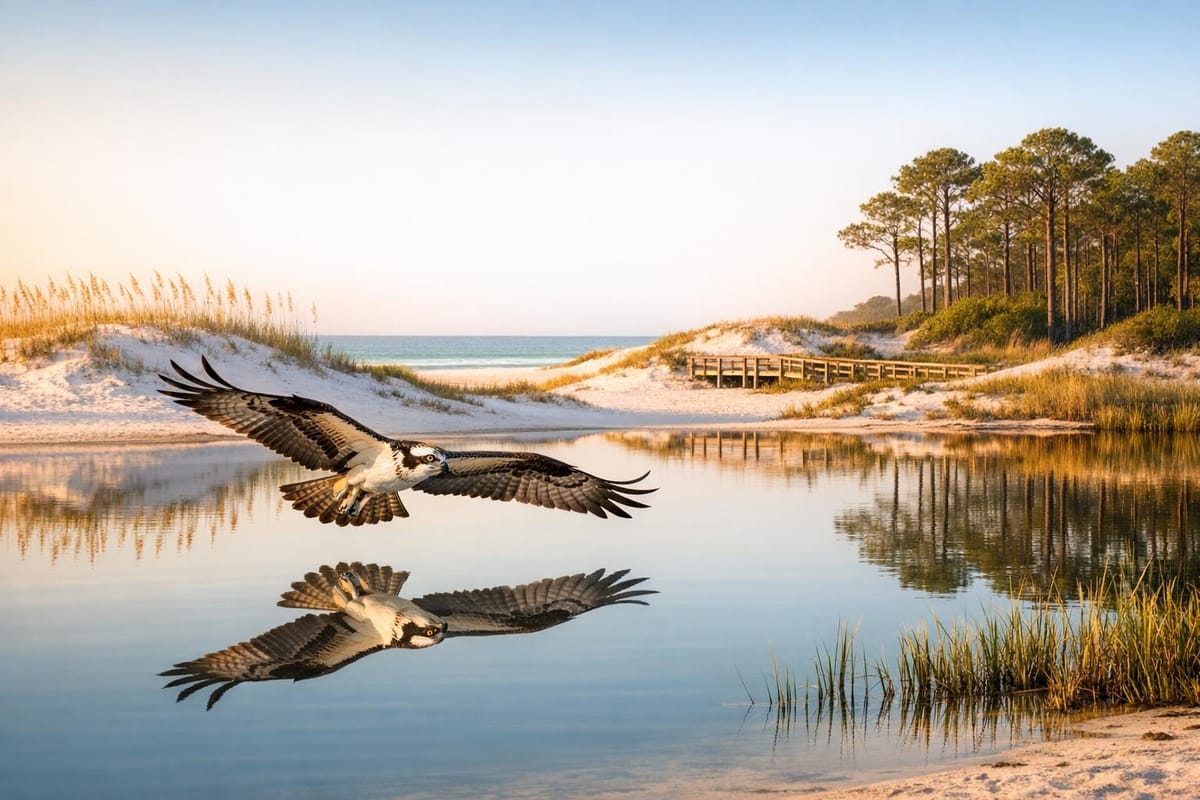
30A, located along Florida's Emerald Coast, is a haven for nature lovers with its rare ecosystems and diverse wildlife. From unique coastal dune lakes to expansive forests, this area offers incredible opportunities to observe birds, mammals, reptiles, and plants in their natural habitats. Whether you're a seasoned birder, a casual explorer, or visiting with family, each location has something to offer.
Key Highlights:
- Topsail Hill Preserve State Park: Spot ospreys, bald eagles, and red-headed woodpeckers. Features ADA-accessible trails and glamping options.
- Grayton Beach State Park: Home to Snowy Plovers, bald eagles, and the "Hobbit Hole" nature trail. Ideal for birdwatchers.
- Deer Lake State Park: A peaceful retreat with a boardwalk, rare coastal dune lake, and sightings of great horned owls.
- Point Washington State Forest: Perfect for experienced hikers with 15,000 acres of trails and sightings of red-cockaded woodpeckers.
- Choctawhatchee Bay & Eastern Lake: Best for water enthusiasts, offering views of alligators, herons, and dolphins. Kayaking and eco-tours are popular here.
Best Times to Visit:
- Early mornings (6:00–9:00 AM) for active wildlife.
- Fall for migratory bird patterns; spring for blooming wildflowers.
- Post-storm visits to see dramatic lake outfalls.
For families, Topsail Hill and Deer Lake provide easy access and short trails. Adventurers will enjoy the rugged terrain of Point Washington or kayaking in Choctawhatchee Bay. Always respect these fragile ecosystems and tread lightly to protect their rare beauty.
Exploring the Trails, Nature, and Beach of Deer Lake State Park in Santa Rosa, Florida
1. Topsail Hill Preserve State Park
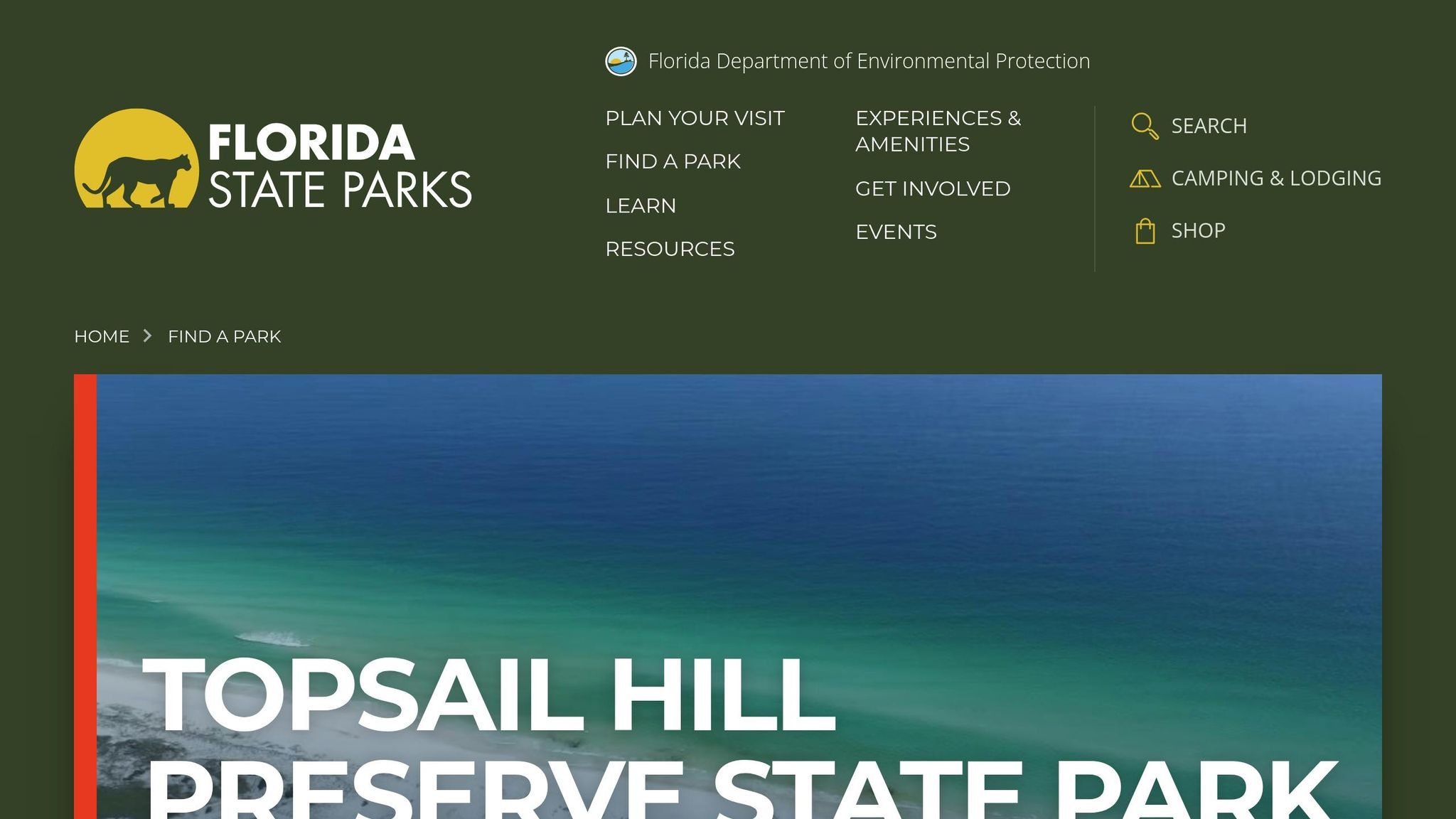
Topsail Hill Preserve State Park spans 1,640 acres of diverse wildlife habitats and boasts 3.2 miles of untouched beachfront. Its name comes from the 25-foot-tall sand dunes that resemble ship sails against the Gulf's horizon. The park also features five coastal dune lakes, including Campbell, Morris, and Stallworth, which add to its natural charm.
Wildlife Diversity
The park's varied landscape supports an impressive range of wildlife. It provides a haven for 13 imperiled species, including the endangered Choctawhatchee beach mouse and the fascinating carnivorous pitcher plants. Early risers might spot white-tailed deer, gray foxes, coyotes, raccoons, bobcats, or fox squirrels during the morning hours. In the wetlands and lakes, American alligators - some reaching lengths of up to 12 feet - are occasional visitors. Birdwatchers can observe over 200 bird species, such as ospreys, bald eagles, and red-headed woodpeckers. A standout feature is Campbell Lake, which is almost entirely freshwater. On rare occasions when it connects to the Gulf, it creates a fascinating mix of freshwater and saltwater fish, including bream, largemouth bass, flounder, and redfish. These unique characteristics make Topsail Hill a must-visit for wildlife enthusiasts along 30A.
Accessibility
Topsail Hill is designed with accessibility in mind. With over 10 miles of trails, including paved paths like the Beach Tram Trail and Campbell Lake Bird Trail, the park accommodates wheelchairs, strollers, and bicycles. A tram service shuttles visitors from the parking lot to the beach, making exploration more convenient. The park's entry fee is $6 per vehicle. Due to ongoing construction of a new Nature Walk and Visitor Center (set to finish by January 27, 2025), the tram stop and temporary restrooms have been relocated near the construction fence. For a quick and easy nature experience, the Coastal Dune Lakes Overlook is just a short 0.3-mile walk from the on-site coffee shop and offers stunning views of wading birds and ospreys without requiring a trek through deep sand.
Best Seasons/Times
To catch the best wildlife activity, visit between 6:30 AM and 8:30 AM, when deer and wading birds are most active. Calm, clear mornings are perfect for birdwatching, while light rain can also increase animal sightings. From March through October, the Butterfly Garden becomes a hotspot for pollinators. Visitors are encouraged to stay on marked trails to protect the delicate habitat of the endangered Choctawhatchee beach mouse.
Unique Features
Topsail Hill offers some standout amenities. The on-site coffee shop, Coastal Coffee & Cafe 30A, opens early at 6:30 AM, making it easy to grab a drink before exploring. For those looking to stay overnight, glamping options are available, and from May to October, visitors might witness sea turtles like Loggerheads and Greens nesting on the beach. Just offshore, an artificial snorkeling reef shaped like a seahorse adds an extra layer of adventure for water enthusiasts.
2. Grayton Beach State Park and Western Lake
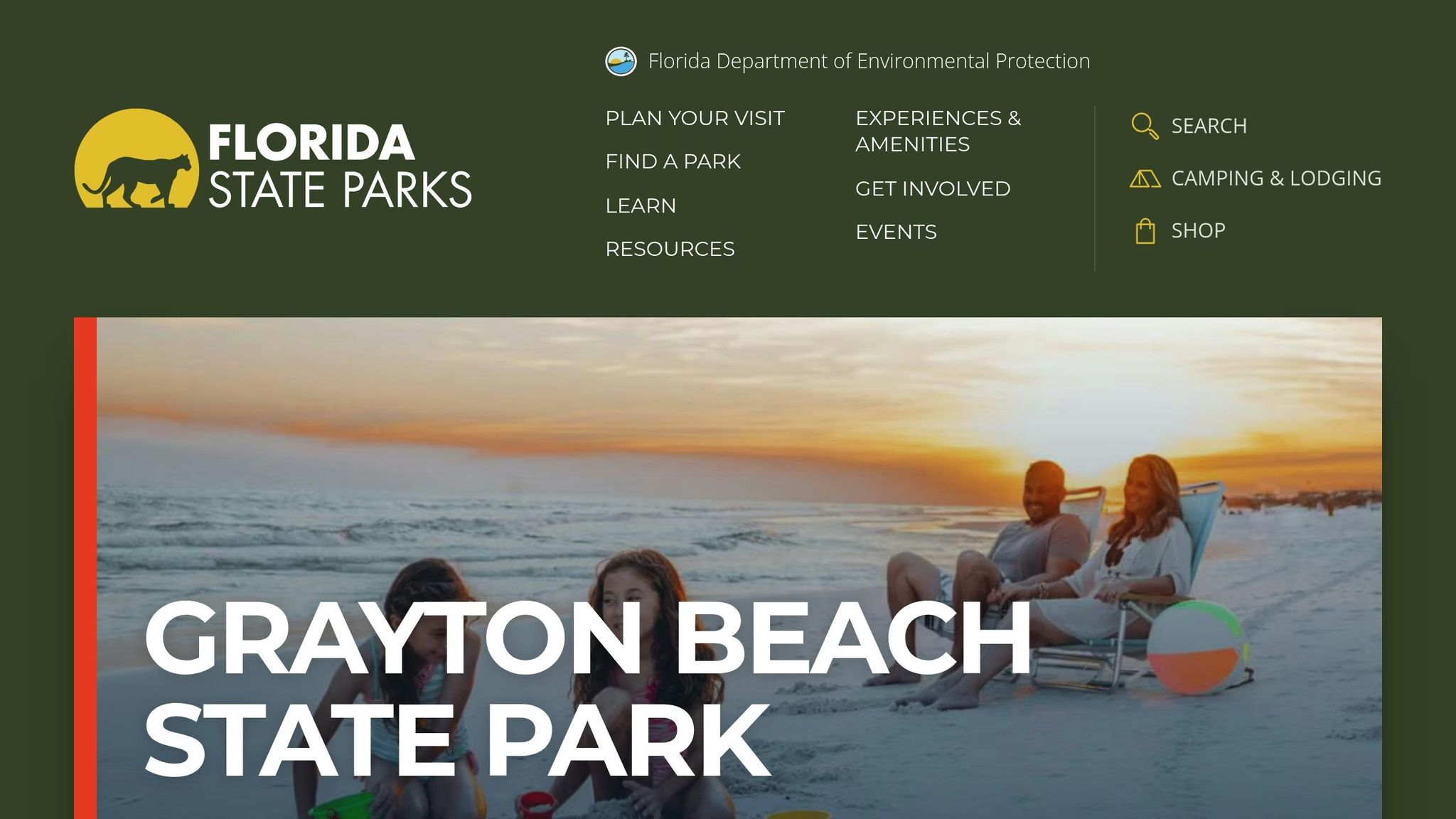
After the rich wildlife encounters at Topsail Hill, Grayton Beach State Park offers a fresh take on the Gulf Coast's natural beauty. Spanning 2,186 acres, this park is home to Western Lake, a rare 100-acre coastal dune lake - one of only a handful in the world.
Wildlife Diversity
Grayton Beach State Park is a haven for wildlife enthusiasts. Birdwatchers can spot Snowy Plovers nesting along the beach, Bald Eagles soaring above, and Great Blue Herons wading in the lake's shallows. Winter brings sightings of Northern Gannets, Bonaparte's Gulls, and even Common Loons near Western Lake. Beyond the birdlife, the park is home to Florida black bears, white-tailed deer, gray foxes, and American alligators, often seen near lake outfalls and wetlands. The park's diverse habitats - ranging from pine flatwoods and scrub oak forests to sand dunes - support an array of species. Plant lovers will appreciate sandhill milkweed, woody goldenrod, and the striking lavender blooms of lupine in spring.
Accessibility
The park is budget-friendly, with entry fees set at $5.00 per vehicle or $4.00 for individual visitors. For those eager to explore, trails include a 1-mile Nature Trail winding through sand dunes and oak canopies, and a 4.2-mile Hike and Bike Trail that leads to the north shore of Western Lake. Visitors can borrow optics and field guides at the ranger station to enhance their experience. Accessibility is a priority, with ADA-compliant restrooms, parking, and two accessible duplex cabins among the 30 overnight options. Beach wheelchairs and Mobi-Mats ensure easy access to the shore.
Best Seasons/Times
Wildlife observation is rewarding any time of the year. Resident species like Bald Eagles, Ospreys, and Great Blue Herons are visible year-round. During shorebird nesting season, parts of the beach may be cordoned off to protect Snowy Plover nests. Seasonal ranger-led programs, such as guided wildlife walks, add to the experience, so be sure to check the schedule when you arrive. If you plan to hike the Flatwoods Trail, waterproof footwear is a smart choice, as the area near Western Lake can get soggy.
Unique Features
One of the park’s standout features is the enchanting "Hobbit Hole", where wind-sculpted trees create a tunnel-like canopy. Offshore, the artificial "Turtle Reef", located 750 feet from the beach, offers a great snorkeling spot and supports diverse marine life. For those eager to explore Western Lake, canoe and kayak rentals are available at the ranger station. The Barrier Dune Nature Trail also offers a peaceful retreat under a shaded oak canopy, where visitors can pause to read the reflective "Prayer of the Woods". These features make Grayton Beach State Park not just a place to observe nature but a destination to connect deeply with it.
3. Deer Lake State Park
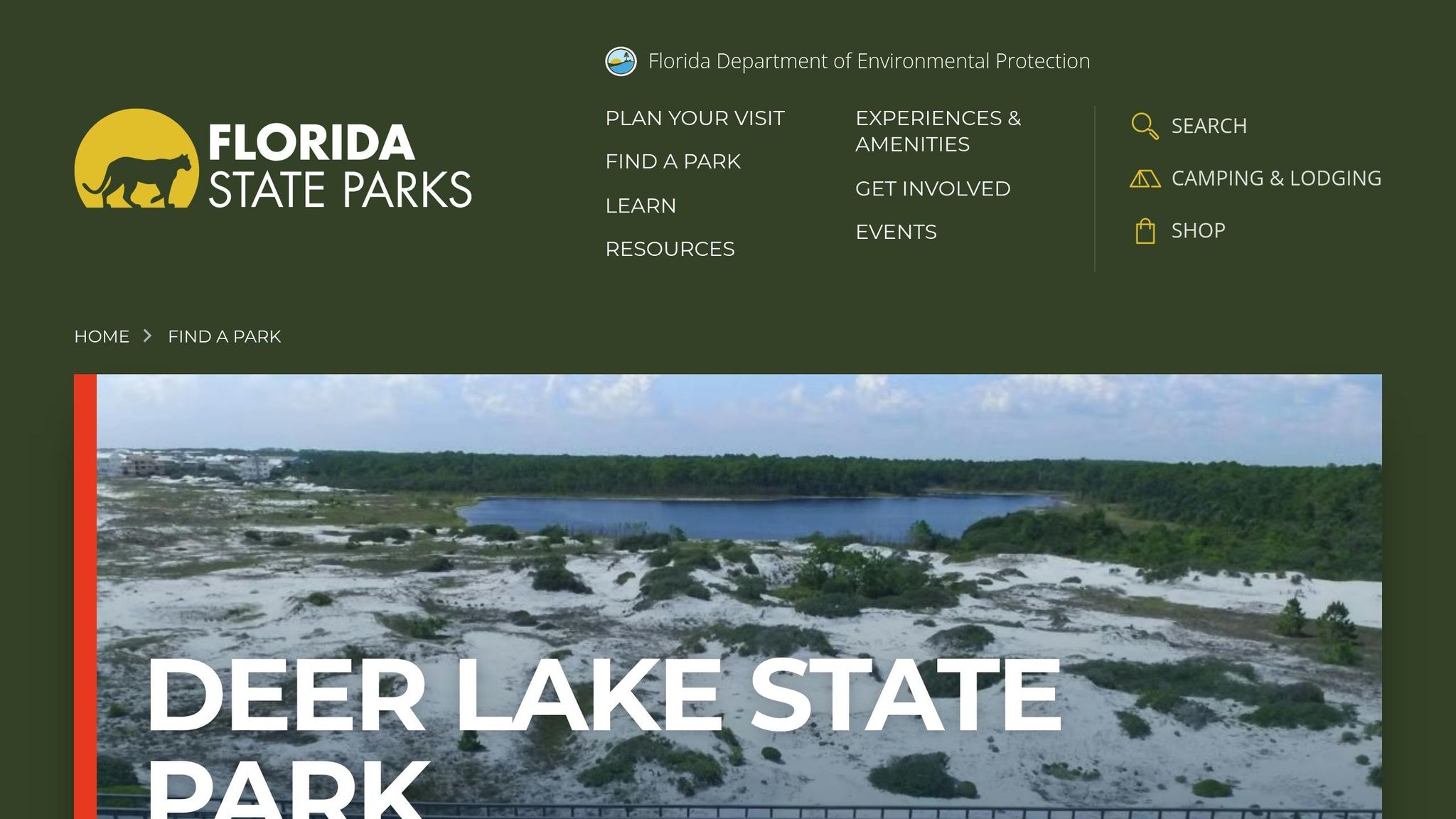
Deer Lake State Park offers a close-up experience with nature, spanning 1,920 acres and covering 11 distinct natural communities, including cypress domes, blackwater streams, wet prairies, and coastal dunes. This park provides a peaceful retreat into Florida's rich ecosystems.
Wildlife Diversity
The park's diverse habitats are home to an array of wildlife. Visitors might spot Florida black bears, coyotes, and white-tailed deer roaming the area. Birdwatchers are in for a treat, with Great Horned Owls appearing at dusk, Prothonotary Warblers during migration, and Red-headed Woodpeckers throughout the year. Early mornings and late afternoons bring sightings of ospreys, bald eagles, herons, and egrets. On the beach, sea turtles nest and hatch, adding to the park’s ecological significance.
Deer Lake also supports rare plant species, including Curtiss' sandgrass, Gulf Coast lupine, spoonflower, and endangered pitcher plants, which thrive in a 312-acre restored wet prairie.
Accessibility
The park is easy to access, with entry fees set at $3.00 per vehicle or $2.00 for pedestrians and cyclists, payable at an honor box. An elevated 0.3-mile boardwalk leads visitors across delicate dunes to the Gulf shore. Amenities include ADA-accessible picnic tables, grills, and restrooms, as well as a 1.5-mile nature trail located on the north side of County Road 30-A.
During peak times, the park may reach capacity and temporarily close, so plan accordingly. Be sure to refill your water bottle at the trailhead restrooms, as the walk to the lake outfall is fully exposed to the sun. Sunrise and post-storm visits offer the best chances for wildlife encounters.
Best Seasons/Times
Sunrise is an ideal time to observe active birds and shy mammals near the coastal dune lake. Summer brings a burst of wildflowers around the cypress domes. After heavy storms, the beach becomes a spectacle with the dramatic "outfall", where the lake's tannic freshwater carves through dunes to meet the Gulf. Moving quietly and slowly ensures minimal disturbance to wildlife.
Unique Features
What truly sets Deer Lake State Park apart is its globally rare coastal dune lake. This unique ecosystem exists only in Florida, Australia, and Africa. The dunes are dotted with Florida rosemary shrubs, which naturally suppress competing vegetation.
"The sand is sugar white and the Gulf's waters are emerald green - an invitation to experience Deer Lake's solitude".
4. Point Washington State Forest
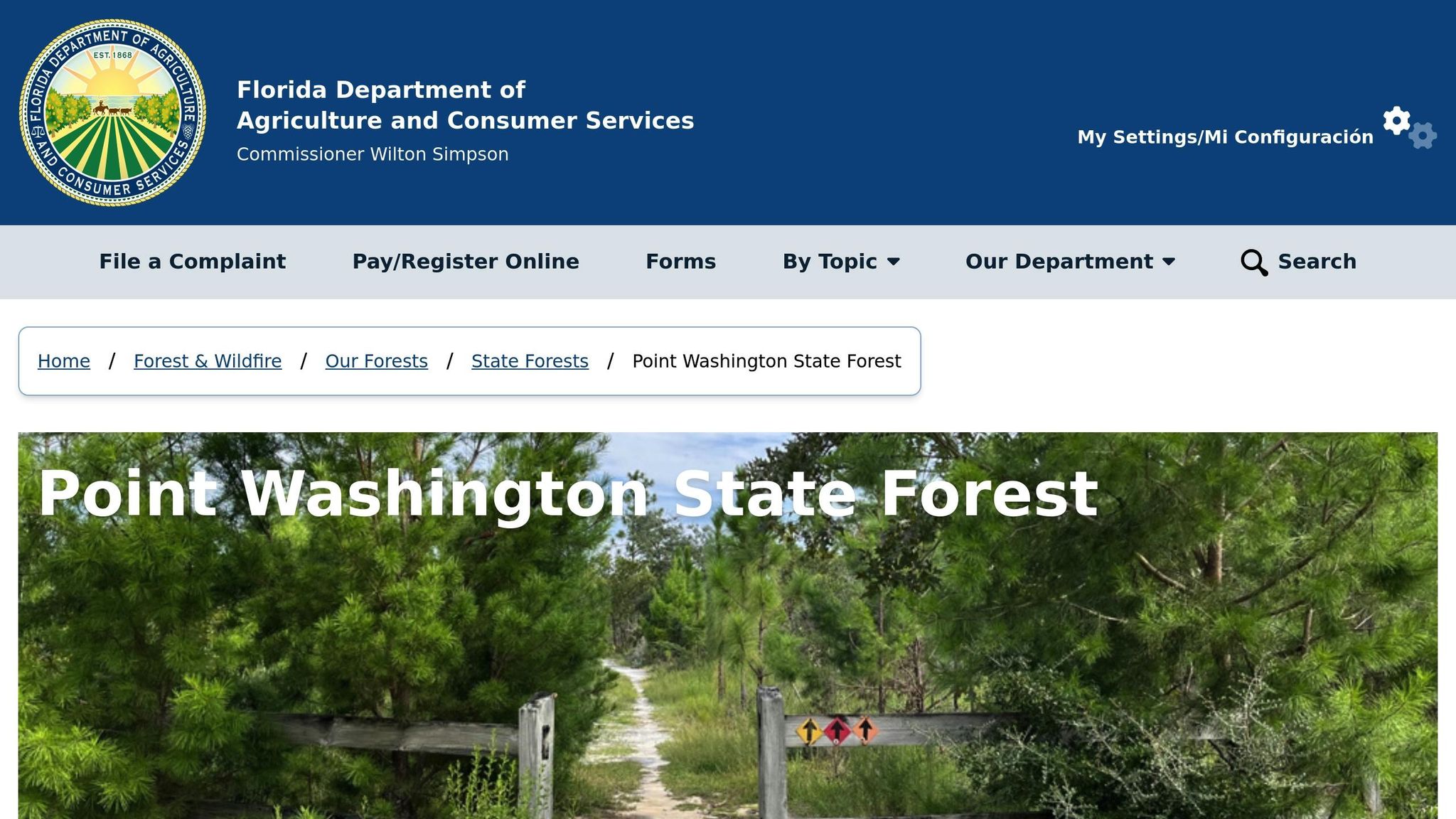
Point Washington State Forest covers over 15,000 acres of sandhills, pine flatwoods, cypress swamps, and wet prairies. Nestled between US Highway 98 and County Road 30A, this area is carefully managed by the Florida Forest Service, which uses prescribed burns to maintain its ecosystems and encourage habitat diversity.
Wildlife Diversity
The forest is a haven for wildlife enthusiasts, offering over 27 miles of trails for exploration. White-tailed deer are commonly spotted, particularly during the fall hunting season. The area is also home to unique plant species, including Curtiss' sandgrass and the rare white-topped pitcher plants, making it a remarkable destination for nature lovers.
Accessibility
Getting into the forest is straightforward, with ten public access points available. Popular trailheads include:
- Eastern Lake Trailhead (CR 395): Features parking for visitors.
- 30A Trailhead (Seagrove): Located near The Lodge 30A at Greenway Station.
- Longleaf Pine Greenway (Blue Mountain): Found at the end of Satinwood Drive.
A $2 day-use fee is required, payable at self-pay stations. While interior roads are open to vehicles, a 4-wheel drive is recommended due to soft sand and water crossings.
Best Seasons/Times
Since the forest is a designated Wildlife Management Area, seasonal hunting takes place. Visitors should check hunting dates in advance and wear an orange vest during fall deer season for safety. Early mornings are ideal for wildlife observation. For those looking to camp, primitive sites at Eastern Lake are available for $10 per night, with reservations required through Reserve America.
Unique Features
Point Washington State Forest serves as an essential upland watershed for the coastal dune lakes along the 30A coastline. Among its highlights is the 7.9-mile Longleaf Greenway Trail, which links the Eastern Lake Trailhead with Blue Mountain Beach. Future plans aim to connect this trail to Grayton Beach, Deer Lake, and Topsail Hill State Parks, creating a broader network of trails that integrate the region's habitats and destinations. This interconnected system enhances the overall experience, blending diverse ecosystems with 30A's natural beauty.
5. Choctawhatchee Bay and Eastern Lake Areas
Choctawhatchee Bay and Eastern Lake offer a wildlife experience that feels entirely different from the cozy, walkable state parks along the Gulf. The bay itself is massive, stretching about 30 miles in length and 4 to 6 miles across, forming an expansive estuarine system that dwarfs the smaller coastal preserves. Eastern Lake, on the other hand, is one of the world’s rare coastal dune lakes. Its broad outfall occasionally opens to the Gulf, creating a fascinating brackish environment where freshwater and saltwater species mingle. Together, these areas provide a more open and adventurous setting for nature lovers.
Wildlife Diversity
If you’re hoping to spot alligators, this is the place to be. The bay’s undeveloped rivers and canals make an ideal home for these reptiles, as well as for ospreys and bald eagles. Dolphins are often seen chasing mullet in the shallow, grassy waters of the bay, while the endangered giant gulf sturgeon migrates through these waters to spawn in the Choctawhatchee River. Eastern Lake, with its mix of freshwater and marine influences, attracts wading birds like herons, egrets, and ibis, alongside turtles and mullet. After heavy rain, when the lake’s outfall opens to the Gulf, you might even catch a glimpse of stingrays or redfish in the brackish channel where the tannin-rich water flows into the sea.
Accessibility
Eastern Lake is best explored by kayak or paddleboard, with public launch points available in Seagrove. For Choctawhatchee Bay, Thomas Pilcher Park offers an excellent spot to observe water birds without needing to get on the water. The bay also features boat ramps, fishing piers, and access points like Eden Gardens State Park and the parks near the 331 bridge. Whether you prefer exploring by land or water, there are plenty of options to enjoy these habitats. For a relaxing way to combine wildlife viewing with dining, check out bay-side restaurants like The Bay or North Beach Tortilla Co., which offer scenic views of the water.
Best Seasons/Times
Eastern Lake is magical at sunrise, when the water is calm, and birds are most active. Twilight is another great time, especially if you want to hear Great Horned Owls calling from nearby wooded areas. The lake’s outfall is a must-see after heavy rains, but stay onshore to avoid the strong currents. Polarized sunglasses can help you spot fish and turtles below the dark, tea-colored water. If you’re paddling, keep your movements slow and your voice soft to avoid disturbing nesting birds and turtles near the lake grasses.
Unique Features
The tannin-stained water in Eastern Lake, caused by pine needles and decaying leaves, is a natural sign of a thriving ecosystem - not pollution. With only 15 coastal dune lakes in South Walton, these ecosystems are incredibly rare. For a closer look at Choctawhatchee Bay, consider a private river excursion into its canals, which are perfect for spotting alligators and exploring the bayou environment. While state parks offer a more compact, accessible experience, the bay’s vast waters invite longer eco-tours and fishing adventures, making it a haven for those who crave a broader connection with nature.
Comparison of Each Location
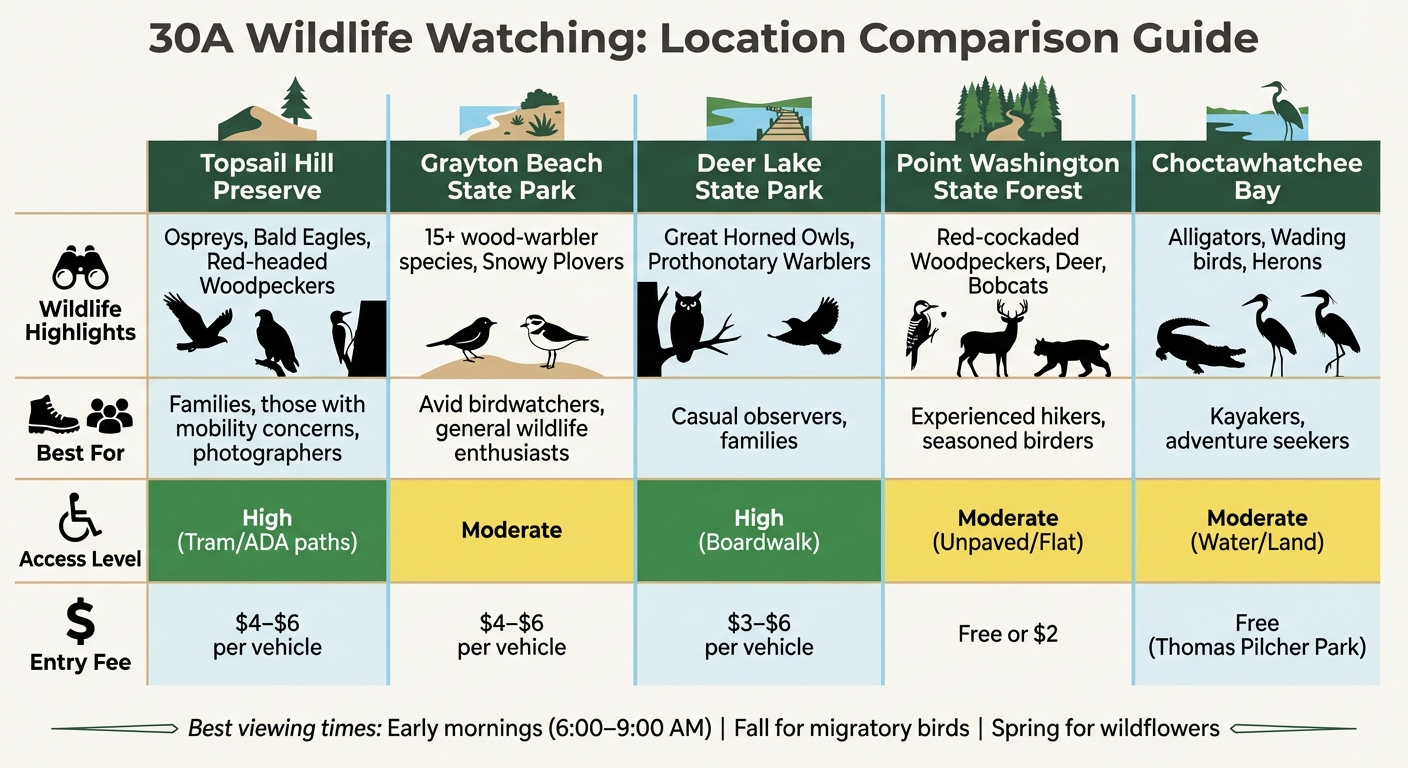
30A Wildlife Watching Locations Comparison Guide
Here's a quick breakdown of how these 30A wildlife spots stack up against each other.
Each destination has its own charm. Topsail Hill Preserve stands out for its easy access, thanks to tram services and ADA-compliant paths. Grayton Beach, on the other hand, is a haven for birdwatchers, boasting over 15 wood-warbler species and offering loaner optics at the ranger station. For a more serene experience, Deer Lake provides a peaceful boardwalk near nesting areas.
If you're up for a challenge, Point Washington State Forest offers 15,000 acres of rugged terrain with unpaved trails, making it perfect for seasoned hikers and birders. It's also a prime spot to see endangered Red-cockaded Woodpeckers and deer. Choctawhatchee Bay is the go-to for observing alligators, wading birds, and herons. While a kayak or boat enhances the experience, Thomas Pilcher Park offers a solid land-based view.
Timing matters, too. Fall (September–November) is ideal for migratory birds, while spring showcases breeding behaviors. Early mornings (6:00–9:00 AM) are the best for general wildlife activity, with dusk being prime for owl sightings. Winter is great for spotting waterfowl at Grayton Beach, and summer highlights resident species.
Here’s a table to help you compare these spots at a glance:
| Location | Wildlife Highlights | Best For | Access Level | Entry Fee |
|---|---|---|---|---|
| Topsail Hill Preserve | Ospreys, Bald Eagles, Red-headed Woodpeckers | Families, those with mobility concerns, photographers | High (Tram/ADA paths) | $4–$6 per vehicle |
| Grayton Beach | 15+ wood-warbler species, Snowy Plovers | Avid birdwatchers, general wildlife enthusiasts | Moderate | $4–$6 per vehicle |
| Deer Lake | Great Horned Owls, Prothonotary Warblers | Casual observers, families | High (Boardwalk) | $3–$6 per vehicle |
| Point Washington | Red-cockaded Woodpeckers, Deer, Bobcats | Experienced hikers, seasoned birders | Moderate (Unpaved/Flat) | Free or $2 |
| Choctawhatchee Bay | Alligators, Wading birds, Herons | Kayakers, adventure seekers | Moderate (Water/Land) | Free (Thomas Pilcher Park) |
For an easygoing visit with diverse wildlife, Topsail Hill or Deer Lake are great picks. If you're after more rugged adventures, Point Washington or Choctawhatchee Bay might be more your speed. To help organize your trip, you can use a South Walton itinerary generator to map out your wildlife stops.
Conclusion
The five wildlife watching spots along 30A each bring something special to the table. For families with young kids, Topsail Hill Preserve State Park and Deer Lake State Park are excellent choices. Topsail Hill offers a tram service and ADA-accessible paths, making it easy for everyone to explore. Meanwhile, Deer Lake's short, elevated boardwalk provides a safe way for children to enjoy views of the coastal dune lake. Keep family visits short - 20 to 40 minutes is often enough to catch highlights like pelicans, dolphins on calm days, and ghost crabs scuttling around at sunset.
For those with specific wildlife interests, 30A has even more to offer. Grayton Beach is ideal for birdwatchers, with wood-warblers and snowy plovers making regular appearances. If you're up for a challenge, Point Washington State Forest has over 15,000 acres and 27+ miles of trails, where you might spot the endangered Red-cockaded Woodpecker. For water enthusiasts, Choctawhatchee Bay delivers with its mix of wading birds, herons, and other aquatic wildlife, perfect for kayakers and adventurers alike.
A word of caution - always keep an eye on kids near freshwater areas, as alligators may be present. And don’t forget to tread lightly; these ecosystems are rare and delicate. South Walton’s 15 coastal dune lakes are among the few of their kind worldwide, making them a treasure worth protecting.
For more information on 30A activities, trail updates, birding events, or planning a multi-stop wildlife adventure, check out sowal.co - your go-to guide for everything along the South Walton and 30A coastline.
FAQs
Which 30A spot is best for kids?
Topsail Hill Preserve is an ideal spot along 30A for families with kids, and the Deer Track Trail is a standout feature. This easy, shaded 1-mile loop is perfect for little ones or those pushing strollers. With benches along the way, restrooms, and picnic areas nearby, it offers everything you need for a relaxing family outing.
Do I need a kayak to see wildlife?
No, you don’t need a kayak to enjoy wildlife along 30A. While kayaking lets you get up close to coastal dune lakes and bays, there are plenty of other ways to spot wildlife. Parks, beaches, and scenic areas like Grayton Beach State Park and Topsail Hill Preserve offer fantastic opportunities to see animals such as dolphins, birds, and even deer in their natural environments. Whether you’re on the water or exploring on foot, nature is all around you.
What gear should I bring for wildlife watching?
For wildlife watching on 30A, pack binoculars with at least 7x magnification to observe animals clearly from a distance without causing any disturbance. A good field guide can help you identify the various species you encounter, and a flashlight is handy for spotting animals' eyeshine during nighttime outings. To safeguard your gear, opt for weather-sealed cameras and lenses. With these tools, you’ll be ready for an unforgettable wildlife experience on 30A.