Study: 30A Growth and Social Shifts
30A's shift from quiet coast to a year‑round luxury hub: population surge, $7.2B tourism impact, real estate boom and pressure on services and beaches.
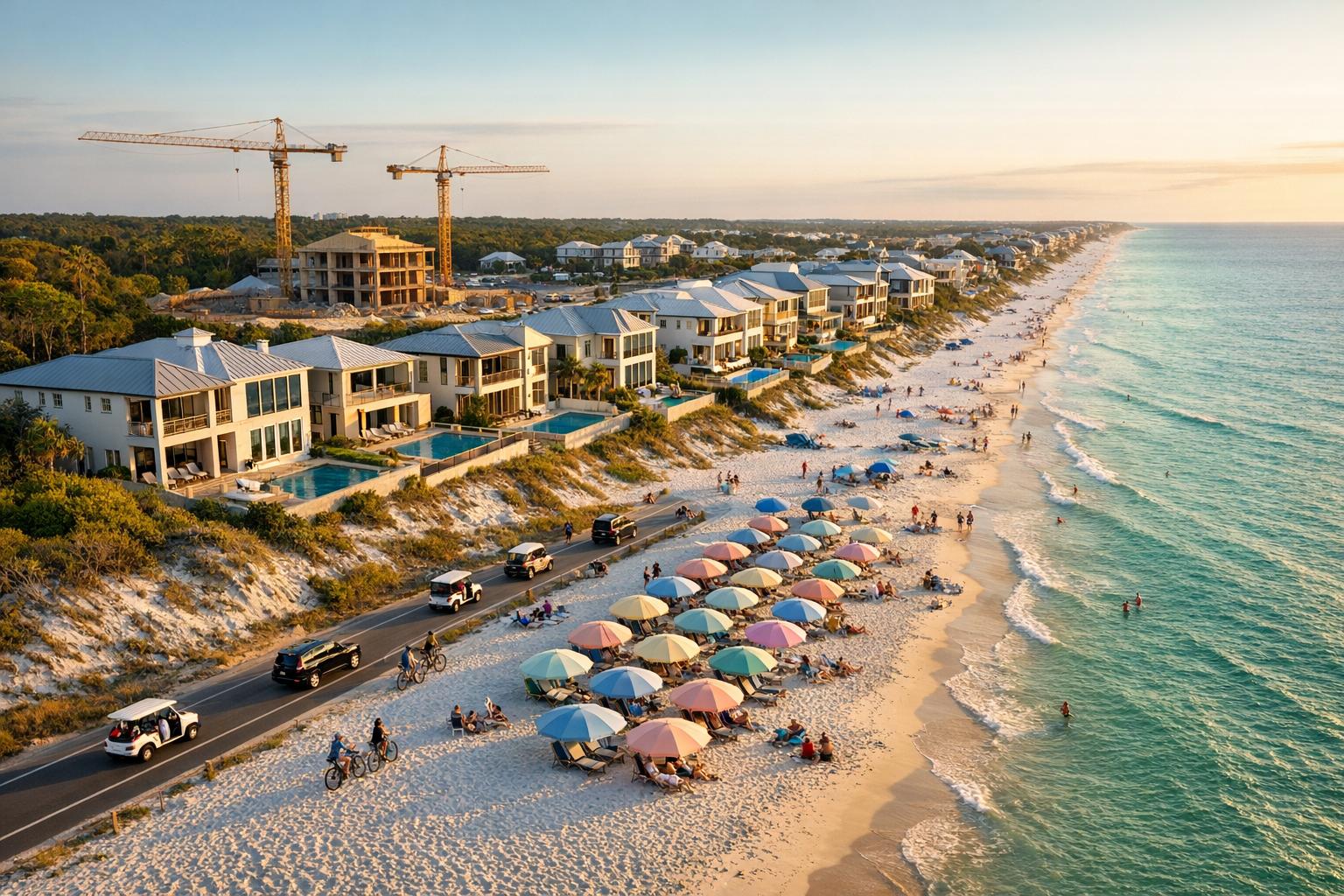
South Walton's 30A area has transformed from a quiet coastal destination into a thriving year-round community. Fueled by tourism, remote work, and rising property values, the region now attracts affluent visitors and permanent residents alike. Key points include:
- Economic Impact: In 2023, tourism brought in $7.2 billion, supporting over 47,000 jobs. Visitors saved local households an average of $2,109 in taxes annually.
- Population Growth: Walton County's population grew 50.9% from 2010 to 2022 and is projected to reach 96,322 by 2026 - a 74.45% increase since 2010.
- Real Estate Boom: Property values have skyrocketed, with homes in Alys Beach starting at $10 million.
- Challenges: Limited land, healthcare strain, and disputes over beach access highlight the pressure of balancing growth with preserving the area's charm.
30A's evolution reflects a blend of luxury tourism, community shifts, and ongoing development challenges.
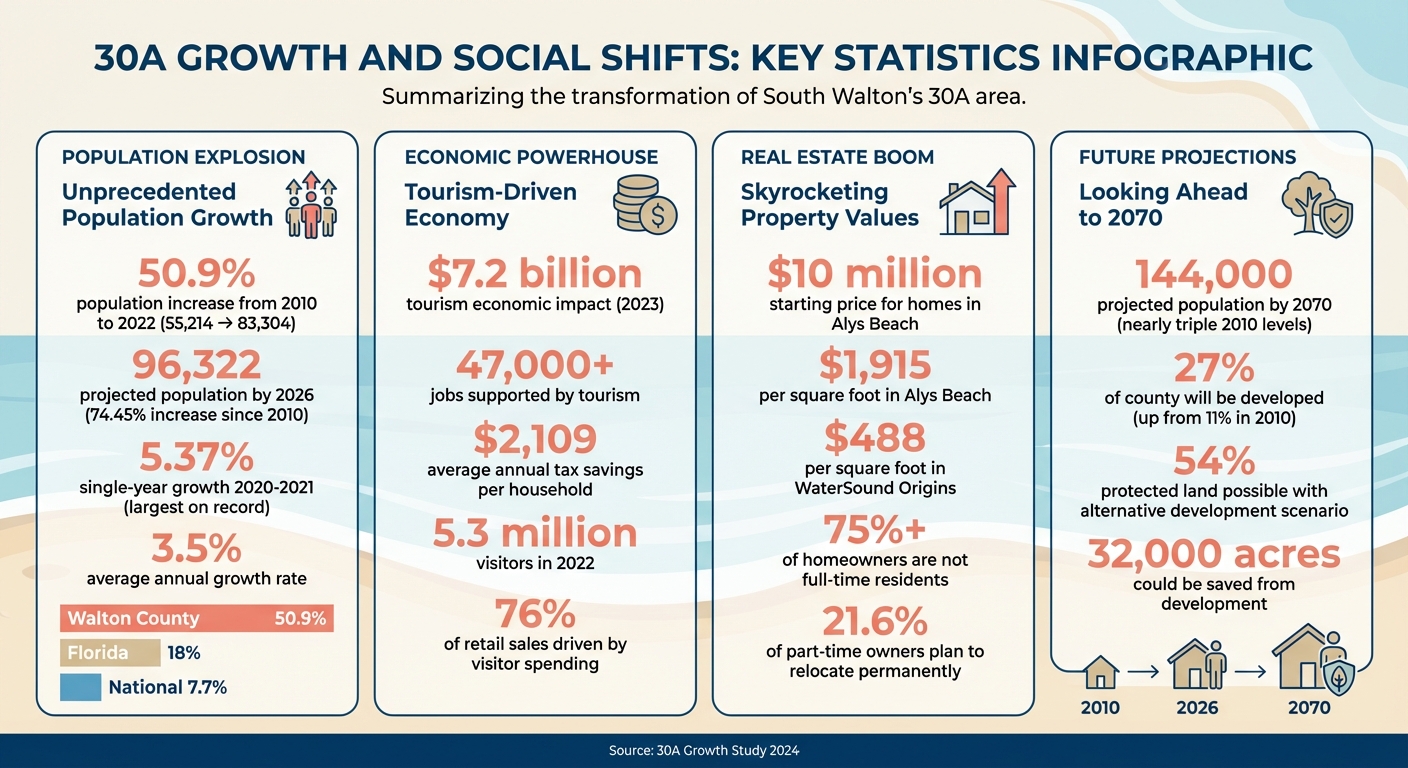
30A Growth Statistics: Population, Tourism & Economic Impact 2010-2026
Population Trends in South Walton (2010-2026)
Historical Growth Patterns
From 2010 to 2022, Walton County experienced a population boom, growing by 50.9% - from 55,214 to 83,304. To put that into perspective, Florida's growth during this time was 18%, while the national average was just 7.7%. With an average annual growth rate of 3.5%, the county saw consistent increases every single year.
The demographic shifts were just as striking. The 65-and-older group nearly doubled, rising 89% from 16.3% to 20.5%. The Hispanic/Latino population also grew, reaching 7.1% by 2022, though the county remains predominantly White at 83.7%. The median age climbed to 43.9 years, reflecting its growing appeal among retirees and mid-career professionals.
These trends laid the groundwork for even faster growth during the pandemic years.
Recent Growth Rates and Projections
The pandemic years brought a significant spike in population growth. Between 2020 and 2021 alone, Walton County's population surged by 5.37% - the largest single-year increase on record. From 2020 to 2023, the county added 10,413 new residents, marking a 13.71% rise, far outpacing the national growth rate of 1.02%.
Looking ahead, the county is expected to maintain this upward trajectory, albeit at a slightly slower pace. By 2026, the population is projected to reach 96,322, representing a 74.45% increase since 2010. The annual growth rate for 2026 is forecasted at 3.58%, with an estimated 3,328 new residents added that year alone. This steady expansion has elevated Walton County to the 38th largest county in Florida, with a population density now at 93 people per square mile.
Future Projections for Walton County
2030 Population Growth Estimates
Walton County has experienced steady growth over the past decade, and this trend shows no signs of slowing down. While the U.S. population is expected to grow by 5.5% between 2020 and 2030, Florida will remain one of the top three most populous states through 2050. This statewide growth will continue to fuel Walton County's expansion.
By 2030, nearly 25% of Florida's population is anticipated to be over the age of 65. This shift in demographics is already influencing Walton County, as its appeal to retirees and mid-career professionals positions it to thrive amid broader population trends moving south and west.
These changes hint at larger challenges ahead. As the population grows, the county will face mounting pressure to balance development with the preservation of its natural environment.
2070 Growth and Land Use Impact
Projections indicate that Walton County's population could nearly triple, rising from approximately 55,000 in 2010 to almost 144,000 by 2070. This dramatic growth will significantly alter the county's landscape.
"If patterns of growth and development in Walton County remain the same as in 2010, the amount of developed land will more than double, from 11 percent of the county to 27 percent." - 1000 Friends of Florida
Most of this new development is expected to replace timberland. However, there is an alternative vision. The "2070 Alternative" scenario proposes a different path: increasing development density by 20% and prioritizing land conservation. This approach could save nearly 32,000 acres from development. If adopted, it could boost protected land in the county from 34% to 54% by 2070. This strategy would allow Walton County to maintain its natural charm while accommodating its growing population.
Economic Drivers of Growth in 30A
Income Growth and Employment Trends
Tourism and a thriving professional class are the twin engines driving South Walton's economic growth. In 2024 alone, tourism contributed nearly $5 billion to Walton County's economy, supporting around 34,000 jobs and generating $1.4 billion in wages and salaries. What’s notable is how tourism sustains employment year-round, not just during peak seasons.
Santa Rosa Beach reflects this economic momentum, with the median household income climbing to $101,067 in 2023. A significant 84.3% of the workforce holds white-collar jobs, while 23.8% are self-employed, showcasing a 9.5% annual income growth.
Tourism's influence isn't limited to job creation - it directly benefits residents' finances. In 2024, local households saved an average of $2,292 in taxes, thanks to tourism revenue. Visitors were responsible for 71% of all spending in Walton County during the same year, enabling the survival of over 200 restaurants and upscale boutiques that otherwise couldn’t thrive in a market of this size.
"Walton County is an incredible destination and we're proud that we can share it with our visitors, all while supporting our community through job creation and visitor spending" – Matt Algarin, Tourism Director for Walton County
This influx of tourism dollars not only supports local businesses but also fuels community development and infrastructure projects, laying the groundwork for the region's evolving appeal.
Tourism and Lifestyle Appeal
Tourism continues to be the cornerstone of 30A’s transformation into a premier luxury destination. Once a regional gem, the area now attracts a national audience. In 2022, over 5.3 million visitors came to the region, contributing $4.8 billion in direct spending. By 2023, summer visitor spending had grown by $500 million compared to 2019 levels. Interestingly, the pandemic played a key role in accelerating this shift, as Florida’s early reopening drew visitors eager to escape stricter lockdowns elsewhere, creating a sustainable post-pandemic tourism model.
But 30A offers more than just pristine beaches. The 5% bed tax funds essential services like beach safety and the maintenance of 42 miles of pathways. Since 2016, more than $76 million has been invested to ensure public beach access. Tourism marketing also plays a crucial role: every dollar spent on promotion generates $479 in visitor spending. This creates a cycle where smart investments continue to drive growth.
"Now you're seeing people from the Northeast, people from the West, Salt Lake City, Utah, Colorado" – Beau Blankenship, Real Estate Agent
This expanding visitor base, combined with strategic investments, is reshaping 30A into a destination that blends local charm with national appeal.
Social and Demographic Changes in South Walton
Demographic Shifts and Trends
The 30A community is undergoing noticeable changes in its population dynamics. Recent statistics reveal that 19.92% of homeowners are permanent Florida residents, while 34.33% are part-time residents who spend less than half the year in the area. Meanwhile, 33.53% of properties are primarily rentals, with owners present less than 25% of the time. Altogether, over 75% of homeowners are not full-time residents.
Interestingly, 21.6% of part-time homeowners now plan to relocate to South Walton permanently, a shift that is putting pressure on local resources. Healthcare, in particular, is feeling the strain, as the county operates only two hospitals, each with limited intensive care capacity. Mary Zahner from the 30A Alliance summed up this trend, saying:
"One thing that struck me is how many people are thinking of moving down here permanently... there's got to be some sort of balance."
The rise of remote work has also reshaped community expectations. Over 52% of residents now view high-quality digital connectivity as essential, leading to increased interest in wellness villages. These developments combine medical offices, fitness facilities, and healthy food options to help address the community’s healthcare challenges.
These shifting residency patterns are driving new tensions as community priorities continue to evolve.
Community and Lifestyle Impacts
As more people make South Walton their full-time home, local priorities are sparking fresh debates. Issues like beach access and healthcare availability have become more pressing. For example, 95.8% of residents identify clean beaches and natural scenery as their top priority, while 55.82% value a vibrant arts and culture scene. These preferences have led to discussions about housing density and how to preserve the area's character.
Beach access has been a particularly divisive issue. Disputes over customary use, which ensures public access to beachfront areas, remain unresolved and continue to stir debate among residents. Additionally, 68.21% of locals rank quality healthcare as a major concern, highlighting the challenge of balancing South Walton’s luxury appeal with the practical needs of an increasing number of full-time residents.
Together, these changes paint a picture of a community in the midst of a transformation - from a seasonal getaway to a year-round residential hub.
30A Market Update 2026 - Inventory Surges, Insurance Shifts and What Buyers Must Know
Conclusion and Key Takeaways
30A has grown from a serene coastal area into what Gary John describes as "a fashion accessory" - a transformation fueled by clever branding, the rise of remote work, and a thriving tourism economy. This shift has brought about a $7.2 billion economic impact and supported over 47,000 jobs, reflecting a delicate balance between growth and preserving the area's natural charm.
Tourism remains the backbone of 30A's economy, funding critical infrastructure and services. Visitor spending drives 76% of all retail sales in Walton County, saving local households an average of $2,109 in taxes each year. These revenues help maintain 20 miles of pristine beaches, 42 miles of multi-use pathways, and vital programs like beach safety initiatives.
On the flip side, the region is facing challenges as it adapts to hosting 5.3 million visitors annually and accommodating an increasing number of year-round residents. Issues like traffic congestion and limited beach access are testing the limits of local infrastructure. Meanwhile, the real estate market is adjusting after a pandemic-driven surge, with developers calling it a "healthy correction." Yet, limited land availability keeps property values high, with areas like Alys Beach reaching $1,915 per square foot and WaterSound Origins averaging $488 per square foot.
FAQs
What’s driving 30A’s rapid growth?
30A has experienced rapid growth, thanks to its status as a sought-after destination for both vacations and upscale living. Known for its stunning natural landscapes and often referred to as the "Hamptons of the South", the area has become a magnet for celebrities and affluent families. This popularity has fueled a booming real estate market, with average home prices reaching $1.62 million.
But with growth comes challenges. The surge in tourism and development has put pressure on local infrastructure and raised concerns about preserving the area's natural beauty. Balancing expansion with conservation efforts remains a critical challenge for the community.
How is growth affecting beach access?
The rapid development along 30A has led to proactive steps to ensure beach access remains available and enjoyable. One major initiative is beach renourishment, which involves adding 3.8 million cubic yards of sand across 13.5 miles of coastline. This effort helps combat erosion while preserving public access to the beaches.
In addition, Walton County has allocated around $70 million to purchase land and beachfront properties. These investments aim to expand access points and include amenities like parking and restrooms, making the beaches more convenient and welcoming for everyone.
Can local healthcare keep up with new residents?
South Walton's healthcare system is stepping up to address the demands of its expanding population. Recent changes include enhanced emergency and trauma response services, the introduction of new hospital facilities, and residency programs designed to boost access to primary care. These efforts are crucial as the area's population continues to grow, with notable progress already visible as of March 2026.