Cost vs. ROI: 30A Luxury Property Upgrades
Targeted luxury upgrades—pools, extra bedrooms, and efficient tech—deliver the strongest ROI for 30A rental properties.
Want to maximize rental income on your 30A property? Luxury upgrades are key. With 4.5 million annual visitors and limited rental supply, premium features can set your property apart - and significantly boost revenue. Here's what you need to know:
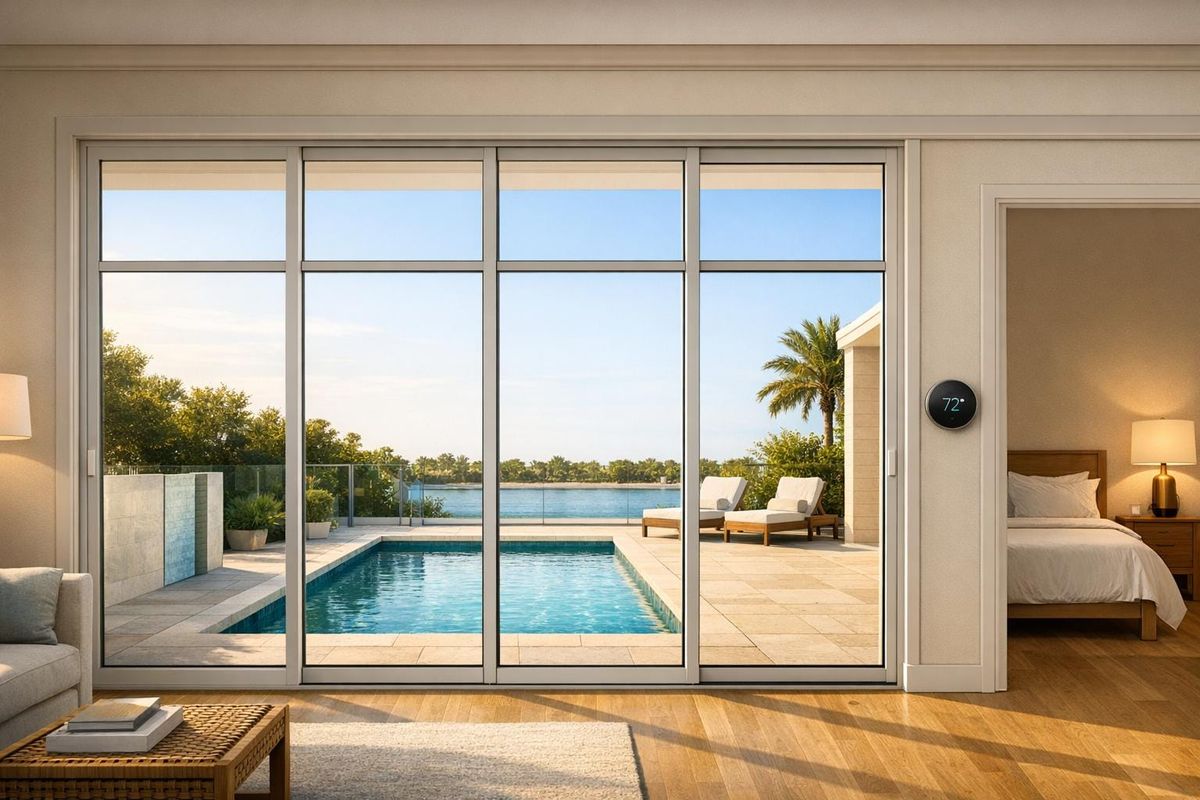
- Outdoor Upgrades (Pools, Kitchens): Private pools can increase nightly rates by up to 25%, adding $136 per night on average. Heated pools also extend bookings into cooler months. Costs range from $300–$500 per square foot, with annual maintenance of $5,300–$11,600.
- Interior Finishes (Kitchens, Bathrooms): A $40,000 remodel can pay for itself in two years by increasing annual revenue by $20,000. Durable materials like quartz countertops and LVP flooring are ideal for coastal rentals.
- Layout Changes (Bunk Rooms, Extra Bedrooms): Adding sleeping capacity boosts occupancy and ADR. For example, a $40,000 renovation can yield $20,000 in additional revenue annually. Costs vary but can range from $35,000–$120,000.
- Tech & Energy Efficiency: Smart home features, efficient HVAC systems, and spray foam insulation cut operating costs and improve guest satisfaction. These upgrades make self-management easier, reducing reliance on costly property managers.
Bottom Line: Focus on upgrades that directly increase revenue, like pools, modern interiors, or added bedrooms. Always check HOA rules and local regulations before investing.
High ROI Airbnb Design: Exactly Where to Spend (and NOT Spend) Your Budget
sbb-itb-d06eda6
1. Outdoor Living Upgrades (Pools, Hot Tubs, Outdoor Kitchens)
Outdoor amenities are a game-changer for 30A rental properties. A private pool, for instance, has shifted from being a luxury to an expectation - properties without one often end up lowering their rates just to stay competitive.
Cost Range
Adding a private pool with features like a spa, built-in seating, and lighting typically falls within the $300–$500 per square foot range for high-end builds in the 30A market. But the costs don’t stop there. Annual upkeep, including weekly pool service, equipment repairs, and professional landscaping, can add another $5,300–$11,600 per year. While these expenses might seem steep, they directly contribute to maintaining high standards and increasing the property’s earning potential.
Impact on ADR
A thoughtfully designed outdoor area can significantly raise nightly rates. Homes with private pools often see rates up to 25% higher than similar properties without one. Considering the average daily rate (ADR) in the 30A area is around $544, this could mean an extra $136 per night - a meaningful boost over time. This is particularly important in a market where guests are comparing your property to boutique hotels like the Pearl in Rosemary Beach.
The most sought-after outdoor spaces go beyond just having a pool. As Grahame Family 30A explains:
"The backyards pulling serious nightly rates right now have a runover spa, built-in seating with lighting, and a shaded cabana zone that works after 2pm when the sun is brutal."
Occupancy and Revenue Impact
Upgraded outdoor features don’t just improve pricing - they also increase occupancy. High-end amenities can push occupancy rates from 70% to 90%. These upgrades also encourage repeat bookings. For example, one property with an extended covered porch saw a 22% increase in repeat bookings over two seasons. Heated pools, in particular, can attract guests during cooler months, helping to fill the shoulder season.
The overall impact on occupancy and repeat bookings highlights the financial upside of investing in outdoor improvements.
Payback Period and ROI
The earning potential for top-tier 30A properties can exceed that of median performers by $40,000–$70,000 per year. However, the actual return on investment (ROI) depends on how well the property is managed. Owners should factor in annual maintenance costs of $5,300–$11,600, along with setting aside 1.5–2% of the property’s value annually to account for wear and tear from salt air.
"A property with lower gross income but cleaner operating efficiency can outperform a larger home with heavier carrying costs." - Venture South Real Estate
Lastly, don’t overlook local HOA rules. Some 30A communities have strict architectural guidelines that could limit additions like pools or outdoor kitchens.
2. Interior Luxury Finishes (Kitchens, Bathrooms, Flooring)
If outdoor amenities grab attention, it's the interior finishes that seal the deal. Venture South Real Estate emphasizes:
"Kitchens, baths, flooring, and exterior appeal often influence booking performance more than highly personalized finishes."
These updates create a solid base for enhancing guest experiences and maximizing booking potential.
Cost Range
Renovating interiors on a 30A property typically runs about $40,000. This investment covers key updates like kitchen countertops, bathroom remodels, and new flooring. For kitchens, quartz or durable stone surfaces are ideal, while Luxury Vinyl Plank (LVP) flooring is a smart choice for its ability to withstand sand, moisture, and heavy use in coastal rentals. Neutral and clean bathroom finishes not only photograph well but also appeal to a wide audience.
Impact on ADR
Interior upgrades can push your property into a higher pricing bracket. Properties with outdated interiors often remain stuck in lower market tiers, while those with modern, well-thought-out finishes can command top rates. In areas like Rosemary Beach and Seaside, where peak ADRs range from $1,000 to $1,500 per night, the difference between renovated and unrenovated properties is significant.
Occupancy and Revenue Impact
Upgraded interiors also help maintain steady occupancy, especially during slower seasons. In destinations like Seagrove Beach, properties with modern interiors consistently outperform older counterparts. This is partly because updated spaces photograph better and generate stronger reviews on platforms like Vrbo and Airbnb. Functionality plays a big role too. As Grahame Family Homes puts it:
"In 2026, beautiful isn't enough... We are hearing, 'What is it like when twelve people show up on a Friday with luggage, paddleboards, and no agenda?' That question changes everything."
Layouts that cater to group needs - such as durable, easy-to-clean floors and spacious, efficient kitchens - can turn casual browsers into confirmed bookings.
Payback Period and ROI
Well-planned interior upgrades deliver strong ROI. A $40,000 remodel that increases annual rental revenue by $20,000 typically pays for itself in about two years. Venture South Real Estate explains it best:
"A $40,000 remodel that increases annual rental revenue by $20,000 is an investment. A $40,000 remodel that only improves appearance is an expense."
The most effective upgrades focus on durability, reducing maintenance issues, and enhancing the guest experience. Beyond the initial renovation, budgeting $4,000–$9,500 annually for decor updates, linen replacements, and consumables helps maintain a fresh, inviting look. These thoughtful investments not only improve guest satisfaction but also contribute to long-term financial success for 30A property owners.
3. Bedroom and Layout Changes (Bunk Rooms, Extra Bedrooms)
In the 30A rental market, adding more sleeping capacity can significantly boost revenue. The average travel group in the Santa Rosa Beach area consists of 4.5 people, and half of the visitors bring children under 20. This makes properties with more sleeping options more appealing and often results in higher occupancy rates. Here's a closer look at the costs, nightly rate impact, occupancy benefits, and potential returns for these types of layout upgrades.
Cost Range
Building new spaces can cost between $300–$500 per square foot, while renovations, such as turning a loft into a bunk room, are less expensive. Furnishing costs vary depending on the size of the property:
- A 4-bedroom home: $35,000–$70,000
- A 5+ bedroom property: $50,000–$120,000
Cleaning fees also scale with size, ranging from $250–$375 for a 4-bedroom home to $350–$550 for a larger property.
Impact on ADR
Adding bedrooms doesn’t just increase sleeping capacity - it can also boost nightly rates and improve market positioning. Venture South Real Estate highlights this point:
"A four-bedroom home with strong design and efficient layout can sometimes outperform a poorly configured five-bedroom property because usability shapes renter demand."
Flexible sleeping setups, like twin-over-queen bunk beds, can attract larger groups and justify higher rates. In premium areas, peak ADRs range from $1,200 to $1,500 per night in Rosemary Beach and $1,000 to $1,400 per night in Seaside.
Occupancy and Revenue Impact
Bunk rooms, especially when designed with families in mind, help maintain strong occupancy levels - even during slower seasons. Well-staged and thoughtfully photographed bunk rooms often convert online browsers into bookings faster. This is especially relevant since 52% of visitors use vacation-rental websites to plan their trips. As Darren Koenenn, a real estate advisor, puts it:
"A home that sleeps well, stores gear cleanly, and photographs clearly often has stronger appeal in this market."
Payback Period and ROI
For example, a $40,000 remodel that generates $20,000 in additional annual revenue can pay for itself in about two years. Beyond rental income, owners may also benefit from tax savings. Cost segregation studies on 30A properties can provide $25,000 to $40,000 in first-year tax savings for those in higher tax brackets. However, keep in mind that Walton County enforces an occupancy limit of one person per 150 square feet of heated and cooled living space, so it’s essential to confirm your property’s maximum capacity before making changes.
Strategic layout upgrades, paired with other luxury improvements, can maximize both revenue and return on investment for 30A properties.
4. Technology and Energy Efficiency Upgrades (Smart Home Features, HVAC)
Technology and energy efficiency upgrades are no longer optional for 30A rental properties - they're the new norm. As Grahame Family 30A Custom Home Builders explains:
"Spray foam insulation, high-efficiency HVAC systems, smart thermostats, and automated controls aren't futuristic anymore, they're standard. They keep homes comfortable year-round."
Cost Range
Smart home features like smart locks and automated tools for guest communications and pricing adjustments come with relatively low upfront costs but deliver strong operational benefits. On the other hand, maintaining HVAC systems costs between $300 and $600 annually. For larger luxury homes, total utility expenses fall between $5,000 and $10,000 per year, with monthly electric bills averaging $200–$450. While systems like spray foam insulation, heat pump water heaters, and high-efficiency HVAC units require a bigger initial investment, they help lower ongoing operating costs significantly.
Impact on ADR
While smart home upgrades may not directly increase nightly rates, they play a big role in guest satisfaction. Features that ensure a quiet and cool environment during Florida's hot summers can prevent negative reviews. As Grahame Family builders noted:
"A house that's still 80 degrees at 10pm in July gets a bad review. So does one that sounds like a wind tunnel when the HVAC kicks on."
Homes equipped with modern technology and energy-efficient designs consistently outperform similar properties in revenue. These upgrades not only help secure better ADRs but also improve occupancy rates by reducing guest complaints.
Occupancy and Revenue Impact
The benefits of these upgrades go beyond guest comfort - they also make self-management more feasible. Self-management vs. hiring 30A property managers typically costs 20%–30% of gross rental revenue. For a property earning $90,000 annually, this translates to $18,000–$27,000 per year. Smart home tools, such as remote monitoring and automated scheduling, enable owners to manage properties effectively from a distance, cutting out these high fees. Combined with interior and exterior improvements, these technological advancements help maximize financial performance and improve ROI.
Payback Period and ROI
Management fees are one of the largest controllable expenses for rental property owners, often accounting for 20%–30% of gross revenue. By minimizing these costs and allocating 1.5%–2% of the property's value annually for maintenance, technology upgrades can deliver a solid ROI. This is especially true in coastal areas where salt air accelerates the wear and tear on HVAC systems. Durable and efficient systems not only cut long-term maintenance expenses but also ensure high guest satisfaction, making them a smart investment for property owners.
Pros and Cons
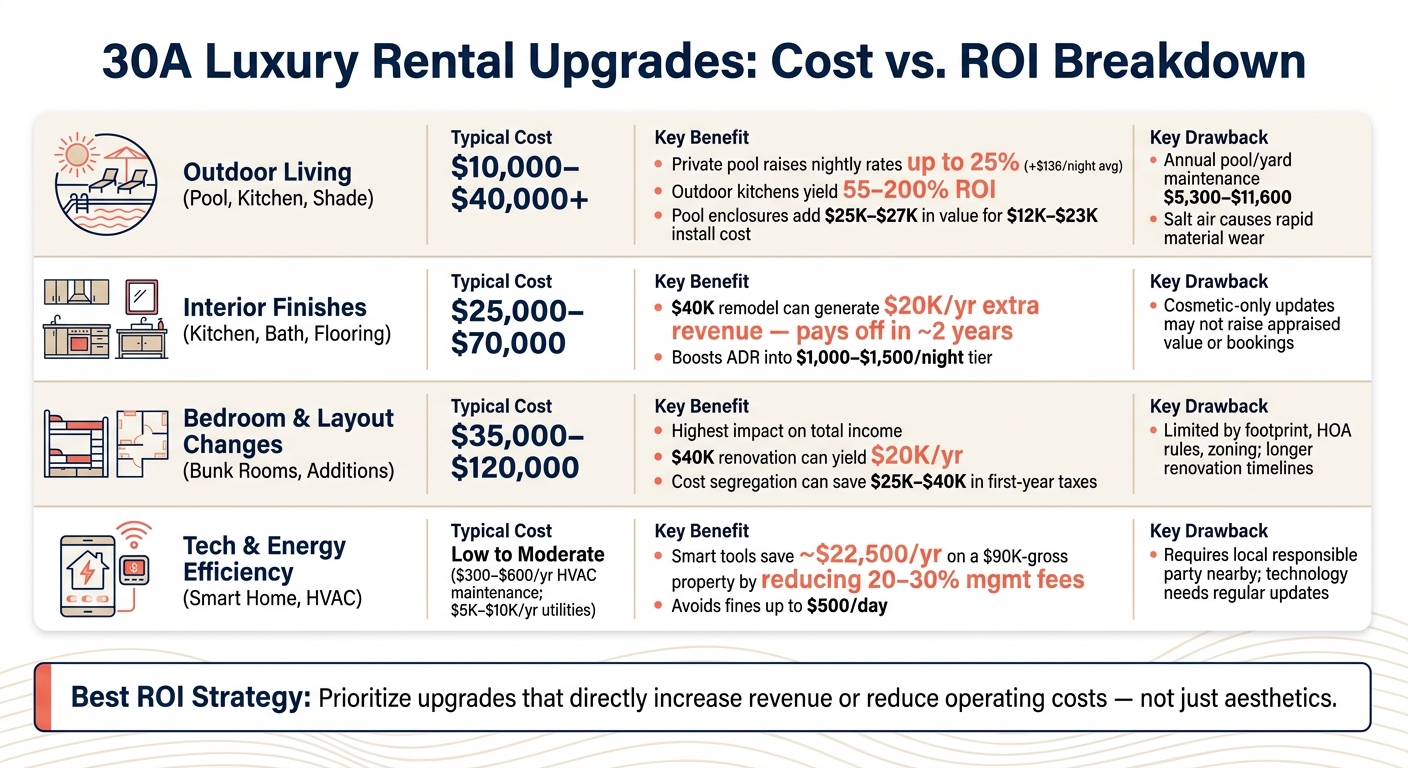
30A Luxury Rental Upgrades: Cost vs. ROI Breakdown
Here’s a breakdown of the costs, benefits, and challenges associated with each type of upgrade. The goal? To either increase booking rates or cut operating expenses, aligning with the strategic approach outlined earlier.
| Upgrade Category | Typical Cost | Key Benefit | Key Drawback |
|---|---|---|---|
| Outdoor Living (pools, kitchens, shade) | $10,000–$40,000+ | Outdoor kitchens can yield 55%–200% ROI in warm-climate markets; pool enclosures can add $25,000–$27,000 in appraisal value for an installation cost of $12,000–$23,000 | Annual maintenance for pools and yards ranges from $5,300–$11,600; salt air can cause significant wear on materials in just one season |
| Interior Finishes (kitchens, baths, flooring) | $25,000–$70,000 | Enhances ADR and the guest "wow" factor; durable materials like quartz and LVP stand up well to frequent use | Cosmetic updates alone may not increase appraised value; a remodel only pays off if it boosts annual rental revenue |
| Bedroom & Layout Changes (bunk rooms, additions) | High (varies by scope) | Directly increases revenue by adding sleeping capacity; has the highest impact on total income potential | Can be restricted by the current footprint, HOA regulations, or local zoning laws; often involves longer renovation timelines |
| Tech & Energy Efficiency (smart home, HVAC) | Low to moderate | Smart tools can save around $22,500 annually on a property grossing $90,000; monitoring systems help avoid fines of up to $500/day in Walton County | Requires a Local Responsible Party within close proximity to the property; technology needs regular updates |
While upgrades like outdoor features and interior finishes can raise ADR by improving visual appeal, operational improvements focus on maximizing net income. Prioritize upgrades that enhance appraised value, shorten market time, or increase annual revenue. This approach ensures investments not only attract guests but also strengthen overall profitability.
Conclusion
Investing in upgrades on 30A properties can lead to a range of returns, depending on how those improvements influence revenue and attract guests. A closer look at outdoor, interior, layout, and tech upgrades shows that the best returns come from changes that directly increase revenue - like adding sleeping capacity, installing a private pool, or creating inviting outdoor living spaces. On the other hand, purely cosmetic updates that don't affect bookings or nightly rates tend to offer less financial impact.
Property type plays a key role. Condos often see the most benefit from upscale interior finishes and smart home technology. For single-family homes, features like private pools and resort-style outdoor areas bring the clearest revenue boost. Guest demand also hinges on usability - an efficiently designed home with a smart layout often outperforms a larger property with poor functionality.
When working with limited budgets, focusing on technology and efficiency upgrades often provides the best returns. For those with more capital to invest, structural changes - such as adding bunk rooms or outdoor kitchens - can significantly enhance both occupancy and average daily rates.
Durability is another critical factor. Using long-lasting materials like quartz countertops, LVP flooring, and water-resistant upholstery helps reduce maintenance and replacement costs, especially in 30A’s challenging environment of salt air and high humidity.
Before moving forward with upgrades, it’s essential to check HOA rules and local zoning regulations. Some communities have restrictions on rental durations or specific rental programs, which could limit the revenue potential of certain improvements. Additionally, rely on property-specific rental comparisons instead of general market averages. As Venture South Real Estate advises:
"The best investment is not always the most famous address. It is the property where purchase price, revenue potential, and future resale demand align."
Ultimately, the right upgrades depend on your property's type, your budget, and your long-term goals. Carefully evaluate these factors to ensure your improvements align with your revenue objectives.
FAQs
Which upgrade gives the fastest payback on a 30A rental?
Professional photography is one of the quickest and most effective ways to boost income for 30A rental properties. For example, a $500 investment in professional-quality photos helped one homeowner increase their annual income by $10,000 while seeing a 39% jump in bookings. In fact, listings with professional images often attract up to 40% more clicks and generate 30% more bookings. Compared to pricey renovations like updating kitchens or adding pools, this is a cost-effective upgrade with impressive results.
How do I estimate ROI after pool maintenance and utilities?
To figure out the ROI for pool upgrades, start by calculating the net boost in revenue. Look at how much the upgrade is likely to increase nightly rental rates and overall bookings. Then, subtract the yearly operating expenses, which include things like maintenance, chemicals, utilities, and reserves for equipment.
For instance, when it comes to a pool heater, the ROI is often measured by comparing the installation cost to the extra rental income it generates. In many cases, especially for high-performing 30A properties, the payback period can be less than 12 months.
What HOA and Walton County rules can limit upgrade plans?
If you're planning upgrades on 30A, it's crucial to follow both Walton County regulations and your HOA's rules. Walton County oversees permits, flood zone requirements, and environmental reviews, especially for projects near the coast. They also regulate noise levels, parking, and occupancy limits to maintain the area's character and safety.
On top of that, HOAs often have their own set of stricter guidelines. These might include rental caps, design restrictions, or minimum stay requirements. To avoid any headaches, take the time to thoroughly review your HOA's governing documents and the county's codes before starting any project. This preparation can save you time, money, and potential legal issues down the road.