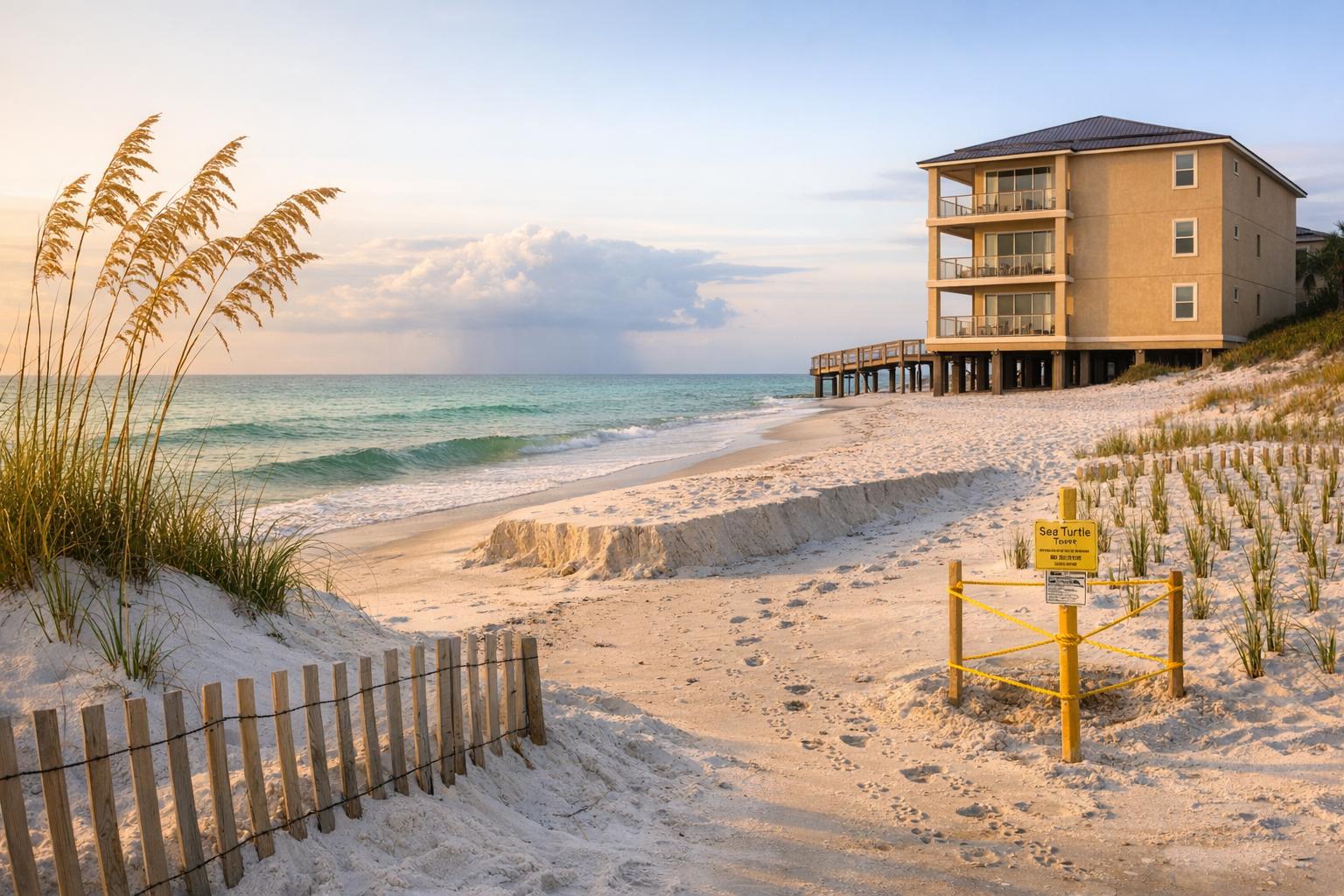
Coastal development in South Walton is reshaping its iconic beaches along the 30A corridor, but not without consequences. The rapid growth driven by tourism and construction has led to:
- Erosion and Flooding Risks: Shoreline construction disrupts natural dune systems, weakening defenses against storms and increasing flood risks.
- Wildlife Habitat Loss: Construction displaces shorebirds, sea turtles, and other species by disturbing nesting areas and removing vegetation.
- Regulatory Challenges: Walton County's regulations struggle to keep pace with growth, often leaving violations unchecked due to limited resources and fragmented enforcement.
- Tourism vs. Conservation: High-density developments prioritize short-term rentals over long-term preservation, adding pressure to fragile ecosystems.
Potential Solutions: Residents and developers can focus on nature-based designs, like living shorelines and dune restoration, while leveraging tourism tax revenue to fund conservation efforts. These approaches balance economic growth with preserving South Walton's rare coastal features, such as its dune lakes and biodiverse beaches.
The future of South Walton’s beaches depends on collaboration between the community, local authorities, and developers to protect these natural treasures for generations to come.
South Walton Coastal Development Impact Statistics and Solutions
How coastal communities are adapting to rising seas naturally with Living Shorelines
Environmental Impacts of Coastal Development
Coastal construction in South Walton brings long-lasting environmental challenges.
Beach Erosion and Flooding Risks
Building along the shoreline often disrupts or removes natural dune systems that act as barriers against storm surges and flooding. To better understand these effects, the Florida Department of Environmental Protection uses the SBEACH (Storm-Induced Beach Change) model to examine how beach and dune profiles respond to erosion. Research by Leadon and Nguyen highlights that storms with 15- and 25-year return intervals cause significant erosion to the dunes and beaches in Walton County.
"This study presents eroded dune and beach profiles due to high frequency storm events with return intervals of 15 years and 25 years in Walton and Okaloosa Counties using the calibrated SBEACH model." – Leadon and Nguyen, Florida Department of Environmental Protection
These recurring storm events emphasize the coastline's vulnerability and the importance of preserving intact dune systems. When dunes erode, the natural defenses weaken, triggering a ripple effect that impacts local habitats and increases flood risks.
Disruption of Local Ecosystems and Wildlife
The effects of coastal construction go beyond physical changes to the landscape - it also disrupts the area's ecosystems. Construction activities displace wildlife and fragment essential habitats used for nesting, feeding, and migration. Noise, artificial lighting, and human activity can drive away shorebirds and sea turtles during sensitive breeding seasons. Additionally, clearing vegetation eliminates critical food sources, shelter, and plants that stabilize the sand. These disruptions can lead to a decline in the biodiversity that defines South Walton's coastal environment.
Problems with Current Coastal Development Regulations
Overview of Walton County Regulations
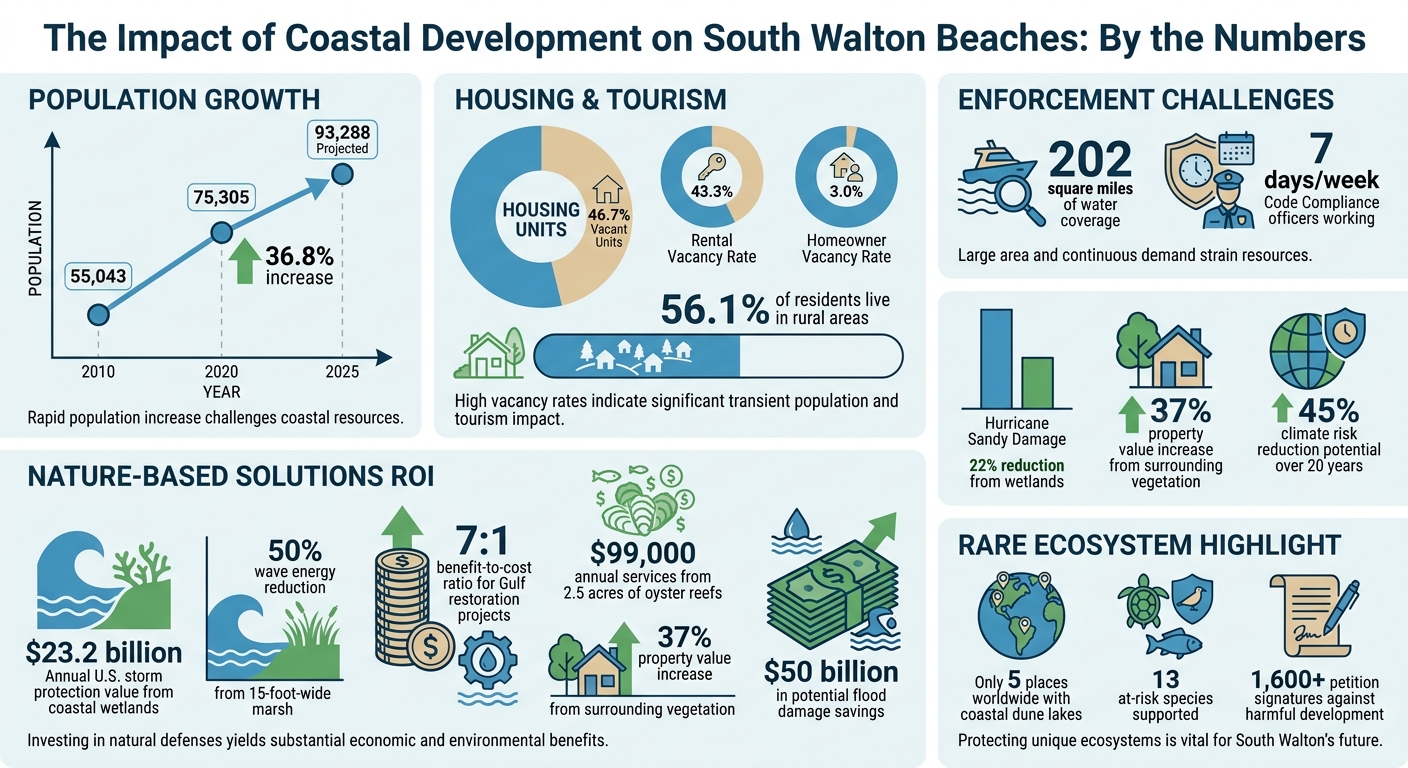
Walton County's regulations are struggling to keep up with the area's rapid growth, particularly along South Walton's beaches. From 2010 to 2020, the population jumped by 36.8%, growing from 55,043 to 75,305 residents. By 2025, that number is expected to hit 93,288. This kind of growth puts a massive strain on the county's ability to enforce development rules effectively.
The Walton County Code Compliance Department focuses on education and voluntary compliance. While this approach works for minor issues, it doesn’t do much to deter large developers who might see fines as just another cost of doing business. Enforcement responsibilities are divided among multiple agencies, including Code Compliance, the Building Department, and the Florida Fish and Wildlife Conservation Commission. This fragmented system can let violations slip through the cracks, especially since it relies heavily on residents to report problems. However, Florida law requires complainants to provide their name and address unless the violation poses an immediate threat to critical resources. This requirement might discourage people from stepping forward to report environmental damage.
Adding to the problem, limited staffing and tight budgets mean Code Compliance operates in a reactive mode, addressing issues as they arise. Officers are working seven days a week, yet they’re stretched thin trying to oversee 202 square miles of water coverage. These challenges in enforcement only deepen the ongoing tension between rapid development and conservation efforts.
Conflicts Between Tourism and Conservation
Walton County’s housing market shines a spotlight on the clash between tourism-driven development and the need to protect the environment. Nearly half (46.7%) of all housing units in the county are vacant, with a rental vacancy rate of 43.3%, compared to just 3.0% for homeowners. This imbalance shows a clear preference for short-term rentals over permanent housing.
High-density developments like Seaside, Alys Beach, and Rosemary Beach - built around the New Urbanism model since the 1980s - add even more pressure on sensitive coastal areas. While 56.1% of the county’s residents live in rural areas, the most intense development happens in coastal hotspots like Miramar Beach and Santa Rosa Beach. This uneven spread of development creates a regulatory tug-of-war: on one side, there’s a need to protect rural conservation areas; on the other, there’s pressure to support the tourism infrastructure that fuels the local economy.
In some cases, developers push projects forward at breakneck speed or start unpermitted work based on informal agreements to sidestep permit fees. Administrative penalties often aren’t enough to stop these practices, allowing construction to continue unchecked.
Solutions for Responsible Coastal Development
Community-Centered Development Approaches
Addressing the pressures on South Walton's beaches requires active participation from both residents and business owners. Jared Schnader, the mind behind the documentary podcast Eroded: 30A's Battle for Florida's Beaches, underscores the importance of informed engagement: "Eroded was created to give the community a clearer picture of how we got here - and to encourage informed, constructive involvement in what comes next. My hope is that listeners come away better educated, more engaged, and ready to take part in shaping the future of our community and our beaches." Schnader's work sheds light on how misunderstandings around Customary Use vs. Beach Nourishment have hindered productive discussions in county commission meetings. When people grasp the technical details and legislative history - like the 2017 state language affecting Walton County - they can play a meaningful role in shaping policies for coastal development. Blending community insights with forward-thinking design naturally leads to solutions rooted in nature.
Nature-Based Solutions and Eco-Friendly Design
Natural infrastructure offers a flexible and cost-efficient alternative to traditional concrete barriers for protecting South Walton's coastline. Living shorelines, built with elements like oyster reefs, sand, and native plants, not only stabilize shores but also improve water quality and capture carbon. Unlike rigid sea walls, these systems can adapt and repair themselves as sea levels rise. In fact, coastal wetlands across the U.S. provide an estimated $23.2 billion in storm protection annually, and a 15-foot-wide marsh can reduce up to 50% of incoming wave energy.
Restoring sand dunes creates natural defenses against storm surges, while green infrastructure - such as permeable pavements and rain gardens - helps manage stormwater before it impacts coastal ecosystems. Restoration projects in the Gulf of Mexico, like wetlands and reefs, deliver incredible returns, with benefit-to-cost ratios exceeding 7:1. For every dollar spent, $7 in flood-reduction benefits is generated. During Hurricane Sandy, wetlands reduced damages by over 22% in half of the impacted areas. Developers who embrace features like elevated designs, green roofs, and native plants not only lessen environmental harm but also boost property values. Homes surrounded by trees and vegetation can see property values rise by as much as 37%.
Using Economic Measures to Support Conservation
Tourism tax revenue could provide the funding South Walton needs for conservation efforts. Rather than treating environmental protection as a barrier to growth, the county could channel a portion of tourism income into projects like wetland restoration, living shorelines, and eco-friendly infrastructure. The financial case is strong: just 2.5 acres of restored oyster reefs can deliver up to $99,000 in annual services. For example, a wetland restoration project in Michigan brought in an additional $600,000 in yearly tax revenue. Over the long term, these nature-based solutions could reduce climate risks in the Gulf region by more than 45% over the next 20 years, potentially saving over $50 billion in flood damage costs.
Conclusion: Balancing Development and Preservation
South Walton's coastline is a treasure - one of only five places in the world with coastal dune lakes. These rare ecosystems play a critical role, supporting 13 species at risk and acting as natural water filters and flood barriers. The beaches and dunes that attract visitors are more than just beautiful - they are essential to both the local economy and the environment. Protecting them requires a collective effort from the community.
Long-term preservation must take precedence over short-term profits. As resident Barbara Morano emphasized during a public workshop in January 2026:
"These coastal dune lakes are rare. They are not man-made… nobody wants you to touch a piece of sand… conservation of our coastal dunes must be a priority to the future and preservation of our most precious natural resources."
This sentiment was echoed when a petition opposing a development project that threatened these fragile ecosystems gathered over 1,600 signatures - a clear call for action from the community.
FAQs
What can I do to help protect South Walton’s dunes and wildlife?
Protecting South Walton’s dunes and wildlife starts with simple, impactful actions. Support conservation efforts by planting native vegetation, installing sand fences, and removing invasive species that threaten the area's natural balance. Always stick to designated paths to avoid trampling the dunes - this helps prevent erosion and protects vital habitats.
You can also help by respecting setback regulations and backing local initiatives aimed at preserving these dunes. Healthy dunes are more than just scenic - they act as natural barriers, shielding both wildlife and nearby communities from storm damage. Every small effort contributes to their preservation.
How do living shorelines work compared to seawalls?
Living shorelines rely on natural elements such as marshes, wetlands, and native plants to protect coastlines and diminish wave energy. They provide an environmentally friendly alternative to seawalls. While seawalls are rigid barriers that block waves, they often lead to habitat destruction and can even accelerate erosion in surrounding areas. Living shorelines, on the other hand, help control erosion, rebuild habitats, and support biodiversity - offering a way to safeguard coastlines while preserving the surrounding environment.
Where does Walton County’s tourism tax money go, and can it fund conservation?
Walton County’s tourism tax, often called the "bed tax", plays a key role in funding the area’s Tourism Department and various local initiatives aimed at boosting tourism. The tax revenue supports a range of efforts, including:
- Beach Operations and Public Access: Ensuring the beaches remain accessible and well-maintained for visitors and residents alike.
- Infrastructure Projects: Investing in improvements that enhance the overall visitor experience.
- Beach Renourishment and Conservation: Protecting South Walton’s coastline by funding efforts to preserve its natural beauty and combat erosion.
This tax is a critical tool for maintaining the charm and functionality of South Walton’s beaches, ensuring they remain a draw for tourists while safeguarding the environment.