
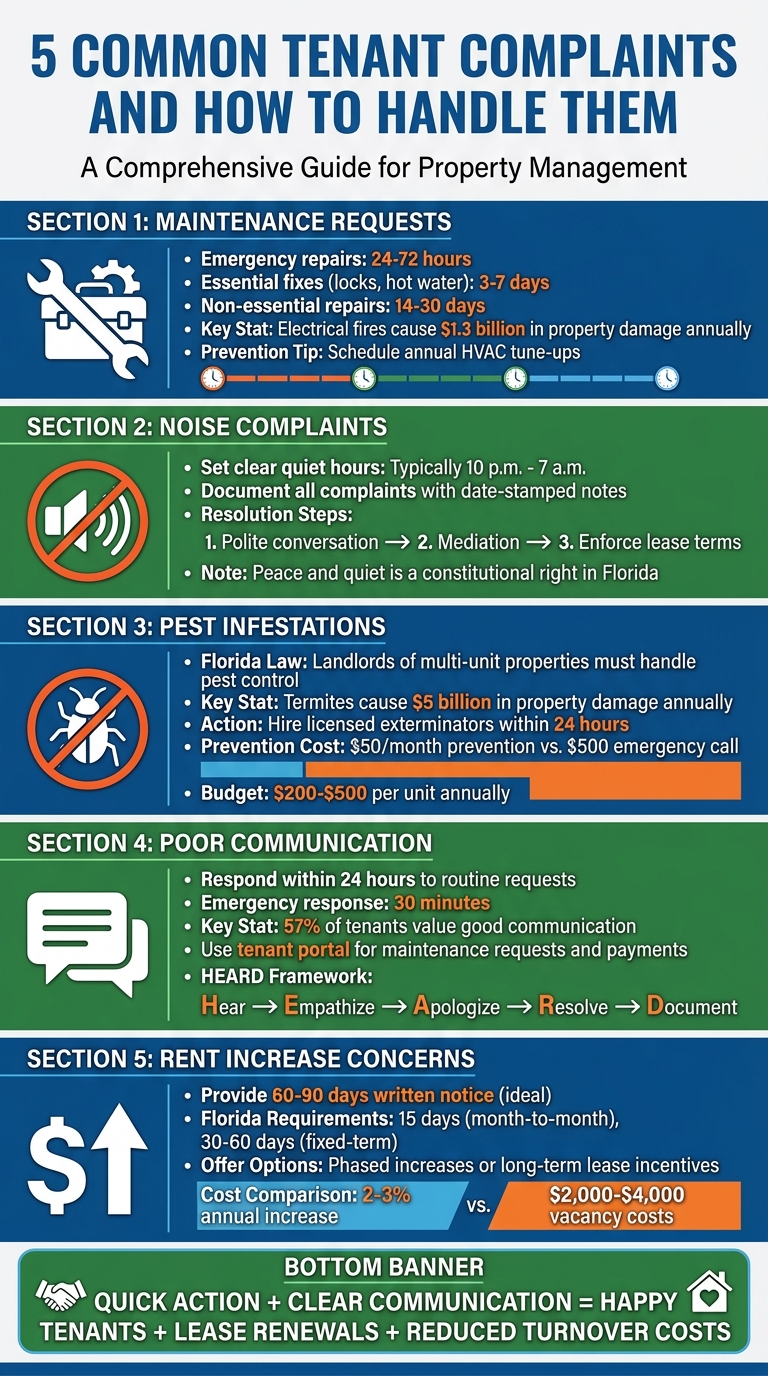
Managing tenant complaints effectively can save you time, money, and stress. Here are the five most common issues landlords face and how to address them:
- Maintenance Requests: Quick action matters. Emergency repairs should be handled within 24–72 hours, while essential fixes like broken locks or hot water must be addressed within 3–7 days. Regular upkeep, like HVAC tune-ups and plumbing checks, prevents bigger problems.
- Noise Complaints: Set clear quiet hours in the lease and document all complaints. Start with a polite conversation between tenants, escalate to mediation if needed, and enforce lease terms for repeated disturbances.
- Pest Infestations: Florida law requires landlords of multi-unit properties to handle pest control. Act fast, hire licensed exterminators, and clarify responsibilities in the lease. Preventative measures like sealing gaps and quarterly treatments save money long-term.
- Poor Communication: Respond to tenant concerns within 24 hours. Use a tenant portal for maintenance requests and rent payments to keep records organized. Clear and timely communication builds trust and reduces complaints.
- Rent Increase Concerns: Provide written notice (60–90 days is ideal) and explain the reasons for rent adjustments. Offer options like phased increases or incentives for long-term leases to maintain tenant relationships.
Addressing these complaints promptly and professionally encourages lease renewals, reduces turnover costs, and protects your investment.
5 Common Tenant Complaints and How Landlords Should Handle Them
How to Handle Difficult Tenant Situations Effectively!
Maintenance Requests
Maintenance requests can range from small annoyances like leaky faucets to serious issues like electrical hazards. For properties near the coast, there’s the added challenge of dealing with humidity and saltwater corrosion. Tackling these problems quickly and staying on top of regular maintenance avoids bigger headaches down the road and keeps tenants happier.
Handling Urgent Repairs First
Not all maintenance issues are created equal - some need immediate attention. Emergency repairs, such as gas leaks or sewage backups, should be addressed within 24 to 72 hours. Essential fixes - like restoring hot water, repairing broken locks, or fixing a refrigerator - should usually be handled within 3 to 7 days. In fact, local laws often require landlords to complete essential repairs within seven days of receiving a written notice. On the other hand, non-essential repairs, like patching drywall or fixing minor leaks, can often wait 14 to 30 days.
Electrical and plumbing problems, in particular, shouldn’t be ignored. Electrical fires are responsible for about 51,000 home fires, 500 deaths, and $1.3 billion in property damage in the U.S. each year. Meanwhile, plumbing leaks waste nearly 900 billion gallons of water annually. Fixing small leaks early can prevent costly water damage and higher bills.
Preventing Problems Through Regular Maintenance
A little prevention goes a long way. Regular maintenance not only reduces tenant complaints but also extends the life of key systems. For instance:
- Schedule annual HVAC tune-ups and drain water heaters yearly to prevent sediment buildup. A well-maintained HVAC system can last 15 to 25 years, and replacing a water heater costs between $1,000 and $3,000.
- Replace air filters every 1 to 3 months. This simple step protects the HVAC motor and lowers utility bills.
- Test smoke detectors monthly, and replace units every 10 years.
- Conduct yearly inspections to catch small issues before they become big problems.
Another smart move? Provide tenants with a "Home Care Handbook." This guide can outline simple tips, like what not to flush or pour down drains, to avoid unnecessary maintenance calls.
Keeping Tenants Informed
Even if a repair can’t be fixed right away, it’s crucial to acknowledge a tenant’s request within 24 hours. Andrew Smallwood, Chief Strategy Officer at Second Nature, emphasizes:
"Ignoring a complaint is possibly the worst thing you could do. Not only will it lead to disgruntled residents, but ignoring serious issues like maintenance problems, pests, or safety can lead to escalating problems that could cost your clients a lot of money".
Using maintenance software, such as Property Meld or Mezo, can make the process smoother. These tools let tenants submit photo-documented requests and track progress in real time. Be sure to explain the steps being taken, provide realistic timelines, and follow up once the job is done. As Krista Reuther from TurboTenant points out:
"A landlord who responds quickly to repair requests builds trust and encourages lease renewals, which reduces turnover and vacancy costs".
Clear communication shows tenants that their concerns matter and helps build trust, which can lead to long-term tenant satisfaction.
Noise Complaints
Handling noise complaints promptly and clearly is essential for maintaining tenant trust and protecting your property. Noise issues are among the most frequent challenges landlords face. Whether it’s loud parties, booming music, or constant heavy footsteps, these situations demand a fair and balanced approach. In Florida, peace and quiet aren’t just desirable - they’re actually considered a constitutional right. This makes it crucial for landlords to address noise complaints seriously and equitably.
Florida Noise Regulations
Florida law requires the state to provide measures for managing "excessive noise". However, there isn’t a uniform noise limit across the state. Instead, each county or municipality establishes its own regulations. For instance, Orange County enforces rules under Chapter 15 Article V, while Miami-Dade County refers to Chapter 36. If your property is in South Walton or along the 30A coastline, you’ll need to review Walton County’s ordinances to understand local decibel limits and quiet hours.
The ideal time to inform tenants about these rules is during the lease signing process. Provide an overview of local quiet hours - typically from 10 p.m. to 7 a.m. in most Florida areas - and clarify what qualifies as "excessive noise" in your jurisdiction. Setting these expectations upfront can help avoid disputes later.
Tracking and Recording Complaints
When a tenant raises a noise concern, start by keeping detailed records. Document everything with written, date-stamped notes, noise logs, and any relevant photographic or video evidence. This documentation is crucial if you need to enforce the lease or defend against accusations of inaction.
Courts use a "reasonable-person" standard to evaluate noise complaints, meaning they assess whether the noise would disturb an average person - not just someone particularly sensitive to sound. It’s also important to differentiate between a one-time incident and a recurring problem. Repeated, well-documented disturbances are typically required for lease enforcement or eviction. Use your records to address the issue effectively.
Resolving Disputes Between Tenants
Once you’ve gathered the necessary documentation, take proactive steps to resolve the conflict. Many noise issues can be settled without formal action. Encourage tenants to have a polite, face-to-face conversation. Often, people are unaware they’re being disruptive, and a friendly discussion can quickly resolve the matter.
If direct communication doesn’t work, mediation with a neutral third party can help. This might involve setting agreed-upon quiet hours or moving speakers away from shared walls. Mediation tends to be more effective than issuing warnings or escalating tensions.
If the noise continues, follow a structured escalation process: start with an informal verbal warning, move to a formal written "cure or quit" notice referencing specific lease clauses, and, if necessary, proceed to lease enforcement or eviction as a final step. Throughout this process, ensure you maintain thorough records and treat all tenants fairly to avoid potential discrimination claims.
Pest Infestations
Pest infestations, much like noise problems, require immediate and professional attention to ensure tenant health and protect property value. Under the implied warranty of habitability, landlords across all 50 states are obligated to provide living spaces free of health or safety hazards - and pests fall squarely into that category. Florida law takes it a step further: landlords of multi-unit properties are legally required to exterminate pests such as insects, rodents, and wood-destroying organisms, as outlined in Florida Statutes Section 83.51. Ignoring pest issues can lead to legal trouble and expensive property damage. For instance, subterranean termites alone are responsible for about $5 billion in property damage annually in the U.S..
Hiring Professional Exterminators
Tackling infestations effectively starts with hiring licensed and insured professionals. DIY solutions often fail, especially with pests like bed bugs and termites, and can even make the problem worse by causing pests to spread. Professional heat treatments for bed bugs typically range from $1,000 to $3,000 per unit, while chemical treatments cost between $300 and $800 but may require multiple visits. In multi-unit buildings, it’s crucial to treat adjacent units and shared spaces simultaneously to prevent pests from migrating through walls or plumbing.
Act quickly when a tenant reports a pest problem - ideally within 24 hours for urgent cases like bed bugs. Require tenants to submit written reports of sightings within 48 hours to establish a clear record and enable swift action. If your property is in a coastal area like South Walton or along the 30A coastline, the humid climate can attract pests such as termites, cockroaches, and silverfish, making rapid professional intervention even more essential.
Who Is Responsible for What
Once professional treatment is underway, determine who is responsible for the infestation. Landlords are generally accountable for structural pests like termites and carpenter ants, as well as infestations present at move-in or caused by building defects like cracks or faulty plumbing. Tenants, on the other hand, are typically responsible for pests resulting from poor housekeeping, improper food storage, or their pets - such as fleas from a dog or roaches from leaving food out. In Florida, landlords of multi-unit buildings are required to handle pest control, but responsibility for single-family homes or duplexes can be shifted to tenants through the lease agreement.
Including a Pest Control Clause in your lease can help clarify who pays for what, depending on the cause of the infestation. To protect yourself, document the unit’s pest-free condition at move-in with dated photos. If a tenant files a formal pest complaint in Florida, landlords must respond with a "Seven Day Notice to Cure." Failure to resolve the issue within seven days could allow tenants to withhold rent.
Preventing Future Infestations
Preventative measures are far more cost-effective than dealing with infestations after they occur. For example, a $50 monthly prevention plan is much cheaper than a $500 emergency call. Regular quarterly exterior treatments can create a chemical barrier to keep pests out and are generally 20% to 30% less expensive than reactive treatments. Use steel wool to seal gaps around utility pipes before caulking, as this prevents rodents from chewing through. Address leaks and drainage issues promptly, as moisture attracts many types of pests.
Other preventative steps include trimming trees at least 2 feet away from the property and replacing mulch near the foundation with gravel to deter pests. Annual termite inspections, costing $75 to $150 per visit, are especially important in humid areas like Florida. Budgeting $200 to $500 per unit annually for pest control is a smart move to protect your property and keep tenants happy. Proactive pest management not only preserves the property’s value but also improves tenant satisfaction, increasing the likelihood of lease renewals.
Poor Communication
Poor communication is one of the most frustrating yet avoidable issues for tenants. Many tenants rank slow responses or complete silence as their biggest grievances. This often happens because landlords tend to react only when problems arise, rather than being proactive. On top of that, managing tenant requests without a centralized system can lead to lost messages and inconsistent follow-ups. As PropertyCEO aptly puts it:
"Poor tenant communication is the silent killer of property management businesses. It drives negative reviews, increases turnover, causes maintenance escalations, and makes owners question your competence."
The upside? With clear systems and timely responses, you can prevent most communication issues before they even start.
Setting Up Clear Contact Methods
Relying only on phone calls is a mistake - they don’t provide a written record. Instead, create a structured communication strategy that uses different channels for specific purposes. A tenant portal should be your go-to for routine maintenance requests, rent payments, general inquiries, and formal notices like lease renewals. This acts as a "single source of truth", keeping records organized and avoiding the chaos of scattered texts and emails.
Reserve text messages for urgent updates like inspection reminders or utility outages - texts have a staggering 98% open rate compared to just 20% for emails. Phone calls should be limited to emergencies or complex situations that require immediate attention.
By adopting a tenant portal, you could reduce phone calls and emails by 40% to 60%, saving time while keeping better records. Aim for an 80/20 balance: 80% of communication handled through automation or the portal, and 20% through direct interaction. When tenants sign their lease, send a welcome letter that explains your preferred contact methods, office hours, and expected response times. Setting these expectations upfront can cut down on follow-up inquiries like "Did you get my request?" by about 30%. These small steps set the stage for smoother communication.
Responding Within 24 Hours
Once you’ve established clear communication channels, the next step is responding promptly. Studies show that 57% of tenants value good communication and responsiveness, with 56% specifically highlighting the importance of quick action on repairs and maintenance. For routine requests, aim to reply or acknowledge within one business day (24 hours).
For emergencies, respond within 30 minutes and dispatch a vendor within two hours. Urgent issues should be acknowledged within four hours and scheduled for resolution within 24 hours. Sharing these response standards with tenants builds trust and helps prevent minor concerns from escalating into major disputes.
When addressing tenant concerns, use the HEARD Framework: Hear them out, Empathize with their situation, Apologize for the inconvenience, Resolve the issue with a clear timeline, and Document everything. This method ensures tenants feel heard and valued while keeping a record of the resolution process.
Keeping Written Records
Timely responses are crucial, but keeping thorough written records is just as important. Documenting all interactions helps clarify agreements and avoids misunderstandings. After any phone call or in-person meeting, send a summary email outlining what was discussed, next steps, and timelines. Maintain a communication log that includes the date, method of contact (email, text, portal), a summary of the issue, and its current status. This habit ensures everyone stays on the same page.
Use your tenant portal or property management software to centralize maintenance requests, rent payments, and documentation in one place. For formal notices - like rent increases or lease violations - include the date, tenant details, the reason for the notice, and clear instructions. Always save copies of emails and notices to meet legal requirements and protect yourself against future disputes.
Just as regular maintenance prevents bigger problems, effective communication can stop tenant complaints from spiraling. Keeping written records not only reduces confusion but also builds trust and transparency in the landlord-tenant relationship.
Rent Increase Concerns
Handling rent increases with care is just as important as maintaining open communication and addressing repairs promptly. When done correctly, it helps preserve tenant trust and reduces the likelihood of disputes. In Florida, landlords have the freedom to set rents at market levels since rent control is prohibited statewide. However, this flexibility comes with legal and practical responsibilities.
Giving Proper Notice
Florida law requires landlords to provide written notice of rent increases, with the timing depending on the type of tenancy: 15 days for month-to-month agreements, 7 days for week-to-week, and 30–60 days for fixed-term leases. In some areas, like Miami-Dade County, landlords must give 60 days' notice for increases exceeding 5%.
Even when not legally required, giving tenants 60 to 90 days' notice shows respect and gives them time to plan. Notices should always be sent via mail or delivered in person, and landlords should keep written records of all communication. Additionally, landlords should avoid retaliatory increases. For example, if a rent hike occurs within six months of a tenant filing a formal repair complaint, it may be considered retaliation under the law.
Discussing Lease Renewal Options
Starting conversations about potential rent increases 60 to 90 days before a lease ends can help tenants feel prepared rather than caught off guard. Be upfront about the reasons for the increase, such as rising property taxes (which have grown 2–4% annually in many areas), higher insurance costs (up 5–15% in recent years), or adjustments to align with current market rates.
For tenants who have been renting long-term, consider offering incentives like a smaller increase of 2–3% in exchange for an extended lease term (18–24 months) or a phased increase - splitting the adjustment into two smaller steps. Before implementing a significant rent hike, weigh the potential costs of a vacancy. A 30- to 60-day vacancy could lead to $2,000–$4,000 in lost rent, plus $500–$2,000 in cleaning and repair expenses. As TenantKeep puts it:
"A 2-3% annual increase is normal. Tenants accept it. Skipping years and then hitting them with 8% feels like punishment."
Outlining future rent adjustments in the lease agreement can further build trust and clarity with tenants.
Including Rent Terms in Lease Agreements
To avoid misunderstandings later, include clear language about rent increases in the lease agreement from the start. Detail the required notice periods and explain how increases will be determined. Some landlords also use escalation clauses, which allow for mid-lease adjustments if both parties agree in writing.
Including these clauses and specifying anti-retaliation provisions can protect both landlords and tenants. As Zoe Harper from Steadily advises:
"Landlords must avoid raising rent for discriminatory or retaliatory reasons. These practices can be viewed as unlawful and tenants have the right to challenge them."
Conclusion
Managing tenant complaints effectively is a key part of running a successful rental property. How quickly and thoughtfully you address these issues can have a direct impact on whether tenants choose to renew their leases or move on. As Cameron Smith from iPropertyManagement explains:
"How the landlord handles these issues can determine whether a tenant stays long term".
Happy tenants are more likely to pay rent on time, take care of the property, and help you avoid the expense and hassle of frequent turnovers.
On the flip side, ignoring tenant complaints can lead to serious financial and legal problems. For example, in Florida, landlords who fail to comply with security deposit return laws can face penalties of two to three times the deposit amount. Neglected maintenance, pest infestations, or unresolved safety issues can spiral into costly repairs and even legal battles.
Good communication is essential. Acknowledging complaints in writing within 24 hours and following up proactively helps build trust and keeps small issues from becoming major disputes. Keeping detailed records shows tenants that their concerns are taken seriously and protects both parties in case of disagreements. By prioritizing these practices, you can create a positive experience for tenants while protecting your investment.
FAQs
What should I do if a tenant reports a problem but won’t put it in writing?
If a tenant brings up an issue but hesitates to document it in writing, make sure to keep the lines of communication open and take thorough notes during your conversations. Acknowledge their concerns verbally and gently encourage them to provide a written follow-up. If they choose not to, take the initiative to send them a written summary of your discussion via email or letter. This creates an official record, which could be helpful if the matter requires further attention later on.
How can I tell if a pest issue is the tenant’s fault or a building problem?
When figuring out who’s responsible for a pest problem, it’s important to look at what caused it. If the infestation is tied to tenant behavior - like leaving food out, not disposing of trash properly, or maintaining poor sanitation - then the tenant is usually at fault. On the other hand, if pests are getting in due to structural issues, such as cracks in walls or gaps in shared plumbing, responsibility typically falls on the landlord. The key is determining whether the problem arises from tenant negligence or flaws in the building itself.
When does a noise complaint become serious enough for a formal notice?
A noise complaint requires a formal notice when the disturbance significantly disrupts the peace and comfort of others. In such cases, a landlord or property manager may issue a written warning or take additional steps to resolve the problem.