Top 5 Factors Driving 30A Rental Property Values
Five factors that drive 30A rental values: beach access, amenities, year‑round demand, size/layout, and local rules that affect net returns.
When it comes to rental property values along Florida’s 30A, five factors make all the difference: proximity to the beach, amenities, year-round demand, property size and layout, and local regulations and costs. Here's what you need to know:
- Location Matters: Gulf-front homes or those with private beach access fetch the highest rates. Properties further inland can remain competitive with features like heated pools or golf carts.
- Amenities Boost Income: Heated pools, modern kitchens, outdoor spaces, and tech upgrades increase rental appeal and justify higher nightly rates.
- Seasonal Demand: Summer is peak season, but properties that attract guests in spring, fall, and winter are more profitable overall.
- Size and Layout: Homes with at least four bedrooms and ensuite bathrooms cater to larger groups and command premium pricing.
- Regulations and Costs: Compliance with local zoning laws and rental permits affects profitability. Operating expenses like pool maintenance and cleaning fees also impact net income.
To maximize returns, focus on offering the right mix of location, features, and compliance while staying informed about local market trends and rules.
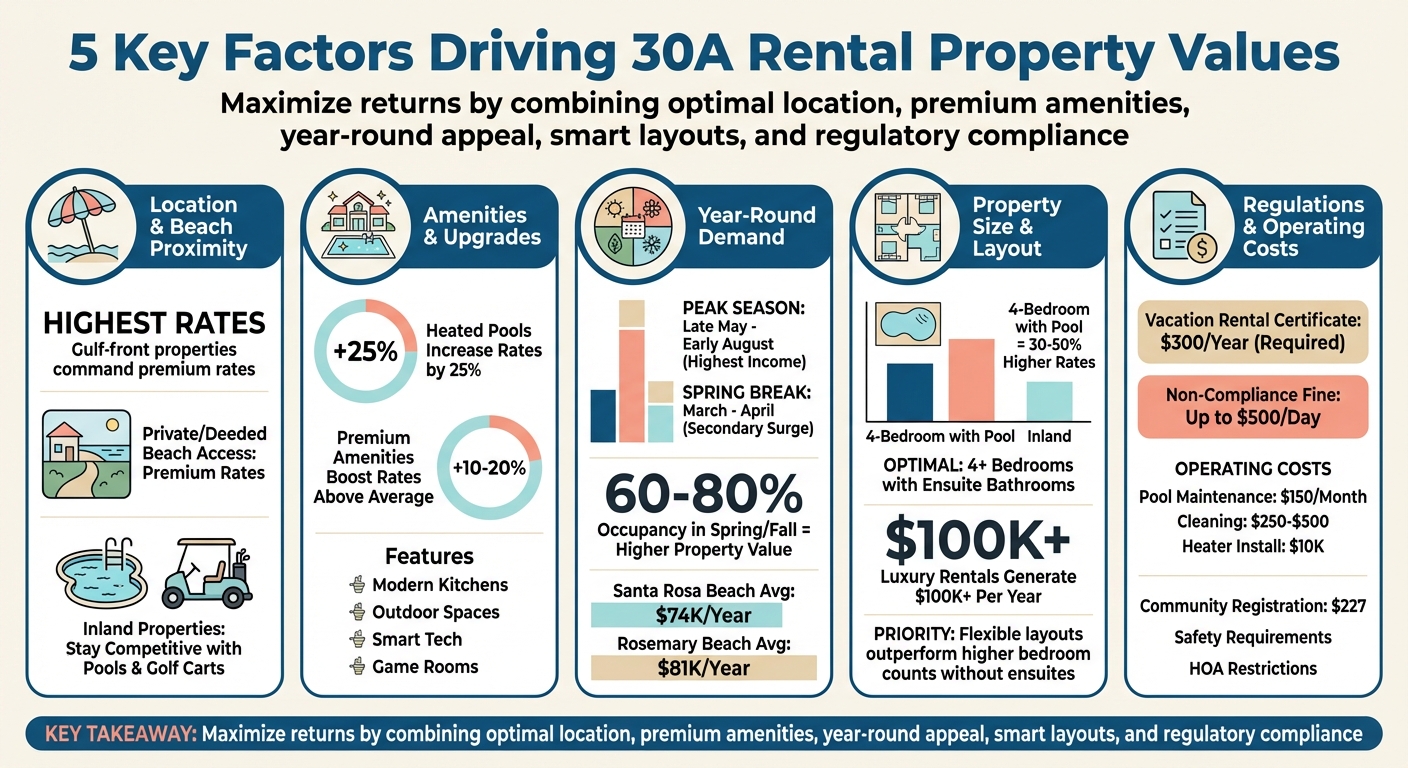
5 Key Factors Driving 30A Rental Property Values and ROI
Want to SUCCEED in 30A's Rental Market IN 2025? Watch This Now!
1. Location and Distance to the Beach
When it comes to property value and rental income along 30A, how close a property is to the beach makes a huge difference. Lyndon Jackson, a real estate agent familiar with the area, puts it plainly:
Distance to beach access is one of the most important factors influencing what buyers should pay for a 30A property.
Gulf-front homes sit at the top of the market, commanding the highest prices and rental rates. Meanwhile, inland properties tend to attract full-time residents looking for larger lots and more affordable options.
But it’s not just about how close you are to the beach - how you access it matters just as much. Properties with private or deeded beach access, like those in WaterSound or Carillon Beach, allow owners to charge much higher rates compared to homes relying on public access points. Before buying, it’s crucial to check whether the property offers private, neighborhood-exclusive, or public beach access. This detail can significantly impact what you can charge. As Jackson points out:
Homes that are just steps from the sand or have private beach access are highly desirable and tend to maintain value even during market fluctuations.
For properties further from the shoreline, offering top-tier amenities can help bridge the gap. Features like heated pools, outdoor kitchens, spacious game rooms, and golf carts can make these homes just as appealing. In fact, many guests today prioritize on-site perks over proximity to the beach. Including a golf cart with your rental, for example, has become a must for homes that aren’t right next to beach access.
Community amenities also play a big role in boosting property value. Neighborhoods such as WaterColor and Alys Beach stand out with features like exclusive beach clubs, resort-style pools, and beautifully maintained parks. These extras justify higher nightly rates, especially when paired with walkable town centers and distinctive architecture. While location remains a key factor, thoughtfully added amenities can take rental performance to the next level.
2. Property Amenities and Upgrades
Amenities play a huge role in determining 30A rental income. Today’s luxury travelers want more than just a place to stay - they’re seeking an experience. As Tanner Shehan from Written By puts it:
Guests pay a premium for properties that feel luxurious.
One of the most popular features? Private heated pools. These can increase nightly rates by up to 25% and extend the rental season into cooler months. Offering pool heating is especially appealing during times when the Gulf water is too cold for swimming.
Modern kitchens are another big draw. Stainless steel appliances and quartz countertops not only look sleek but also signal quality, making higher rental rates easier to justify.
Outdoor spaces matter just as much as the interiors. Features like summer kitchens, fire pits, weatherproof TVs, and low-maintenance astroturf create a resort-like vibe. And don’t overlook climate-controlled game rooms - converted garages with arcade machines or pool tables can attract guests during slower seasons. These extras enhance the guest experience while directly maximizing rental ROI.
Tech upgrades, such as smart locks and high-speed Wi-Fi, are now considered essentials. They improve guest satisfaction and lead to better reviews. Properties with standout amenities often achieve rental rates 10% to 20% higher than average.
Finally, transportation perks like 6-seater golf carts and beach cruisers are a game-changer. They not only speed up bookings but also help justify premium pricing. Together, these features ensure that your property stays in demand year-round.
3. Rental Demand Throughout the Year
Rental demand along 30A varies significantly throughout the year, and properties that maintain steady income across all seasons tend to hold greater value. This consistency translates into more dependable returns for investors.
The peak rental season, running from late May through early August, is when most properties generate the majority of their income. Corbin Roush from the Spears Group explains:
The highest rental income typically occurs during the peak summer season, which runs from late May through early August.
Outside of summer, demand shifts, creating noticeable fluctuations in annual performance. Spring Break, spanning March and April, provides a secondary surge in bookings, with rates higher than those seen during the shoulder seasons. However, winter occupancy often drops below 50%, apart from major holiday periods. By 2026, the gap between peak and off-season performance is expected to widen, with properties offering unique features outperforming more standard options.
Properties that achieve 60–80% occupancy during the spring and fall are valued more highly due to their ability to minimize income fluctuations. For instance, Santa Rosa Beach properties average 57% annual occupancy and bring in about $74,000 in yearly revenue. In contrast, Rosemary Beach properties, with an average daily rate of $700, generate approximately $81,200 annually. The key difference lies in how effectively these properties draw demand beyond the summer months.
To combat the slower off-peak season, many owners employ strategic approaches. Long-term winter rentals aimed at snowbirds, pricing adjustments tied to local events like the 30A Songwriters Festival, and features like outdoor fireplaces that make properties appealing during cooler months all help sustain demand. These strategies not only enhance off-season income but also underscore why year-round rental performance is a critical factor in determining property value along 30A.
4. Property Size and Layout
When it comes to vacation rentals, the number of bedrooms and bathrooms plays a huge role in determining guest capacity and rental income. For instance, a four-bedroom home with a pool and beach access can command 30% to 50% higher nightly rates compared to a similar property located inland without those features.
But it’s not just about the numbers. The layout and design of a property can make or break its appeal. Christine Fox, a Realtor with Christine Fox Realty, highlights this point:
A flexible layout with sufficient bathrooms outperforms a higher bedroom count lacking these features
. For example, a three-bedroom home with ensuite bathrooms and versatile sleeping arrangements might outperform a standard four-bedroom property that lacks private baths or open communal spaces. The sweet spot for maximizing rental potential includes at least four bedrooms, each with an ensuite bathroom. High-performing properties often feature king-sized bedrooms with private baths, along with designated sleeping areas for kids.
The distribution of bathrooms is especially important for guest comfort and operational efficiency. Multigenerational groups - frequent visitors to 30A communities - value privacy, and properties designed with these needs in mind can charge premium rates. By optimizing layouts, owners not only enhance guest satisfaction but also stay competitive in the long run.
Adding functional space is just as important as a well-thought-out interior. While square footage still matters, post-COVID trends show that guests are looking for properties that provide complete "experiences." Homeowners are transforming garages into climate-controlled game rooms with arcade machines and media setups or creating outdoor entertainment spaces with fireplaces and weatherproof TVs. These upgrades not only expand usable space but also justify higher rental rates.
However, vertical layouts with multiple stories might deter certain guests, such as elderly travelers or families with young children. This highlights the importance of designing spaces that cater to a wide range of needs. For properties in prime 30A locations, getting the size and layout just right can lead to impressive returns - some luxury rentals generate over $100,000 per year in gross rental income.
5. Local Regulations and Operating Expenses
When evaluating a property's net value, it's not just about location, amenities, or seasonal demand - compliance costs are a major factor too. Local regulations can significantly influence rental profitability. For example, every vacation rental in Walton County must have a Vacation Rental Certificate (VRC), which costs $300 annually. Failing to comply can lead to fines of up to $500 per day. To stay within the rules, you need to display your VRC number on all online listings and on a physical exterior sign (no larger than 216 square inches).
Starting in 2026, most 30A zip codes will transition to a unified June 1 renewal deadline. However, properties in the 32459 zip code (Santa Rosa Beach) will stick to their existing renewal cycle. Additional fees include $227 for community registration, $125 for changing a managing agent, $25 to update the local responsible party, and an extra $100 processing fee for paper applications.
Beyond permits, operational compliance involves meeting safety standards, including:
- Fire extinguishers on every floor
- Battery-powered emergency lighting
- Balcony inspections every three years for buildings with three or more stories
Noise violations between 10:00 PM and 6:00 AM can result in fines of $500 per day. New construction properties must also provide one off-street parking space for every 900 square feet of living area. Trash management rules require 35 gallons of trash capacity per four occupants, with containers placed curbside no earlier than 4:00 PM the day before pickup.
Operating expenses can quickly add up. Pool maintenance, for instance, typically costs about $150 per month for weekly service, and installing a pool heater may run around $10,000 upfront. Cleaning fees vary, ranging from $250 for a 4-bedroom home to $500 for a larger 6-bedroom luxury property. Internet and cable services will cost you between $64 and $150 per month, depending on the speed and provider. Routine replacements are another ongoing expense - expect to replace pillows every 1–2 years, repaint interiors every 3 years, swap mattresses every 5–7 years, and replace major appliances every 10–12 years.
HOA rules can impose additional restrictions, such as limits on rental durations or guest counts, which might impact your income. Properties with fewer regulatory hurdles and lower ongoing expenses tend to attract higher values, offering better net returns for investors. To stay informed about regulatory updates in the 30A area, visit sowal.co. A clear understanding of these costs and requirements will help you maximize your net returns in this competitive market.
Conclusion
Understanding what influences rental property values on 30A boils down to five key factors. Location and beach proximity set the foundation for value, while quality amenities and modern upgrades make your property stand out. Year-round rental demand shapes occupancy rates and revenue potential, property size and layout determine guest capacity, and short-term rental rules and operating costs directly impact your bottom line.
The 30A market is constantly shifting. Regulatory changes are common, with HOA and county rules varying widely. For example, areas like Blue Mountain Beach have implemented freezes on new short-term rental applications, and many HOAs are introducing stricter rental caps and minimum stay requirements. At the same time, rising insurance premiums and fluctuating home prices - where older homes often see price cuts - add to the complexity. New construction, on the other hand, often commands premium pricing.
To protect your investment and maximize returns, staying informed is crucial. Regularly reviewing HOA minutes and zoning updates can help you adapt to changes that could affect your rental strategy. It's also important to keep track of Vacation Rental Certificate renewal deadlines, which differ by zip code, to ensure compliance with local regulations.
For ongoing updates on community news, regulatory changes, hidden beach access points, and local events that influence seasonal demand, sowal.co is a valuable resource. Their guides cover everything from vacation home maintenance tips and ADA-accessible beaches to specific rules for golf carts and low-speed vehicles. These tools can help property owners stay ahead of market trends, make smart decisions about upgrades and pricing, and navigate the competitive coastal rental market with confidence.
FAQs
Is private beach access worth paying more for?
Private beach access can be worth the extra cost for several reasons. First, it offers a quieter and more serene experience, free from the crowds that often gather on public beaches. You also get the freedom of unrestricted access hours, allowing you to enjoy the beach whenever you want. Plus, private access often includes perks like larger, more comfortable beach setups.
If you're considering this as part of a rental property, it can be a game-changer. The exclusivity and added amenities can make your property more appealing to potential renters, which might help you command higher rental income.
Which upgrades raise 30A rental income the most?
Adding features like private pools can increase nightly rental rates by as much as 25%. On top of that, upgrading luxury amenities - think direct beach access, sleek modern interiors, or smart home tech - can make your property more appealing and boost its rental income potential.
What fees and rules most affect net returns in Walton County?
Several factors can influence net returns for property owners in Walton County. These include:
- Short-Term Rental Certification Fees: Each property requires an annual certification fee of $300.
- Occupancy and Parking Limits: Restrictions on how many guests a property can accommodate and parking availability can affect rental potential.
- Safety Requirements: Meeting local safety standards is mandatory, which may involve additional costs.
Taxes to Consider
Taxes play a significant role in determining net returns. Here's the breakdown:
- Tourist Development Tax: Properties in South Walton are subject to a 5% tax, while those in North Walton pay 3%.
- State and Local Taxes: A 6% state sales tax and a 1% county surtax apply to all rentals.
This means the total tax rate is either 12% in South Walton or 10% in North Walton, depending on the property's location. Property owners must ensure these taxes are collected from guests and properly remitted.