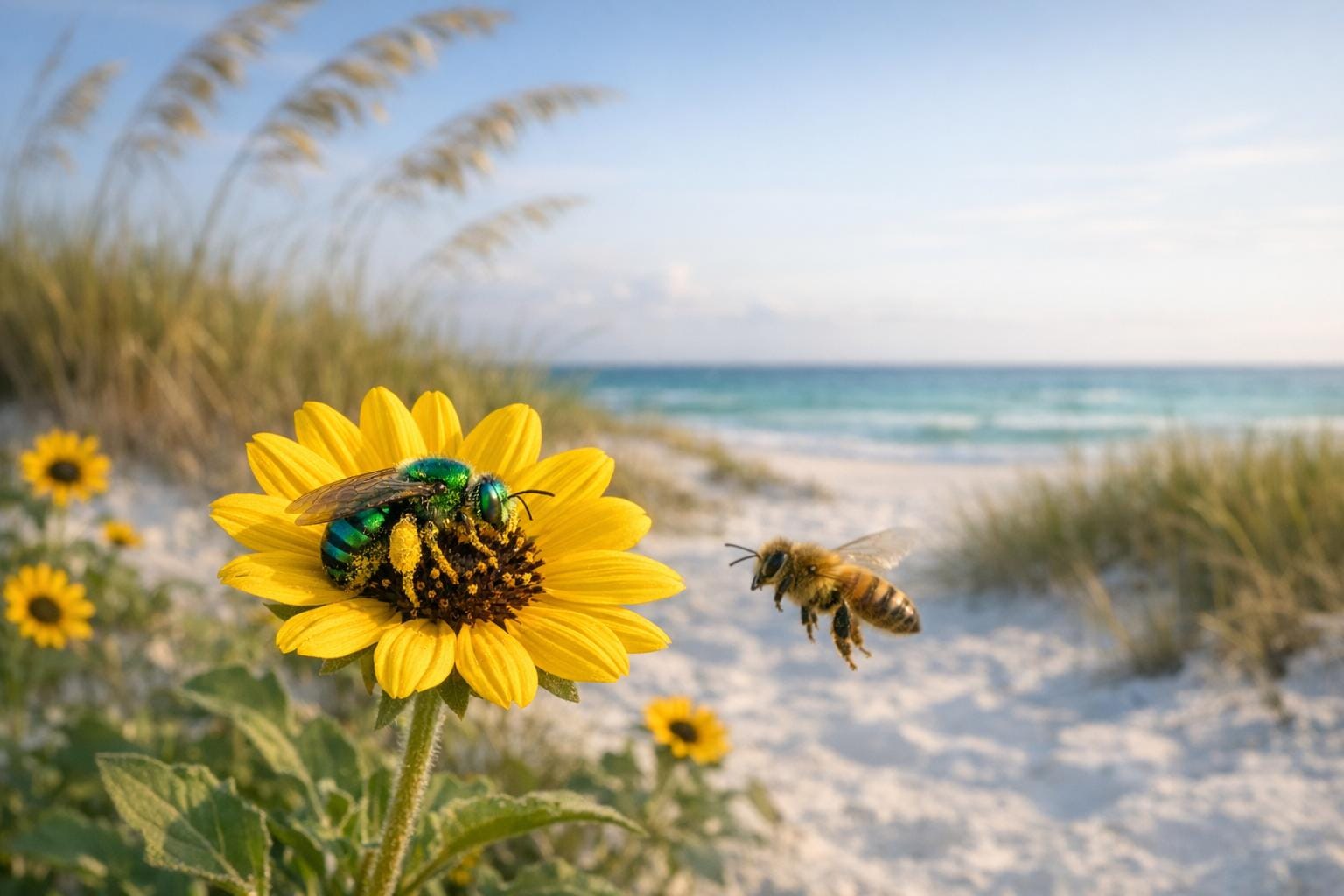
Native pollinators are critical for South Walton’s ecosystems, while non-native honey bees often create challenges. Here’s why:
- Native pollinators like the Southeastern Blueberry Bee and Gulf Fritillary butterfly have evolved alongside local plants, making them highly effective at supporting wildflowers and stabilizing coastal habitats.
- Non-native honey bees, introduced for agriculture, compete with native species for resources but are less efficient at pollinating local plants.
- South Walton’s rare coastal dune lakes and unique biodiversity depend on native pollinators to maintain balance, yet threats like land conservation vs. development challenges, pesticides, and climate change are putting them at risk.
- Honey bees, though helpful for crops, can disrupt local ecosystems by outcompeting native species and spreading diseases.
Quick Overview
- Native Pollinators: Better suited for local plants, support biodiversity, face threats like habitat loss.
- Non-Native Honey Bees: Good for agriculture but compete with and harm native species.
Small actions, like planting native flowers and reducing pesticide use, can help protect South Walton’s pollinators and their essential role in preserving the region’s natural beauty.
Native Pollinators in South Walton
Common Native Pollinator Species
South Walton's coastal environment is a haven for a variety of native pollinators, uniquely adapted to thrive in sandy soils, withstand salt spray, and navigate shifting dunes. Florida is home to numerous native bee species, and several are perfectly suited for the Panhandle's coastal habitats.
One standout species is the Southeastern Blueberry Bee (Habropoda laboriosa), a specialist pollinator that plays a key role in pollinating native blueberry and cranberry plants. Other notable native bees include the American Bumble Bee (Bombus pensylvanicus), various Sweat Bees (Halictidae), and Leafcutter Bees (Megachilidae). Most of these bees are solitary and nest in the ground, taking advantage of South Walton's abundant sandy soils.
Butterflies also contribute significantly to pollination. The Gulf Fritillary (Agraulis vanillae) feeds on nectar from a variety of plants but depends on native Passionflower (Passiflora) vines for its larvae. The Zebra Longwing (Heliconius charithonia), Florida's state butterfly, has a unique diet that includes both nectar and pollen, enabling it to live longer and lay more eggs than most butterflies. During migration, species like the Monarch (Danaus plexippus) and Palamedes Swallowtail (Papilio palamedes) also play a role in pollination. Additionally, the Ruby-throated Hummingbird (Archilochus colubris) serves as the region's primary avian pollinator.
These pollinators, with their specialized behaviors and diets, not only enrich South Walton's biodiversity but also play a vital role in maintaining its ecosystems.
How Native Pollinators Support Local Ecosystems
Native pollinators are essential to the health of South Walton's ecosystems, thanks to their long-standing, specialized relationships with local plants. For example, many native bees use "buzz pollination" (or sonication), a technique where they vibrate their flight muscles to release pollen trapped deep within flowers. This makes them 2–3 times more effective at pollinating native wildflowers and certain crops compared to non-native honeybees.
These pollinators are critical for the reproduction of coastal plants like Sea Oats (Uniola paniculata) and Bitter Panicum, which help stabilize sand dunes and shield the shoreline from erosion and storm surges. Around South Walton's rare coastal dune lakes, they support the growth of vegetation that filters runoff and sustains the delicate balance of brackish ecosystems.
By ensuring the survival of native plants, pollinators also sustain the broader food web. Native flora provides the chemical compounds and habitats that local insects, birds, and mammals rely on. South Walton is part of the North American Coastal Plain, a globally recognized biodiversity hotspot, making the work of these pollinators essential for preserving the region's unique species.
Threats Facing Native Pollinators
Despite their importance, native pollinators in South Walton face numerous challenges. One of the most pressing threats is rapid development along the Scenic Highway 30A corridor. Residential and commercial construction replaces natural scrub and pine forests with landscaped areas, creating fragmented habitats. This isolation makes it harder for pollinators to find food and nesting sites. Ground-nesting bees, in particular, struggle when bare soil is covered with heavy mulch or other landscaping materials.
Pesticides present another significant problem. Broad-spectrum insecticides used for mosquito control or lawn care can kill native pollinators and contaminate their food sources. Systemic pesticides like neonicotinoids linger in plant tissues, poisoning bees and their larvae long after the chemicals are applied.
Climate change and rising sea levels add additional pressures. Saltwater intrusion into coastal dune lake ecosystems and mismatched flowering times disrupt the delicate balance between plants and pollinators. Invasive plants like Cogongrass also crowd out native wildflowers such as Blanket Flower (Gaillardia) and Beach Sunflower (Helianthus debilis), depriving pollinators of essential food sources.
To counter these challenges, some communities, including Seaside and Alys Beach, are adopting "Florida-Friendly Landscaping" practices to create pollinator corridors. Conservation efforts are also focusing on "Living Shorelines", which use native plants to protect against coastal erosion while supporting pollinator habitats.
Non-Native Pollinators in South Walton
Common Non-Native Pollinator Species
The European honey bee (Apis mellifera) stands out as the most prominent non-native pollinator in South Walton. Originally hailing from Europe, Africa, and parts of Asia, these bees were introduced to North America in the 1620s and have since become the most widely managed pollinator across the continent.
Unlike South Walton's native solitary bees, which nest individually in sandy soils, honey bees form massive colonies ranging from 15,000 to 50,000 members. This creates intense competition for nectar and pollen, resources that native pollinators rely on for survival. Honey bee colonies are essentially domesticated, and their numbers have reached unprecedented levels globally.
Studies conducted in USDA zones 8b and 9a (covering the Panhandle region) revealed that honey bees only accounted for 7.6% of total floral visits, while native small-to-medium bees dominated with over 55% of visits. Despite their large colonies, honey bees play a relatively small role in pollinating South Walton's native plants compared to the region's native pollinator species. This highlights the dual nature of honey bees: beneficial for agriculture but challenging for local ecosystems.
Benefits of Non-Native Pollinators
Honey bees have become indispensable in agriculture, thanks to their ability to visit flowers frequently. This makes up for their lower efficiency as pollinators. Their importance grew in the early 20th century when they helped pollinate monoculture crops and offset the damage caused by widespread insecticide use. Managed hives are portable, allowing farmers to transport them to orchards and fields as needed, providing a dependable pollination service.
Honey bees visit flowers 80% more often than native pollinators. This increased activity can sometimes balance out their lower pollination success rates, resulting in comparable seed and fruit production for certain crops. As one study explains, "the higher visitation frequency of exotic pollinators overcame deficiencies in pollen removal and transfer resulting in seed/fruit set levels similar to native pollinators".
For residents of South Walton with gardens or fruit trees, having honey bee hives nearby can enhance pollination during peak blooming seasons. However, these benefits come with significant ecological trade-offs.
Problems Caused by Non-Native Pollinators
Unlike native pollinators that have co-evolved with local plants, non-native honey bees often disrupt these delicate relationships. Their large colonies create intense competition for resources, making it difficult for native solitary bees to thrive. To put this in perspective, a single honey bee hive can collect enough pollen in three months to sustain 100,000 native solitary bees.
Honey bees are also less effective pollinators for native plants. They groom pollen into compact, moist "cakes" on their legs to bring back to the hive, which reduces the chances of pollen reaching a flower's stigma. By contrast, native bees carry dry pollen grains scattered across their bodies, making them far more effective. On average, exotic pollinators are 55% less efficient per visit when pollinating native plants. Additionally, honey bees lack the "buzz pollination" technique that native bees use to pollinate plants like blueberries.
Another issue is nectar theft. Honey bees sometimes bite holes in flowers to access nectar without aiding pollination. They also spread pathogens such as deformed wing virus to native bumble bees, accelerating the decline of these already-vulnerable species. Currently, 28% of North American bumble bee species are threatened, and more than 40% of invertebrate pollinators are at risk of extinction.
"Beekeeping is not bee conservation. Managed honey bees are domesticated livestock, and their very presence has the potential to harm native species." - Rich Hatfield and Matthew Shepherd, Xerces Society
High-density urban beekeeping poses additional risks. When floral resources are limited, an overabundance of honey bees can reduce the diversity of native bee species in the area.
Why native bees are better pollinators than the honey bee
Native vs. Non-Native Pollinators: Direct Comparison
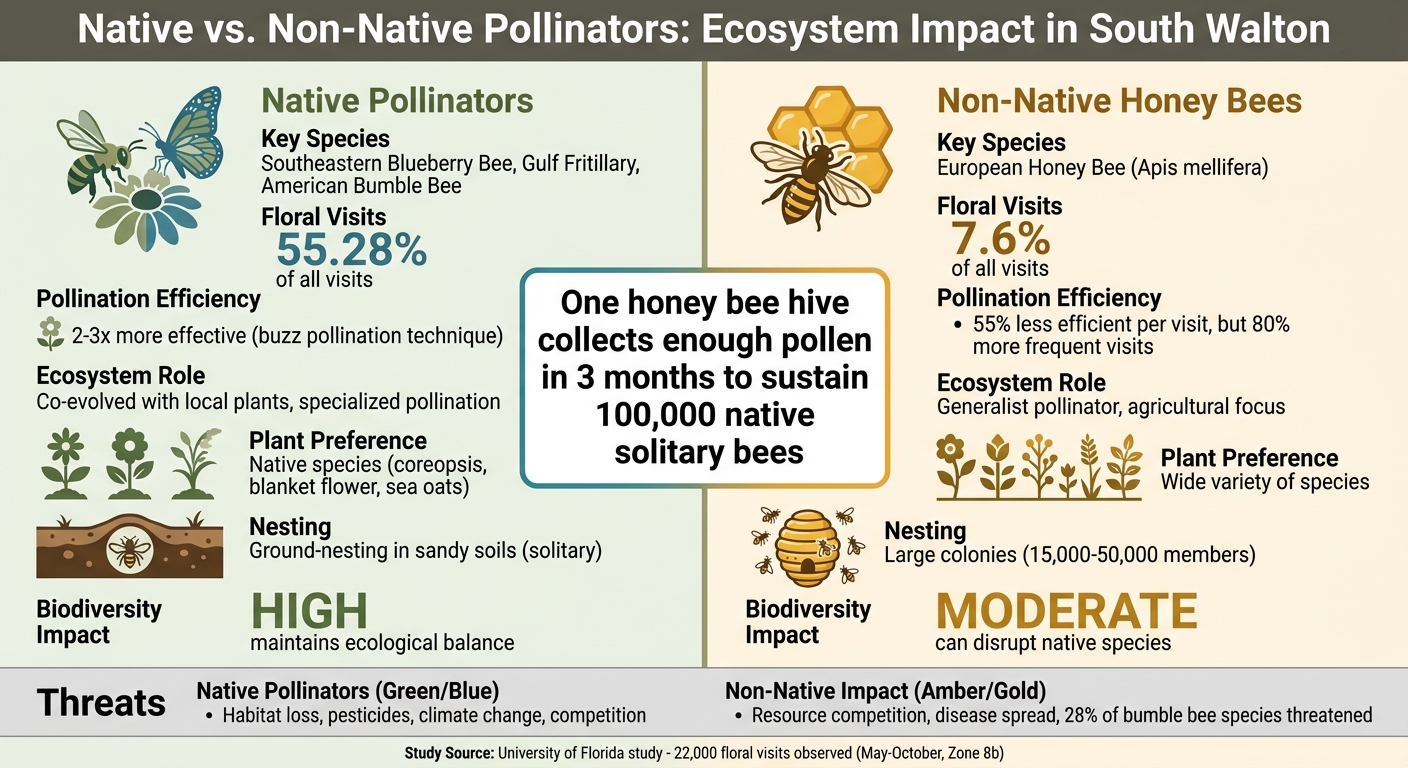
Native vs Non-Native Pollinators in South Walton: Ecosystem Impact Comparison
Differences in Ecosystem Impact
Native pollinators and non-native honey bees play distinct roles in South Walton's ecosystems. A 2019 University of Florida study conducted in Quincy (Zone 8b, similar to South Walton's climate) observed around 22,000 floral visits on ornamental plants between May and October. Interestingly, native small-to-medium-bodied bees were responsible for 55.28% of all visits, while non-native honey bees accounted for only 7.6%.
This difference highlights how native pollinators are uniquely adapted to the local environment. Native bees have evolved alongside regional plants, making them highly effective at pollinating species like lanceleaf coreopsis and blanket flower. In contrast, non-native honey bees, while versatile, often lack the specialization needed to support rare or endemic plants.
"A higher quantity and diversity of native plants have been found to support a more prolific abundance and diversity of pollinator types." - HortScience
The ecological ripple effects are significant. Native perennial plants provide consistent year-round pollen and nectar sources, whereas the availability of non-native annual plants can vary widely. Research from Badlands National Park found that removing invasive plants allowed pollinators to shift their focus to native species, helping restore ecological balance. This adaptability underscores the resilience of native pollinator networks, as shown in the comparison below.
Strengths and Weaknesses of Each Group
| Aspect | Native Pollinators | Non-Native Pollinators |
|---|---|---|
| Biodiversity Support | High; responsible for 55.28% of local floral visits | Moderate; accounts for 7.6% of visits in ornamental settings |
| Ecosystem Balance | Strong; co-evolved with local flora for specialized pollination | Can disrupt balance; may compete with native bees for resources |
| Agricultural Benefits | Crucial for native crops and specific wild plant reproduction | Broad support for commercial and non-native crops |
| Resource Preference | Favor native plants like coreopsis and blanket flower | Generalists; visit a wide variety of species |
| Threats | Habitat loss, climate change, and competition for resources | Competition with natives, spread of diseases, and habitat shifts |
Native pollinators are vital for maintaining South Walton's ecological health, but they face growing challenges like habitat loss and climate change. Non-native honey bees, while valuable for agriculture, can sometimes upset the delicate balance required for native species to thrive.
Conclusion
Main Points
Research from South Walton highlights how native pollinators play a crucial role in maintaining local ecosystems through their unique relationships with native plants. These partnerships help sustain biodiversity. On the other hand, non-native pollinators often compete for nectar, which can disrupt these delicate ecological balances. Encouragingly, studies show that pollinators are willing to return to native plants when invasive species are controlled, and native options are made available. Striking this balance is essential to protecting South Walton's coastal ecosystems and the biodiversity they support.
This research emphasizes the power of small, everyday actions in restoring ecological harmony.
How to Help Pollinators in South Walton
You can make a difference by supporting native pollinators through thoughtful choices in your own backyard. Here are some practical steps:
- Plant a variety of native species that bloom at different times throughout the year to ensure pollinators have consistent food sources .
- Include host plants for butterfly and moth caterpillars, providing them with more than just nectar.
- Delay spring garden cleanups to protect pollinators that overwinter in plant debris, and reduce pesticide use to create a safer environment.
For guidance, check out resources like the Xerces Society's native plant lists tailored for Florida and the Southeast or the Ladybird Johnson Wildflower Center's plant database. These tools can help you design a pollinator-friendly garden that aligns with South Walton's natural beauty and ecological needs.
FAQs
Are honey bees bad for South Walton’s native pollinators?
Honey bees, brought to North America in the 1600s, are not native to the region and often outcompete South Walton’s native pollinators. This competition can upset local ecosystems, potentially harming the area's plants and wildlife. While honey bees themselves aren't "bad", their presence can reduce biodiversity, which plays a crucial role in maintaining South Walton’s natural beauty and ecological health.
Which native plants best support local pollinators year-round?
Native plants play a key role in supporting local pollinators throughout the year, especially those suited to South Walton's unique soils and climate. These plants not only provide nectar and pollen for adult pollinators but also serve as essential food sources for caterpillars and habitats for beneficial insects. For guidance on choosing the right pollinator-friendly plants, the Xerces Society offers a helpful list specifically tailored to Southeast Florida, making it a great resource for plant selection.
How can I help pollinators without using pesticides?
You can support pollinators by making small, thoughtful changes in your gardening and landscaping practices. Start by planting native wildflowers that offer both nectar and pollen - these are a lifeline for bees, butterflies, and other pollinators. Avoid using chemical pesticides and fertilizers, as they can harm these essential creatures. Instead, consider creating welcoming spaces like bee hotels or leaving patches of undisturbed soil for ground-nesting bees.
By incorporating native plants into your garden, you’re not just beautifying your space - you’re also strengthening local ecosystems and helping wildlife thrive. Pair this with conservation efforts and eco-friendly landscaping techniques, and you’ll naturally encourage pollinator populations to flourish. Every small step makes a difference!