Protecting Sea Turtles on 30A Beaches
How artificial light, beach hazards, predators, and human activity threaten sea turtles on 30A—and simple 'Clean, Dark, Flat' steps to protect nests.
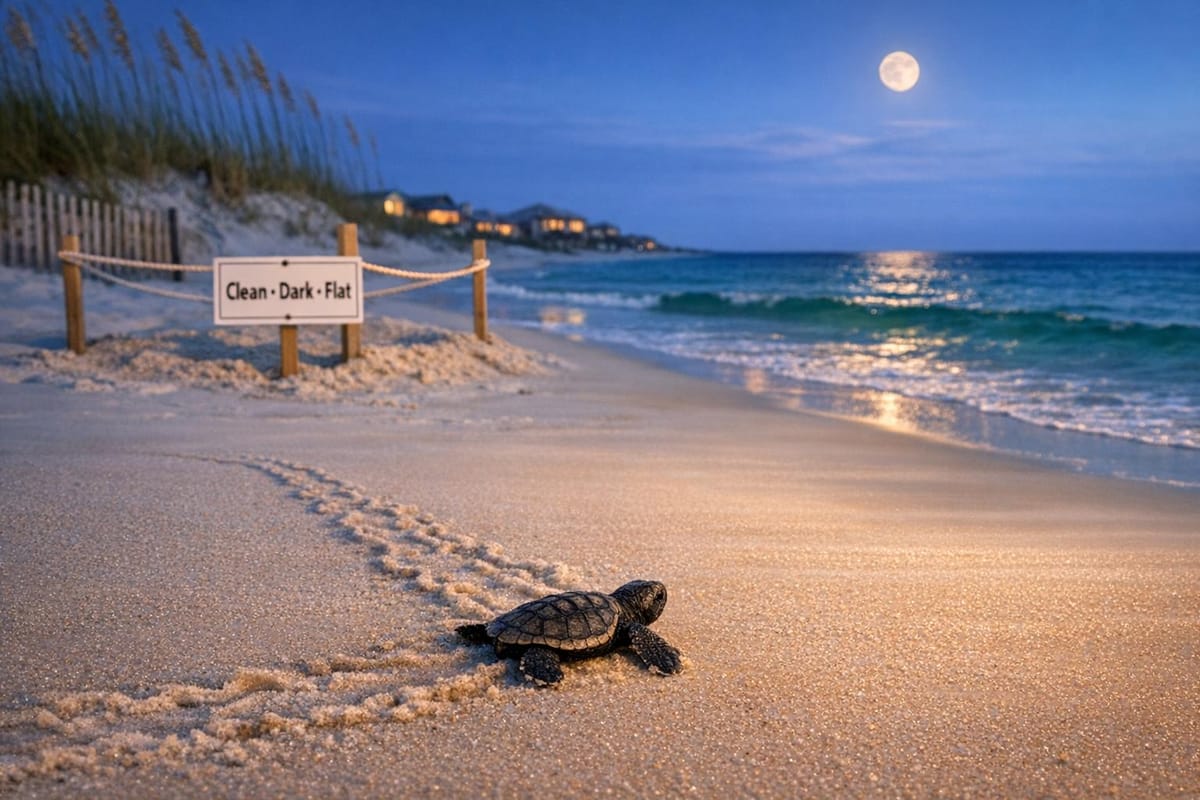
Sea turtles on 30A beaches face numerous challenges during their nesting season from May to October. Artificial lighting, beach obstacles, predators, and human interference significantly impact their survival. Only 1 in 1,000 hatchlings makes it to adulthood, highlighting the importance of conservation efforts.
Here’s what you need to know:
- Threats: Bright lights disorient hatchlings, beach debris traps turtles, and predators destroy nests.
- Conservation Efforts: Programs like South Walton Turtle Watch patrol and protect nests, while education campaigns promote safe practices.
- How You Can Help: Turn off beachfront lights, remove obstacles, and report injured turtles. Follow the “Clean, Dark, Flat” rule to ensure safe nesting.
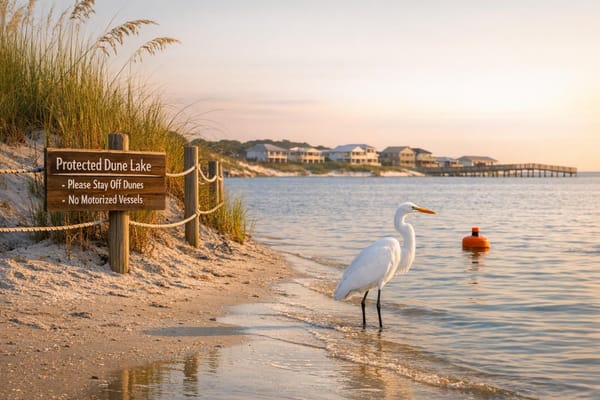
Simple actions can make a big difference for these ancient creatures and the coastal ecosystem. This includes protecting rare coastal dune lakes that provide critical habitats nearby. Together, we can help protect sea turtles for future generations.
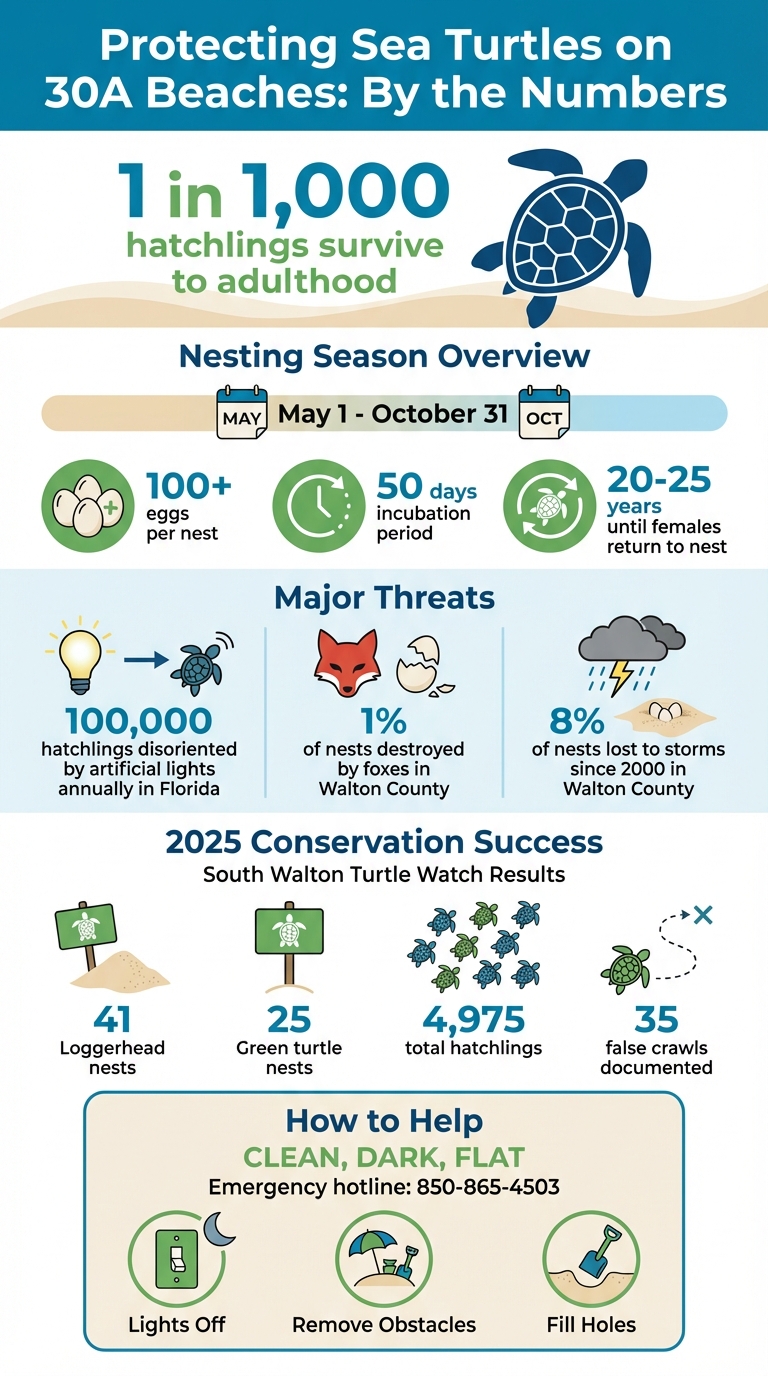
Sea Turtle Conservation Statistics and Threats on 30A Beaches
Clean, dark, flat: Guidelines for protecting sea turtles during North Florida’s nesting season
Threats to Sea Turtles on 30A Beaches
The picturesque coastline of 30A is home to sea turtles, but these ancient creatures face numerous dangers that drastically reduce their chances of survival. Understanding these challenges is essential to protecting them. This is especially true during sea turtle nesting season, when both adults and hatchlings are most active.
Artificial Lighting Confuses Hatchlings
Artificial lighting is a major hazard for sea turtle hatchlings. When baby turtles emerge from their nests at night, they instinctively head toward the ocean, guided by the moon's glow. However, bright lights from homes, businesses, and condos often lead them astray. Each year in Florida, an estimated 100,000 hatchlings become disoriented, wandering into roads, parking lots, or even swimming pools. These missteps expose them to dehydration, exhaustion, predators, and the risk of being hit by vehicles. Bright lights also deter nesting females, causing some to abandon their nesting attempts altogether.
"When they pop out of an egg in a dark nest, their very first instinctive drive is to make it to the water and swim out as far as they can... When they get disoriented like that, they expend all of that energy scrambling around looking for the ocean. They become very vulnerable to predation, to dehydration, to being cooked in the sun, to being crushed by cars."
– David Godfrey, Executive Director, Sea Turtle Conservancy
Efforts to address this issue have shown promise. For instance, between 2013 and 2018, a Santa Rosa Beach condominium development switched to turtle-friendly lighting through funding from the Gulf Environmental Benefit Fund. This change created a safer nesting area and significantly reduced hatchling disorientation. While lighting is a key issue, other human activities and obstacles also pose serious risks.
Beach Obstacles and Human Interference
Beach debris like chairs, umbrellas, tents, and toys can become life-threatening barriers for both nesting mothers and hatchlings. Deep holes, sandcastles, and sand piles left behind by beachgoers can trap turtles, preventing them from reaching the ocean. Human actions, such as using flash photography, shining bright flashlights, or approaching nesting turtles, can disturb females enough to make them abandon their nests. Handling hatchlings is not only disruptive to their natural imprinting process but is also illegal.
Vehicles on the beach add another layer of danger. They can crush nests, injure turtles, and leave behind tire ruts that trap hatchlings or cast shadows that misdirect them. These human-made hazards make it even harder for turtles to safely nest and for hatchlings to find their way to the water. On top of these challenges, natural predators and environmental forces further threaten sea turtle nests.
Predators and Low Survival Rates
Sea turtle eggs and hatchlings are vulnerable to natural predators like ghost crabs, raccoons, and foxes. In Walton County, foxes are responsible for destroying about 1% of nests annually. Human-related trash, including food waste, attracts these predators and increases the likelihood of nest raids.
Environmental factors also play a significant role. Storms can cause "washouts", where waves wash away sand containing eggs. Since 2000, approximately 8% of nests in Walton County have been lost to storms. Tidal inundation, which occurs when seawater saturates a nest, often results in the death of all embryos inside.
The combination of artificial lighting, physical barriers, human interference, natural predators, and environmental challenges highlights the urgent need for targeted conservation efforts to protect these vulnerable turtles.
Sea Turtle Nesting Season on 30A
May to October Nesting Period
Sea turtle nesting season along 30A spans from May 1 to October 31, with four primary species making their nests here: Loggerhead, Green, Leatherback, and Kemp's Ridley. Occasionally, Hawksbill turtles also make an appearance. These nesting cycles highlight the importance of conservation efforts on 30A beaches, helping protect the fragile coastal ecosystem.
Female sea turtles have an incredible homing instinct, returning to the very beaches where they hatched. This behavior is tied to a process called imprinting, which occurs during their first crawl to the ocean. When nesting, turtles often choose the "toe of the dune" to lay their eggs. Each nest can hold over 100 eggs, which incubate for about 50 days before hatching. Green turtles primarily nest from June to late September, while Loggerheads nest throughout the entire season. In 2015, 1,499 Loggerhead nests were recorded across seven Northwest Florida counties, including Walton. These nests play a critical role in the hatchlings' eventual journey to the ocean.
How Hatchlings Reach the Ocean
After incubating, hatchlings emerge at night when the sand cools. They rely on the light of the moon and stars reflecting off the Gulf to guide them toward the water. This journey is more than just a dash to the sea - it’s a crucial step in their imprinting process, ensuring they can return to the same beach decades later to nest.
"It's very important that the hatchlings can walk from the nest all the way to the water. They are imprinting on the sand so they know where to come back to."
– Sharon Maxwell, Founder, South Walton Turtle Watch
This imprinting means female turtles will return to the same beach 20 to 25 years later to lay their eggs. It’s why touching or "helping" hatchlings is illegal - they need to complete the journey on their own. Once they make it to the water, they swim offshore as quickly as possible, seeking safety in sargassum weed while evading predators like birds and crabs.
Conservation Programs on 30A Beaches
30A beaches are home to various conservation efforts that blend hands-on protection, public education, and scientific research to ensure the survival of sea turtles.
South Walton Turtle Watch Patrols

The South Walton Turtle Watch (SWTW), led by Lacie Wegner, conducts daily sunrise patrols from May 1 to October 31. These surveys focus on identifying sea turtle tracks and marking nests to protect them during incubation. When a nest is discovered, volunteers record the species and secure the area with stakes and flagging tape. They also differentiate between "false crawls" - when a turtle returns to the water without laying eggs - and successful nests, reporting their findings to the Florida Fish and Wildlife Conservation Commission (FWC).
In the 2025 season alone, SWTW safeguarded 41 Loggerhead nests and 25 Green nests, resulting in 4,975 hatchlings, while also documenting 35 false crawls. The group operates a 24-hour Sea Turtle Hotline (850-865-4503) for reporting sick, injured, or deceased turtles, ensuring live turtles are transported to rehabilitation centers. After each nest hatches, volunteers conduct post-hatch inventories to evaluate success rates. These patrols not only protect sea turtles but also foster community awareness and contribute to state-level conservation efforts.
Friends of South Walton Sea Turtles Education Programs
Friends of South Walton Sea Turtles (FOSWST) focuses on educating the public about sea turtle conservation. Their mission, "Conservation through awareness & education", targets both locals and the millions of tourists visiting the 30A area.
One of their standout initiatives, "Wild Sea Turtle Wednesdays", runs during June and July, offering interactive educational booths and family-friendly activities. FOSWST also holds story time sessions at The Hidden Lantern bookstore in Rosemary Beach, teaching children about the importance of protecting sea turtles. Their Volunteer Beach Ambassador Program trains individuals to lead educational sessions in schools and promote the #CleanDarkFlat campaign. This initiative encourages beachgoers to keep beaches clean, turn off lights at night, and flatten sandcastles to create a safer environment for turtles. Additionally, FOSWST engages with the community through presentations at events, libraries, and snowbird gatherings, reinforcing the importance of conservation.
State Monitoring and Record Nest Counts
The Florida Fish and Wildlife Conservation Commission (FWC) oversees sea turtle management across the state. Partnering with local groups like SWTW, they monitor nesting activity and assess the health of turtle populations.
In 2024, South Walton recorded 64 Loggerhead and 6 Green nests, producing 3,845 hatchlings. By 2025, the numbers shifted to 41 Loggerhead and 25 Green nests, resulting in 2,951 Loggerhead and 2,024 Green hatchlings. These figures, along with data from other Gulf Coast counties - such as the 1,499 Loggerhead nests documented in 2015 - help scientists track nesting trends and population health.
"In order to keep sea turtles and our beaches and oceans healthy, it's important for all of us to be good neighbors and do our part."
– Dr. Robbin Trindell, Sea Turtle Management Program Leader, Florida Fish and Wildlife Conservation Commission
How You Can Help Protect Sea Turtles
If you're on 30A during the May 1–October 31 sea turtle season, there are simple steps you can take to protect these incredible creatures. The guiding principle is straightforward: keep beaches Clean, Dark, and Flat. By addressing common threats like artificial lighting and beach hazards, you can help nesting mothers and hatchlings safely reach the ocean.
Turn Off Beachfront Lights
Artificial lighting is a major problem for sea turtles. Hatchlings can become disoriented, crawling in circles or heading inland instead of toward the water. To prevent this, turn off all unnecessary outdoor lights after dark, including decorative string lights and uplighting. Close curtains or use shades to block indoor lights that might spill onto the beach - these can be even brighter than outdoor lights.
If safety lighting is essential, opt for low, shielded fixtures with long-wavelength bulbs (560 nm or greater). These bulbs emit amber, orange, or red light, which is less disruptive to turtles. Make sure the light is directed downward and away from the beach. If you're walking on the beach at night, use a red or amber flashlight designed to be turtle-friendly, and avoid using your phone's flashlight or camera flashes.
Remove Beach Hazards
Beach obstacles can be life-threatening for hatchlings. Before sunset, remove all beach gear like chairs, umbrellas, and toys. Fill in any holes and flatten sandcastles to create a smooth path for the turtles. Dispose of food scraps properly to avoid attracting predators such as raccoons and crows, which can prey on turtle eggs and hatchlings. If you're using an umbrella, avoid burying the pole directly in the sand - use a pole-holder or sleeve instead to keep the area clear.
Report Injured Turtles
If you come across a sick, injured, or dead turtle, immediately call the Florida Fish and Wildlife Conservation Commission (FWC) Wildlife Alert Hotline at 888‑404‑3922 (or dial *FWC on your cell phone). For local sightings on 30A, contact the South Walton Turtle Watch Hotline at 850‑865‑4503. Families can also get involved through South Walton Turtle Watch youth programs that teach kids how to monitor nests and reduce hazards. It's important to remember that under the Endangered Species Act, it's illegal to touch or disturb sea turtles, their eggs, or nests. Keep at least 50 feet away from nesting turtles to avoid interfering with their natural process. If you find a stranded turtle, don’t push it back into the water - wait for trained responders to arrive.
For more tips on enjoying and preserving the beauty of the area, explore our 30A and South Walton guides.
Long-Term Protection Methods and Results
Efforts to counter the threats posed by artificial lighting and human activity have been central to the recovery of sea turtle nesting along 30A. These strategies combine advancements in fishing technology, habitat conservation, and legal measures to address dangers both onshore and offshore.
Turtle Excluder Devices on Shrimp Boats
Turtle Excluder Devices (TEDs) are specialized metal grids with bars and mesh that are integrated into trawl nets. These grids allow shrimp to pass through while redirecting larger animals, like sea turtles, out of the nets via an escape flap. When installed and maintained correctly, TEDs are shown to be 97% effective in reducing sea turtle deaths in commercial fishing operations. Since their federal mandate in 1987, TEDs have played a crucial role in protecting all five sea turtle species found near 30A: Loggerhead, Kemp's Ridley, Green, Leatherback, and Hawksbill.
The impact of TEDs is evident in the recovery of Kemp's ridley turtles, whose nests grew from 2,000 in 1996 to approximately 17,000 by 2022, thanks to these devices and improved nest protection. Beyond aiding turtles, TEDs benefit shrimpers by reducing bycatch of sharks and rays, clearing marine debris from nets, and improving shrimp quality. Highlighting the collaboration between government and fishermen, Jeff Gearhart, Harvesting Systems Branch Chief at the Southeast Fisheries Science Center, remarked:
"Having worked as commercial fishermen prior to entering government service, many of our staff bring a unique credibility to their collaborations with industry, which strengthens relationships and builds trust between fishermen and the agency."
While TEDs address threats at sea, conservation efforts onshore ensure the survival of hatchlings.
Protected Nesting Areas in State Parks
State parks like Topsail Hill Preserve and Grayton Beach State Park offer essential beach and dune habitats where sea turtles can nest without disturbance. From March 1 to October 31, park staff and volunteers survey these beaches, marking and securing nests to prevent interference. In areas with high predator activity, wire screens are used to shield nests from animals like raccoons and coyotes.
Since 2017, the Florida Park Service has utilized the Survey123 mobile application to collect real-time nesting data, improving population monitoring and management. After 75 days, teams excavate nests to count empty shells and unhatched eggs, assess success rates, and assist straggler hatchlings in reaching the water. In South Walton, nest counts included 84 in 2015 and 57 in 2016.
These protected zones, combined with strict regulations, create a safer environment for sea turtles to thrive.
Visitor Rules and Legal Protections
Sea turtles, their nests, and eggs are safeguarded under both state and federal law. Visitors are required to stay at least 50 feet away from nesting turtles, as close proximity can cause a mother to abandon her nest. Violating these rules can result in fines of up to $2,500.
Regulations also restrict activities like beach driving and bonfires, which can crush nests or disorient hatchlings. Dr. Robbin Trindell, Sea Turtle Management Program Lead at FWC, underscores the importance of these measures:
"In order to keep sea turtles and our beaches and oceans healthy, it's important for all of us to be good neighbors and do our part."
Conclusion
Sea turtles on 30A beaches face serious challenges from artificial lighting, beach obstacles, and human activity. However, a mix of state programs, protected nesting areas, and community involvement is making a noticeable impact. Since 1995, South Walton Turtle Watch has encouraged simple yet effective actions like turning off lights, removing obstacles, and filling in holes - steps that directly improve hatchling survival. As Sharon Maxwell, founder of South Walton Turtle Watch, explains:
"I know we've been saying our same spiel since 1995, 'turn off the lights,' 'pick stuff up.' But it really makes a difference".
These efforts are paying off, as seen in the recovery of loggerhead nests. Despite only 1 in 1,000 hatchlings surviving to adulthood, protecting nests today secures the species' future. For example, loggerhead nesting rates rebounded, with 1,499 nests documented across seven Gulf coast counties in 2015.
Individual actions matter most when paired with community efforts. Whether it’s reporting injured turtles to the FWC Wildlife Alert Hotline at 1-888-404-3922 or keeping a respectful distance from nesting turtles, every contribution helps. Dr. Robbin Trindell, who leads the Sea Turtle Management Program at the Florida Fish and Wildlife Conservation Commission, highlights this shared responsibility:
"In order to keep sea turtles and our beaches and oceans healthy, it's important for all of us to be good neighbors and do our part".
The hatchlings leaving 30A beaches today won’t return to nest for another 20 to 25 years. Protecting sea turtles requires a long-term commitment, not just a single season of effort. By taking these steps, both residents and visitors can help preserve sea turtles and the coastal environment for generations to come.
FAQs
How does artificial lighting endanger sea turtle hatchlings?
Artificial lighting poses a serious threat to sea turtle hatchlings, often leading them astray from the ocean. These young turtles instinctively rely on the moon and starlight reflecting off the water to find their way. However, bright lights from beachfront properties and developments can create misleading signals. This confusion can leave hatchlings disoriented, causing exhaustion, making them easy prey, and frequently leading to fatal outcomes.
To address this issue, local communities have implemented measures to protect hatchlings. Beachfront properties are encouraged - or in some cases required - to use low, shielded lighting with long-wavelength colors, such as amber or red. These types of lights are less likely to disrupt the hatchlings' natural navigation. By adopting these practices, coastal areas along 30A are helping ensure that more hatchlings make it safely to the ocean, contributing to ongoing sea turtle conservation efforts.
How can I help protect sea turtles while visiting 30A beaches?
You can take simple steps to help protect sea turtles on 30A beaches while making a big difference. Maintain a safe distance of at least 50 feet from nesting turtles or their nests. At night, avoid using bright lights or flash photography, as artificial lighting can confuse both nesting turtles and hatchlings. To minimize this risk, turn off unnecessary outdoor lights or switch to turtle-friendly amber lighting.
Keep the beaches clean and obstacle-free. Fill in any holes, pick up trash, and remove items like chairs or umbrellas before sunset. These actions ensure turtles can move freely without encountering barriers. If you spot a distressed or stranded turtle, don’t approach or handle it - this can harm the animal and is against the law. Instead, contact local authorities or the Turtle Watch hotline for assistance.
By taking these straightforward actions, you can play a part in protecting sea turtles and preserving the beauty of 30A beaches for future generations.
Why do sea turtle hatchlings need to make their own way to the ocean?
Sea turtle hatchlings must make their own way to the ocean because this trek plays a key role in their early development. Crawling across the sand not only strengthens their flippers but also helps them imprint on their birth beach. This imprinting is crucial for their ability to navigate back as adults to lay eggs.
When humans interfere - whether by handling the hatchlings or redirecting them - it can cause confusion and lead them away from the water. This increases their vulnerability to dehydration, exhaustion, or predators, all of which can be deadly. Letting hatchlings complete this journey on their own gives them the best shot at survival.