Western Lake Trail: A Scenic Hike Guide
Trail options from 0.7 to 9 miles around a coastal dune lake—wildlife viewing, photography spots, best seasons, safety tips and park fees.
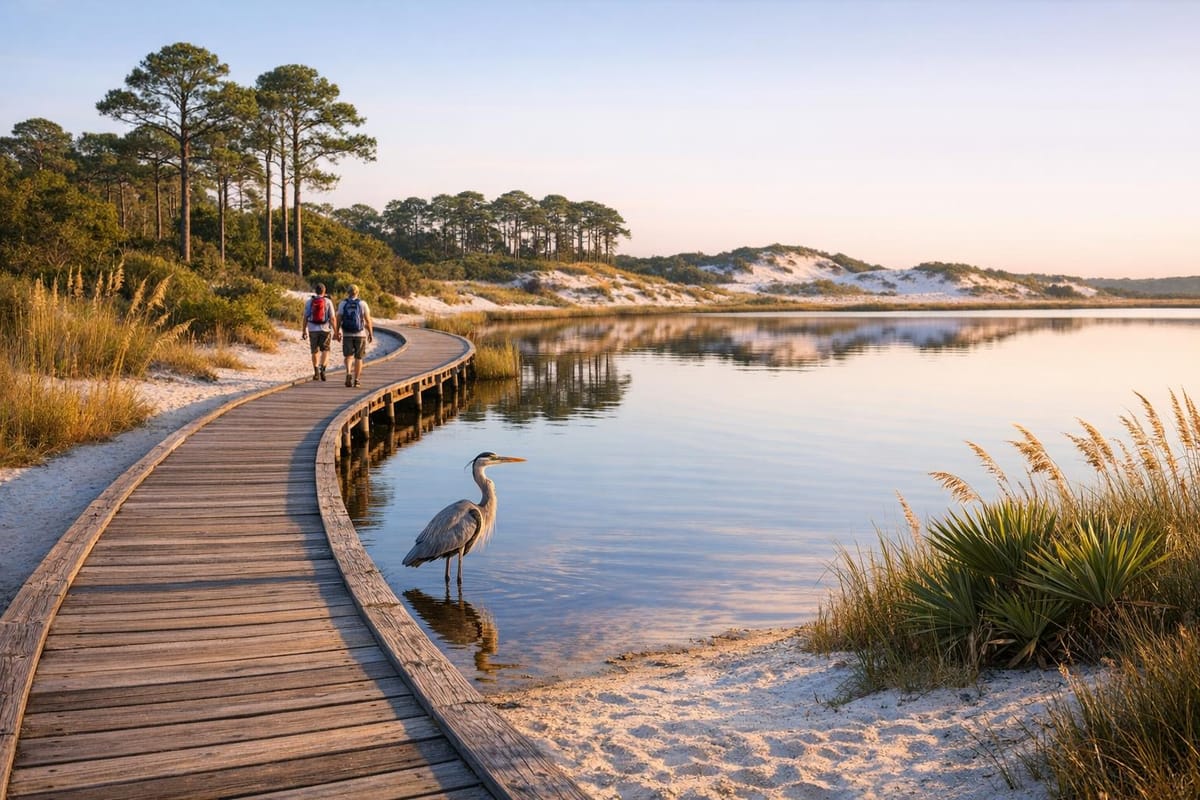
Looking for a serene hiking experience in Florida? Western Lake Trail in South Walton offers a rare chance to enjoy one of the world’s few coastal dune lakes. With trails ranging from a 0.7-mile accessible loop to a 9-mile trek, you’ll find options for all fitness levels. Located near Grayton Beach State Park, this trail features stunning views of tannic waters, pine flatwoods, and dunes.
Key Highlights:
- Trail Options: 0.7-mile loop to 9-mile round trip.
- Wildlife: Bald eagles, deer, and migratory shorebirds.
- Best Times to Visit: Spring and fall (March-May, October).
- Entry Fee: $5 per car or $4 per person.
- Safety Tip: Avoid swimming due to alligators.
Pack sunscreen, water, and bug spray, and enjoy this peaceful escape. Whether hiking, birdwatching, or photographing the lake, Western Lake Trail is a must-visit for nature enthusiasts.
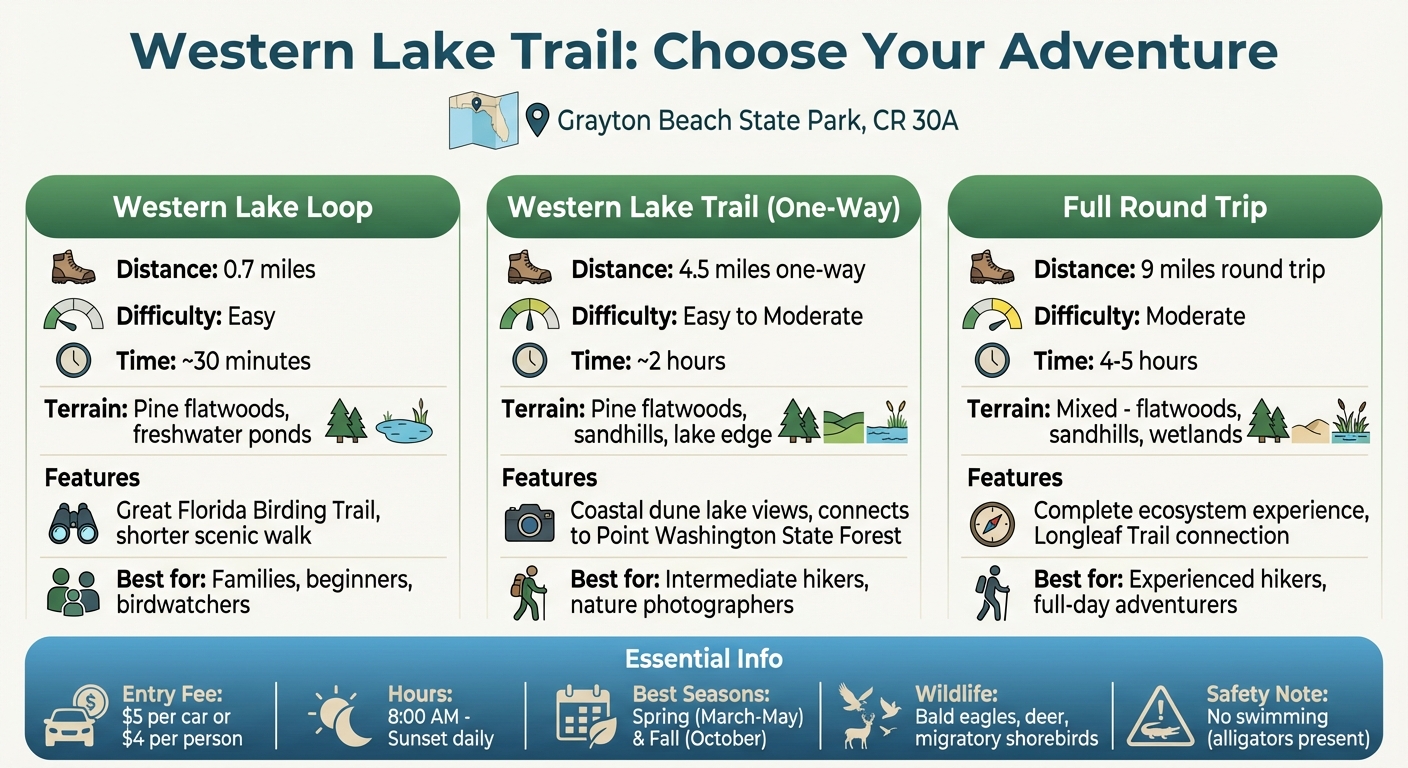
Western Lake Trail Options: Distance, Difficulty & Features Comparison
Preparing for Your Hike
What to Bring
If you're heading out on the Flatwoods Trail, waterproof footwear is a must. Parts of the trail can get wet, and a good pair of waterproof hiking shoes will keep your feet dry and comfortable. Pack plenty of water, sunscreen, and mosquito spray - especially for the wooded wetlands where bugs are common. Don’t forget a printed or downloaded trail map to help navigate the interconnected paths. Binoculars are great for spotting wildlife, and if you’re into fishing, bring your gear since it’s allowed. Photographers should pack essentials like a wide-angle lens, tripod, and polarizing filter to capture stunning reflections. Keep in mind that the coastal areas offer little shade, so plan accordingly.
When to Visit
For the best experience, aim to visit during spring or fall - March through May or early October. These seasons offer milder temperatures and fewer crowds. If you want to enjoy cooler weather and ideal lighting, plan your hike for early morning or late afternoon. For photography enthusiasts, arriving 30 to 45 minutes before sunset is perfect for capturing the lake’s mirror-like reflections.
Trail Rules and Entry Fees
To make the most of your visit, be sure to follow the park’s guidelines. Entry fees are $4 per person or $5 per carload (up to 8 people). The park is open daily from 8:00 AM until sunset. Leashed pets are welcome on the trails, but they’re not allowed on the beaches. Stick to marked trails and boardwalks to protect the fragile dune vegetation and the endangered Choctawhatchee beach mouse. And while Western Lake is beautiful, swimming isn’t advised due to alligators. Always keep a safe distance from the water’s edge and marshy areas for your safety.
Trail Route and Navigation
Where the Trail Starts
The main trailhead is located on the north side of County Road 30A, about 0.2 miles east of Grayton Beach State Park's main entrance at 357 Main Park Road. To get there from US 98, drive south on CR 283 and take a left onto CR 30A. Sandra Friend and John Keatley, the team behind FloridaHikes.com, explain:
"The Western Lake trailhead is another 0.2 miles east past the main entrance on the left side of the road".
If you'd prefer to skip the park fee, you can access the lake from the public boat ramp on Hotz Avenue in Grayton Beach. Before setting out, it's a good idea to familiarize yourself with the trail's layout and sections to plan your hike effectively.
Trail Distance and Segments
The Western Lake Trail spans 4.5 miles one-way. It winds through pine flatwoods, sandhills, and along the lake’s edge, offering a glimpse of the rare coastal dune lake ecosystem. If you're planning a linear hike, you can arrange a shuttle to the CR 395 trailhead in Point Washington State Forest. As Friend and Keatley put it:
"The Longleaf Trail then connects to the primary trailhead for Point Washington State Forest along CR 395, affording a round-trip of 9 miles or, with two cars, a linear hike of 4.5 miles".
Additional Loops and Connections
For a shorter trek, the 0.7-mile Western Lake Loop provides a scenic walk through pine flatwoods and freshwater ponds on the north side of CR 30A. This loop is also part of the Great Florida Birding Trail. If you're looking for a longer adventure, the trail connects with the Longleaf Trail and the 7.9-mile Longleaf Greenway Trail in Point Washington State Forest. Additionally, the Timpoochee Trail, a 19-mile paved path, cuts through the park and includes a bridge that spans Western Lake. These extra loops and connections create plenty of options for exploring the area's diverse and protected landscapes.
What You'll See Along the Trail
With the route planned, it's time to explore the natural wonders waiting along the way.
Western Lake Views
Western Lake is a sight to behold, showcasing the trail's rich and varied ecosystem. This coastal dune lake, one of the few in Walton County, covers around 200 acres and averages about five feet deep. Its tannic waters, tinted a coppery brown from decomposed pine needles and grasses, offer a striking contrast to the emerald green of the nearby Gulf. As the FloridaPanhandle.com Local Expert Team puts it:
"The contrast between the emerald green waters of the Gulf and the copper-brown lakewater makes the difference starker."
Keep an eye out for the lake's outfall, where occasional breaches allow it to connect with the Gulf. This creates a brackish mix of freshwater and saltwater, constantly reshaping the lake's edges. Add to that the towering sand dunes surrounding the area, and you’ve got a landscape that’s as dramatic as it is dynamic.
But the lake is just the beginning - there’s much more to discover along the trail.
Plants and Wildlife
The trail meanders through a variety of landscapes, from pine flatwoods to coastal scrub, each brimming with life. You’ll encounter longleaf pines, magnolia trees, and sea oats, which play a vital role in stabilizing the delicate dune system. Wildlife enthusiasts will be thrilled to spot white-tailed deer, turtles, and even the endangered Choctawhatchee beach mouse.
For bird lovers, this area is a dream come true. As part of the Great Florida Birding Trail, it’s home to bald eagles, osprey, woodpeckers, herons, egrets, and migratory shorebirds like plovers, terns, and gulls. If you’re lucky, you might catch a glimpse of mullet darting through the shallow waters. For the best chance of spotting wildlife, move quietly and keep an eye on the reeds and shrubs.
Quiet Areas for Solitude
While the trail offers plenty of vibrant sights and sounds, it also provides pockets of peace and solitude. For a quieter experience, head to the Flatwoods Trail on the northern side of CR 30A. Sandra Friend and John Keatley describe it as:
"The quieter side of Grayton Beach State Park is the perfect place for a walk in the woods to the north shore of Western Lake."
These tranquil paths are ideal for birdwatching or simply soaking in the serenity. Just remember to stick to the marked trails and boardwalks to protect the fragile environment. Seasonal shorebird nesting sites are often cordoned off, so be sure to respect those areas to help preserve the local wildlife.
Whether you’re drawn to the vibrant lake views, the bustling wildlife, or the quiet corners, this trail offers something for everyone.
Tips for a Better Hiking Experience
Now that you have an idea of what to expect, here’s how to make your time on the trail both smooth and enjoyable.
Trail Difficulty and Time Needed
The Western Lake Loop is considered an easy trail, making it a great choice for hikers of most fitness levels. Covering about 4.8 to 5 miles, the hike typically takes around 1 hour and 59 minutes to complete. The terrain varies, with sections of flat pavement, hard-packed ground, and sandy, hilly areas. After rain, parts of the Flatwoods Trail can become soggy or wet, so having footwear with extra traction is a good idea. Keep in mind, about half the route is on pavement without shade, so plan for exposure to the sun. These conditions make it essential to prepare for changing weather and trail conditions.
Weather and Safety
Check the weather before heading out, and avoid hiking during extreme heat or when afternoon thunderstorms are forecasted. With limited shade on the trail, bring plenty of water, wear a hat, and apply sunscreen to protect your skin. Stick to the marked trails to ensure your safety and to avoid damaging the fragile dune ecosystem. Western Lake is home to alligators, so swimming is not advised, and it’s important to keep pets leashed at all times. Be mindful of any restricted areas, as they are in place to protect local wildlife.
Other Activities Nearby
Once you’ve finished your hike, there’s plenty more to do in the area. Western Lake offers stand-up paddleboarding, kayaking, and canoeing, with rentals available at Grayton Beach State Park. Fishing is also allowed on both the lake and the beach. For those wanting to continue their outdoor adventure, the trail connects to the Timpoochee Trail, an 18-mile paved path ideal for biking. Grayton Beach State Park also features picnic areas and restrooms, making it easy to spend the entire day enjoying the outdoors.
Conclusion
The Western Lake Trail provides a rare opportunity to explore one of Walton County's 15 coastal dune lakes - an ecosystem so unique it's found in only a handful of places around the globe, including Madagascar, Australia, and New Zealand.
Whether you prefer the leisurely 0.7-mile Western Lake Loop or the more adventurous 4.5-mile hike into Point Washington State Forest, you'll journey through a variety of landscapes. From the striking white sand dunes to the serene pine flatwoods and salt marshes, the trail showcases the natural diversity that defines South Walton's 30A corridor.
Start your adventure at Grayton Beach State Park, where entry is just $5 per vehicle. Beyond the trail, the park offers excellent birdwatching and stunning views of the 200-acre lake. Its tea-colored, mirror-like waters are perfect for photography, wildlife spotting, or simply enjoying a quiet moment in nature.
The Western Lake Trail is more than a hiking destination - it’s a gateway to even more outdoor activities. After your walk, consider renting a kayak to explore the lake further or hopping on the nearby 18-mile Timpoochee Trail for a scenic bike ride.
Don’t forget essentials like water and sun protection, and take the time to fully immerse yourself in this tranquil slice of Florida’s Gulf Coast. If you’re visiting South Walton and the 30A area, the Western Lake Trail offers a refreshing escape from the bustling beaches. For more tips on making the most of your trip, check out sowal.co.
FAQs
Is the 4.5-mile route best as a shuttle hike or out-and-back?
The 4.5-mile route works well as an out-and-back hike. This setup allows you to park at one trailhead, hike to the endpoint, and retrace your steps back - making it a flexible and hassle-free option. While arranging a shuttle between trailheads is another possibility, the out-and-back approach keeps things straightforward and avoids the extra coordination, especially for a route of this length.
Where can I park for free to access Western Lake Trail?
You can park for free at the public boat ramp on Hotz Avenue in Grayton Beach, close to the Red Bar, if you're heading to Western Lake Trail. Another option is Grayton Beach State Park along 30A, but keep in mind there's a fee for parking there.
Are there bathrooms and water fountains on the trail?
Restrooms can be found along the trail at Grayton Beach State Park. Since water fountains aren't mentioned, it's a good idea to bring your own water to stay hydrated.