30A Trail Checklist For Wildlife Watching Trips
Plan dawn/dusk 30A walks: pack 16–32 oz water, closed-toe shoes, bug spray, sun protection, binoculars, first-aid, and check trail access.
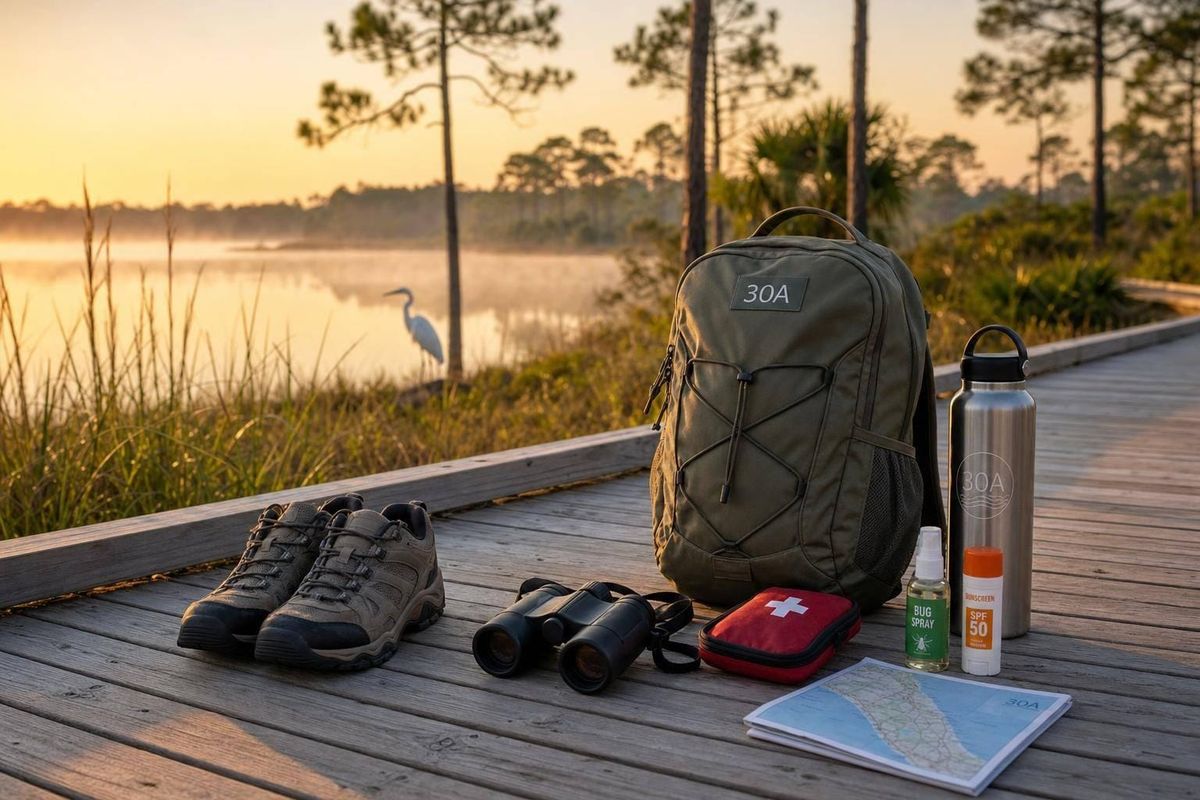
If I want to see more wildlife on a 30A trail, I plan for dawn or dusk, bring 16–32 oz of water per person, wear closed-toe shoes, and keep my setup simple: bug spray, sun protection, a phone, and binoculars. That covers most short walks.
Here’s the short version:
- Best time: Near sunrise or within 2 hours of sunset
- Slowest time for sightings: 10:00 AM to 3:00 PM
- Best season for comfort and wildlife: November through April
- Core gear: Water, snacks, bug spray, sunscreen, hat, sunglasses, phone, first-aid basics, binoculars
- Best clothing: Light, breathable long sleeves and pants, plus non-slip shoes
- For families and mobility needs: Check surface, shade, parking, restrooms, and boardwalk access before leaving
I’d keep one thing in mind: pick the trail first, then pack for the surface, heat, shade, and distance. A paved path or boardwalk works better for strollers and wheelchairs, while sandy forest trails need more support and more time.
This guide gives me a simple way to plan the trip, pack the right items, and avoid common problems like heat, bugs, wet ground, and rough trail access.
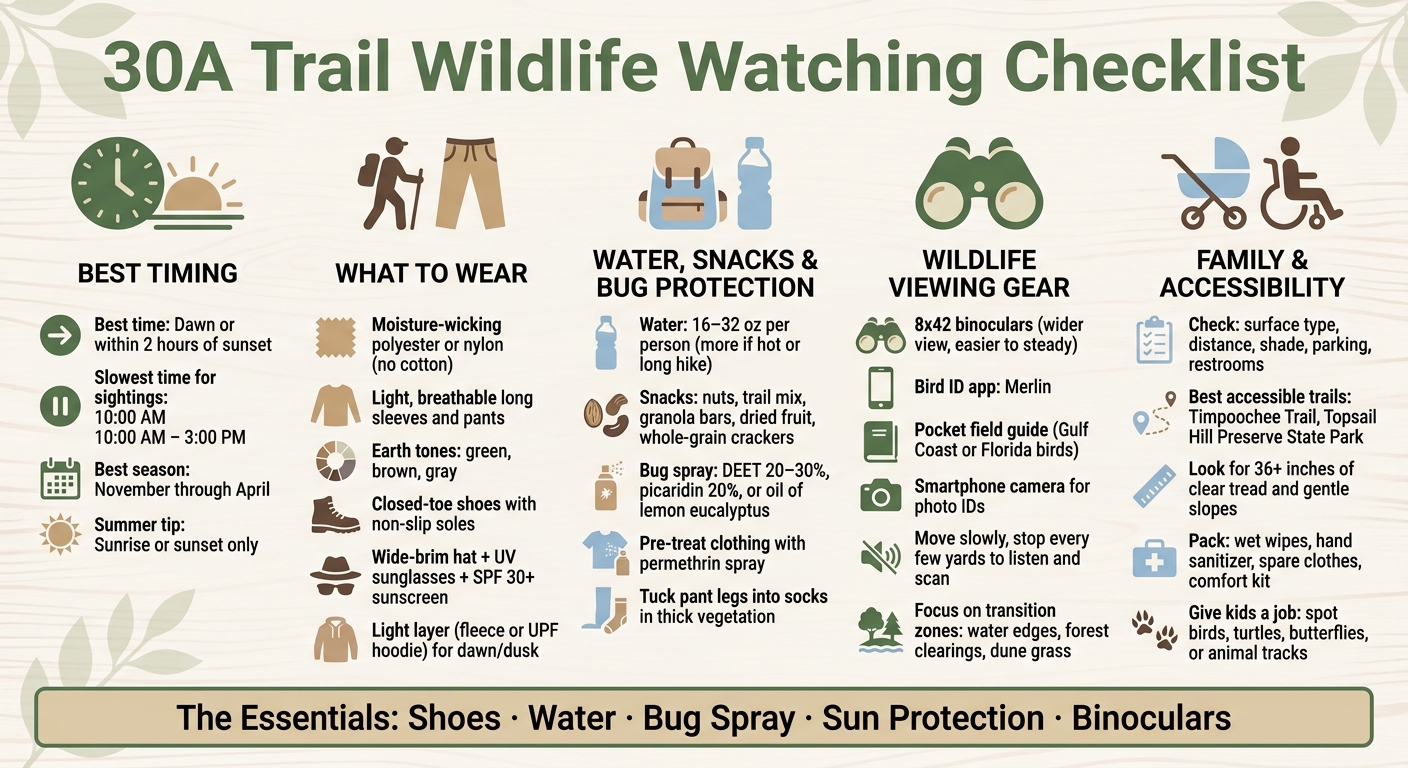
30A Trail Wildlife Watching Checklist: What to Bring & When to Go
Grayton Beach State Park Best Florida State Parks - Nature Trail, Coastal Dune Lake & Pristine Beach
sbb-itb-d06eda6
Pick the Right Trail and Time for Wildlife Sightings
Start by matching the trail to your group. Timpoochee works well for easy access, state park boardwalks fit short wildlife walks, and Point Washington makes more sense for longer sandy hikes. Pick the trail first, then pack for the surface, shade, and distance.
Best Times of Day and Year to See Wildlife
November through April brings the most comfortable hiking weather and the best mix of resident and migratory wildlife. This is also the prime window for birdwatching in South Walton. Spring and fall tend to offer the broadest range of wildlife. Winter mornings are cooler and quieter, which can make spotting animals a bit easier. Summer works best at sunrise or sunset, when the heat eases off and the trails feel far less punishing.
After you settle on your timing, check the trail surface and the weather before heading out.
Trail Conditions, Weather, and Safety Checks Before You Go
Before you leave, confirm the trail surface, shade, and open hours. Summer afternoons in South Walton can bring thunderstorms, and open dunes, high boardwalks, and long unshaded paths are not safe places to be during active lightning. If storms show up in the forecast, shift to a shorter shaded route.
It also helps to download or screenshot your trail map before leaving home. Once your route is set, use the packing checklist to match the day’s conditions.
Packing Checklist: Clothing, Water, Snacks, and Basic Safety Gear
Use this packing checklist in order.
What to Wear on 30A Trails
Skip cotton. In coastal humidity and damp spots, moisture-wicking polyester or nylon dries faster and feels a lot better on the trail. Long sleeves and full-length pants in breathable fabric also help with sun and bug protection near wetlands. Stick with earth tones like green, brown, and gray so you blend in better and don’t spook wildlife.
For shoes, go with closed-toe walking or hiking shoes that have non-slip soles. They work best on sand, dirt, and damp boardwalks. Add thin wool or synthetic socks to help prevent blisters. A wide-brim hat, UV-blocking sunglasses, and SPF 30+ sunscreen are also smart to bring. If you’re starting at sunrise or walking later in the evening, pack a light layer like a thin fleece or UPF hoodie so you can adjust as the temperature shifts.
After clothing, pack water, bug spray, and a small first aid kit.
Water, Snacks, and Bug Protection to Bring
Bring 16–32 oz of water per person for short walks, and carry more if it’s hot or if you’ll be out longer. Insulated stainless steel bottles are a good fit for shorter trips. For extra gear, use a daypack. For longer hikes, a hydration pack makes things easier.
For snacks, pack food that travels well and won’t fall apart in the heat, such as:
- Nuts
- Trail mix
- Granola bars
- Dried fruit
- Whole-grain crackers
Use insect repellent near wetlands, especially at dawn and dusk. Apply an EPA-registered repellent with DEET (20–30%), picaridin (20%), or oil of lemon eucalyptus to exposed skin after sunscreen. You can also pre-treat clothing with permethrin spray before the trip for added protection that holds up through sweat and light rain. In thick vegetation, tuck your pant legs into your socks.
Phone, First Aid, and Trail Navigation Basics
Bring your phone fully charged, and pack a portable battery bank, especially if you plan to use offline maps or take photos. Before you start walking, download offline maps or snap clear photos of trailhead kiosks.
Your first aid basics should include adhesive bandages in a few sizes, moleskin or blister pads, antiseptic wipes, tweezers, and a small tube of antibiotic ointment. Blister pads are especially handy on sandy trails and boardwalks. Store everything in a zip-top bag to keep it dry in rain and humidity.
Next: binoculars, quiet movement, and wildlife-viewing basics.
Wildlife Watching Checklist: Binoculars, Field Guides, and Quiet Trail Habits
Binoculars and Basic Viewing Gear
Start with 8x42 binoculars. They’re easier to hold steady than 10x42 models, and they give you a wider view. That extra width helps a lot on shorelines and in flatwoods, where birds and other animals can show up anywhere in front of you.
A bird ID app like Merlin is handy for fast IDs in the field. If you want a backup, bring a pocket field guide focused on Gulf Coast or Florida birds. It works without cell service or battery life, which can save the day. A smartphone camera helps too. Even a quick photo can give you enough detail to sort out an ID later.
Once your gear is packed, the biggest shift usually comes from how quietly you move.
How to Move Quietly and Spot More Wildlife
Move slowly, keep your voice low, and stay on marked paths. Every few yards, stop for a moment to listen and scan. Start with a naked-eye sweep from left to right, and pay close attention to edges - where water meets reeds, where forest opens into a clearing, and where dune grass gives way to open sand. Animals often feed and travel along these transition zones.
When something catches your eye, bring your binoculars up without shifting your gaze so the subject stays centered in view. It sounds simple, but it makes a big difference. If an animal stops feeding, lifts its head, or starts moving away, back up slowly.
For stroller or wheelchair outings, the next checklist covers surface, space, and packing needs.
Family and Accessibility Checklist for 30A Trails
Stroller and Wheelchair Planning Notes
If you're heading out with a stroller or wheelchair, start with the surface and access points. That matters more than anything else. Paved paths and solid boardwalks are usually the safest bet. Sandy or uneven trails in Point Washington State Forest can be tough for wheeled devices.
The Timpoochee Trail is a good pick for strollers and bikes. Topsail Hill Preserve State Park is one of the better options because it has a paved Beach Tram trail, elevated boardwalks, ADA restrooms, and free beach wheelchairs on-site.
Before you leave, check a few basics:
- Surface type
- Distance
- Shade
- Parking
- Restrooms
It also helps to look for at least 36 inches of clear tread, gentle slopes, and limited cross slope. A lot of trails don't post that kind of detail up front, so if anything is unclear, call the park directly.
What Families Should Pack for a Smoother Outing
For families, the core items don't change. You just need more of them, and you need them easy to grab. Bring heat-stable snacks like crackers, cut fruit, and protein bars. Wet wipes, hand sanitizer, and a small trash bag make cleanup much easier. Pack sunscreen, sun hats, and anything you'll need for quick reapplication. A small comfort kit with bandages and spare clothes for younger kids can save the day after a scrape or spill.
You can also give kids a simple job to keep them tuned in. Ask them to look for birds, turtles, butterflies, or animal tracks. Kid-size binoculars and a small notebook can go a long way.
Conclusion: A Simple 30A Trail Checklist to Use Before Every Wildlife Trip
Use this checklist before every 30A wildlife walk. It takes a minute, and it can make the whole outing smoother.
Try to plan your walk for dawn or dusk. That’s often the best time to spot wildlife, and it’s usually more comfortable too. If you prefer the water, consider wildlife paddling tours instead.
Here’s the final check before you head out:
- Trail: Does it fit your group and what you want to see?
- Time: Are you going near sunrise or late afternoon, and did you check today’s weather?
- Shoes: Is everyone wearing closed-toe shoes with good traction?
- Water and snacks: Do you have 16–32 oz of water per person, plus a few easy snacks?
- Bug and sun protection: Did you pack bug spray, sunscreen, a hat, and sunglasses?
- Binoculars, phone, and guide: Are they packed and charged, with offline maps and a small first-aid kit?
- Accessibility: If you need stroller or wheelchair access, did you check the trail surface, boardwalks, and access points ahead of time?
Check park websites and sowal.co for current trail conditions and access details.
On 30A, you don’t need much. Shoes, water, bug spray, sun protection, and binoculars cover the basics. Use this checklist each time you go, and your trail walk will be safer, quieter, and more rewarding.
FAQs
Which 30A trails are easiest for beginners?
For beginners, a few 30A trails are easy to get into and simple to enjoy.
- Deer Track Trail at Topsail Hill Preserve State Park: a shaded 1-mile loop that works well for families and strollers
- Deer Lake State Park: a short elevated boardwalk with safe views of the lake
- Barrier Dunes Nature Trail at Grayton Beach State Park: a short, scenic boardwalk
Topsail Hill also offers tram service and ADA-accessible paths.
How much extra water should I bring in summer?
During 30A’s humid summer months, bring plenty of water. A solid rule of thumb for a full day outdoors is about 1 gallon per person.
Coastal trails often have limited shade and heavy humidity, so it’s smart to pack more water than you think you’ll need. That extra bit can help you stay hydrated, keep your energy up, and avoid trouble in the heat.
What should I do if the trail gets buggy or stormy?
Check the forecast before you head out. Skip hikes during extreme heat or on days when afternoon thunderstorms are in the forecast. And if the trails are wet or muddy after rain, wear waterproof shoes with extra grip.
Bugs can be a headache, especially near wooded wetlands and dune lakes. Pack insect repellent, and wear long pants and long sleeves.