Community Growth Impact on Eastern Lake
South Walton's growth and tourism threaten Eastern Lake's water quality and wildlife; community actions and regulations aim to protect the fragile dune lake.
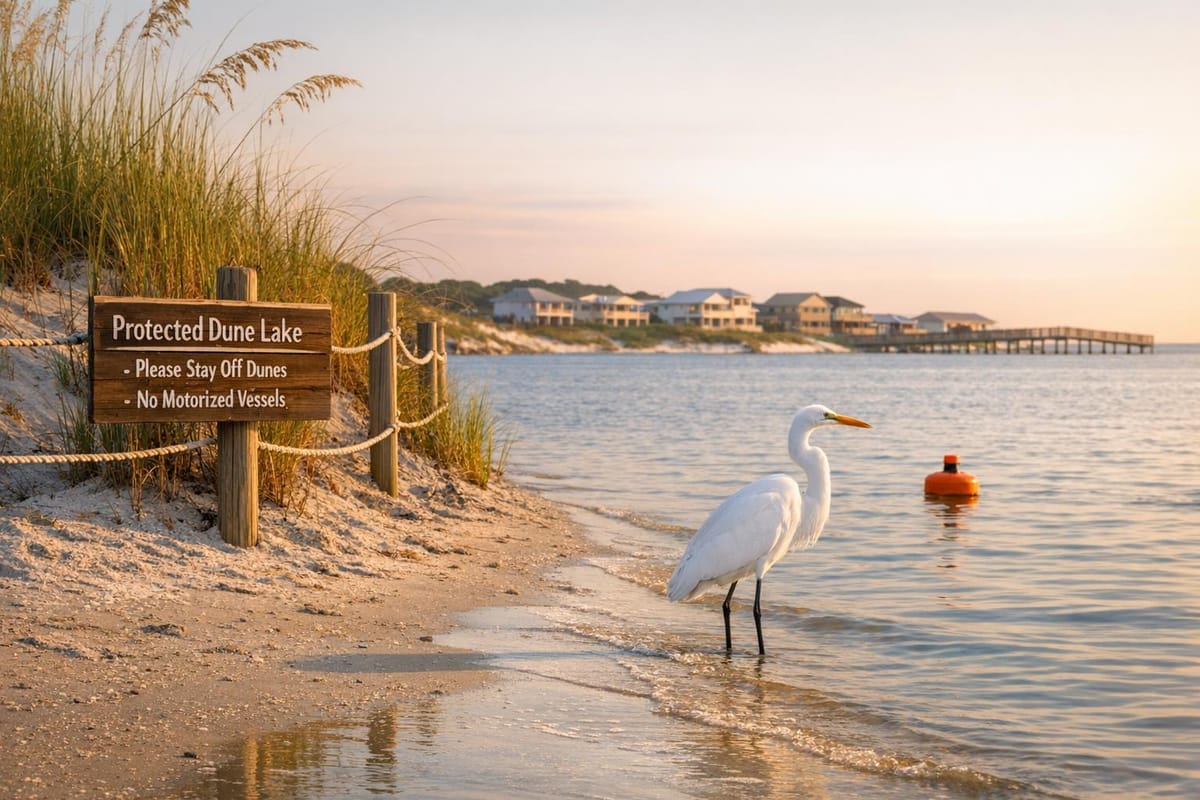
Eastern Lake, a rare coastal dune lake in South Walton, faces growing risks from nearby development and tourism. These pressures are altering its delicate balance, affecting water quality, wildlife, and habitats. Key issues include stormwater runoff, nutrient pollution, and habitat disruptions, all of which threaten the lake’s fragile ecosystem. Efforts like the Eastern Lake Restoration Project and stricter development guidelines aim to mitigate these challenges, but balancing growth with preservation remains a challenge.
Key Takeaways
- Lake Uniqueness: Eastern Lake is one of 15 coastal dune lakes in Walton County, globally rare and critical for biodiversity.
- Development Risks: Proximity to residential areas increases pollution risks, including runoff and chemical seepage.
- Tourism Impact: Visitor activities, including expanded access plans, raise concerns about long-term ecological strain.
- Conservation Efforts: Community-driven actions and stricter regulations are essential to protect the lake.
Immediate and collaborative actions are needed to safeguard Eastern Lake from the pressures of growth while ensuring its natural beauty and ecological role are preserved.
Walton County halts Eastern Lake development after community pushback
What Studies Show About Development Impact
Research highlights the vulnerability of coastal dune systems that shield Eastern Lake, particularly in the face of frequent storms. Advanced modeling has quantified these risks, aligning with concerns raised in the Eastern Lake impact analysis. These insights play a key role in shaping regional planning strategies.
Walton County Resilience Report: Development Risks
Walton County uses the SBEACH model to evaluate how 15- and 25-year storm events could impact the beaches and dunes that protect Eastern Lake. This calibrated tool provides a clearer picture of the potential threats these natural barriers face.
Plan for Walton 2040: Growth and Protection Conflicts
Building on these findings, local planning initiatives aim to balance development pressures with environmental protection. The Florida DEP emphasizes the importance of preserving natural resources through community collaboration and engineering studies. Their goal is to ensure resilient coastal systems that can safeguard Eastern Lake while accommodating local growth.
How Development Affects Eastern Lake's Environment
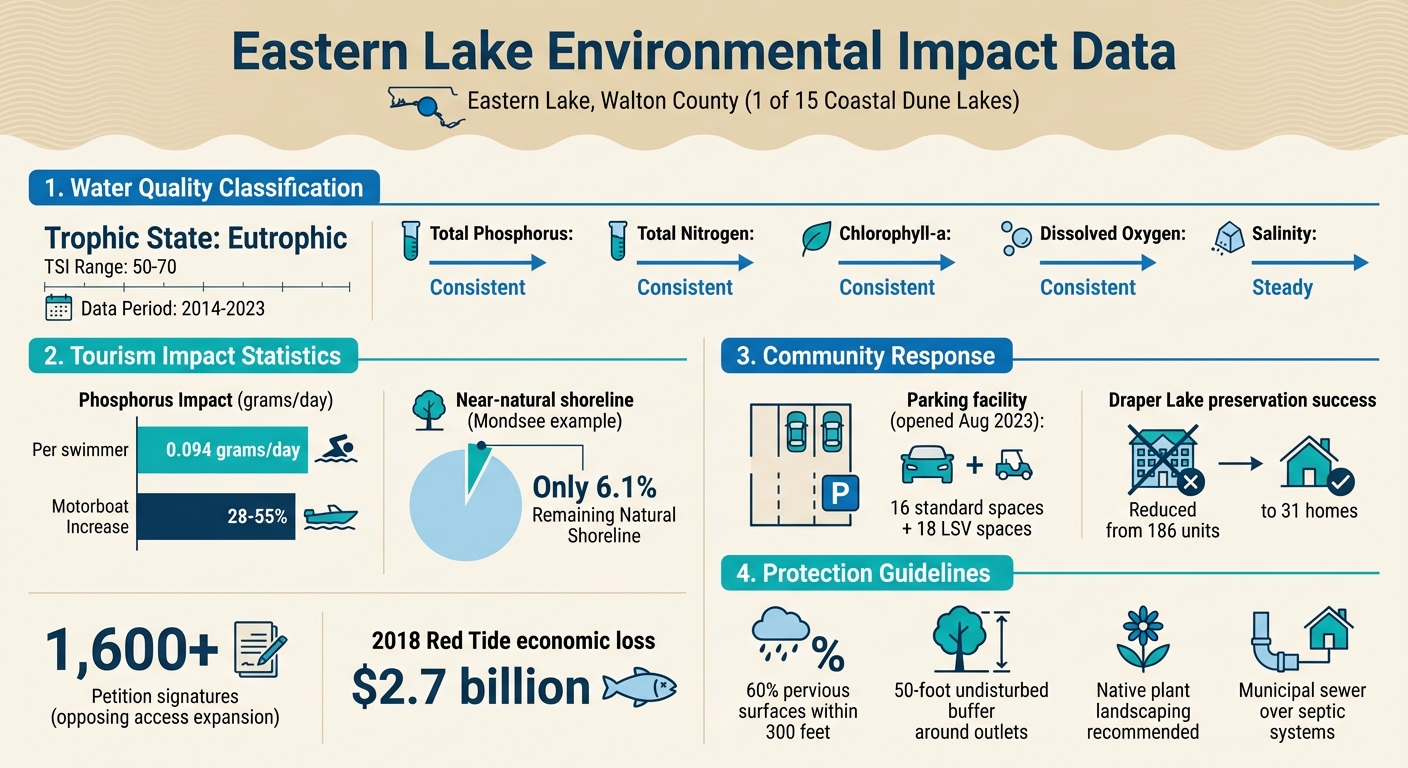
Eastern Lake Environmental Impact Statistics and Conservation Data
Development studies reveal that community growth in South Walton has left its mark on Eastern Lake's ecosystem. This growth has altered the lake's natural balance, influencing water quality and disrupting habitats critical to local wildlife.
Water Quality
Eastern Lake is classified as "Eutrophic", meaning it has a Trophic State Index (TSI) ranging from 50 to 70. This classification points to high levels of algal biomass, reduced water clarity, and the potential for oxygen depletion in deeper areas. Data collected between 2014 and 2023 shows consistent levels of key indicators like Total Phosphorus, Total Nitrogen, Chlorophyll-a, and Dissolved Oxygen. Salinity levels have also remained steady, largely due to water exchanges with the Gulf rather than being directly linked to nearby development. While these indicators suggest stability, the ecosystem faces other challenges that are impacting wildlife.
Wildlife and Habitat Changes
Coastal development introduces physical barriers that interfere with wildlife habitats. For example, items like beach furniture and construction debris can block sea turtles from reaching their nesting sites along Eastern Lake’s shores. This disruption poses a serious threat to both nesting success and the long-term survival of these species. Combined with other pressures on this rare coastal dune lake, these habitat changes add to the ecosystem's overall strain.
Tourism Growth vs. Lake Protection
South Walton's tourism-driven economy faces a delicate balancing act: the influx of visitors boosts local prosperity but also puts pressure on fragile ecosystems like Eastern Lake. Proposals to expand access have triggered debates about the potential long-term effects on the lake's sensitive environment.
Tourism Development Council Data on Lake Access
In January 2026, the Walton County Tourism Development Council introduced a two-phase plan for improving regional beach access to Eastern Lake. Spearheaded by Beach Operations Director Josh Ervin, Phase A proposed adding restrooms, showers, and an emergency vehicle turnaround, while Phase B aimed to enhance sidewalks and pedestrian pathways. However, this proposal met significant public resistance, with an online petition opposing the project gathering over 1,600 signatures. At a public meeting, local resident Mark Scott summed up the community's concerns, stating:
"It was so opposite to anything… it's inconceivable from people that lived here or the people that we knew that visited that would want from what we thought anyway." – Mark Scott, Resident
This plan follows earlier efforts to manage visitor access. In August 2023, Walton County opened the Eastern Lake Municipal Parking Facility at 400 Eastern Lake Road. Funded entirely by the 5% tourist development tax, the facility includes 16 standard parking spaces, 18 spaces for low-speed vehicles, and a bike plaza. District Two Commissioner Danny Glidewell clarified that the facility's purpose was not to attract more tourists but to better handle the existing influx of visitors. The opposition to expanding access reflects widespread concerns about potential environmental disruptions, highlighting the importance of sustainable tourism practices to protect Eastern Lake.
Reducing Visitor Impact
Beyond managing access, reducing the direct environmental impact of visitors is crucial for safeguarding Eastern Lake's ecosystem. Tourism's ecological toll on lakes is well-documented. For instance, a single swimmer can introduce 0.094 grams of phosphorus into a water body daily through skin wash-off and urine, while motorboat activity can increase phosphorus levels by 28% to 55%. In heavily developed tourist areas like Mondsee, only 6.1% of the shoreline remains in a near-natural state. Additionally, the 2018 Florida red tide bloom, exacerbated by nutrient runoff linked to tourism, caused an estimated $2.7 billion in losses for tourism-related businesses. These examples illustrate the concrete environmental costs of unchecked tourism.
Many locals advocate for a balanced approach, suggesting that Eastern Lake remain accessible primarily by foot and bicycle rather than being transformed into a high-traffic access point. This perspective aligns with the success seen at nearby Draper Lake in 2021. There, community advocate Barbara Morano led efforts that convinced developer D.R. Horton to scale back the Bluewater Landing project from 186 residential units to just 31 single-family homes. The developer also agreed to donate the lake and surrounding property to a land trust, ensuring its permanent preservation. This example serves as a model for how community-driven initiatives can protect natural resources while accommodating some level of tourism.
Conclusion: Protecting Eastern Lake During Growth
Main Findings Summary
Research clearly shows that South Walton's rapid growth is putting significant pressure on Eastern Lake. This development threatens water quality through increased nutrient runoff and habitat disturbances. Community concerns are evident, with recent petitions highlighting opposition to unchecked development. These findings emphasize the need to involve local voices in shaping sustainable growth strategies. The message is clear: immediate and collaborative action is essential to safeguard the lake.
Next Steps: Community Action and Protection Efforts
To address these challenges, coordinated efforts from residents, developers, and local officials are crucial. Residents can help by using native plants in their landscaping and switching from septic systems to municipal sewer connections to minimize runoff impacts. Local organizations, such as the Eastern Lake Neighborhood Association, play a vital role by monitoring the lake's health and advocating against high-impact projects.
For developers, adhering to the Coastal Dune Lake Protection Zone guidelines is key. This includes maintaining at least 60% pervious surfaces within 300 feet of the lake and preserving a 50-foot undisturbed buffer around natural outlets. As Mark Scott points out, the community stands united in opposing further intrusive development.
FAQs
What is a coastal dune lake, and why is Eastern Lake so rare?
A coastal dune lake is a rare type of freshwater lake found close to coastlines - usually within two miles of the shore. These lakes are shallow, have irregular shapes, and are uniquely connected to both groundwater and the Gulf of Mexico. What makes Eastern Lake stand out is its rarity; coastal dune lakes are found in only a handful of places worldwide. Remarkably, Walton County boasts 15 of these lakes, making it one of the highest concentrations of such lakes on the planet.
How does stormwater runoff from new development change Eastern Lake’s water quality?
Stormwater runoff from new developments often carries pollutants such as oil, chemicals, dirt, and lawn fertilizers straight into Eastern Lake. This process can degrade water quality by increasing sediment levels, elevating water temperatures, and introducing harmful contaminants. These changes disrupt the lake’s natural balance and can negatively impact its ecosystem.
What can residents and visitors do to reduce their impact on Eastern Lake?
Residents and visitors play a key role in safeguarding Eastern Lake. By sticking to designated trails, you can prevent damage to fragile ecosystems. Avoid disturbing wildlife and their habitats, as even small disruptions can have lasting effects. Reducing fertilizer use is another crucial step - this helps minimize harmful runoff that can impact the lake's water quality. Lastly, supporting local conservation efforts ensures the continued protection of South Walton’s coastal dune lakes, preserving their natural beauty for future generations.