10 Tips for Eco-Friendly Fishing on 30A
Practical tips for sustainable fishing on 30A: catch-and-release, eco gear, local rules, waste disposal, non-toxic boat care, and supporting conservation groups.

Fishing along 30A offers a chance to enjoy stunning coastal waters while protecting its fragile ecosystems. To fish responsibly, focus on sustainable practices that minimize harm to marine life. Here’s a quick summary of the tips:
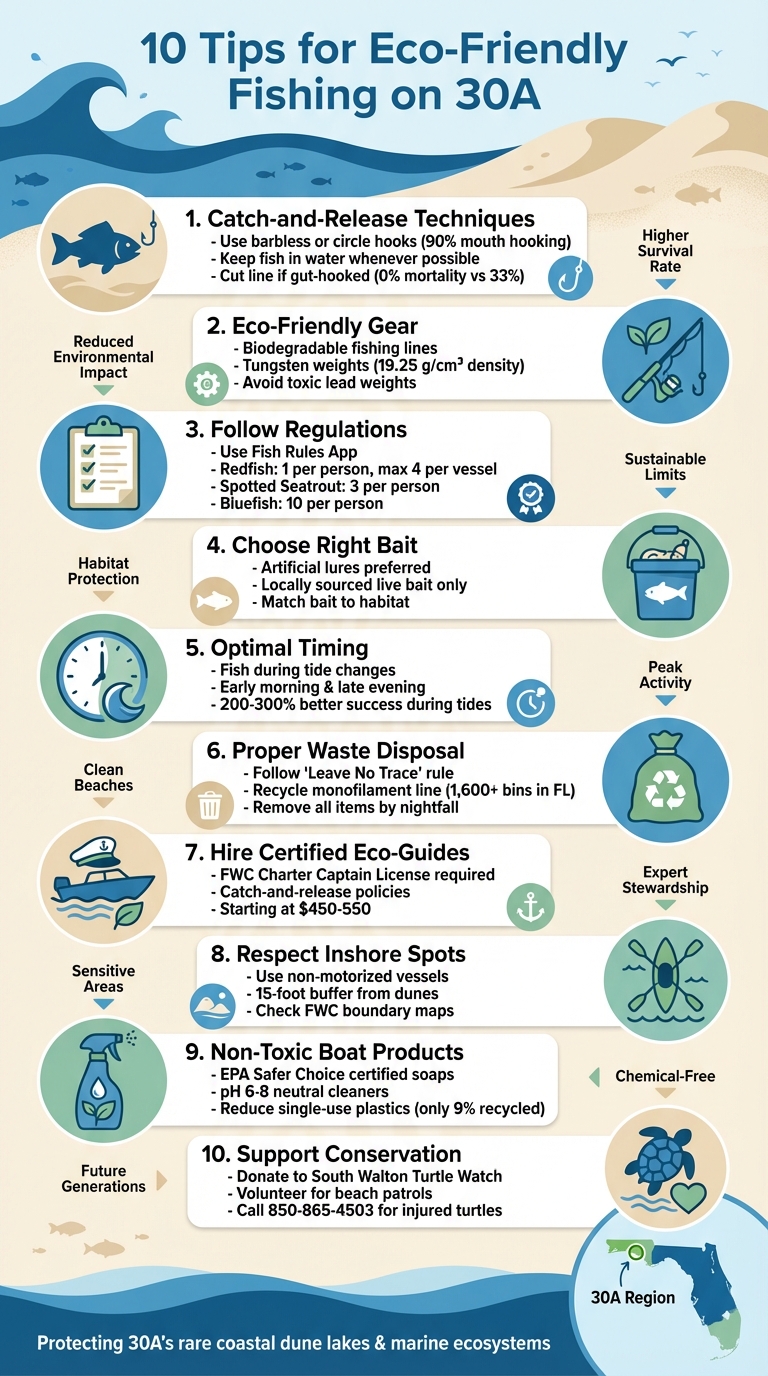
- Catch-and-Release Techniques: Use barbless or circle hooks, keep fish in the water, and handle them gently to ensure survival.
- Eco-Friendly Gear: Switch to biodegradable lines and non-toxic weights like tungsten or steel.
- Follow Regulations: Stay updated on Florida fishing rules, including bag limits and size restrictions, using tools like the Fish Rules App.
- Choose the Right Bait: Opt for artificial lures or locally sourced live bait to avoid introducing harmful species.
- Fish at Optimal Times: Target early mornings, late evenings, or tide changes for better efficiency and reduced fish stress.
- Dispose of Waste Properly: Follow Walton County’s “Leave No Trace” rule and recycle fishing lines.
- Hire Certified Eco-Guides: Book licensed guides who prioritize sustainable practices.
- Respect Inshore and Surf Spots: Use kayaks or paddleboards to avoid damaging habitats, and follow local fishing boundaries.
- Use Non-Toxic Boat Products: Clean your boat with eco-safe soaps and reduce plastic waste.
- Support Conservation Groups: Donate or volunteer with local organizations like South Walton Turtle Watch to protect marine life.
10 Essential Tips for Eco-Friendly Fishing on 30A Florida
What Is Eco-Friendly Fishing and Boating?
1. Use Proper Catch-and-Release Methods
Catch-and-release fishing is all about ensuring the fish you return to the water have the best chance to survive and reproduce. Mishandling fish can cause injuries that severely impact their survival, so it’s crucial to follow the right techniques.
Start by using barbless or circle hooks. Circle hooks are especially effective, hooking fish in the mouth 90% more often than in the stomach or esophagus. This makes removal quicker and less stressful for the fish. If barbless hooks aren’t an option, you can flatten the barb with pliers. Interestingly, a Florida study on snappers and groupers found that catch rates were the same whether anglers used barbed or barbless hooks.
Keep fish in the water whenever possible. Research conducted at Boca Grande Pass, where 27 tarpon were tagged with sonic transmitters, showed that 26 survived after being released. The only fish that didn’t survive had been lifted out of the water for a photo. Florida law even mandates that tarpon over 40 inches stay in the water at all times. When handling fish, wet your hands and support the fish horizontally - place one hand under the head and the other under the belly. This reduces stress and protects the fish’s slime layer, which is vital for its health. Studies have shown that fish held vertically by the jaw have a 100% mortality rate.
"Bringing an exhausted fish out of the water is like asking a triathlon winner to jump back in the water and hold their breath - they both need oxygen to recover!"
If a fish is gut-hooked, cut the line near the hook instead of trying to remove it. Research on deep-hooked snook found that cutting the leader resulted in 0% mortality, compared to a 33% mortality rate when anglers attempted to remove the hook. Cut the line as close to the hook as you can - the hook will often rust out or be expelled naturally. Use tools like long-nosed pliers or dehooking tools to minimize contact and handling time. If revival is needed, hold the fish facing into the current or move it forward in a gentle figure-8 motion. Avoid moving the fish backward through the water, as this disrupts the natural flow over its gills.
Learning these catch-and-release techniques is a key step toward responsible fishing on 30A.
2. Choose Eco-Friendly Fishing Gear
The gear you use can have a direct impact on 30A's delicate coastal ecosystem. Traditional fishing gear, like non-biodegradable lines and lead weights, can linger in the environment for years, causing harm to wildlife and habitats. By switching to eco-friendly alternatives, you can help protect these fragile areas.
Biodegradable fishing lines are a great place to start. These lines decompose naturally within months or a few years, unlike traditional lines that can take centuries to break down. For instance, the Tuf Line Biodegradable Line, available in various strengths including 10 lb test, is a dependable option. Fly fishers can consider the Royal Wulff Bamboo Fly Line, which is made from sustainable, plant-based materials like silk, cotton, or polylactic acid (PLA). These materials significantly reduce environmental harm.
Avoid lead weights to protect wildlife. Lead weights pose a serious threat to local animals. When lost in the water, they can be ingested by birds and other wildlife, leading to poisoning and fatal organ damage. In the UK, lead poisoning accounted for 14.6% of adult Bewick's Swan deaths in one study. A safer alternative is tungsten weights, which are denser (19.25 g/cm³ compared to lead's 11.34 g/cm³) and allow for smaller, more sensitive weights that are less likely to snag. As The Tackle Room emphasizes:
"Lead is toxic. That's not debatable."
While tungsten sinkers are pricier - ranging from $3.00 to $8.00 per ounce versus $0.50 to $1.00 for lead - their performance and reduced environmental impact make them worth the investment. For those on a budget or fishing in shallow waters, tin and steel weights are effective, non-toxic alternatives. This is especially important in 30A's 17 coastal dune lakes, where clean, lead-free water is crucial for the survival of rare ecosystems and diverse bird species.
Upgrading your gear is a small but meaningful step toward responsible fishing in 30A. Once you've chosen eco-friendly equipment, the next step is to ensure you're following local regulations.
3. Follow Florida Fishing Regulations
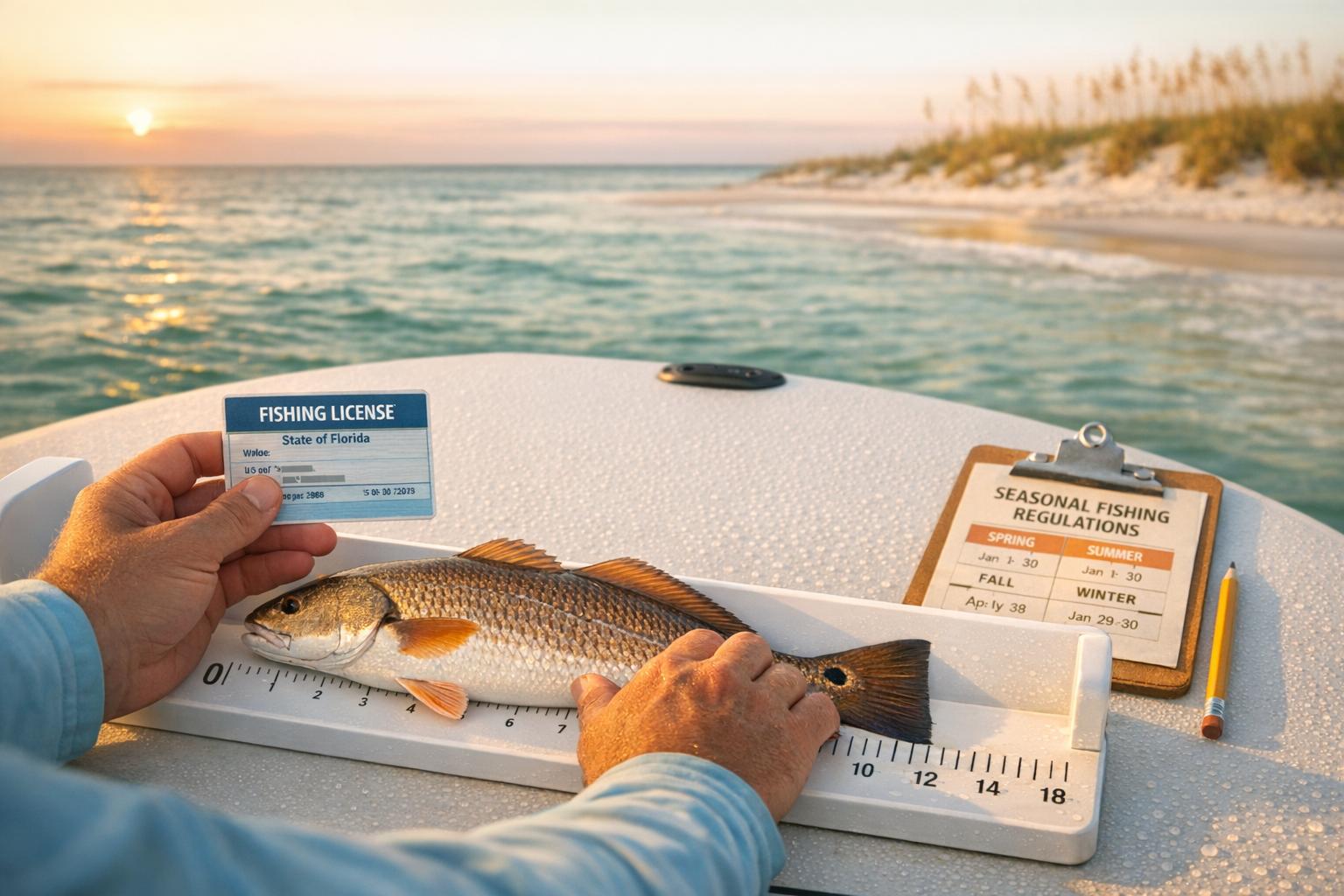
Adhering to Florida's fishing regulations is essential for protecting the marine life along 30A. These rules, grounded in scientific research, are designed to ensure fishing remains sustainable. For example, over half of the fish caught during recreational trips in Florida must be released to comply with species-specific guidelines. Staying informed about these regulations is easier with the help of reliable tools and resources.
Use the Fish Rules App for up-to-date regulations along 30A. This app provides real-time, location-specific rules and is available on both the App Store and Google Play. It's especially helpful since Florida's state waters stretch from the shore to 9 miles into the Gulf of Mexico, and regulations can vary between state and federal waters. For direct access to official resources, visit the Florida Fish and Wildlife Conservation Commission (FWC) website at MyFWC.com or call their Division of Marine Fisheries Management at 850-487-0554.
Pay attention to bag and size limits. Along 30A, specific rules apply to popular species. For instance:
- Redfish: 1 fish per person, with a maximum of 4 per vessel.
- Spotted Seatrout: 3 fish per person (new limits take effect on April 1, 2026).
- Bluefish: 10 fish per person.
For species without specific regulations, the general recreational harvest limit is 100 pounds or two fish, whichever is greater.
Use proper tools to protect reef fish. When fishing for species like snapper or grouper, carry descending or venting tools to prevent barotrauma - a condition caused by pressure changes when fish are brought up from deep water. Angela Collins, a Marine Fisheries Specialist at the University of Florida, explains:
"That gas basically ... expands and has to go somewhere. And that obviously can be detrimental to the fish, in some cases lethal."
Additionally, when using natural bait for reef species, opt for non-stainless steel, non-offset circle hooks. These tools and methods play a key role in preserving 30A’s marine ecosystems.
Check your licensing requirements. Determine whether a freshwater or saltwater license is needed when fishing in the 17 coastal dune lakes, as these unique lakes host both types of species. Most anglers over 16 years old will need a saltwater fishing license unless fishing from a licensed charter vessel. The FWC also hosts Free Fishing Days throughout the year, allowing anglers to fish without a license on select dates.
4. Pick the Right Bait
Once you've fine-tuned your fishing gear and methods, it’s time to focus on choosing the right bait - one that aligns with an eco-conscious approach. Using local or artificial bait is a smart way to protect 30A's ecosystems, especially the 17 rare coastal dune lakes where freshwater and saltwater species thrive together. This practice prevents introducing harmful invasive species that could disrupt these fragile waters and the Choctawhatchee Bay.
Artificial lures are a great choice for minimizing environmental impact. For instance, a 4-inch soft plastic shad on a 1/8- to 1/4-ounce jig head works well for targeting redfish, trout, and pompano across 30A’s diverse fishing spots. If you’re fishing with beginners or kids, try a 1/4-ounce D.O.A. Shrimp suspended 24–28 inches under a popping cork. Captain Tim Cutting once called this setup "the deadliest rig in the marsh". Beyond being effective, artificial lures save you time by reducing trips to the bait shop and help avoid issues with bait-stealers that tend to snatch live bait. This makes your fishing experience simpler while staying aligned with eco-friendly practices that protect marine life.
For those who prefer live bait, it’s important to source it locally. Shops like Stinky's Bait Shack in Dune Allen offer native options such as shrimp, pinfish, and mud minnows. Using local bait not only prevents the spread of parasites and diseases but also supports the local community and economy.
Matching your bait to the habitat is another way to minimize your impact on the environment. For example, when fishing near seagrass or oyster beds, rig soft plastics Texas-style with an offset worm hook to avoid snagging and damaging the habitat. In clear water, lighter colors like glow or clear gold flake are effective, while brighter shades like chartreuse or electric chicken work better in stained water. This thoughtful approach not only boosts your chances of success but also helps protect the delicate ecosystems that make 30A so special.
5. Fish at the Best Times and Tides
Once you've got the right bait, the next step is timing your trip to maximize success while being mindful of fish populations. Fishing during the ideal tides and hours of the day isn’t just about landing more catches - it also makes your efforts more efficient and minimizes stress on the fish. By focusing on peak activity times, you spend less time on the water and handle fewer fish, which helps reduce your environmental impact.
Timing with the tides is crucial. Fish tend to be most active during incoming or outgoing tides. These water movements trigger feeding frenzies, and the first two hours of rising or falling tides can increase your chances of success by 200–300%. During incoming tides, clean, oxygen-rich ocean water flows into 30A’s bays and estuaries, attracting redfish and trout to shallow grass flats. On the flip side, outgoing tides create a "funnel effect", concentrating baitfish in channels and creek mouths, where predators like flounder and snook lie in wait.
Early mornings and late evenings - often called the "golden hours" - are also prime fishing times. These cooler, low-light periods encourage activity in species like snook, tarpon, and redfish. As the sun sets, species such as spotted sea trout and flounder move into shallower waters, taking advantage of the cooler temperatures. Fishing during these hours not only improves your chances but also reduces the physiological stress fish experience in the warmer, oxygen-depleted waters of midday. Combine these times with tide charts for even better results.
For the best results, plan ahead with tide and moon phase data. Tide charts and moon phase calendars are invaluable tools, and apps or local websites make it easy to time your trips. Spring tides during new and full moons generate the strongest currents and the most active feeding periods, while neap tides during quarter moons tend to have weaker water movement and less fish activity. Seth Horne, Founder of In The Spread, offers this advice:
"Fish feed most aggressively during the first 2 hours of rising or falling tide. Plan fishing trips to arrive at prime locations just before these windows start".
Arriving 30–60 minutes before a tide change ensures you're in position when the action begins.
For example, target pompano during early-morning rising tides in spring and fall (March–May, September–November), and aim for speckled trout at dawn and dusk from late April through September. This targeted approach not only helps you catch your desired species faster but also reduces the stress on fish populations.
6. Dispose of Waste Properly
When fishing on 30A, proper waste disposal is non-negotiable. Walton County's "Leave No Trace" rule (Municipal Code 22-54 (g)) requires anglers to remove all personal items - gear, bait containers, trash, and more - by nightfall. Anything left on the beach between one hour after dusk and one hour before sunrise will be discarded. This rule plays a key role in protecting sea turtles during their nesting season, which runs from May through November. Responsible waste management is just as important as using eco-friendly gear and practicing careful release methods.
To keep the beach clean, carry a trash bag to collect micro-litter, scraps of fishing line, and discarded packaging. This small step helps reduce habitat disruption and aligns with eco-friendly fishing practices. Also, if you dig any holes in the sand, make sure they’re no larger than 3x3 feet and no deeper than 2 feet. Filling these holes prevents hazards for nesting turtles and beachgoers alike. Stick to using plastic or metal containers instead of glass, as required by South Walton regulations.
Recycling is another essential part of responsible fishing. Monofilament fishing line, in particular, can be harmful to wildlife if left behind. Florida offers over 1,600 recycling bins specifically for monofilament line, and you can locate the nearest one using the FWC's interactive map. Many anglers even bring a small "mini bin", such as a repurposed tennis ball container, to store used line until they can dispose of it properly.
"The Monofilament Recovery and Recycling Program (MRRP) is a statewide effort to educate the public on the consequences of monofilament line left in the environment, to encourage recycling through a network of line recycling bins and drop-off locations, and to promote volunteer cleanup events."
7. Hire Certified Eco-Guides
After choosing sustainable gear and techniques, the next step is hiring certified eco-guides to enhance your fishing experience while supporting 30A's coastal ecosystem. These guides take care of everything - gear, tackle, bait, and fishing licenses - while educating you about local conservation efforts and sustainable practices.
Before booking, confirm that your captain holds a valid FWC Charter Captain License from the Florida Fish and Wildlife Conservation Commission. This license often includes fishing permits for everyone on board, so you won’t need to buy individual saltwater licenses. Choosing licensed charters ensures compliance with regulations and aligns with eco-friendly tourism principles.
Look for charters that prioritize catch-and-release policies to help maintain fish populations. For instance, Reel30a offers a 2-hour Eco Discovery Tour for $450, focusing on minimal environmental impact. Another great option is 30Angler Fishing Charters, led by Captain Ted, who integrates education into every trip to promote awareness of local ecosystems.
Certified guides also consider factors like water clarity, wind conditions, and bait activity to pick the best launch sites. This thoughtful planning not only increases your chances of success but also reduces fuel consumption. Inshore charters, which operate in bays and flats, tend to have a lower ecological footprint compared to deep-sea fishing trips. They also provide calmer waters, making them a family-friendly choice.
Before setting sail, check online reviews to ensure your guide is committed to conservation. For example, Dead Fish Charters was awarded "Grand Champion" by Visit South Walton in 2016, and Florida Boy Adventures is consistently rated among the area’s top charters.
Pricing for inshore trips typically starts at $550 for three hours and $700 for four hours, with specialized kids' trips available for around $400. By hiring a guide who values conservation, you're doing more than just fishing - you’re contributing to the preservation of 30A’s coastal waters and its rare coastal dune lakes for future generations.
8. Fish Inshore and Surf Spots Responsibly
When fishing inshore or along the surf, it's important to adopt practices that protect the delicate ecosystems of 30A. These areas, including South Walton's bays, grass flats, and the rare coastal dune lakes (of which there are only 15–17 globally), are home to a mix of freshwater and saltwater species. They're also fragile environments that can be easily disrupted. If you're targeting Redfish, Speckled Trout, or Flounder, be mindful of your impact - seagrass beds, for instance, are crucial nurseries for marine life and can be damaged by boat propellers.
Instead of motorized boats, consider using kayaks or paddleboards. These quieter, non-motorized options are better for the environment, reducing noise and wake that can erode shorelines or disturb wildlife. They also allow you to navigate shallow waters without harming sensitive habitats.
Follow the #CleanDarkFlat guidelines to help preserve the area for both wildlife and future visitors. This means removing all fishing gear, chairs, and trash from the beach each evening, especially during sea turtle nesting season, which continues through November. Keep a 15-foot buffer from sand dunes, and opt for mineral-based sunscreens to avoid harming vegetation and marine species.
Before you cast your line, check the Florida Fish and Wildlife Conservation Commission (FWC) boundary maps to ensure you're not fishing in restricted areas. South Walton falls within the Panhandle management zone, which has specific rules to prevent overfishing. For instance, some areas are closed from April 1 to July 31 to protect spawning fish. To support local fish populations, consider practicing catch-and-release for species like Jack Crevalle, which are valued more for their fight than their flavor.
Don’t forget to follow proper waste disposal methods, particularly for monofilament fishing lines, which can harm wildlife if not discarded correctly. If you're looking to improve your conservation knowledge, consider taking a surf fishing class at Topsail Hill Preserve State Park. These classes offer practical tips on sustainable fishing techniques to help you make a positive impact.
9. Use Non-Toxic Materials on Your Boat
The cleaning products you use on your boat can have a big impact on the delicate waters around 30A. Many traditional boat cleaners are packed with harmful chemicals like ammonia, petroleum distillates, and chlorine, which can damage fish, coral, and essential microorganisms that keep marine ecosystems thriving. Switching to eco-friendly cleaning alternatives is a simple way to help protect South Walton’s waters.
Look for boat soaps with a neutral pH (between 6 and 8) and labels like the EPA's Safer Choice or Design for the Environment. These products are designed to clean effectively without harming the environment. For instance, Thetford Marine Boat Wash has been highlighted as a "Staff Pick" by the BoatU.S. Foundation for its strong performance in toxicity and biodegradability tests. Similarly, 3M Marine Boat Soap has demonstrated low toxicity in lab testing. If you're on a budget, Simple Green All-Purpose Cleaner is a great option, costing about $6.47 for a 67.6 oz bottle, and it also carries the EPA Safer Choice medallion. Choosing these products not only reduces toxic runoff but also promotes sustainable boat care practices.
"The time it takes a product to degrade is more important than its initial toxicity. The longer the product lasts in the water, the more time it has to impact aquatic organisms."
- BoatU.S. Foundation
When using cleaning products, always dilute them as directed. Stronger mixtures won’t clean better but will increase toxicity. If possible, wash your boat on land instead of near the water, allowing the ground to naturally filter any runoff. Also, stick to wash-style soaps mixed in a bucket rather than spray-on cleaners, which have been shown to be hundreds or even thousands of times more toxic.
Beyond cleaning products, consider reducing plastic waste on your boat. Single-use plastics are a major contributor to marine pollution, with only 9% of all plastic waste ever produced being recycled. Tragically, around 100,000 marine mammals die each year due to ingesting or becoming entangled in plastics. Small changes, like using reusable cloth bags, mesh produce sacks, or buying bulk items such as dish soap, can make a big difference. Even increasing the use of refillable bottles by just 10% could cut marine plastic pollution by up to 22%. These small efforts help protect 30A’s fragile ecosystems and ensure a cleaner, healthier environment for everyone.
10. Support Local Conservation Efforts
Backing local conservation groups is a powerful way to help protect the marine life and ecosystems along 30A. Just as sustainable fishing practices safeguard marine species, supporting these organizations ensures the continuation of vital preservation efforts. Groups like South Walton Turtle Watch (SWTW) and Friends of South Walton Sea Turtles (FOSWST) are at the forefront of protecting the area's coastline.
SWTW focuses heavily on hands-on conservation, conducting daily beach patrols, marking sea turtle nests, and responding to injured or stranded turtles. In the 2025 season alone, they monitored 41 Loggerhead nests and 25 Green turtle nests. On the other hand, FOSWST emphasizes education and community outreach, offering school programs and coordinating the Volunteer Beach Ambassador initiative to raise awareness.
Local organizations like these create a bridge between community involvement and environmental preservation.
"We strive to protect them and their nesting habitats so they can continue to thrive and increase healthy populations." - South Walton Turtle Watch
You can contribute by donating to these 501(c)(3) groups, which use funds for habitat protection and educational initiatives. Volunteering is another impactful way to get involved. During sea turtle nesting season (May 1–October 31), SWTW welcomes volunteers for beach patrols. Volunteers are asked to commit to at least two days per week, assisting with monitoring nests and tracking hatchlings.
For families, Wild Sea Turtle Wednesdays at The Big Chill in Watersound is a fun way to learn about marine life. From May through July, kids can earn "Jr. Ocean Ranger" badges and receive activity books, making education an engaging experience. Additionally, community cleanup events organized by Keep Walton County Beautiful are a great opportunity to remove debris that endangers marine animals.
If you encounter an injured or stranded sea turtle, contact SWTW at 850-865-4503. Following local cleanup guidelines also helps protect the approximately 40% of South Walton that is preserved as natural habitat. These efforts are crucial for maintaining 30A's distinctive ecosystems, including its rare coastal dune lakes. By actively supporting these initiatives, you contribute to the health of the area's environment and ensure its beauty and biodiversity endure for future generations.
Conclusion
Fishing along 30A is more than just a pastime in South Walton - it's a treasured part of the community's heritage. But with this privilege comes the responsibility to safeguard the area's rare coastal dune lakes and delicate ecosystems. Using eco-friendly gear, practicing proper catch-and-release techniques, and following FWC regulations are key steps to maintaining healthy marine populations and preventing overfishing. Simple actions like these ensure the natural beauty and biodiversity of the region remain intact for future generations.
If you're new to the area, there are plenty of resources to help you get started with responsible fishing. For up-to-date regulations, visit FloridaConservation.org or call 1-888-347-4356 to secure a temporary fishing license. Looking to improve your skills? Local state parks like Topsail Hill Preserve offer surf fishing classes, and seasoned professionals like Capt. Larry Pentel of Dead Fish Charters or the team at Stinky's Bait Shack can provide expert guidance in sustainable fishing practices.
FAQs
What’s the best way to release a fish without hurting it?
To safely release a fish, handle it carefully using wet hands or tools to protect its delicate skin. Always support the fish horizontally with both hands to prevent injury. When removing the hook, use pliers or a dehooker and try to keep the fish in the water as much as possible. This approach reduces stress and boosts the fish's chances of survival.
Do I need a fishing license on 30A or on a charter?
If you're 16 or older, you'll need a Florida saltwater fishing license to fish along 30A or while on a charter. Some charter trips might include the license as part of the package, so it's a good idea to confirm with your provider in advance.
Where can I recycle used fishing line on 30A?
Recycling used fishing line is easy and accessible along 30A. You’ll find designated drop-off points specifically set up for fishing gear recycling. By taking advantage of these locations, you’re not only helping to keep the coastline clean but also playing a part in protecting marine life and the surrounding environment. Be sure to check local resources to find the nearest recycling station.