How to Find Nature-Based Programs for Kids on 30A
Find nature-based kids' programs on 30A: wilderness classes, science centers, eco-tours, and camps, plus practical tips on enrollment, safety, and costs.
Looking for outdoor programs for kids along Florida's 30A? Here's what you need to know:
- Top Programs: Wildlife 30A offers wilderness skills classes for kids aged 6–12, while the E.O. Wilson Biophilia Center provides science-based lessons on local ecosystems.
- Resources: Use directories like Fun 4 Emerald Coast Kids for local options, or check state parks for free or low-cost activities like the Junior Ranger Program.
- Seasonal Options: Summer camps and eco-tours provide flexible ways to enjoy nature, with activities like water sports for kids, animal tracking, and guided hikes.
- Key Tips: Apply early, confirm enrollment requirements, and ensure the program aligns with your child's interests and your family's values.
These programs help kids unplug, learn new skills, and connect with nature while having fun. Plan ahead to secure a spot!
How to Research Nature-Based Programs on 30A
Finding nature programs on 30A is easier than you might think, thanks to various local resources. Whether you're looking for a single workshop or an ongoing outdoor education program, the area offers plenty of options to match your child’s interests.
Tap Into Local Family and Community Resources
One of the go-to directories for families in Walton, Okaloosa, and Bay counties is Fun 4 Emerald Coast Kids. This site has a "Nature and Animal" section under its "Programs & Classes" category, listing opportunities like 4-H clubs, wildlife refuges, and survival schools. Currently, there are 10 nature and animal programs featured for the region.
The platform also includes a live family events calendar showcasing one-time workshops. For example, you can find marine life clay and art classes, which cost $25 for a child and one chaperone, or farm tours at T's Farm, priced at $15 per person (kids under 3 get in free). Another resource, sowal.co, offers guides to parks and beach accesses along 30A, making it a great tool for planning outdoor adventures.
Don’t overlook library calendars, either. The Walton County Coastal Branch hosts free nature-themed events like "Bark for Books" and "Music and Movement" storytimes. These activities provide a low-pressure way to introduce your child to nature-focused learning before diving into more involved programs.
Reach Out to State and Local Parks
State and local parks in the 30A area are treasure troves for nature programs, many of which are free or budget-friendly. A standout is the Florida State Parks Junior Ranger Program, which operates at locations like Topsail Hill Preserve State Park and Grayton Beach State Park. This program offers hands-on experiences in conservation. As Florida State Parks describes it:
The Florida State Parks Junior Ranger Program provides the opportunity for young people to learn, serve and share our natural and cultural resources.
For seasonal ranger-led walks and special activities that might not be listed online, it’s best to call park offices directly. Here are some key contacts:
- Grayton Beach State Park and Deer Lake State Park: 850-267-8300
- Eden Gardens State Park: 850-267-8320
- Point Washington State Forest: 850-267-8325
Additionally, many parks participate in the Florida State Forests' Trailwalker Program, where families can earn patches and certificates by completing 10 designated trails. This is a fun way to combine outdoor exploration with a sense of accomplishment.
Nature-Based Programs for Kids on 30A
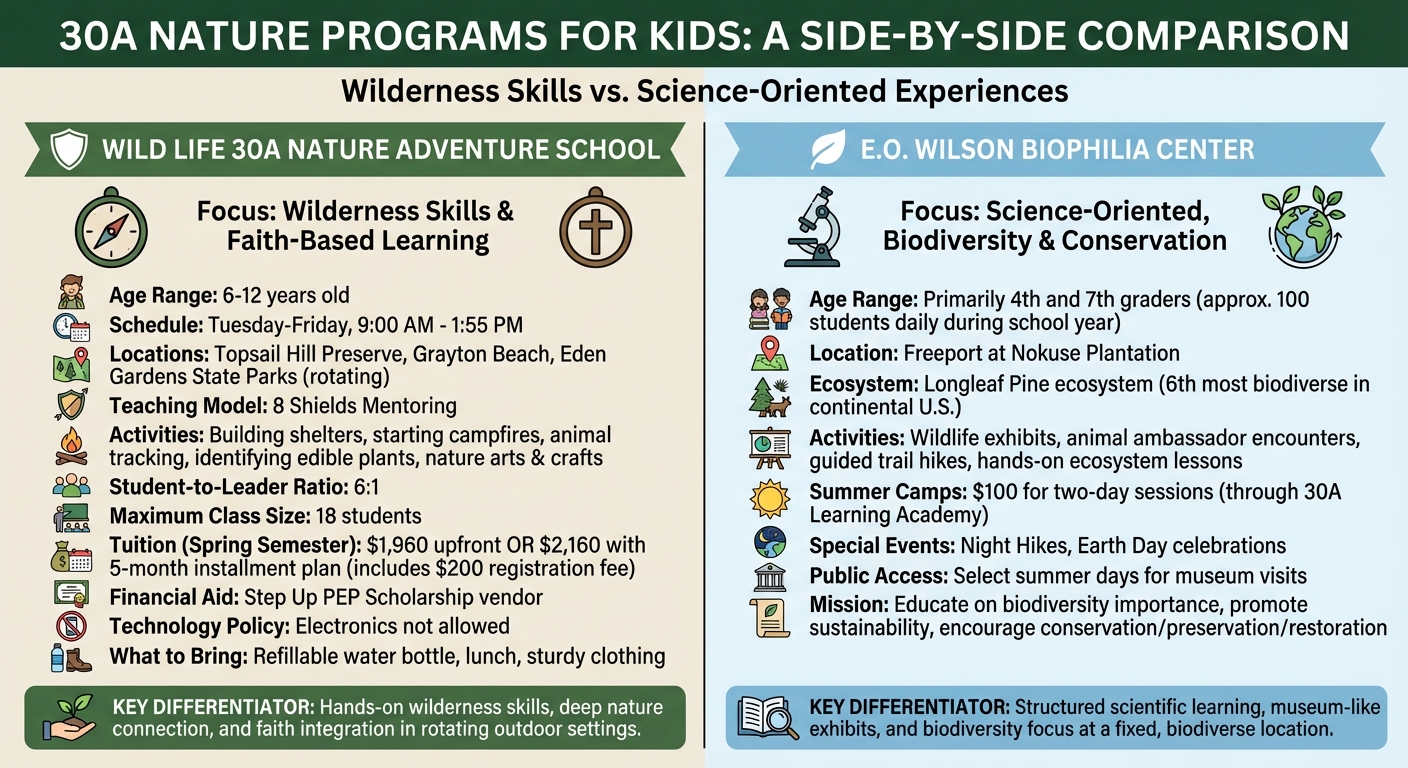
Comparison of Top Nature Programs for Kids on 30A Florida
Two programs on 30A stand out for their unique ways of connecting kids with nature, making them perfect additions to a custom South Walton itinerary.
Wild Life 30A Nature Adventure School
Wild Life 30A offers a faith-based homeschool enrichment program designed for kids aged 6–12. Classes run Tuesday through Friday, 9:00 AM to 1:55 PM, rotating between Topsail Hill Preserve, Grayton Beach, and Eden Gardens State Parks. Using the "8 Shields Mentoring" model, the program focuses on wilderness skills like building shelters, starting campfires, tracking animals, identifying edible plants, and creating nature-inspired arts and crafts.
The program keeps a small 6:1 student-to-leader ratio, with a maximum of 18 students per class. Tuition for the spring semester is $1,960 if paid upfront or $2,160 with a five-month installment plan, which includes a $200 registration fee. For families needing financial support, Wild Life 30A is a Step Up PEP Scholarship vendor, which could help cover costs. One parent, Brooke, shared her enthusiasm:
It was the highlight of each week last year. We're beyond grateful we can join you guys again!
Kids should bring a refillable water bottle, lunch, and sturdy clothing - electronics are not allowed to ensure they stay fully engaged with nature. For those looking for a more science-centered program, the E.O. Wilson Biophilia Center is worth exploring.
E.O. Wilson Biophilia Center Programs
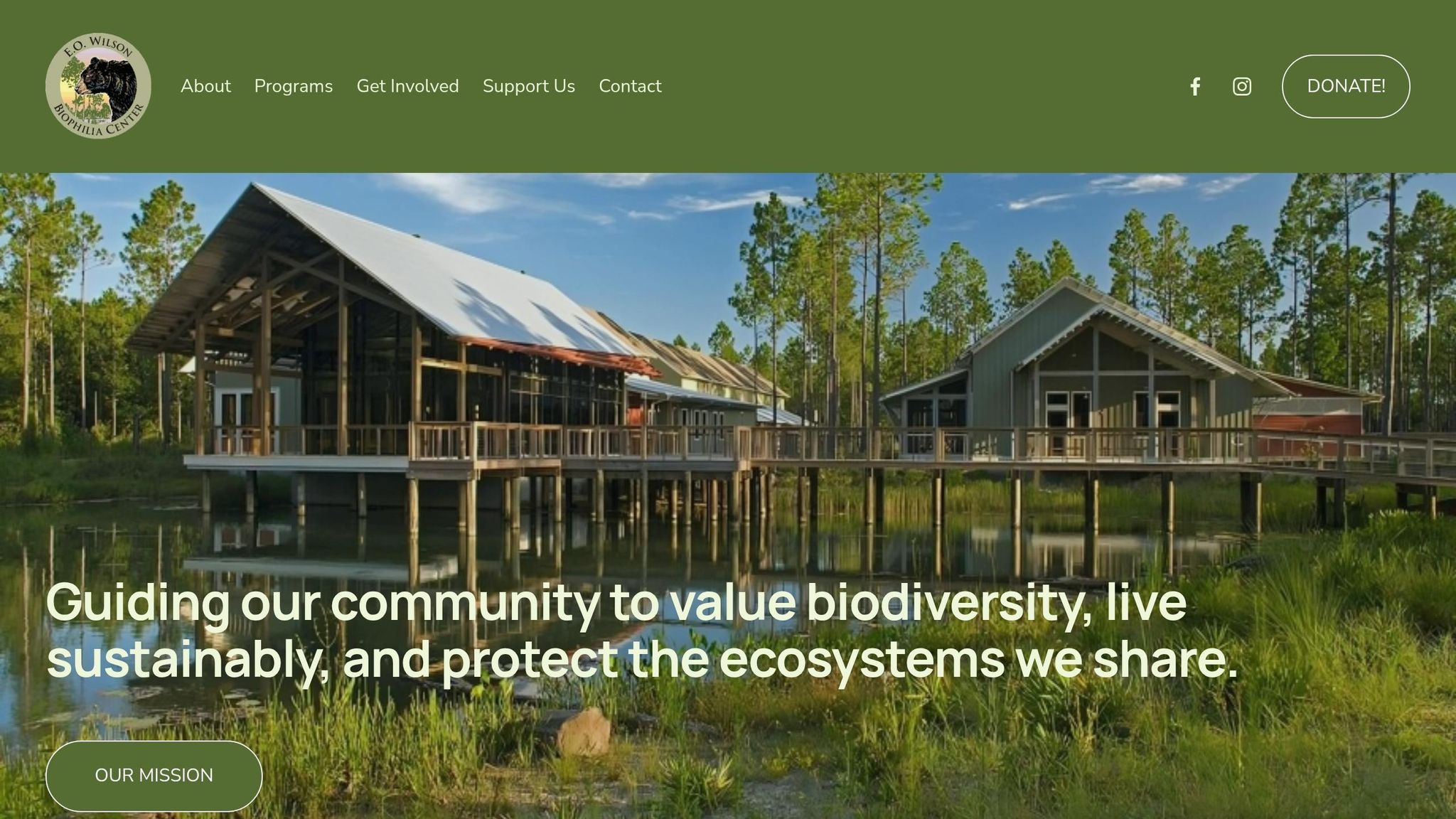
Located in Freeport at Nokuse Plantation, the E.O. Wilson Biophilia Center provides a science-oriented alternative. This educational center focuses on biodiversity and conservation, particularly within the Longleaf Pine ecosystem, one of the most biodiverse areas in the continental U.S. (ranked 6th). During the school year, the center educates about 100 students daily, primarily targeting 4th and 7th graders.
Activities include wildlife exhibits, animal encounters with their "animal ambassadors", guided trail hikes, and hands-on lessons about local ecosystems. The center also opens to the public on select summer days for museum visits and special events like "Night Hikes" and "Earth Day" celebrations. Summer camps, offered through partners like 30A Learning Academy, cost $100 for two-day sessions.
The center’s mission is clear:
to educate students and visitors on the importance of biodiversity, to promote sustainability, and to encourage conservation, preservation, and restoration of ecosystems.
This program is perfect for families seeking a museum-like educational experience, offering a contrast to Wild Life 30A’s focus on wilderness survival skills.
Seasonal Options: Eco-Tours and Summer Camps
These seasonal offerings add variety to established programs, providing flexible and immersive ways to enjoy the outdoors.
Summer Camps on 30A
Wild Life 30A runs its main program from September 15 to May 15, but they don’t stop there. During school breaks and summer months, they offer one-day camp sessions designed for kids aged 6–12. These shorter camps introduce children to wilderness skills like tracking animals, building shelters, and starting campfires - all without the long-term commitment of a full semester. And just like their regular program, they keep the same 6-to-1 student-to-leader ratio, ensuring plenty of hands-on guidance.
For families looking for outdoor fun beyond camps, there are also guided eco-tours that showcase the area's natural beauty.
Guided Eco-Tours for Families
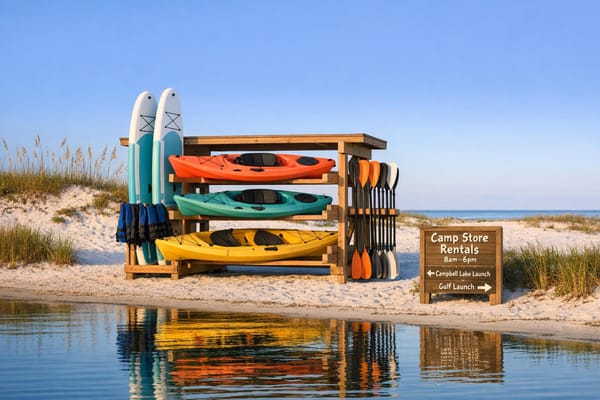
Eco-tours are a great way for families to dive into 30A's unique ecosystems. Adventure 30A offers guided paddleboard and kayak tours where instructors provide fascinating details about local ecosystems, coastal dune lakes, and marine life - all while paddling through calm waters. If you’re new to kayaking or canoeing, Coldwater Excursions is a perfect choice. Their trips through the spring-fed waters of Econfina Creek and the St. Andrews Bay system feature gentle currents, making them beginner-friendly.
For those drawn to marine wildlife, Wildside Nature Tours hosts early morning excursions in St. Andrews Bay. These tours focus on spotting dolphins, sea turtles, and a variety of shorebirds at local birdwatching spots in serene, reflective waters. They provide all the essentials - kayaks, paddleboards, paddles, and safety gear - so all you need to bring is a waterproof bag and a sense of adventure!
How to Select the Right Program
Once you've explored the available options, choosing the right program for your child comes down to balancing their interests, safety, and how well the program's values align with your family's expectations. Here's how to make an informed decision.
Read Reviews and Testimonials
Hearing from other parents can give you a clearer picture of what to expect. Look for reviews that go beyond general comments and focus on specific experiences. For example, one parent shared this about Wildlife 30A:
My daughter packs her lunch on Wednesday because she's so excited for class on Friday!
You can find more detailed reviews on platforms like Tripadvisor or local forums such as sowal.co, where families often discuss their experiences with 30A programs. After reading these firsthand accounts, double-check logistical details to confirm the program aligns with your needs.
Confirm Availability and Enrollment Requirements
Reach out to program organizers to clarify key details. Ask about enrollment deadlines, registration fees, and whether they accept scholarships like Step Up For Students. It's also important to inquire about staff-to-student ratios to ensure adequate supervision and personalized attention for your child.
Check what your child needs to bring, such as a refillable water bottle or weather-appropriate clothing for outdoor activities. If your child uses a phone or smartwatch, confirm the program's technology policy to avoid surprises.
Safety should be a top priority. Verify that all staff and volunteers have undergone background checks and that leaders are CPR certified. Programs like Wildlife 30A emphasize safety measures:
Our leaders are CPR certified. All of our volunteers and leaders have background checks. We have an Emergency Action Plan for each park we visit and maintain contact with the head rangers.
Also, ask about how they handle weather-related issues. For example, what happens in the event of lightning, heavy rain, or tornado warnings? Make sure you're aware of how you'll be notified of delays or cancellations.
Lastly, evaluate whether the program's curriculum and philosophy align with your family's values. Some programs, such as Wildlife 30A, incorporate a faith-based approach with references to a Creator, while others may focus on conservation or recreational activities. Knowing this in advance ensures your child will feel comfortable and engaged throughout their experience.
Conclusion
Finding a nature-based program for your child on 30A is easier when you follow a few simple steps: look into local resources and state parks, check out established options like Wildlife 30A and the E.O. Wilson Biophilia Center, and make sure to handle enrollment details early. These steps build on the strategies outlined earlier in this guide. The benefits of outdoor learning go beyond academics - programs like these help kids gain confidence, learn wilderness skills, and develop a lasting bond with nature. As Wildlife 30A explains:
Wildlife 30A taps into each child's innate curiosity to inspire learning and outdoor play that leads to lifelong wonder, value and connection to nature.
Keep in mind, these programs tend to fill up fast due to limited class sizes. Many start accepting applications nearly a year in advance, so applying early is key to securing a spot.
Also, expect to pay a non-refundable registration fee, typically around $200, to hold your child’s place. If you’re eligible for Step Up For Students scholarships, make sure the program you choose is a PEP Scholarship Vendor, which can help reduce tuition costs. Following these steps will help ensure a smooth and enriching outdoor learning experience for your child.
FAQs
How do I choose between a skills-based program and a science-based one?
When choosing, think about what excites your child the most. Skills-based programs are all about hands-on experiences - things like outdoor survival techniques, exploration, and building confidence through activities. On the other hand, science-based programs dive into understanding nature, focusing on ecosystems and scientific discovery through experiments and observation. If your child loves being active and learning by doing, skills-based might be the way to go. But if they’re drawn to understanding how nature works, a science-based program could be a perfect fit. Both options help kids connect with the outdoors in meaningful ways.
What should my child bring to an outdoor program on 30A?
Your child should pack reef-safe sunscreen with high SPF, a hat or sunglasses for sun protection, and plenty of water to stay hydrated. Insect repellent can come in handy for evening activities, while snacks or small first-aid items might also be useful. If they’ll be going on nature walks, make sure to include closed-toe shoes or even binoculars. Prioritize sun protection, hydration, and comfort to ensure they have a great time.
How early should I apply, and what fees should I expect?
Enrollment for nature-focused programs on 30A, such as Wildlife 30A Nature School, usually begins ahead of the program start date. These programs often run from September through May, with summer camps kicking off in June. Since space is limited, it's a good idea to apply early. Fees can differ depending on the program, but note that there’s a $30 charge for returned checks. For specific deadlines and pricing details, check the program’s website or reach out to the organizers directly.