30A HOA Vacation Rental Rules: 2026 Guide
HOA rules on 30A determine short-term rental viability in 2026 — minimum stays, rental caps, guest limits, parking, fees.
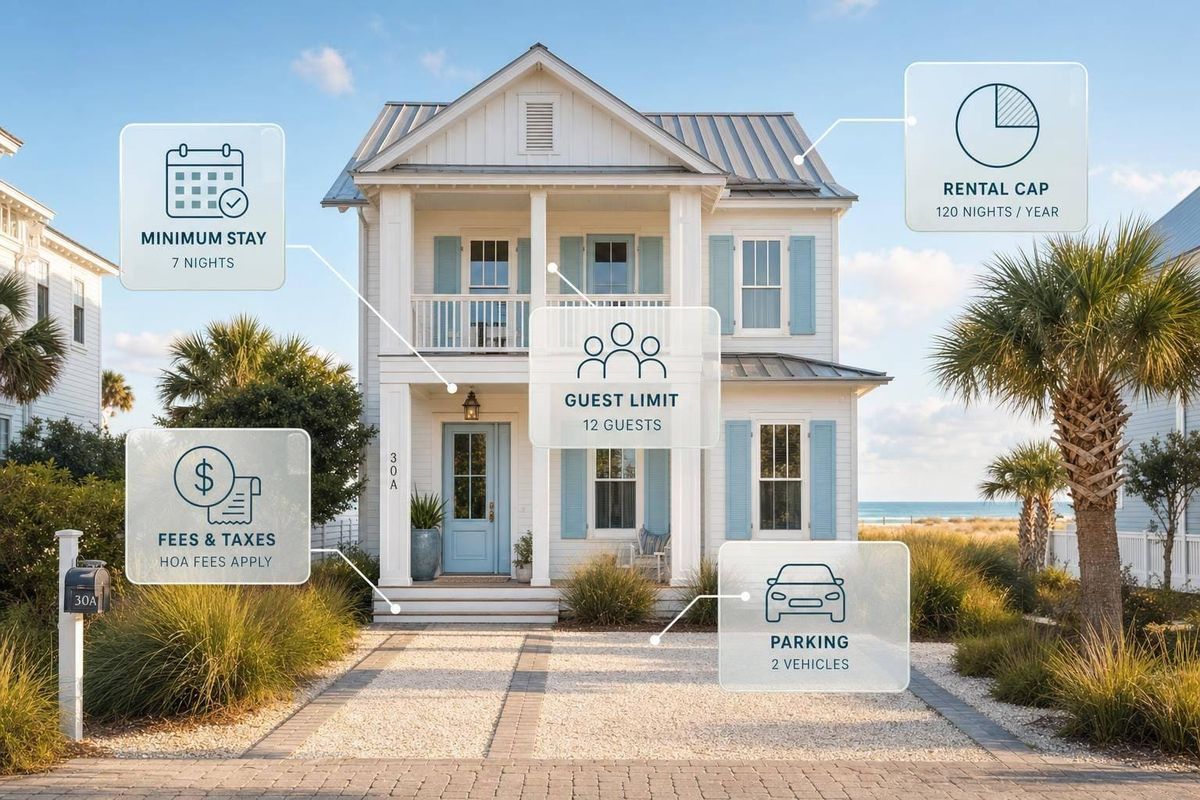
A Walton County rental certificate does not mean your 30A home can be used as a vacation rental. In many cases, the HOA is the part that decides whether you can rent short-term, how often you can do it, how many guests can stay, where they can park, and whether they can use the pool or beach club.
If I were buying on 30A in 2026, I’d check these items before I signed anything:
- Minimum stay rules: nightly, weekly, 30-day, 6-month, or 12-month limits
- Rental caps: limits on how many times I can rent each year
- Guest and occupancy limits: headcount rules that change how I can list the home
- Parking rules: limits on cars, golf carts, boats, trailers, and street parking
- Amenity access: wristbands, key cards, beach access, and guest-only limits
- Guest fees: per-person or per-night charges that cut into margin
- Registration steps: owner forms, portals, annual certifications, and approvals
- Fines and assessments: costs I may have to pay if guests break the rules
- Phase-by-phase differences: one section of a community may allow rentals while another does not
Here’s the short version: county law may say yes, but the HOA may still say no. And even when the HOA allows rentals, the rules may make a property a poor fit for short stays.
A few examples from the article make that plain:
- WaterColor treats rentals under 6 months as short-term rentals and uses registration, guest limits, wristbands, and amenity fees.
- WaterColor Phase 5 bans short-term rentals.
- Seaside allows rentals but uses amenity controls like RFID wristbands and advance access setup.
How to Legally Rent Your 30A Home Short-Term (STR Guide)
sbb-itb-d06eda6
Quick comparison
| Community | Short-term rentals | Stay rule | Guest amenity access |
|---|---|---|---|
| WaterColor (most phases) | Allowed with HOA steps | Under 6 months treated as short-term | Wristbands required; guest fee applies |
| WaterColor Phase 5 | Not allowed | N/A | N/A |
| Seaside | Allowed with controls | Varies by current rules | RFID wristbands and amenity cards required |
Before closing, I’d ask for the CC&Rs, amendments, rules, board minutes from the last 12–24 months, fee schedules, budget, reserve study, and estoppel letter. Then I’d get a dated email or letter from the HOA or manager that confirms the current rental policy and any pending rule changes.
That’s the core point of this guide: don’t judge a 30A rental by ZIP code, neighborhood name, or agent comments. Judge it by the HOA documents for that exact address.
Core HOA vacation rental rules on 30A
These are the HOA rules that most often shape rental use on 30A in 2026. In plain English: they decide whether a property can work as a vacation rental at all. After that, the big question is how much these rules change from one community to another.
Lease length and rental frequency limits
Minimum-stay rules and rental caps can shut down nightly or weekly rentals, even when county law says those rentals are allowed. Some communities also limit how many times an owner can rent out the property during the year. That can turn a place that looks good on paper into a poor fit for maximizing short-term rental ROI.
Guest caps, parking rules, and noise restrictions
Parking rules cause a lot of problems. Many communities require off-street parking and don’t allow street parking. Boats, trailers, RVs, and golf carts often come with storage or parking limits too. In most cases, the owner is on the hook for renter violations, including noise issues, parking problems, and misuse of amenities. That’s why the same type of property can do well in one neighborhood and struggle in another.
Amenity access, guest fees, and owner fines
Many resort-style communities require guest registration for pools, beach clubs, and similar amenities. That may mean wristbands, key fobs, or per-guest fees. Those rules shape the guest experience and add to operating costs. HOAs can also fine owners for rule violations. Special assessments may cut into net returns as well. You see those differences most clearly when you compare one 30A community with the next.
How HOA rules differ across 30A communities
30A HOA Vacation Rental Rules: Community Comparison Guide 2026
Along 30A, private HOA rules sit on top of short-term rental rules in South Walton, and in many cases they’re the deciding factor. A property can have every Walton County certificate in place and still be barred from operating as a vacation rental under its HOA covenants.
Examples of stricter and more flexible community approaches
The rules can change a lot from one community to another. In some places - or even in one phase of a larger neighborhood - short-term rentals are banned outright. In others, rentals are allowed on paper but limited by minimum lease terms of 30 days, 6 months, or 12 months. That usually knocks out weekly bookings, even when county rules would allow them.
Some communities take a middle path. They allow rentals, but add day-to-day controls like registration, guest caps, amenity wristbands, or access fees. Seaside is one example: it requires RFID wristbands and amenity cards requested ahead of time for beach and amenity access.
WaterColor as an example of rental registration and amenity control
WaterColor shows just how much control an HOA can have. The community treats any rental of less than six months as a short-term rental and requires owners to register those rentals through a dedicated portal, complete an Annual Owner Certification, and set a Maximum Certified Number of Guests for the property.
Guest access comes with extra rules and costs. Rental guests pay a per-person, per-night amenity fee to use HOA amenities. All guests age 5 and older must wear HOA-issued wristbands to enter the pools and Beach Club, while children under 5 usually get paper bands.
There’s also a phase-by-phase difference inside the same community. WaterColor Phase 5 bans short-term rentals entirely, while earlier phases allow them if owners follow the registration rules.
Side-by-side community comparison for buyers
This is why checking the exact community matters more than relying on broad 30A talk. The main issue isn’t whether rentals exist somewhere on 30A. It’s whether the HOA for the property you want allows the stay length, guest count, and amenity setup your rental plan depends on.
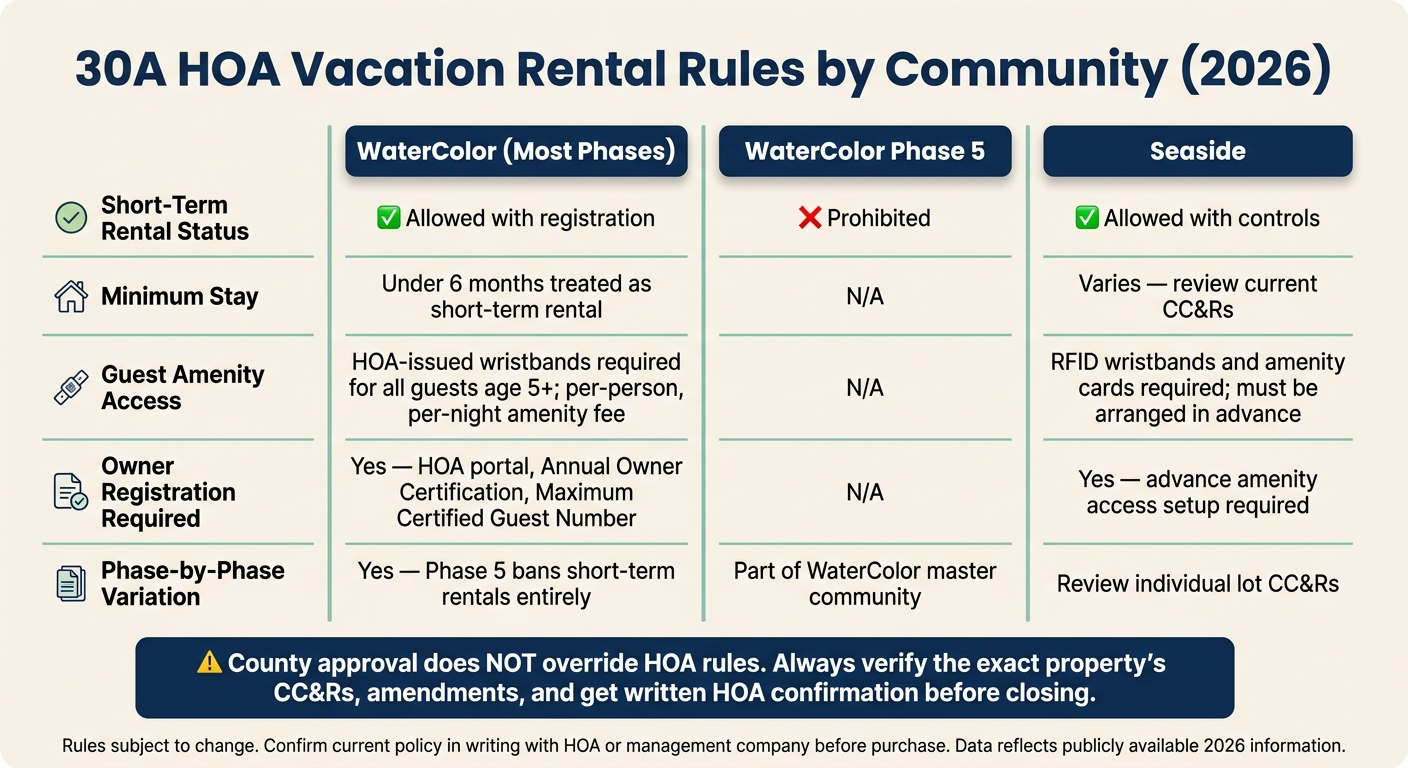
The table below sums up publicly verifiable rental rules across three 30A communities. Confirm the current HOA rules before closing.
| Community | Short-term rental status | Minimum stay | Amenity access for guests |
|---|---|---|---|
| WaterColor (most phases) | Allowed with registration | Less than 6 months is treated as a short-term rental | Wristbands required; guest fee applies |
| WaterColor Phase 5 | Prohibited | N/A | N/A |
| Seaside | Allowed with amenity controls | Varies; review current CC&Rs | RFID wristbands and amenity cards required in advance |
A property’s location can tell you very little by itself. Two homes in the same ZIP code - or even in the same master-planned development - can face very different rental rules from one phase to the next.
What to review before buying a 30A vacation rental
If a 30A community allows rentals, your next job is to check the rules for the exact property you want to buy. Get the HOA rules for that address in writing before closing.
That matters because rules can change by phase, lot, or later amendment. So two homes in the same development can end up with very different rental limits.
HOA documents and records to request
Ask for the CC&Rs, all amendments, bylaws, and rules and regulations before you make an offer or during the inspection period. That last part matters because amendments can replace older rental language.
You should also ask for:
- Written rental policies
- Board resolutions
- Registration forms and fee schedules
- 12–24 months of board minutes
- The current budget
- The latest reserve study
- The estoppel certificate, which confirms dues, delinquencies, and any special assessments
Rental clauses to search for in HOA documents
Once you have the documents, go straight to the sections that control rental use. Look for terms like lease, rental, short-term, transient, vacation rental, hotel use, guest limits, parking, amenity access, and fines.
Here’s what to look for and why it matters:
| Clause to find | Why it matters |
|---|---|
| Minimum lease term | Determines whether weekly bookings are allowed |
| Max rentals per year | Caps how often you can rent the property |
| Occupancy / guest limits | Affects how you list and price the property |
| Parking restrictions | Can limit guest capacity and trigger fines |
| Amenity access for guests | Changes what you can advertise and your nightly rate |
| Fine schedule | Shows financial risk from guest violations |
| Rental registration requirements | Adds cost and administrative steps before you can rent |
How to confirm current HOA policy before closing
The documents are only part of the picture. You also need direct written confirmation from the HOA or management company. A dated email or letter should confirm the current rental rules, minimum stays, registration steps, and any pending amendments.
Don’t rely on a listing agent’s verbal comments. That’s where buyers get burned.
Be direct and ask whether any rule changes are pending. A community may look rental-friendly in the documents, but a pending amendment or board vote can shift the rules fast. Local guides like sowal.co can help you get a feel for the area, but they don’t replace written HOA confirmation.
Conclusion: How to evaluate a 30A HOA before you buy in 2026
Walton County sets the legal floor, but the HOA often decides whether a 30A home can function as a vacation rental.
Start with the numbers that shape the deal: minimum stays, rental caps, guest limits, and fees. If the stay length, occupancy rules, or cost setup doesn't fit your plan, the math can fall apart fast.
Read the full CC&Rs, amendments, board resolutions, and meeting minutes. The disclosure summary required under Florida Statute § 720.401 is only a starting point. Before closing, get each of the items below confirmed in writing.
The 2026 buyer checklist at a glance
Use this checklist to verify the rules for the exact property before you remove contingencies.
| What to check | What to confirm |
|---|---|
| Minimum stay requirement | Nightly, weekly, or longer? Any seasonal variations? |
| Rental frequency cap | Maximum rental weeks or turnovers per year? |
| Occupancy limit | Official cap? Age thresholds? |
| Parking rules | Spaces or hangtags per unit? HOA limit? |
| Amenity access | Pools, beach clubs, walkovers, wristband rules? |
| Guest fees | Per-person or per-night rates? Owner or guest pays? |
| Registration requirements | HOA portal, annual certification, or approved manager required? |
| Fine schedule | Dollar amounts for violations? Recent enforcement history? |
| Written confirmation | Dated letter or email confirming current rules and pending amendments? |
Close only after you receive dated written proof of the current rules and any pending changes.
FAQs
Can an HOA ban short-term rentals even with a county certificate?
Yes. An HOA can ban short-term rentals even if you have a valid Walton County vacation rental certificate.
HOA CC&Rs are separate from county rules, and the stricter rule applies. An HOA can enforce a ban, set minimum stay rules, or place caps on rentals through its recorded governing documents. A county certificate does not override private community restrictions.
Which HOA documents should I review before buying on 30A?
Review the CC&Rs, any amendments, the condo bylaws, and the board’s rules. You should also ask for the full HOA package, including the resale certificate, estoppel letter, and the last 12 to 24 months of board and membership meeting minutes.
Then dig into the reserve study, annual budget, and financial statements to spot any risk of a special assessment. And don’t rely on hearsay for rental limits - get the HOA to confirm the rules in writing, including minimum stay requirements and occupancy caps.
Do guest fees and amenity rules affect rental income?
Yes. HOA guest fees and amenity rules can cut into rental income in a direct way.
For short-term rentals, the biggest issue is often access and limits. Some HOAs set minimum stay rules, cap the number of rentals, or ban short-term rentals outright. That shrinks booking options and can leave you with fewer paying nights.
Amenity rules can hurt demand too. If guests can’t use shared spaces like the pool or fitness center, the property may look less appealing. And when demand slips, nightly rates often slip with it.
There’s also the cost side. If a rental breaks HOA rules, the owner may face fines or lose amenity access for future guests. That can reduce net returns even more.