Walton 2040: Community Growth Forecast
Walton County's population surge and limited developable land require targeted 2040 planning for housing, transit, infrastructure, and conservation.
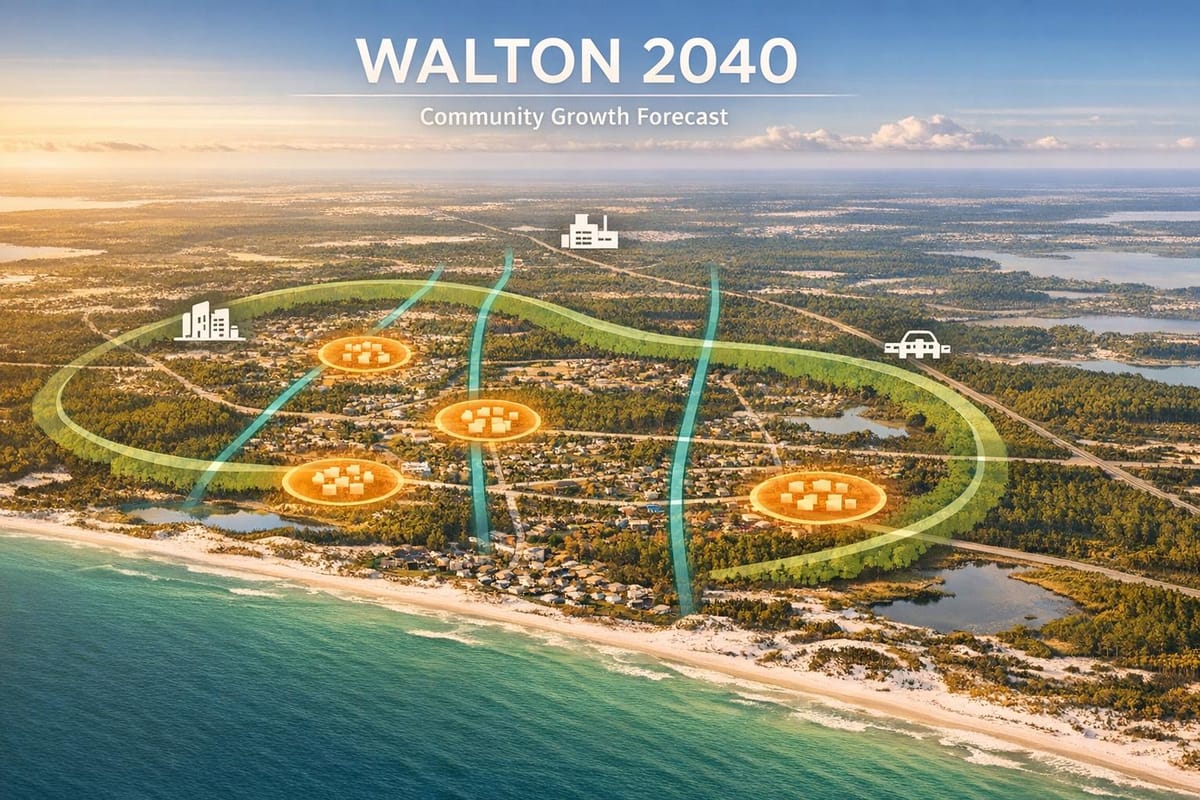
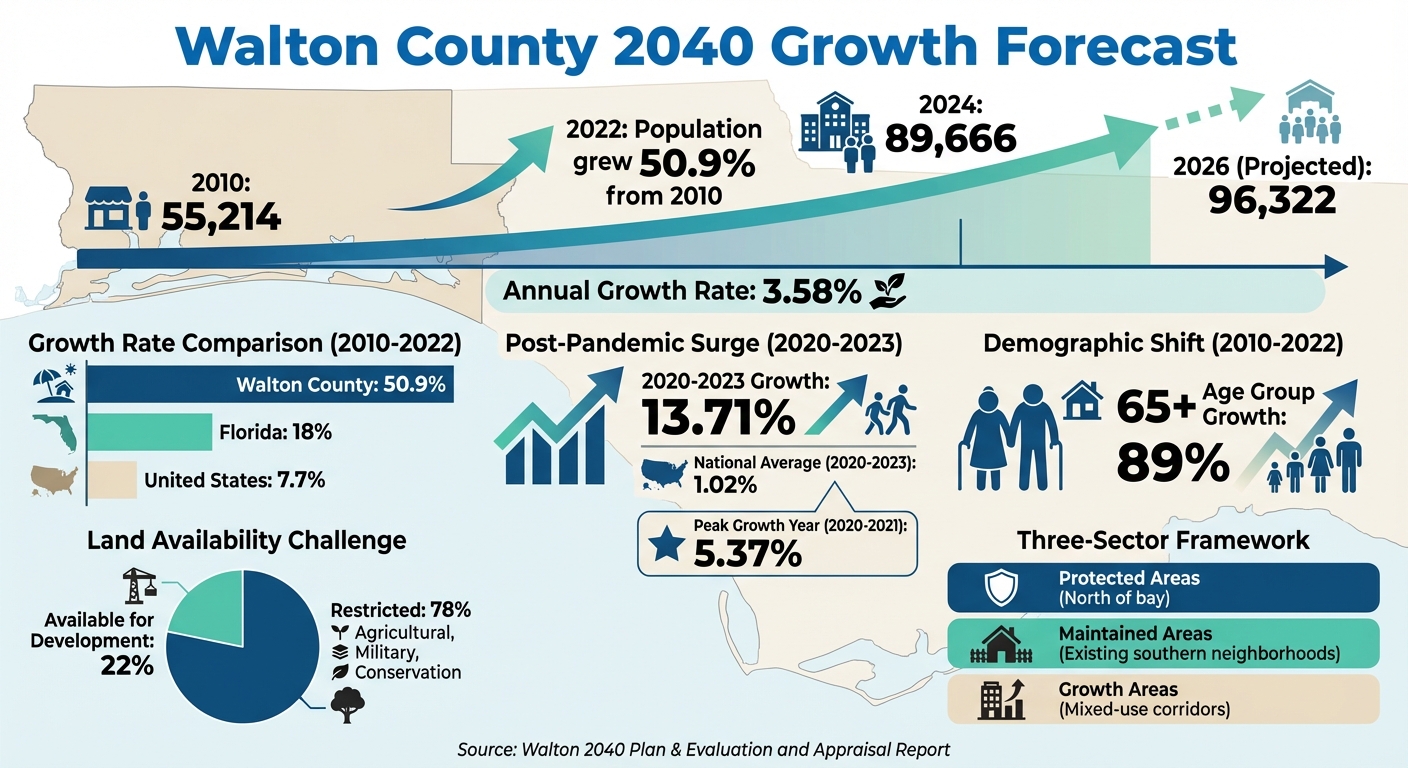
Walton County is growing fast, with its population expected to hit 96,322 by 2026, up from 55,214 in 2010 - an annual growth rate of 3.58%. This rapid expansion is outpacing both state and national averages but comes with challenges. Only 22% of the county's land is available for development due to restrictions on agricultural, military, and conservation areas. The Plan for Walton 2040 aims to manage this growth by focusing development in specific areas while maintaining the county's character.
Key facts:
- Population grew 50.9% (2010–2022), compared to Florida's 18% and the U.S.'s 7.7%.
- The 65+ age group increased by 89% (2010–2022).
- New infrastructure projects like the 393 Transit Hub and Grayton Beach Community Center are set to open in 2026.
- Housing strategies include mixed-use developments and Transfer of Development Rights programs.
Walton County's future depends on balancing growth with maintaining its natural and community assets. The Walton 2040 framework provides a roadmap to address housing, infrastructure, and preservation challenges while engaging residents in shaping the county's future.
Walton County Population Growth 2010-2040: Key Statistics and Projections
1. Current Growth Trends
Population Growth
Walton County's population is growing faster than both state and national averages. Between 2010 and 2022, the county's population surged by 50.9%, compared to Florida's 18% and the United States' 7.7% growth during the same period. By 2024, Walton County's population reached 89,666.
Historically, the county's population grew by about 30-32% in the 1970s and 80s. However, the most recent decade saw a larger increase, exceeding 37%. Post-pandemic growth has been particularly striking, with a 13.71% increase between 2020 and 2023, far outpacing the national growth rate of just 1.02%. The most significant annual growth occurred between 2020 and 2021, with a peak rate of 5.37%.
The county's demographics are also shifting. For example, the 65+ population grew by 89% from 2010 to 2022. This rapid expansion is reshaping community needs and placing new demands on local services and infrastructure.
Public Services Infrastructure
The rapid population growth is putting considerable pressure on Walton County's public services. To address these challenges, the county has introduced mobility fees on new developments to fund infrastructure improvements. However, the demands remain significant. Anna Roach, Executive Director & CEO of ARC, highlighted the importance of staying proactive:
"We must keep investing in our infrastructure and in our people to build a successful future".
These investments are crucial as the county prepares to meet the challenges outlined in its Walton 2040 vision.
Environmental Resilience
Balancing growth with environmental preservation is another key focus for Walton County. Strategic planning is essential to protect restricted land use while accommodating the community's needs. The county has initiated several projects aimed at conservation and enhancing public access. For instance:
- The Grayton Beach Community Center at 44 Hotz Avenue will feature an observation deck and boardwalk, set to open by summer 2026.
- The Kellogg Park Nature Center at 855 Nursery Road will include assembly spaces and kayak access, scheduled to open in March 2026.
These projects highlight the county's efforts to direct growth into specific areas while maintaining its natural beauty. This forward-thinking approach aligns with Walton County's long-term vision for 2040.
2. 2040 Forecasts for Walton County
Population Growth
Walton County's Plan for Walton 2040 lays out a strategy to manage the rapid growth expected over the next two decades. Developed by DPZ CoDesign - the same firm behind Seaside - and detailed in the Evaluation and Appraisal Report, the plan addresses the challenges of having only 22% of the county's land available for development. Much of the remaining land is dedicated to agriculture, the air force base, and conservation efforts. This limited space makes careful planning essential, influencing the county's long-term strategies for housing and infrastructure.
Public Services Infrastructure
Walton County has adopted a three-sector framework to guide its infrastructure development: Protected Areas (north of the bay), Maintained Areas (existing southern neighborhoods), and Growth Areas (specific mixed-use corridors).
Several infrastructure projects are already in motion to support this vision. For example, the 393 Transit Hub is set to open in March 2026, offering 74–83 parking spaces and serving as a central hub for tram services. Meanwhile, the Driftwood Road Parking facility, scheduled for May 2026, will add 67 parking spaces and feature an air-conditioned transit stop. These projects aim to meet the demands of a growing population while improving transportation and connectivity.
Housing and Affordability
Addressing housing needs is another critical part of Walton County's growth strategy. The Sector Map framework focuses new development in designated Growth Areas, promoting walkable, mixed-use communities with a variety of housing options. This approach not only optimizes the county's limited developable land but also safeguards agricultural and conservation zones, which are integral to Walton County's character. Concentrating development in these areas helps reduce strain on infrastructure while providing affordable housing solutions for the community.
Why Everyone’s Talking About Freeport Florida | New Construction & Growth Outlook
Benefits and Challenges
Looking ahead to 2040, Walton County is navigating a shift from reacting to growth to planning for it in advance. This transition is underscored by the county's Evaluation and Appraisal Report, unanimously approved by the Board of County Commissioners in June 2025. The report highlights the dual nature of growth:
"Record growth in Walton County has created tremendous opportunities for jobs and economic development. However, this growth must go hand-in-hand with funding essential community services, infrastructure, and public safety."
The 2040 vision represents a major change in how the county approaches development. Currently, infrastructure upgrades often lag behind growth, responding to immediate pressures. Under the 2040 framework, the county aims to anticipate long-term transportation and capital needs, ensuring that growth itself helps fund critical services instead of overwhelming them. This forward-thinking approach also lays the groundwork for addressing challenges tied to environmental preservation and housing.
Environmental planning plays a key role in this shift. Walton County’s natural landscapes are central to its identity, but current development trends risk diminishing these resources. The 2040 plan integrates coastal management and conservation directly into its strategy, ensuring that growth aligns with preserving the county’s character. As the plan states, "Walton County's growth will continue, but it can and should be managed in a way that supports property rights, enhances surrounding areas, respects existing communities, and improves the quality of life for everyone." These principles also guide decisions on housing and economic development.
Housing affordability is another pressing issue, presenting both hurdles and opportunities. A 25% vacancy rate in multifamily housing suggests an oversupply, which the 2040 framework seeks to address through Transfer of Development Rights (TDR) programs. These programs allow for shifting density to areas with strong infrastructure while protecting agricultural and conservation lands.
On the economic front, current trends have led to immediate job creation and development opportunities. However, the 2040 vision takes a longer-term approach, emphasizing sustainable growth. Community-led design workshops, such as charrettes, will enable residents to actively shape the county’s future amenities and growth patterns, fostering a more inclusive and balanced economic evolution.
Conclusion
With only 22% of Walton County open for development - thanks to restrictions on conservation, military, and agricultural lands - every planning decision leaves a lasting impact on the community's identity. Striking the right balance between growth and preservation is key to shaping the county's future.
The county's sector-based framework, which divides land into Protected, Maintained, and Growth Areas, offers a structured way to guide development. By focusing growth in areas with adequate infrastructure, this plan helps prevent unprepared communities from being overwhelmed while ensuring resources are used effectively.
The central question remains: "Walton County will continue to grow and evolve. How do we best shape future growth?" The answer lies in aligning development with investments in critical services like public safety and transportation. Projects such as the 393 Municipal Parking Facility and Grayton Beach Community Center demonstrate how well-planned infrastructure can support growth while protecting community assets. These efforts, combined with active community involvement, lay the groundwork for thoughtful and sustainable progress.
Residents play a pivotal role in shaping this vision. Early engagement in visioning sessions and neighborhood planning gives communities a chance to steer the direction of growth. Marina Khoury, Project Lead for Plan for Walton 2040, highlights this point: "Future growth in these communities, and the intensity of that growth, should reflect those values [of character and community]". The 2040 framework is more than a planning document - it’s an open invitation for residents to help define their county’s future.
By comparing current trends with 2040 projections, it’s clear that proactive planning is both urgent and full of potential. Without it, rapid growth could overwhelm services and diminish Walton County’s natural beauty. But with a forward-thinking approach, the county can manage growth in a way that preserves its unique character while adapting to inevitable changes.
For updates on community trends, public services, and life in South Walton, visit sowal.co.
FAQs
Where will most new growth be allowed in Walton County?
Growth in Walton County is expected to concentrate along the 30A corridor and other fast-growing areas. At the same time, there’s a strong push to align this development with conservation efforts, aiming to maintain a balance between expansion and preserving the region's natural resources.
How will the 2040 plan pay for roads, transit, and public safety?
The 2040 plan aims to finance roads, transit, and public safety initiatives through community growth revenues overseen by Walton County. A dedicated mobility plan is in the works to tackle transportation demands and enhance infrastructure, with the Walton County Board of County Commissioners providing oversight.
What will Walton County do to keep housing affordable as it grows?
Walton County is gearing up to address affordable housing needs by focusing on development in areas already close to infrastructure and essential services. The plan also emphasizes creating a variety of housing options and encouraging mixed-use developments. These initiatives are designed to ensure housing remains accessible as the community continues to grow.